
Views: 0 Author: Site Editor Publish Time: 2026-07-18 Origin: Site


Evaluating baby products often feels incredibly overwhelming for new parents. You probably spend hours researching the best floor mats for your nursery. This happens because babies spend so much time face-down, crawling, rolling, and teething directly on these surfaces. The core industry debate centers on two distinct materials right now. We see the historical dominance and heavy-duty feel of PVC competing against the rising popularity of lightweight, non-toxic foam alternatives like XPE.
Making a safe, informed choice requires looking past clever marketing buzzwords like "eco-friendly" or "green". You must thoroughly understand the actual chemical makeup, daily usability, and regulatory compliance behind these materials. In this guide, we will break down the science of both options. You will learn exactly how they compare in real-world scenarios to help you confidently protect your child.
Material Base: XPE (Cross-linked Polyethylene) is chemically inert, naturally flexible, and requires no chemical plasticizers, making it inherently safer for chemical exposure.
Toxicity Risks: PVC (Polyvinyl Chloride) requires plasticizers (phthalates) to become soft. While medical-grade, heavily regulated PVC exists, lower-quality PVC poses risks of VOC off-gassing and phthalate exposure.
Practicality: An xpe baby mat is significantly lighter, easier to roll up, and highly shock-absorbent, whereas PVC is heavier, denser, and more resistant to pet scratches.
The Verdict: For parents prioritizing zero-toxicity, zero off-gassing, and portability, XPE is the objective frontrunner.
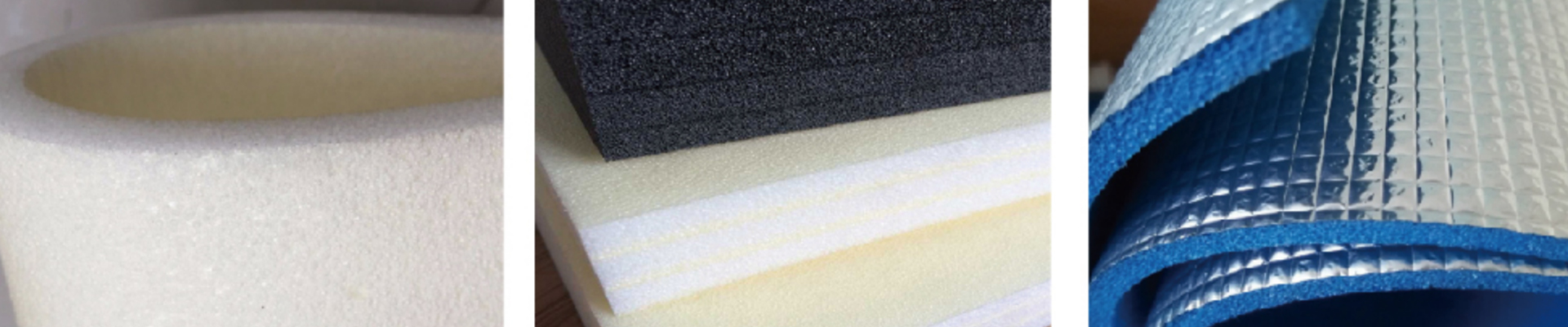
XPE stands for Cross-linked Polyethylene. It represents a massive leap forward in foam technology for consumer goods. Manufacturers use a highly specialized "cross-linking" process to create this material. This chemical process links individual polymer chains together. They form a complex, interconnected 3D cellular structure. This unique physical bond creates a natural bounce. It provides a soft cushion for hard surfaces.
The most critical advantage? It achieves this impressive flexibility without needing added chemicals. You will frequently find XPE utilized in critical healthcare applications. Hospitals use it for medical tubes. The food packaging industry relies on it for safe containers. These industries choose it specifically because of its chemically inert nature. It simply does not react with other substances. This makes it highly stable and perfectly safe for sensitive environments like a baby's nursery.
PVC stands for Polyvinyl Chloride. It ranks as one of the most widely produced synthetic plastic polymers globally. In its raw state, PVC is inherently rigid and brittle. Think about the thick white plumbing pipes running under your sink. To transform this hard plastic into a usable play mat, manufacturers must soften it.
They achieve this flexibility by adding liquid chemical plasticizers. These chemicals wedge themselves between the plastic polymer chains. This brings us to a harsh reality regarding modern manufacturing. Not all PVC is inherently toxic today. However, evaluating its safety relies entirely on trusting the manufacturer. You must trust their specific phthalate-removal process. Many budget brands cut corners during this crucial step. Without strict testing, you cannot guarantee the absence of harmful chemical softeners.
Many parents immediately notice a strong chemical smell when unboxing a new plastic product. This familiar "new shower curtain smell" comes directly from Volatile Organic Compounds (VOCs). These compounds release into your home's air through a process called off-gassing. Flexible plastics also carry historical baggage regarding phthalates. Industry experts classify these specific chemicals as endocrine disruptors. They can potentially interfere with natural hormonal development in young children.
We must acknowledge a crucial trust cue here. Premium PVC mats do exist in the market. These high-end options pass strict safety regulations like the CPSIA. Manufacturers spend heavily to remove dangerous phthalates. However, budget PVC mats remain a high-risk gamble. You simply do not know what cheap plasticizers they contain.
If you prioritize absolute peace of mind, an xpe baby mat delivers exceptional chemical safety. The core material remains inherently free of BPA, Phthalates, Lead, and Formamide. We know XPE does not require any plasticizers to become soft. Therefore, there is zero risk of chemical leaching.
This scientific fact matters immensely. Your baby will inevitably chew on the mat's edges. Human saliva cannot break down this inert foam to release hidden toxins. Furthermore, XPE features impressive hypoallergenic properties. The closed-cell structure naturally resists dust mites. It completely prevents mold and mildew growth. This creates a significantly cleaner, safer breathing environment for your crawling infant.
Babies fall constantly while learning to sit up and walk. Protection against these daily toddler tumbles remains a top priority for parents. PVC feels incredibly dense underfoot. It mimics the sensation of a heavy memory foam mattress. XPE offers an entirely different, spongy feel.
It utilizes an impact-dispersing cellular structure. The tiny internal air pockets compress upon impact. They spread the force outward rather than pushing it back up. Both materials protect well against hard impacts on wood or tile floors. However, XPE offers a vastly superior cushion-to-weight ratio. It provides massive shock absorption without carrying heavy, unnecessary bulk.
PVC holds one distinct advantage regarding extreme wear and tear. It features a very high density profile. It lays completely flat instantly upon unrolling. The heavy weight strongly resists annoying edge curling. It also holds up much better against sharp dog claws or heavy furniture legs.
XPE requires a practical reality check here. The material feels much softer to the human touch. Sharp metal toys or aggressive pet claws can puncture it if you act carelessly. You must keep heavy wooden coffee tables off this softer foam. The weight will leave permanent indentations over time.
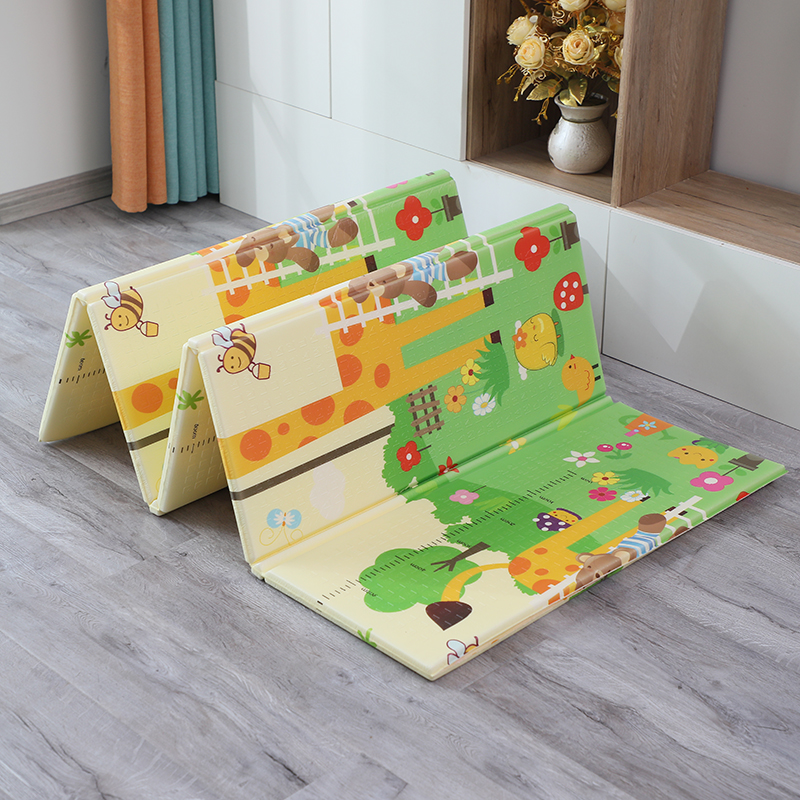
XPE absolutely dominates the portability and storage category. Searching for terms like xpe baby mat,xpe rolling play mat often yields hundreds of lightweight options for a reason. They pack away in just seconds. A standard foam roll weighs only a few pounds. You can easily move it between the living room and the nursery.
Many parents even take them outdoors for summer picnics. Conversely, a large PVC mat acts essentially as a permanent fixture. A typical PVC product weighs over fifteen pounds. Its heavy weight makes daily rolling and storing completely impractical. You will likely unroll it once and leave it there forever.
Babies create unpredictable messes daily. Fortunately, both materials utilize closed-cell construction. This specific manufacturing technique makes them highly waterproof. They easily resist spit-up, heavy urine accidents, and spilled milk.
Liquids sit on the surface rather than soaking into the foam core. You can wipe them away quickly with a dry paper towel. This prevents lingering odors from absorbing into your floor covering.
Surface textures dictate how easily you can clean a mat thoroughly. Deeply embossed PVC patterns look beautiful. However, these deep grooves can trap tiny food crumbs and hidden dust. Poorly sealed XPE edges also invite grime buildup over time.
Liquid can seep into unsealed borders. We highly recommend looking for heat-pressed edges. High-quality XPE products commonly feature this advanced manufacturing technique. It seals the border completely using heat instead of toxic glues. This prevents harmful bacterial buildup and ensures long-lasting hygiene.
You must avoid harsh chemicals when cleaning these surfaces. Bleach and abrasive chemical cleaners will degrade both materials rapidly. They cause rapid oxidation. This breaks down the protective top layers and fades the printed colors.
We recommend using simple mild soap and warm water. You can also use a diluted white vinegar solution. This combination cleans effectively without damaging the foam structure. It also ensures you leave no toxic chemical residues behind for your baby to touch.
Choosing the right product depends heavily on your specific household needs. We prepared a straightforward framework to guide your purchase.
Feature | XPE Foam | PVC |
|---|---|---|
Chemical Safety | Inherently non-toxic, zero off-gassing | Requires plasticizers, potential VOCs |
Weight & Portability | Extremely lightweight, easy to store | Very heavy, mostly permanent |
Pet Durability | Vulnerable to sharp claws | Highly resistant to scratches |
Shock Absorption | Excellent cushion-to-weight ratio | Dense, memory-foam feel |
Parents often make a few critical errors when shopping for play mats. Keep these best practices in mind:
Trusting unverified marketing claims: Never assume a product is safe just because the box says "eco-friendly". Always demand proof.
Ignoring the primary floor type: Soft XPE works beautifully on hard tile. However, placing a thick foam mat over plush carpet creates an unstable walking surface.
Overlooking edge construction: Buying a mat with exposed raw edges leads to rapid peeling. Seek out heat-sealed borders.
Chemical safety and zero off-gassing are your absolute non-negotiables.
You need a lightweight mat you can roll up and store frequently.
You have hardwood or tile floors and need maximum bounce for a crawler.
You have large pets with sharp claws sharing the baby's space.
You intend to leave the product in one spot permanently as an area rug.
Crucial caveat: You must verify it has passed strict European (EN71) or US (CPSIA) standards for phthalate removal.
Never trust unregulated "non-toxic" claims printed on packaging. Marketing teams use these terms very loosely today. Instead, follow a strict certification checklist. Look for independent lab tests from recognized organizations. We recommend verifying certificates from SGS, Oeko-Tex, or CPSIA. These independent bodies test for heavy metals and banned phthalates.
Request the actual test report directly from the brand's customer service team.
Check the date on the certificate to ensure it remains currently valid.
Verify the specific product line matches the testing document exactly.
Premium PVC certainly offers superior durability against pets and heavy furniture. However, XPE provides unmatched peace of mind regarding chemical exposure. Your baby's developing body deserves a completely safe environment. You should not have to worry about hidden toxins during tummy time.
For the vast majority of parents focused on health, safety, and practicality, an XPE play mat represents the superior choice. It delivers excellent shock absorption without introducing harmful compounds into your home. Take a few moments today to check the certifications of your shortlisted brands.
Better yet, explore a curated collection of verified safe, non-toxic rolling options. Evaluate your floor space, assess your storage needs, and make the switch to a cleaner material. You will sleep much better knowing your child plays on a truly risk-free surface.
A: Generally, no. Unlike PVC, which can off-gas VOCs for weeks, XPE is chemically inert. Any faint smell upon unboxing is usually from the packaging and dissipates within hours.
A: No. EVA (Ethylene-Vinyl Acetate) is commonly used in puzzle mats and often contains formamide (a toxic byproduct). XPE is a safer, continuous-sheet alternative that does not contain formamide.
A: It is not recommended to use heavy vacuum beaters, as the mechanical brush can tear the soft foam surface. Stick to wiping with a damp cloth or using a suction-only vacuum attachment.
A: Yes, XPE is highly heat-resistant and acts as an excellent insulator, making it safe and comfortable to use over radiant floor heating without melting or releasing toxins.