
Views: 0 Author: Site Editor Publish Time: 2026-07-17 Origin: Site


Parenting brings a wonderfully messy reality into our homes every single day. You will quickly encounter unexpected spit-ups, sudden diaper leaks, and frequent spilled milk. These daily surprises drive an urgent need for high-performance nursery flooring. Constant scrubbing of traditional fabric rugs simply exhausts busy parents. It leaves them frustrated and tired.
So, is there a highly reliable solution? Yes, XPE (Cross-linked Polyethylene) foam is inherently waterproof. This advanced material naturally blocks moisture without needing extra surface treatments. It offers a wonderfully safe, highly hygienic surface for your little ones to explore freely.
In this article, we explain exactly how XPE effectively repels liquids on a molecular level. We will guide you through simple maintenance routines to keep the surface pristine. You will also discover key factors to evaluate before selecting the ideal xpe baby mat for your home. Ultimately, you will understand exactly why this flooring upgrade saves time, reduces stress, and protects your original floors.
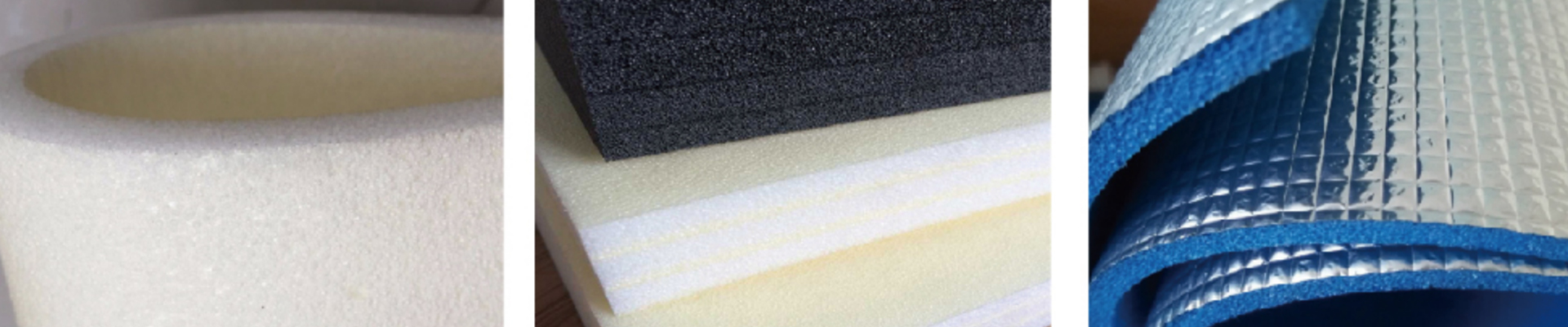
100% Waterproof Material: XPE foam features a closed-cell structure that completely blocks liquid absorption, preventing mold and odors.
Easy Maintenance: Spills can be wiped away instantly with a damp cloth, though textured surfaces and folding hinges require brief attention to prevent liquid pooling.
Safe & Non-Toxic: High-quality XPE mats achieve waterproof status without relying on toxic chemical coatings (unlike some older PVC alternatives).
Durability Caveat: While the material repels water, the waterproof surface can be compromised if punctured by sharp objects or heavy pet claws.
Let us look closely at the science behind cross-linked polyethylene. The real magic lies entirely inside its microscopic structure. Manufacturers deliberately engineer XPE foam to contain millions of tiny, sealed bubbles. We call this specific design a closed-cell structure. The cell walls lock tightly together during the complex manufacturing process. Moisture simply finds no open path to enter.
Because these cells remain completely sealed, the foam has a rigid zero absorption rate. Liquids physically cannot penetrate the top surface of an xpe baby mat. If your toddler drops a full sippy cup, the water beads up immediately on top. It sits there patiently until you grab a towel. You never have to worry about unseen dampness soaking deep into the core. This intrinsic waterproof barrier naturally prevents foul odors from developing hidden beneath the surface over time.
Most importantly, you achieve this robust protection safely. Many older foam products relied heavily on harsh chemical sprays to actively repel water. Manufacturers often layered these toxic coatings directly on top of cheap materials. These invisible layers would eventually wear off through daily friction. Worse, curious babies might ingest them while playing. XPE requires absolutely no chemical coatings. The waterproofing remains an intrinsic, permanent property of the foam itself. You get a completely safe, non-toxic environment for endless tummy time.
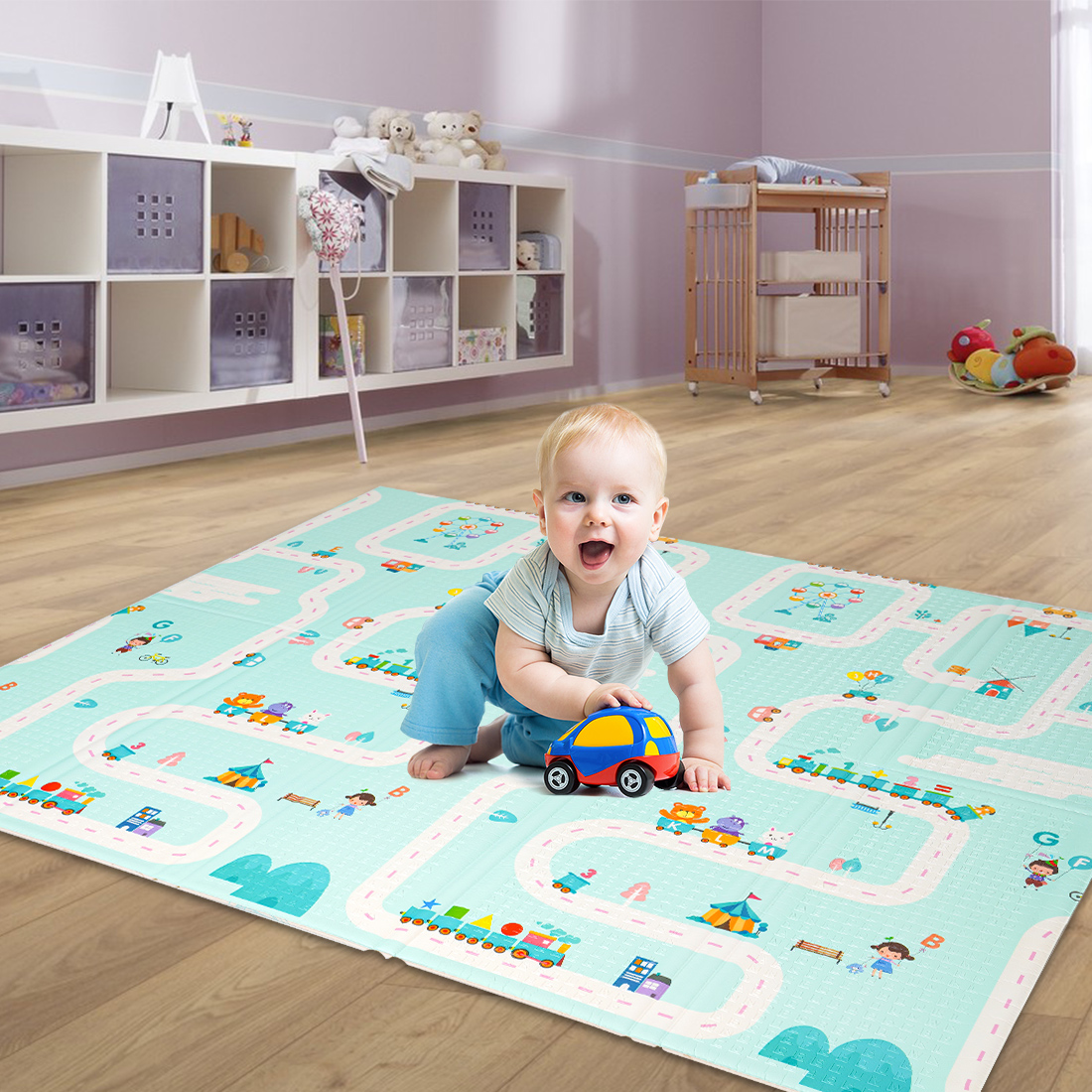
Understanding the deep science helps, but practical performance matters much more. Let us frame this performance around typical household realities. We must properly distinguish between simple surface spills and total submersion. XPE handles everyday baby messes beautifully. Urine, spilled breast milk, and knocked-over water glasses wipe up in mere seconds. The liquid stays exactly where it landed initially. However, these mats are definitely not pool floats. You should never submerge them entirely in bathtub water. Full submersion can slowly degrade the protective edge seals over time.
Next, consider the common hinge and texture factor. Most mats feature an embossed anti-slip texture across the top layer. This vital texture keeps your baby from sliding around dangerously during early crawling practice. Liquid can sometimes pool slightly inside these tiny embossed grooves. If you own a modern foldable mat, spills can also easily trickle down into the folding crevices. You just need to remain mindful during cleanup. Give those textured areas a slightly firmer wipe to remove all hidden moisture.
This directly brings us to a highly common design comparison. Shoppers frequently debate an xpe rolling play mat versus a foldable design. Objectively, both styles use the exact same waterproof foam material. Yet, they perform slightly differently during rapid cleanup. A seamless rolling mat offers one continuous, uninterrupted surface. You sweep a towel across it effortlessly without stopping. A foldable mat introduces necessary structural seams for easier storage. These seams require a more deliberate, targeted wipe-down when major juice spills occur. Choose the specific style matching your daily cleaning patience and available closet space.
Consistent daily maintenance successfully protects your investment. XPE makes cleaning incredibly easy, but you must use the correct approach. Let us thoroughly walk through the exact steps to keep your play area perfectly sanitary.
Follow this simple routine to handle daily messes efficiently:
Prepare your solution: Mix warm water and a few drops of mild, baby-safe soap in a small bowl.
Wipe the surface: Dip a soft microfiber cloth into the soapy water. Gently wipe away any fresh spills or sticky spots.
Rinse away residue: Use a separate clean cloth dampened only lightly to remove any lingering soap bubbles.
Dry thoroughly: Run a dry, highly absorbent towel over the entire area to remove all surface moisture.
Certain cleaning habits will permanently ruin the material. You must fiercely protect the outer film to guarantee longevity. Avoid the following dangerous items completely:
Bleach and harsh chemicals: Acidic or highly alkaline cleaners aggressively eat away the top protective layer.
Abrasive scrubbing pads: Steel wool or stiff bristle brushes will severely scratch the delicate surface, creating tiny pockets for bacteria.
Vacuum cleaner beater bars: Heavy motorized brush rolls can snag, aggressively stretch, or deeply tear the soft foam.
High-heat steam mops: Intense direct heat easily warps the closed-cell structure and compromises the carefully sealed outer edges.
Proper drying serves as a critical safety step. Because the foam has a complete zero absorption rate, spilled water has nowhere to go. If you leave it wet, the surface becomes dangerously slick. Babies learning to walk can easily slip and fall. Always air-dry the mat entirely before letting your child resume play. Alternatively, wipe it completely dry using a large absorbent towel.
Parents often feel completely overwhelmed by endless material acronyms. How does XPE effectively stack up against older nursery staples? We must evaluate the available options objectively.
EVA foam puzzle mats dominated playrooms for many years. They remain cheap and brightly colorful. However, XPE proves significantly safer and much more durable overall. EVA puzzle pieces have dozens of vulnerable interlocking seams. Accidental spills leak directly through these wide cracks onto your expensive hardwood floors. Furthermore, cheap EVA often off-gasses a highly distinct chemical smell. XPE offers superior liquid resistance in a single, seamless piece. You smartly avoid the chemical odors and the frustrating under-mat floor cleanups entirely.
TPU (Thermoplastic Polyurethane) represents another premium waterproof option. We must provide a fully balanced claim here. TPU generally offers slightly better scratch resistance than standard XPE. It feels heavier and more akin to luxury memory foam. However, XPE provides a much thicker, more deeply cushioned landing pad. Babies taking inevitable tumbles benefit greatly from this extra shock absorption. Additionally, XPE achieves this superior protective thickness at a much more accessible price point for most young families.
PVC mats offer extreme durability and heavy weight. Unfortunately, serious safety remains a major concern with older PVC products. Manufacturers historically used dangerous phthalates and toxic plasticizers to make rigid PVC soft and flexible. These chemical additives can slowly leach out over extended time. XPE entirely avoids these toxic plasticizers. It smartly achieves its soft, flexible nature safely through cross-linking. You get excellent waterproofing without ever sacrificing your peace of mind.
Material Type | Waterproof Level | Seam Vulnerability | Cushioning | Safety Profile |
|---|---|---|---|---|
XPE Foam | Excellent | Low (Seamless or Folded) | High (Very thick) | Non-toxic, no chemical coatings |
EVA Foam | Moderate | High (Interlocking puzzle pieces) | Moderate | Often off-gasses odors |
TPU | Excellent | Low | Moderate (Denser) | Generally safe, premium price |
PVC | Excellent | Low | Moderate to High | Risk of phthalates/plasticizers |
Knowing the basic material is excellent. Buying the right specific product requires a bit more diligence. Use these practical criteria when evaluating your next big purchase.
First, always prioritize verified material certification. Never simply take a brand's marketing word on safety. You must look for rigorous independent safety testing. Reputable manufacturers proudly display CPC (Children's Product Certificate), ASTM, or strict EN71 certifications. These documents prove the material actually underwent rigorous laboratory testing. They confirm the foam remains entirely free of dangerous heavy metals, BPA, and harmful phthalates.
Next, carefully evaluate the product thickness and density. Most standard options range from 0.4 to 0.8 inches thick. Your underlying floor should heavily dictate your final choice. If you have plush living room carpet, a thinner 0.4-inch mat provides ample walking stability. If you place it directly over cold, unforgiving hardwood or tile floors, upgrade immediately. A thicker 0.8-inch mat protects fragile knees and elbows much better. High-density foam also bounces back quickly, actively preventing permanent dents from heavy baby gates or light furniture.
Finally, closely inspect the outer edge sealing. This small detail heavily impacts overall longevity. Instruct yourself to look closely at the zoomed-in product photos. You want mats featuring high-quality, heat-pressed edge sealing. Poorly finished edges eventually fray open. Frayed edges constantly allow spilled juice or bath water to seep directly into the foam sides. Heat-pressed borders lock moisture out completely. They ensure your expensive play area survives years of daily toddler use.
Let us summarize our final verdict clearly. An XPE baby mat stands out as a highly reliable, completely waterproof, and non-toxic nursery solution. It easily repels daily spills and aggressively blocks harmful moisture absorption. For decision-stage buyers prioritizing simple cleanup and uncompromised safety, it remains an exceptional household investment. You happily avoid toxic chemical coatings while gaining a deeply cushioned, hygienic play space.
Your next step is quite simple and highly practical. Grab a tape measure and assess your available open floor space. Think carefully about your daily parenting habits. Do you prefer leaving the mat out permanently? A seamless rolling mat provides continuous, uninterrupted protection. Do you desperately need to pack it away when adult guests arrive? A portable foldable design fits neatly into narrow hallway closets. Weigh your exact storage needs carefully, check for trusted safety certifications, and confidently upgrade your baby's play environment today.
A: No, the mat itself will not grow mold because its closed-cell structure physically cannot absorb moisture. However, if a spill sneaks over the edge, water can become trapped underneath the mat. When moisture sits unattended on a hardwood floor, mold can rapidly grow on the floorboards. Routine lifting, wiping, and airing of the underside are highly recommended.
A: Yes, the inherently waterproof nature makes it wonderfully suitable for damp grass or patio picnics. Moisture will not soak upward into your baby's clothes. Be cautious, though. Prolonged exposure to direct UV sunlight can degrade the top film. Sharp rocks or hidden twigs can also puncture the foam permanently.
A: The urine will not soak into the core, making surface cleanup fast and easy. You will not deal with lingering odors in the foam. However, buyers should stay aware of their pets. Sharp pet claws can easily puncture the sealed surface. A compromised surface could allow future liquids to penetrate the damaged area.