
Views: 0 Author: Site Editor Publish Time: 2026-07-17 Origin: Site


Baby play mats are high-traffic zones for drool, spit-up, and diaper blowouts. Parents constantly battle invisible germs hiding beneath cute cartoon prints. You need a sterile surface to keep your infant safe during daily tummy time.
However, aggressively sanitizing an XPE mat creates an entirely new hazard. Standard household chemicals often degrade the delicate foam material. Heavy solvents break down the structural integrity and expose tiny lungs to toxic residues. Cross-linked Polyethylene (XPE) requires very specific handling. Its closed-cell structure makes it waterproof, but it reacts poorly to abrasives, extreme heat, and harsh disinfectants.
We designed this guide to provide a tested, baby-safe cleaning framework. You will discover how to eliminate harmful bacteria without destroying your mat's anti-slip texture or cushioning. We cover daily wiping protocols, natural disinfection methods, and the exact maintenance mistakes you must avoid to keep your play area safe.
Chemical Sensitivity: Alcohol, bleach, and essential oils break down XPE foam structure and strip protective films; stick to mild, pH-neutral solutions.
Moisture Management: While XPE is waterproof, prolonged soaking or trapped moisture under the mat can breed mold.
Natural Disinfection: A 1:1 ratio of distilled white vinegar and water is the safest, most effective broad-spectrum cleaner for daily use.
Temperature Limits: Never use steam mops or hot water extraction; heat warps and permanently shrinks XPE material.
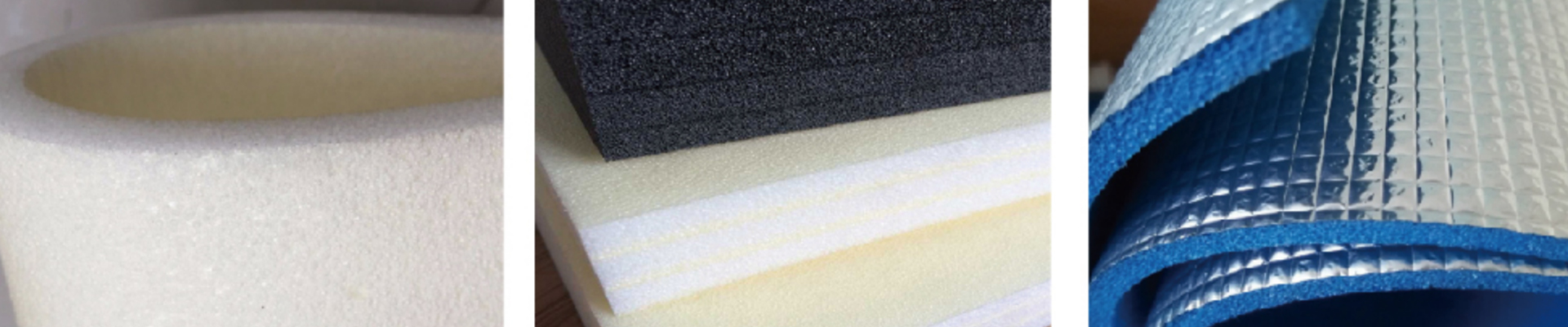
You must understand the material reality of XPE to clean it properly. Manufacturers create Cross-linked Polyethylene by linking polymer chains together. This process forms a closed-cell construction. The foam consists of millions of tiny, sealed bubbles. It repels liquids naturally. Spills cannot penetrate the core unless the surface tears. This means surface-level wiping remains highly effective if you do it promptly.
Parents often struggle with the evaluation criteria of safety versus efficacy. You face a direct trade-off between aggressive sanitation and material longevity. Hospital-grade disinfectants certainly kill germs. However, they also destroy the mat's structural integrity. Heavy chemical sprays leave behind Volatile Organic Compounds (VOCs). Babies inhale or ingest these invisible gases as they crawl.
The degradation risk is severe when you use the wrong products. Harsh chemicals like bleach or heavy-duty degreasers attack the foam. They dry out the essential plasticizers inside the material. Your mat will eventually suffer from cracking and flaking. The foam loses its impact absorption over time. A hardened mat no longer protects your infant from accidental falls.
Cleaner Category | Effect on XPE Material | Safety for Infants |
|---|---|---|
Bleach & Ammonia | Strips protective film, causes cracking | High risk of VOC off-gassing |
Alcohol-Based Wipes | Dissolves printed top layers over time | Moderate risk of skin irritation |
Essential Oil Sprays | Solvents melt the closed-cell foam | Potential allergen exposure |
Mild Plant-Based Soap | Preserves texture and color safely | 100% safe once dried |
Your primary goal involves removing daily dust, pet dander, and dried drool. You must accomplish this with zero material degradation. A xpe baby mat requires a gentle touch to maintain its vibrant printed film.
The recommended solution is incredibly simple. Mix warm water with just one or two drops of mild, plant-based dish soap. Avoid using hot water. High temperatures soften the protective top layer unnecessarily. Plant-based soaps lack the heavy degreasers found in industrial formulas. They gently lift dirt without stripping the plasticizers.
Follow these implementation steps for optimal daily maintenance:
Select the right tool: Use a non-abrasive microfiber cloth. Paper towels or rough sponges create micro-scratches on the printed film. Dirt eventually gets trapped inside these tiny scratches.
Apply the correct motion: Wipe in sweeping motions. Follow the raised textured pattern of the mat. This mechanical action dislodges dirt trapped in the anti-slip grooves.
Rinse thoroughly: Use a second cloth dampened only with plain water. Wipe away any remaining soap residue. Soap buildup attracts more dirt over time.
Execute the crucial step: Immediately dry the surface with a separate clean towel. Allowing water to air-dry naturally leaves mineral residues behind. Standing water also creates a dangerous slipping hazard for crawling babies.
Bodily fluid spills present a unique business problem for parents. You must safely neutralize bacteria and odors after a diaper blowout or spit-up incident. Resorting to bleach seems logical, but it ruins the foam. You need a powerful alternative.
The vinegar protocol provides the perfect solution. Outline a 1:1 mixture of water and standard white vinegar in a spray bottle. Keep this bottle near your play area. Vinegar contains natural acetic acid. This weak acid effectively alters the pH level of the surface. It destroys the cell walls of most common household pathogens.
We value transparency regarding disinfection. Vinegar is not a registered hospital-grade sterilizer. It will not kill every extreme virus. However, its primary benefit outweighs this limitation. Vinegar is 100% food-safe once dried. You never have to worry about your baby licking the mat after a vinegar wipe-down.
Odor neutralization requires a different approach. Lingering smells from urine or vomit sink into the textured grooves. Do not use chemical air fresheners. Instead, sprinkle a light layer of baking soda directly over the smelly area. Let the powder sit undisturbed for 15 minutes. Baking soda physically absorbs off-gassing odor molecules. Wipe the powder away using your damp vinegar cloth. The mild fizzing reaction helps lift any remaining grime.
Your play area will inevitably encounter high-pigment stains. Crushed berries, washable markers, and sweet potato purees leave glaring marks. You must address these stains without scrubbing away the mat's color layer. Standard solution approaches often involve heavy friction. You must avoid this impulse.
The paste method works beautifully for stubborn organic stains. Mix two tablespoons of baking soda with a few drops of warm water. Stir them until they form a thick, spreadable paste. Apply this paste directly onto the stain. Leave it to rest for 5 to 10 minutes. The baking soda gently lifts the pigment away from the waterproof film.
Pay strict attention to friction warnings during removal. Use a soft-bristled infant toothbrush or a gentle silicone scrubber. Work the paste in light circles. Never use scouring pads, steel wool, or stiff nylon brushes. Hard bristles will permanently sheer the textured surface. Once you destroy the anti-slip texture, that section of the mat becomes permanently slick and unsafe.
Parents often ruin perfectly good foam mats through innocent mistakes. These implementation risks and rollout lessons come from real-world failures. Avoid these four common destruction methods at all costs.
Steam Mops: Many parents love steam cleaning their hard floors. Never let a steam mop touch your XPE foam. The localized high heat instantly melts the top film. The extreme temperature warps the inner core and permanently shrinks the foam layers. Your mat will curl at the edges and never sit flat again.
Washing Machines: You might feel tempted to fold the mat and toss it into a large washing machine. Do not attempt this. Even on a delicate cycle, the mechanical agitation tears the closed-cell foam apart. The spinning action causes the waterproof outer layers to delaminate and separate from the inner core.
Direct UV Exposure: Air-drying a freshly cleaned mat outside seems highly natural. Unfortunately, prolonged direct sunlight damages synthetic polymers. UV rays cause the XPE material to become brittle over time. Sunlight also drastically accelerates color fading, turning bright cartoon prints into dull, yellowed shadows. Dry your mat indoors.
Heavy Chemical Wipes: Convenience often drives parents to use standard antibacterial wipes like Clorox or Lysol. Avoid these completely. The high alcohol content in these wipes acts as a chemical solvent. It slowly eats away the mat’s protective coating. You will eventually notice a sticky, degraded patch where you wiped too frequently.
You must regularly audit the health of your play surface. Evaluate its condition across multiple dimensions. Cleaning only works if the structural integrity remains intact. Sometimes, no amount of vinegar can save a compromised product.
Watch for signs of irreversible wear. Look closely for deep punctures. Pet claws, sharp toys, or dropped furniture easily breach the closed-cell layer. Once the top film is punctured, the waterproof guarantee disappears. Moisture from spills or floor washing gets trapped deep inside the foam core. Once water enters the core, mold growth becomes completely unavoidable. You cannot clean mold from inside sealed foam.
Examine the edges for peeling top-film. Babies love to pick at loose edges. A peeling layer presents a severe choking hazard. You cannot glue it back down safely, as industrial adhesives emit dangerous fumes.
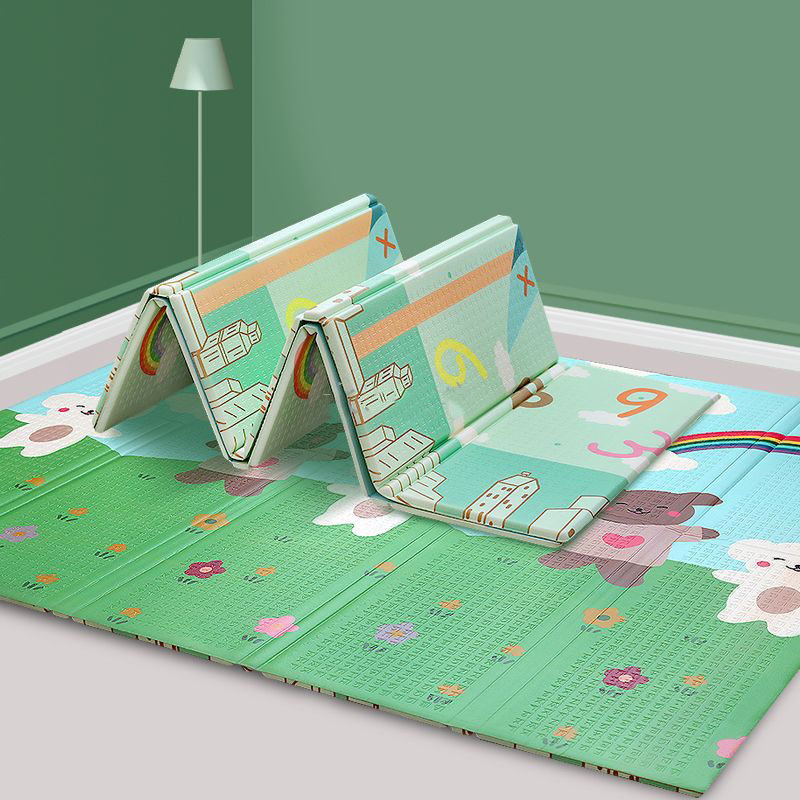
Take decisive next-step actions if you spot these issues. If the mat is compromised beyond safe cleaning, consider immediate replacement. We recommend evaluating an easily storable xpe rolling play mat. Rolling designs allow for quick deployment. They also offer much easier segmented cleaning compared to complex puzzle-piece variants. Puzzle mats trap liquid between dozens of interlocking seams. A rolling format eliminates those frustrating spill-traps entirely.
Effective cleaning relies entirely on gentle frequency rather than harsh intervention. You ensure a sanitary environment by consistently removing daily grime with mild solutions. Avoid the temptation to execute infrequent, chemical-heavy deep cleans. Standard detergents and extreme heat do more harm than good to closed-cell structures.
Preserving your mat’s structural integrity is just as important as sanitizing it. A physically degraded mat poses tripping hazards and off-gassing risks. Stick strictly to microfiber cloths, mild plant-based soap, and simple white vinegar. Following this straightforward framework maximizes the product’s lifespan while ensuring complete infant safety during playtime.
A: Yes, you can use baby wipes for quick spot checks. Ensure they are purely water-based and completely alcohol-free. However, frequent use may leave a slight, sticky residue over time due to the mild lotions in the wipes. You should follow up with a standard soap-and-water wipe weekly to remove any buildup.
A: You must roll or fold the mat away completely. Clean your hard floor using your standard floor cleaner. Most importantly, allow the hard floor to dry fully before replacing the mat. Placing foam over damp flooring traps moisture. This leads to hidden mold growth and severe hardwood discoloration.
A: No. Many essential oils contain highly concentrated natural solvents. For example, citrus oils contain limonene. These compounds easily degrade synthetic foams. They will slowly melt the XPE surface and aggressively strip away the printed cartoon designs. Stick to vinegar for safe odor control.