
Views: 0 Author: Site Editor Publish Time: 2026-07-22 Origin: Site


Parents often hit a wall of decision fatigue when researching nursery gear. The sentiment “searching for a play mat is driving me crazy” dominates online parenting forums today. It makes perfect sense. You want a safe, stylish surface for your home. However, you also face an overwhelming sea of conflicting product claims. Most early research focuses solely on tummy time. We need to shift our focus. The high-impact mobility stages—crawling, pulling up, and taking first steps—demand much more from your flooring. A newborn simply lies down. A toddler falls hard. This article evaluates the xpe baby mat objectively. We will examine it through two critical lenses: biomechanical support for infant motor development and uncompromising material safety. You will learn exactly what developing joints require and how to choose a surface supporting those crucial early milestones.
Biomechanical Support: XPE foam provides the necessary firm-yet-cushioned resistance babies require for joint stability during crawling and walking.
Material Safety: High-quality XPE is non-toxic, hypoallergenic, and free from PVC, BPA, and phthalates, making it a safer alternative to traditional EVA foam.
Practicality: An xpe rolling play mat offers superior durability and seamless, trip-free edges compared to interlocking puzzle tiles.
Limitation: While highly shock-absorbent, XPE is susceptible to punctures from sharp objects or heavy pet claws.
Infants do not just need a soft place to play. They require a dynamic surface engineered for motor skill acquisition. Pediatricians and osteopathic experts study how infants interact with their environment. They emphasize how floor density directly impacts muscle memory and joint alignment. We can break this down into three core biomechanical requirements.
Developing joints need a specific type of feedback from the floor. We call this the "Goldilocks" firmness. If a play mat is too soft, it acts like quicksand. Ultra-plush memory foam absorbs all the kinetic energy a baby generates. When they try to push up on their hands and knees, the floor simply sinks. They cannot establish a stable foundation. This lack of push-off resistance often delays crawling milestones.
Conversely, hard floors present the opposite problem. Hardwood or tile offers excellent push-off resistance. However, these surfaces cause immediate bruising. When a baby experiences pain from a minor fall, they develop a reluctance to try again. The ideal surface offers a firm foundation for pushing, while yielding just enough to prevent injury. Babies thrive when they feel secure and supported.
Crawling requires a delicate balance between grip and glide. You must understand the difference between necessary traction and excessive friction. Traction keeps a baby’s knees and feet anchored. Without adequate traction, their limbs slide outward into a frog-leg position. This sliding strains developing hip joints. It also frustrates the infant, halting their forward momentum.
However, excessive friction creates a different hazard. Delicate infant skin drags across the surface during early army-crawling phases. Heavy friction causes painful rug burns. A properly engineered play surface provides just enough micro-texture to prevent slipping. It must remain smooth enough to allow comfortable gliding across the floor.
Toddlers fall constantly. Early walking involves sudden, localized downward forces. A falling toddler’s head or knees strike the floor with surprising speed. The play surface must absorb this concentrated energy instantly. Poor-quality foam bottoms out. This means the foam compresses entirely, transferring the impact directly into the hard floor beneath. Effective impact dispersal requires a material spreading the force outward rather than downward.
We must evaluate specific materials against these biomechanical demands. Cross-Linked Polyethylene (XPE) foam has emerged as a leading material in infant care. It addresses the exact physical challenges infants face during mobility stages. We can analyze its performance across three critical metrics.
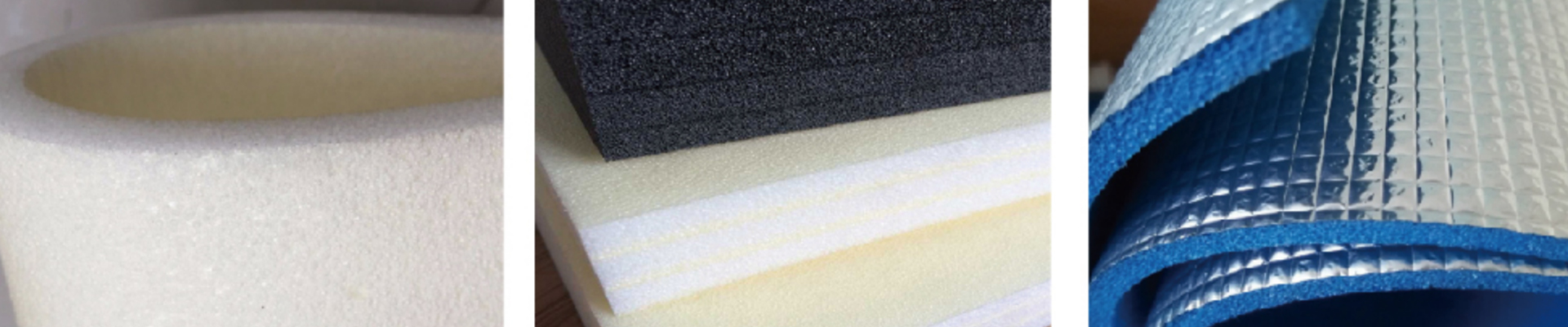
XPE utilizes a highly advanced closed-cell structure. Picture millions of microscopic, sealed air bubbles trapped within the foam. When a toddler falls, these trapped bubbles compress slightly. They distribute the impact laterally across the mat. This closed-cell design prevents the foam from bottoming out.
More importantly, XPE exhibits excellent structural memory. It cushions the initial fall beautifully. Then, it instantly returns to its original shape. This rapid rebound provides a firm, stable foundation for the child’s very next step. They do not have to struggle out of a temporary dent in the foam.
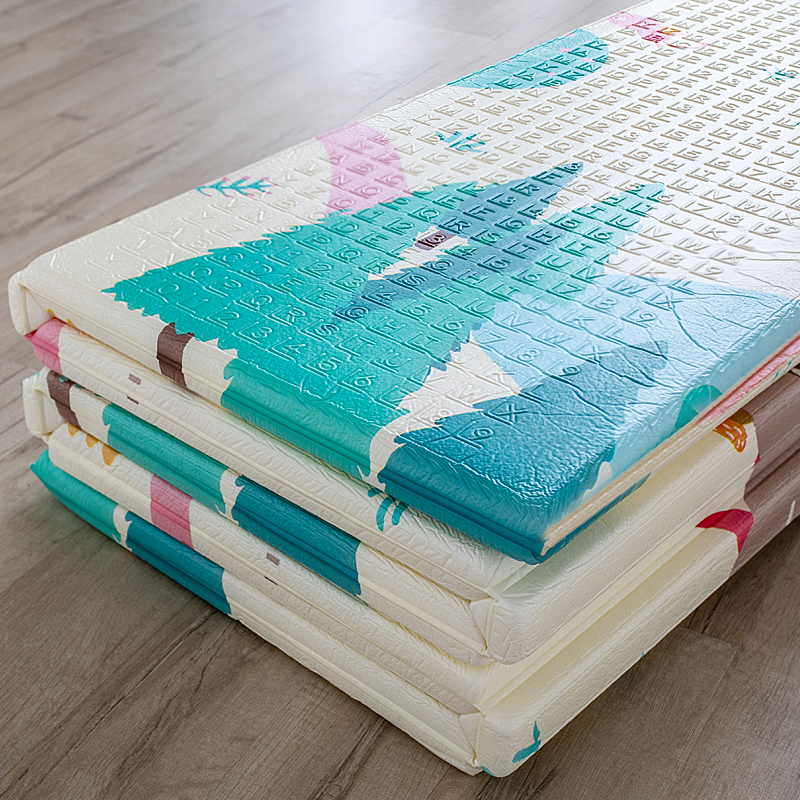
If you examine a high-quality mat closely, you will notice distinct micro-textures. Manufacturers typically stamp tiny geometric shapes or raised letters into the surface. Many parents view these textures merely as design elements. In reality, they serve a crucial functional purpose.
These raised patterns create optimal crawling traction. They give tiny toes and knees something to grip. This texture prevents the dreaded outward slip of the hips. Yet, the material remains inherently smooth to the touch, entirely eliminating the risk of friction burns.
Floor exploration requires comfort. Cold, hard surfaces actively discourage babies from spending time on the floor. Tile and hardwood floors pull body heat away from a small infant rapidly. XPE functions as an exceptional thermal insulator.
The closed-cell structure blocks cold air from rising through the floorboards. It maintains a neutral, comfortable temperature on the surface. This practical benefit encourages longer, uninterrupted play sessions. When babies feel warm and comfortable, they explore their environment more actively.
Material safety causes massive anxiety for modern parents. Babies spend hours face-down on these mats. They lick them, chew on them, and breathe directly against them. We must look beyond vague marketing claims. We need to examine the actual chemical composition of the flooring.
What exactly is XPE? It stands for Cross-Linked Polyethylene. Polyethylene is a widely used, safe plastic found in food packaging. The term "cross-linked" refers to the manufacturing process. Scientists create chemical bonds bridging the polymer chains together.
This cross-linking matters immensely for stability. It locks the molecular structure in place. Because the structure is so stable, the foam does not break down easily. It resists releasing volatile organic compounds (VOCs) into your home’s air. This inherent stability makes XPE exceptionally safe for indoor nurseries.
Many flexible plastics require dangerous chemical additives. Legitimate XPE mats do not. We can verify this by checking for known contaminants.
No Plasticizers: PVC (polyvinyl chloride) is naturally rigid. Manufacturers must add phthalates to make PVC soft enough for play mats. Phthalates act as endocrine disruptors. XPE is naturally flexible and requires zero phthalates.
No Formamide: Traditional EVA foam (commonly used in cheap puzzle mats) often relies on formamide as a blowing agent. Formamide off-gasses over time, releasing a strong chemical odor. High-quality XPE manufacturing avoids formamide entirely.
BPA Free: XPE does not contain Bisphenol A, ensuring no hormonal interference.
Do not simply trust a box labeled "non-toxic." You must look for independent, third-party testing markers. Reputable brands submit their products to rigorous laboratory environments. Look for certifications proving the mat passes strict European (EN71) or American (CPSIA) safety standards. Verify they have undergone specific heavy metal testing. Ensure they meet stringent VOC emissions standards. Transparency is non-negotiable when dealing with infant health.
Parents generally choose between three main foam types. You will encounter XPE, EVA (Ethylene-Vinyl Acetate), and PU (Polyurethane). Each material behaves differently in a home environment. We must compare them directly to determine the best option for active toddlers.
Material Performance Comparison Table
Feature | XPE (Cross-Linked Polyethylene) | EVA (Puzzle Tiles) | PU (Polyurethane Memory Foam) |
|---|---|---|---|
Shock Absorption | Excellent (firm rebound) | Moderate (can bottom out) | High (but sinks deeply) |
Safety Profile | High (No formamide, no PVC) | Variable (Formamide risks) | High (Usually non-toxic PU) |
Maintenance | Wipes clean easily, waterproof | Traps dirt in puzzle seams | Often requires washing fabric covers |
Weight & Portability | Lightweight, easy to roll | Lightweight but tedious to move | Heavy, difficult to relocate |
Historically, EVA puzzle mats dominated the market. However, they present two significant flaws. First, safety remains a concern due to formamide off-gassing risks in cheaper EVA variants. Second, interlocking tiles fail functionally. Active toddlers constantly pull the pieces apart. The puzzle seams trap crumbs, pet hair, and spilled milk. Furthermore, lifting edges create dangerous trip hazards for a baby just learning to walk. XPE eliminates these issues entirely with a seamless surface.
PU mats often look like expensive living room rugs. They offer premium aesthetics. However, PU comes with practical drawbacks. Polyurethane is incredibly heavy. You will struggle to roll it up for cleaning. PU mats often require an outer fabric cover, which absorbs spills and requires machine washing. In contrast, XPE is inherently waterproof. It needs no fabric cover. It is lightweight, making daily cleaning and room transitions effortless.
When you weigh safety, ease of maintenance, and biomechanical support, XPE wins out. It represents the optimal intersection of firm impact resistance and daily practicality. It supports the child’s physical development while protecting the parents' sanity regarding cleanup.
Not all XPE products are created equal. You must select specific dimensions and formats to maximize the benefits. Follow these actionable guidelines to make an informed purchase.
Thickness dictates shock absorption capacity. A mat that is too thin will not protect against hard falls. A mat that is too thick becomes a tripping hazard at the edges.
Biomechanical Support Score Chart
Thickness Level | Primary Stage | Impact Protection Score | Push-off Resistance Score |
|---|---|---|---|
0.4 inch (1.0 cm) | Tummy Time / Early Crawling | Adequate | Excellent |
0.6 inch (1.5 cm) | Pulling Up / First Steps | Excellent | Very Good |
0.8+ inch (2.0+ cm) | Active Toddler Gymnastics | Maximum | Good (Edges may trip infants) |
We recommend specific dimensions based on your child's stage. For basic crawling and tummy time, a 0.4-inch (1cm) thickness provides sufficient comfort. However, if your child is beginning to pull up, upgrade immediately. You need at least 0.6 inches (1.5cm) to cushion the frequent, heavier falls associated with early walking.
You generally have two format choices: folding or rolling. We strongly advocate for the xpe rolling play mat. Folding mats feature deep creases where the panels connect. Active toddlers easily trip over these folding lines. Furthermore, dirt and liquids settle deep into those crevices, making sanitization difficult. A rolling mat provides one continuous, seamless safe zone. It offers superior durability and eliminates tripping hazards.
You no longer have to sacrifice your living room decor for baby safety. In the past, play mats featured blinding primary colors and chaotic alphabet prints. Today, high-quality XPE mats feature reversible designs. One side might display a subtle, neutral geometric pattern blending into modern home design. The other side might offer a muted, playful scene. This satisfies adult aesthetic preferences without compromising the functional needs of the developing infant.
We must transparently address the limitations of XPE. Its highly responsive, closed-cell nature makes it vulnerable to focused pressure points. Follow these implementation rules:
Avoid Heavy Furniture: Do not place heavy coffee tables or sharp chair legs directly on the mat. Concentrated weight will permanently dent and eventually puncture the foam structure.
Manage Pet Access: Unclipped dog or cat claws can easily puncture the material. If you have active pets, you must train them to stay off the mat or ensure their nails are consistently filed down.
Keep Sharp Objects Away: High heels, sharp toys, and dropped utensils can pierce the protective waterproof outer layer.
An intelligently designed play space transforms how your infant navigates their environment. We have established that an xpe baby mat effectively solves the dual problem of impact protection and developmental support. It provides the essential "Goldilocks" firmness required for crawling. It ensures chemical safety by eliminating formamide and phthalates entirely. Your next steps are simple. Measure your designated play area carefully. Prioritize finding a seamless rolling mat with a minimum thickness of 1.5cm. Always verify the manufacturer provides independent safety testing certifications. By doing so, you create a secure, supportive foundation for your child's most exciting mobility milestones.
A: No. While XPE feels firmer than a mattress, this firmness is intentional and entirely safe. Newborns require a firm surface for tummy time to build neck and shoulder strength safely. The mat yields enough to be comfortable while preventing the suffocation risks associated with plush, sinking memory foams.
A: You only need mild soap, warm water, and a soft cloth. Because XPE utilizes a closed-cell structure, it is inherently waterproof. Liquids and bodily fluids cannot penetrate the surface. Simply wipe the mess away and sanitize with a baby-safe surface cleaner. Never put it in a washing machine.
A: Newly unboxed rolling mats often exhibit slight curling at the edges due to packaging memory. This is temporary. You can easily fix it by reverse-rolling the curled edges tightly for a few minutes. Alternatively, lay flat heavy books on the corners overnight. It will settle perfectly flat, eliminating trip hazards.