
Views: 0 Author: Site Editor Publish Time: 2026-07-20 Origin: Site


You have already narrowed down your material choice. You decided on an XPE foam surface. This material offers incredible non-toxic, lightweight, and shock-absorbing properties. Now, you face the final structural decision. Should you buy a foldable or roll-up version?
Both formats share identical material safety baselines. However, their distinct engineering heavily impacts your daily routines. They change how you handle cleaning. Storage space requirements differ drastically. Playroom aesthetics also shift based on your choice.
We designed this guide to help you decide. We provide an objective, lifestyle-based evaluation framework. You will learn how to choose the exact mat configuration. It must fit your home’s footprint perfectly. It also needs to support your family’s daily chaos. Read on to find your perfect match.
Material parity: Both foldable and roll-up formats offer identical non-toxic (PVC-free, BPA-free) and waterproof baselines.
Foldable mats prioritize high portability and compact storage but require more effort to clean due to their folding seams.
An XPE rolling play mat offers a seamless, rug-like aesthetic and effortless wipe-downs, but demands more physical storage space and may suffer from temporary edge-curling.
Decision driver: Your choice ultimately hinges on whether the mat will be a permanent fixture (roll-up) or a temporary, pull-out play space (foldable).
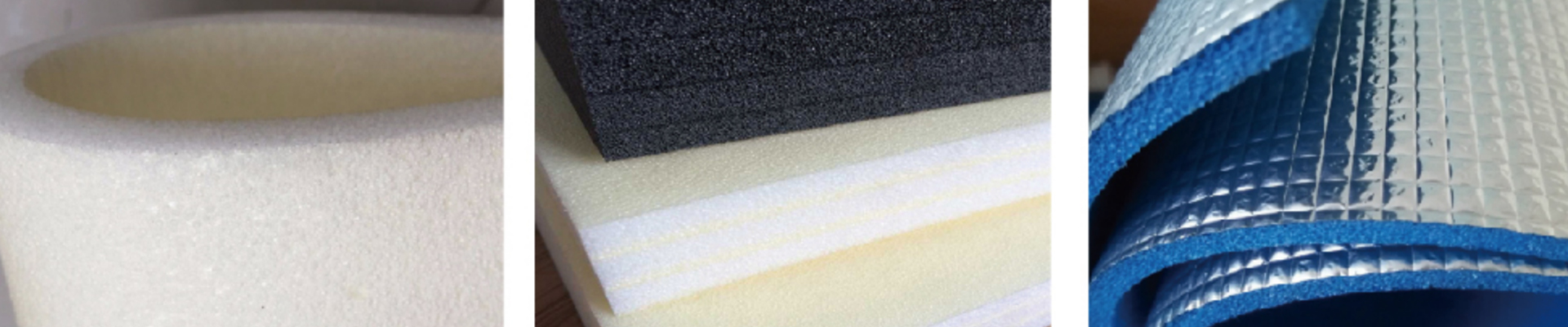
Start by validating your material choice. Cross-linked Polyethylene (XPE) represents the current industry standard for foam safety. Manufacturers create it through a specialized physical cross-linking process. This unique process yields a closed-cell foam structure. It remains highly hypoallergenic. Parents appreciate the strict absence of harmful chemicals. You will not find toxic phthalates, formamide, or PVC here. Global safety frameworks often validate these claims.
Beyond chemical safety, performance metrics matter deeply. These surfaces deliver high-density cushioning. They absorb severe impacts from sudden toddler falls. They also provide excellent thermal insulation. You can confidently place them over cold basement tiles. Hardwood floors feel significantly warmer. The closed-cell surface also repels spills instantly. Moisture cannot penetrate the inner foam layers.
The true divide lies in manufacturing mechanics. Factories produce continuous formats through large-scale extrusion. They form one long, seamless sheet. Foldable versions use a completely different method. Machines segment the foam blocks. They apply intense hinged heat-pressing. This action creates built-in fold lines. Your daily parenting experience hinges entirely on this structural difference.
Let us evaluate the foldable design objectively. It relies entirely on an accordion-style folding mechanism. Heat-pressed grooves connect individual foam panels. This creates mechanical hinges.
Implementation Advantages (Pros):
Spatial flexibility: This design collapses into a highly compact rectangle. You can slide it under a crib easily. It fits neatly behind bedroom doors. It also travels exceptionally well in standard vehicle trunks.
Modular sizing: You rarely have to unfold the entire surface. You can partially fold it. This creates a smaller footprint for tight spaces. You can also fold one section up against a wall. This forms a protective bumper cushion for active babies.
Daily Realities & Risks (Cons):
The crumb trap: Dirt inevitably finds the deep crevices. Pet hair and liquid spills settle directly into the fold lines. You must scrub these grooves deliberately. Simple wiping often leaves sticky residue behind.
Durability at the hinges: The material at the fold lines remains intentionally thin. Heavy daily use stresses these specific joints. Over time, tearing mostly occurs right at these heat-pressed hinges. Constant folding accelerates this mechanical fatigue.
Best Fit For:
Grandparents' homes benefit greatly from this style. Frequent travelers also appreciate the extreme portability. It suits apartment dwellers perfectly. If you must reclaim your living room space daily, choose this format.
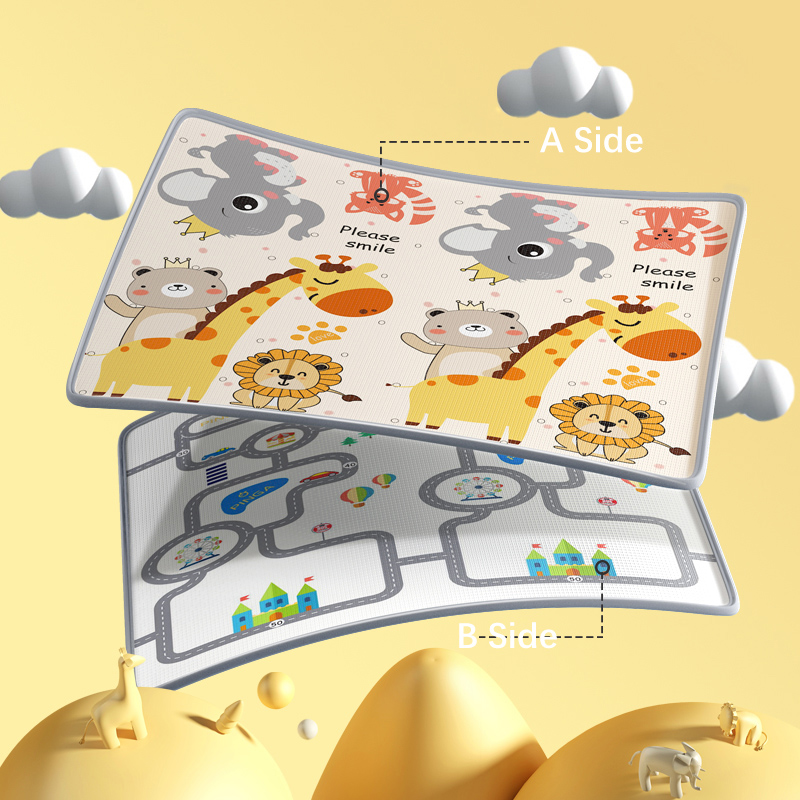
This alternative format uses a single, continuous sheet of extruded foam. You store it strictly as a large cylinder. A dedicated xpe rolling play mat provides a vastly different user experience.
Implementation Advantages (Pros):
Hygienic and seamless: It features absolutely zero crevices. Messes cannot hide anywhere. Spilled milk wipes up instantly. A single pass of a damp microfiber cloth cleans the whole area perfectly.
Aesthetic integration: This design effectively mimics traditional area rugs. It offers a smooth, uninterrupted surface. Shared living spaces retain a mature appearance. It looks far less utilitarian than segmented designs.
Daily Realities & Risks (Cons):
Storage footprint: Rolled storage requires significant vertical space. It creates a bulky, stubborn cylinder. This roll often stands four to six feet tall. Hiding it in a small home closet proves awkward.
Memory curling: Foam retains physical memory from being tightly rolled. The outer edges may curl upward when you first unroll it. This creates a temporary tripping hazard. You must wait patiently for the foam to relax.
Best Fit For:
Dedicated playrooms accommodate this style perfectly. Permanent living room setups also thrive here. Parents prioritizing seamless cleaning love this format. It provides a true fusion of aesthetic style and raw functionality.
Use this strict, criteria-based evaluation lens. It will confidently drive your final choice.
Assess your personal tolerance for daily maintenance. Do you host messy eaters? Does your toddler engage in heavy sensory play? The seamless roll-up wins easily here. Pureed food and paint wipe clean in seconds. Foldable designs demand detailed cleaning routines. You must vacuum every single groove carefully. Dried spills require precise scrubbing.
Measure your available closet space right now. Look at your empty room corners. Can you accommodate a tall, wide cylinder? If vertical space lacks, you need flat storage. Foldable versions stack easily on standard closet shelves. They slide under sofas effortlessly.
Neither format is entirely puncture-proof against sharp animal claws. However, continuous rolling mats handle pet traffic much better. Foldable versions have inherently weaker hinge points. Curious pets often dig directly at these seams. This localized scratching accelerates wear and tear rapidly.
Consider your long-term interior decor plans. Does the surface need to blend into adult spaces? Continuous formats usually feature highly mature designs. They offer elegant, double-sided patterns without distracting grid lines. Foldable versions always display their structural grid aggressively.
Evaluation Criterion | Foldable Design | Roll-Up Design |
|---|---|---|
Daily Cleanability | Low (Crumbs trap in deep hinges) | High (100% seamless wipe-downs) |
Storage Footprint | Compact (Fits under beds/sofas) | Bulky (Requires vertical closet space) |
Pet Durability | Moderate (Pets dig at weak seams) | Stronger (No weak structural points) |
Aesthetic Appeal | Utilitarian (Visible grid lines) | Premium (Mimics traditional rugs) |
Brands often omit certain post-purchase realities in their marketing. We want you fully prepared for unboxing day.
The "Off-Gassing" Reality
Trapped manufacturing odors upon unboxing remain completely normal. The material itself is genuinely non-toxic. However, sealed plastic packaging concentrates the factory smell. We highly recommend a strict 24 to 48-hour airing-out period. Place the item in a well-ventilated garage. A spare room with open windows works perfectly too.
Flattening a Roll-Up Mat
Curled edges frustrate many new buyers. You can fix this issue safely. Follow these exact steps:
Unroll the product completely on a clean, flat floor.
Identify the specific upward-curling edges.
Gently roll those target edges in the exact opposite direction.
Place flat, heavy books along the corners for 24 hours.
Do not apply sharp, sudden folds. You will permanently damage the internal foam structure.
Thickness Variations
Always verify exact thickness dimensions before buying. Most standard options range from 0.4 to 0.6 inches thick. Here is a crucial nuance to note. Foldable variations often feel marginally firmer underfoot. The grooved heat compression physically tightens the surrounding foam cells. For maximum impact comfort, a premium xpe baby mat ensures proper shock absorption for early, unsteady walkers.
Final Verdict Matrix:
Choose the foldable mat if your primary constraints involve limited storage space and high mobility needs.
Choose the continuous roll-up version if you have a dedicated space, hate cleaning crevices, and prioritize a premium interior look.
Next Steps:
Grab a tape measure right now. Measure your intended floor area carefully. Check your specific closet clearance for vertical storage limits. Finalize these exact measurements before clicking through to browse product selections online.
A: Yes, but you must use absolute caution. Only use hard-floor settings. Turn the motorized brush roll off entirely. Spinning bristles easily snag and tear the delicate foam cells. Gentle suction alone handles dry crumbs perfectly without damaging the waterproof surface.
A: Yes, they offer an ideal developmental surface. The dense foam provides crucial sensory firmness. This specific resistance helps infants develop necessary core motor skills. It also offers plenty of shock absorption to cushion sudden head drops safely.
A: No, reputable brands avoid chemical flame retardants entirely. Standard cross-linked foam achieves basic safety compliance naturally. You should always verify specific brand certifications before purchase. Look for explicit REACH or CPSIA compliance markers on the packaging.