
Views: 0 Author: Site Editor Publish Time: 2026-07-16 Origin: Site


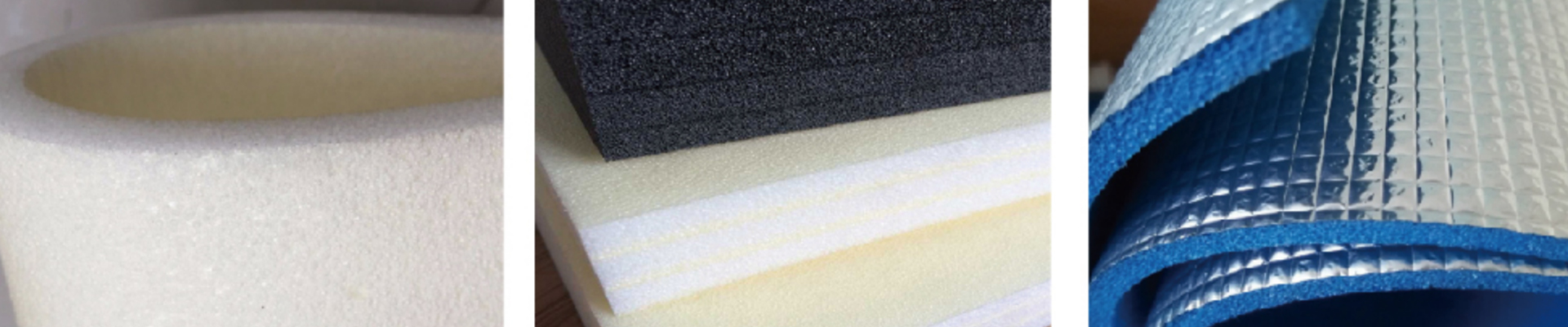
Selecting the right material for cushioning is a constant challenge for businesses and consumers. You must balance high-performance protection, strict safety compliance, and tight budgets. Making the wrong choice often leads to product damage or serious safety hazards. EPE (Expanded Polyethylene) foam provides a reliable solution to these challenges. It is a closed-cell, non-cross-linked material known for its lightweight durability. You will find it serving as a cornerstone in industrial packaging and consumer safety goods alike.
This straightforward evaluation guide will help you understand its capabilities in detail. We will explore how it aligns directly to your specific operational, protective, or compliance requirements. You will learn its structural advantages, ideal applications, and inherent limitations. Read on to determine if this material fits your next manufacturing or packaging project.
Cost-to-Performance: EPE foam delivers superior shock absorption at a lower price point and lighter weight than alternative foams.
Sustainability: Its non-cross-linked structure makes it 100% recyclable, supporting corporate ESG (Environmental, Social, and Governance) goals.
Safety & Compliance: Non-toxic, odorless, and moisture-resistant properties make it the industry standard for an epe foam play mat or food-grade packaging.
Material Limitations: While excellent for impact distribution, it is not suited for high-temperature applications or permanent heavy-load compression.
Manufacturers and logistics experts highly value epe foam because it solves multiple operational problems simultaneously. Understanding its physical properties reveals exactly why it dominates the protective materials market.
The closed-cell structure acts like millions of microscopic balloons. When an impact occurs, these tiny air-filled pockets compress. They absorb the kinetic energy and distribute it evenly across a wider surface area. The material then bounces back to its original shape. It handles repeated impacts exceptionally well during rough transit.
This structural resilience translates into highly measurable business outcomes. First, it significantly reduces return rates caused by shipping damage. Second, it minimizes dimensional weight costs. Because the material is highly efficient, you need less thickness to achieve the same drop-test ratings. Thinner packaging means smaller boxes and cheaper freight rates.
Polyethylene is inherently hydrophobic. The closed-cell extrusion process creates an impermeable barrier against liquids. Water cannot penetrate the cellular walls. Furthermore, it resists many common industrial chemicals, greases, and solvents.
This chemical and moisture resistance yields a massive business outcome. It prevents mold growth and chemical degradation during long transit times or warehouse storage. You will find this critical when shipping sensitive electronics. It also protects automotive parts from rusting in humid shipping containers.
Environmental compliance is no longer optional for major brands. Fortunately, this material is highly eco-friendly. Industry experts classify it as LDPE #4. Because it is non-cross-linked, its molecular bonds remain separate. Facilities can easily melt it down and reform it into new plastic products without toxic byproducts.
This reality offers a powerful business outcome. Companies can market their product packaging as 100% recyclable. You can confidently meet strict corporate ESG goals. Additionally, it drastically reduces waste disposal costs compared to difficult-to-recycle alternatives like polyurethane.
Trapped air is an excellent insulator. The dense cellular structure restricts heat transfer efficiently, resulting in very low thermal conductivity. It keeps cold items cold and protects sensitive goods from extreme external heat.
This characteristic delivers an important business outcome. It makes the material viable for cold-chain logistics, protecting pharmaceuticals and perishable foods. The construction industry also utilizes these thermal properties for underlayment and flooring insulation.
While versatile, this material truly shines in a few specific industries. We see it outperforming competitors across packaging, consumer goods, and industrial applications.
Industrial packaging requires precise shapes to cradle delicate items. You can easily fabricate, die-cut, and weld this material into highly specific configurations. It requires no expensive custom molding or heavy tooling.
Fragile Electronics: Anti-static additives prevent electrostatic discharge while protecting fragile screens.
Glassware and Ceramics: CNC routing creates precise cavities to stop friction and shattering.
Automotive Components: It suspends heavy, awkwardly shaped car parts inside corrugated boxes safely.
Safety is paramount when designing products for home use. Many brands choose this material for consumer flooring solutions. For example, introducing an epe foam mat into a gym or playroom provides excellent cushioning against hard falls. The material rebounds quickly and supports body weight comfortably.
Furthermore, it remains the preferred core material for an epe foam play mat designed for infants and toddlers. Parents demand safe products. This material is completely non-toxic and free of dangerous BPA and phthalates. It is inherently odorless. You can easily sanitize the waterproof surface after spills. Most importantly, it provides critical drop-impact protection for children learning to walk.
Builders and mechanics utilize this material beyond mere packaging. They rely on it for permanent structural integration.
Vibration Dampening: It isolates mechanical vibrations in HVAC systems and vehicle doors.
Acoustic Insulation: Sub-flooring layers block sound transmission between apartment levels.
Joint Expansion: It fills gaps in concrete structures, allowing for natural thermal expansion.

Choosing the correct polymer requires a strict evaluation framework. You must base your selection on direct budget impacts, specific durability needs, and end-user safety. The following comparisons highlight where this material stands against popular industry alternatives.
Both materials originate from polyethylene resin. However, their manufacturing processes differ significantly, creating distinct physical properties.
EPE remains much cheaper to produce. It is less rigid and completely 100% recyclable because its molecular bonds are not permanently fused. XLPE undergoes a chemical cross-linking process. This makes XLPE much more expensive. It provides higher heat resistance and a smoother surface finish, but it is entirely non-recyclable. Choose the non-cross-linked option for standard packaging to save money and boost sustainability.
Manufacturers often debate between these two options for sporting goods and footwear.
EPE is significantly lighter and more affordable. Crucially, it features zero odor. EVA is much denser and feels more rubber-like. However, EVA is highly prone to off-gassing. Cheap EVA products often emit formamide fumes, posing respiratory risks. For indoor consumer applications, the odorless alternative is vastly superior and safer.
These two materials frequently compete in the disposable packaging sector.
EPE is flexible and highly resilient. It bounces back from multiple heavy impacts during a single shipment. It will never crumble or fracture under pressure. EPS (commonly known as Styrofoam) is notoriously brittle. It permanently fractures upon the first heavy impact, losing all protective value. Furthermore, EPS creates severe environmental hazards due to microplastic shedding and widespread recycling bans.
Foam Material Comparison Chart
Material Type | Flexibility & Resilience | Recyclability | Primary Drawback | Best Use Case |
|---|---|---|---|---|
EPE | High (Multiple impacts) | 100% Recyclable | Low heat resistance | Electronics packaging, baby play mats |
XLPE | Medium-High (Rigid) | Non-Recyclable | High material cost | Medical cases, tool inserts |
EVA | High (Rubber-like) | Difficult | Off-gassing (odor) risks | Footwear midsoles, heavy gym mats |
EPS | Very Low (Brittle) | Widely Banned/Difficult | Fractures easily, shedding | Cheap single-use coolers |
Demonstrating trustworthiness requires transparently addressing what a material cannot do. No single polymer solves every engineering challenge. You must understand these physical limitations before committing to a large-scale purchase.
Polymers experience a phenomenon known as "creep." Under sustained, heavy loads over long periods, this material may lose some of its original thickness. It will not bounce back completely. If you place a 500-pound engine block on a thin pad for six months, the pad will compress permanently. For permanent, heavy-load bearing applications, higher-density polyurethane foams perform better over decades.
Common Mistake: Do not use standard densities for permanent heavy-machinery vibration isolation. Always consult an engineer for load-deflection curves.
Thermoplastics melt. This specific material is highly sensitive to extreme heat. It is not suitable for applications exceeding 80°C (176°F). Once it reaches this threshold, the cellular structure begins to warp, collapse, or melt entirely. You should never use it near exhaust pipes, industrial ovens, or high-temperature engine compartments. If your product requires extreme heat resistance, you must specify silicone or specialized cross-linked foams instead.
You must evaluate supplier capabilities rigorously before signing a contract. Not all manufacturing facilities maintain the same quality controls.
First, evaluate their ability to provide additives. If you ship electronics, verify they can produce authentic antistatic (pink) formulations. Second, verify all regulatory compliance documentation. If you transport food, demand FDA compliance certificates. If you manufacture baby products, insist on seeing current CE or ASTM safety testing reports. Never assume baseline raw materials meet strict consumer safety laws automatically.
Making a final procurement decision requires clear logic. Use the following criteria to evaluate if this polymer aligns with your immediate project demands.
You need highly recyclable, cost-effective padding. It excels at providing multi-impact protection for complex shipping networks. It remains the absolute best choice if you need non-toxic, odorless padding for consumer mats or sporting goods. It delivers maximum shock absorption without adding expensive freight weight.
You require Class A surface protection for high-gloss automotive parts. To achieve that, you would need additional spunbond lamination. You should also avoid it if your environment demands extreme heat resistance. Finally, look for alternatives if you need rigid, structural load-bearing properties for building foundations.
If the material profiles match your needs, move into the testing phase immediately. Do not buy in bulk based on technical data sheets alone.
Request detailed CAD prototypes based on your specific product dimensions.
Order physical sample kits containing different densities and thicknesses.
Conduct independent drop-performance testing to verify the cushioning curves.
Measure dimensional tolerances to ensure the pieces fit your outer shipping cartons perfectly.
EPE foam successfully bridges the gap between premium physical protection and strict budgetary constraints. Its closed-cell architecture delivers exceptional shock absorption, water resistance, and thermal insulation. Simultaneously, its non-cross-linked nature solves urgent corporate sustainability goals by remaining 100% recyclable. While it cannot withstand extreme heat or permanent heavy compression, it vastly outperforms EVA and EPS in everyday packaging and consumer safety uses.
You do not have to guess which density or thickness your project requires. Contact a certified packaging engineer or material specialist today. Ask them for custom die-cut quotes and discuss specific formulation requests, such as anti-static or high-density variations, to secure your products perfectly.
A: EPE is widely considered one of the safest foams available today. It is completely non-toxic, free of harmful CFCs and HCFCs, and inherently odorless. These pristine chemical properties make it the undisputed standard for manufacturing baby play mats and consumer flooring.
A: Yes. Its closed-cell structure makes it highly resistant to water penetration and moisture absorption. Fluids cannot easily pass through the dense cellular walls. This makes it exceptionally useful for marine applications, plumbing insulation, and spill-resistant gym mats.
A: Its high strength-to-weight ratio provides maximum shock absorption with minimal added weight. Furthermore, you need less material thickness to achieve passing drop-test scores. This helps businesses optimize dimensional weight (DIM) pricing and lower overall freight bills significantly.
A: Yes. Unlike many rigid foams, its physical expansion process avoids chemical cross-linking. This means facilities can easily melt it down and reform it. Waste management systems typically categorize and process it safely under standard LDPE (#4) recycling streams.