
Views: 0 Author: Site Editor Publish Time: 2026-07-19 Origin: Site


The baby play mat market is flooded with confusing chemical acronyms like XPE, EPE, EVA, and PVC. You see these letters on every product label. This leaves parents overwhelmed by conflicting safety claims and durability issues. Searching for a proper, non-toxic play mat shouldn't feel like a chemistry exam. Buyers need a clear, evidence-based breakdown. You want to balance infant safety with home aesthetics and longevity.
We strip away the marketing jargon below. We evaluate each material against strict safety compliance. We also test them for everyday durability. You will learn exactly how these materials behave in real homes. This guide provides objective facts to help you make a confident, final purchase decision.
PVC: Highly durable and easy to clean, but often scrutinized for phthalates and heavy environmental impact; requires strict third-party lab verification.
EVA: Soft and affordable, but carries inherent risks of formamide (a toxic byproduct) off-gassing unless specifically certified free of it.
EPE: The cheapest, lightest foam option; safe and non-toxic, but highly susceptible to peeling, denting, and rapid wear.
XPE: The premium standard for non-toxic safety. An xpe baby mat provides the best balance: free from BPA, phthalates, and formamide, while offering superior cushioning, thermal insulation, and long-term scratch resistance.
Selecting a play mat goes far beyond picking a cute pattern. The core material dictates everything from indoor air quality to how easily you can wipe up a spill. We evaluate materials using three strict criteria. You must understand these factors to protect your child.
Toxicity and Off-Gassing (The Safety Baseline): We must define strict "non-toxic" parameters. Babies spend hours face-down on these surfaces. They lick the floor. They breathe in whatever the mat emits. We evaluate materials for Volatile Organic Compounds (VOCs), BPA, phthalates, lead, and formamide. Zero-emission standards are mandatory.
Durability vs. Cushioning: There is a distinct trade-off here. A mat must be soft enough for a falling toddler. However, it must also be tough enough to withstand daily hazards. Pet claws, heavy wooden toys, and adult foot traffic test a mat's limits. Weak foams crumble under pressure.
Maintenance and Hygiene: You need absolute waterproofing reliability. Spit-ups and spills happen daily. We look at how different closed-cell versus open-cell structures handle moisture. A good mat handles daily sanitization without degrading or trapping mold inside its pores.
Common Mistake: Many parents assume a "non-toxic" label guarantees safety. Marketing terms are largely unregulated. You must demand actual certifications like EN71 or CPSIA to verify safety.
For decades, PVC and EVA dominated the market. They are widely available. You will see them in almost every big-box store. However, modern science reveals significant drawbacks to these legacy materials.
PVC remains popular for high-end, heavy-duty play mats. It feels dense. It acts much like a traditional rug.
Pros: PVC offers an exceptional lifespan. The heavy weight prevents sliding on hardwood floors. You can wipe it down effortlessly. It resists pet scratches better than most foams.
Risks & Realities: Pure PVC is rigid. Manufacturers historically rely on toxic plasticizers called phthalates to achieve softness. Phthalates disrupt hormones. Buyers must demand CPSIA or EN71 certifications to ensure non-toxicity. Furthermore, PVC is incredibly heavy to move. Rolling it up for storage is often a hassle.
You know EVA best from interlocking puzzle-piece mats. Gym floors use this material heavily.
Pros: EVA is extremely common. It provides high shock absorption. It is very budget-friendly. You can cover a large playroom for very little money.
Risks & Realities: The manufacturing process naturally produces formamide. Formamide is a toxic byproduct. It causes developmental issues at high exposures. While some brands pass "safe level" tests, the off-gassing period frustrates parents. The strong chemical smell often forces buyers to air out the mat for weeks. Potential exposure leads many parents to seek modern alternatives.
Best Practice: If you currently use an older EVA puzzle mat, ensure you clean under the pieces regularly. Dirt and moisture easily trap in the puzzle joints.
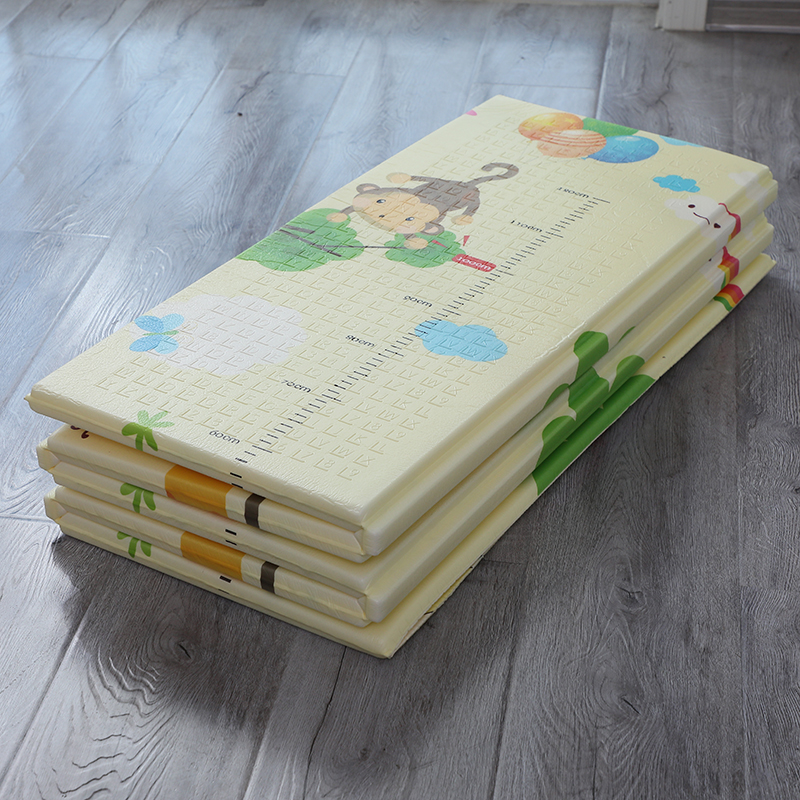
Foam technology evolved dramatically over the last decade. Brands now utilize polyethylene bases to eliminate toxic byproducts. EPE and XPE represent the two main choices in this new era. They share a similar chemical base. However, their physical properties differ drastically.
EPE serves as the entry-level option for health-conscious parents. Packaging materials frequently use EPE foam.
The Appeal: It is ultra-lightweight. EPE is 100% non-toxic. It requires no plasticizers or formamide. It is highly affordable for tight budgets.
The Drawback: It suffers from poor molecular memory. If you place a heavy chair on it, it permanently dents. It tears easily under moderate friction. EPE has a short lifespan. It is not ideal for high-traffic homes or homes with active pets.
XPE takes the safety of EPE and transforms its strength. Engineers bake the foam to create chemical cross-linking. This process bonds the molecules together tightly.
The Upgrade: The cross-linking process changes the foam's cellular structure completely. It eliminates toxic byproducts. It massively improves tensile strength. The mat becomes dense, resilient, and highly durable.
Implementation Wins: A high-quality xpe baby mat resists liquid absorption perfectly. It rebounds quickly from impact. It provides superior thermal insulation over cold winter floors. It is also the ideal material for a seamless, foldable, or xpe rolling play mat because it maintains its shape without cracking over time.
Below is a quick reference guide comparing these four materials.
Material Type | Primary Safety Concern | Durability Level | Typical Cost Level |
|---|---|---|---|
PVC | Phthalates (requires strict testing) | Very High | High |
EVA | Formamide off-gassing | Medium | Low |
EPE | None (Non-toxic) | Low (Prone to tearing) | Low |
XPE | None (Non-toxic) | High (Scratch resistant) | Medium-High |
Parents often grab the cheapest foam mat available. They assume a baby will outgrow it quickly. However, cheap materials introduce hidden frustrations. They also create unexpected safety hazards inside the home.
The Replacement Cycle: Buying an EPE or cheap EVA mat often results in a frustrating cycle. You find yourself purchasing replacements every few months. Pets puncture cheap foam effortlessly. Spills seep into poorly sealed puzzle joints. The continuous replacement expenses quickly exceed the upfront cost of premium materials. You spend more money replacing cheap mats than buying one excellent mat.
The Peeling Hazard: Cheap laminated films pose a massive threat. Manufacturers glue printed films onto lower-grade foams. Normal baby friction causes these films to separate. Babies possess sharp little fingernails. They pick at the edges relentlessly. Flaking plastic films pose a severe choking hazard. You cannot repair a peeling mat.
Aesthetic Integration: Your home should not look like a chaotic daycare center. High-quality closed-cell materials hold high-resolution, home-friendly printed designs much better. Materials like XPE and certified PVC feature seamless finishes. They prevent fading. They avoid trapping dirt in deep surface textures. You get a mat that complements your living room rug rather than clashing with it.
You now understand the science behind the foams. It is time to apply this knowledge. Every family has different needs. Use this logic to finalize your shopping list today.
If budget is the strict priority for short-term use: EPE offers non-toxic safety. It protects your baby from chemicals. Just understand you accept a short lifespan. Keep pets away from it.
If you prioritize ultra-durability and don't mind heavy weight: Look for strictly tested PVC. You must verify medical-grade or non-toxic certifications. It withstands heavy abuse. Just prepare for a very heavy package.
If you want the best all-around balance: XPE is the objective winner. It balances safety, weight, and durability perfectly. It requires a slightly higher initial investment than EPE or EVA. However, it delivers zero-toxicity assurance and years of usability. You can easily roll it up for storage.
Verification Step: Always check for transparent, third-party lab reports. Look for SGS testing, REACH compliance, or CPSIA certification. Do this before clicking buy, regardless of the material chosen. Do not trust generic "eco-friendly" badges.
Common Mistake: Never buy a play mat from a third-party marketplace seller without a verifiable brand website. Untraceable brands often fake safety certificates.
Choosing the right play mat material defines your baby's daily safety. It also determines your daily cleaning routine. Let's summarize the final verdict clearly. XPE stands out as the most reliable, health-conscious, and economically sound investment for a baby's developmental stages.
Here are your final action steps:
Avoid uncertified EVA mats to prevent toxic formamide exposure.
Skip thin EPE mats if you have dogs or cats in the home.
Demand real lab testing documents for any PVC product you consider.
Choose an XPE mat for a lightweight, highly durable, completely non-toxic solution.
Audit your current shortlisted mats today. Look for explicit material disclosures. If a brand hides its material type, move on immediately. Protect your child's play area with confidence by selecting a verified, scientifically backed foam material.
A: Cross-linking is a manufacturing process using heat. It bonds the polyethylene molecules tightly together in a web-like structure. This prevents the foam from tearing easily. It also stops liquids from soaking into the mat. It creates a stronger, safer product without using toxic chemicals.
A: Generally, no. Unless a brand explicitly provides third-party tests proving zero formamide and zero phthalates, EVA is risky. The puzzle piece edges also break off easily. This creates an additional choking hazard for teething babies.
A: XPE is fully waterproof. You can wipe it daily using a damp cloth and mild dish soap. Avoid harsh bleach or abrasive scrubbing brushes. A simple mixture of water and white vinegar also sanitizes the surface naturally without ruining the printed design.
A: Mats made from EVA or cheap PVC often smell due to off-gassing. This releases volatile organic compounds (VOCs) or formamide into the air. Strong chemical smells can be dangerous to respiratory health. High-quality EPE and XPE mats should have almost zero chemical odor upon opening.