
Views: 0 Author: Site Editor Publish Time: 2026-07-22 Origin: Site


Tummy time plays a critical role in infant motor development. It helps babies build the neck strength necessary for holding their heads upright. Still, parents often feel intense anxiety when placing their newborns on the floor. You worry about hard surfaces, hidden chemical exposure, and overall comfort. Finding the perfect developmental surface feels like an endless struggle. Fabric mats are notoriously difficult to clean after inevitable accidents. Budget EVA foam raises serious safety concerns regarding chemical off-gassing and toxicity. Meanwhile, premium TPU options often demand an unjustifiably high price tag for growing families. This leaves parents searching for a balanced, practical alternative. We offer an objective evaluation of why the xpe baby mat has become a dominant mid-tier solution. It provides essential physical support for early skeletal development. It also boasts a rigorous chemical safety profile that reassures anxious parents. Most importantly, it handles the messy realities of daily maintenance effortlessly. Read on to understand how this material strikes the perfect balance. You will learn how it blends safety, motor development, and daily practicality for your nursery.
Motor Support: XPE foam provides the ideal firm-to-soft ratio, offering enough resistance for infants to push up and build neck/core strength.
Material Safety: Cross-linked polyethylene (XPE) is inherently free of BPA, phthalates, and formamide, making it a safer alternative to traditional PVC and EVA foams.
Maintenance Reality: 100% waterproof and wipeable, drastically reducing cleanup time for spit-ups and diaper leaks compared to fabric gym mats.
Cost-to-Value: Sits neatly between budget EVA and premium TPU, offering scalable durability for the rolling and crawling stages.
Pediatricians and osteopathic experts emphasize a critical rule for early development. Overly plush mats actually hinder motor skill progression in infants. Sinking into a soft surface frustrates babies and restricts their natural movement. They need a firm surface to push against effectively. Resistance helps them develop essential neck, shoulder, and core muscles. A solid foundation encourages the natural curvature of the cervical spine. It allows them to practice lifting their heavy heads against gravity.
High-density cellular structure solves the firmness problem beautifully. An xpe baby mat balances necessary push-back with crucial shock absorption. Babies will inevitably drop their heads repeatedly during early tummy time sessions. Their neck muscles tire quickly. The resilient foam material absorbs this impact safely. It protects their delicate skulls while remaining firm enough for active pushing.
Eventually, stationary tummy time transitions into the active rolling phase. A tactile surface and overall structural integrity support this developmental milestone perfectly. Infants grip the textured surface to propel their bodies forward. Using an xpe rolling play mat gives them the consistent traction they need. It prevents frustrating sliding while they learn to coordinate their limbs. The firm density ensures they do not get stuck in a foam depression.
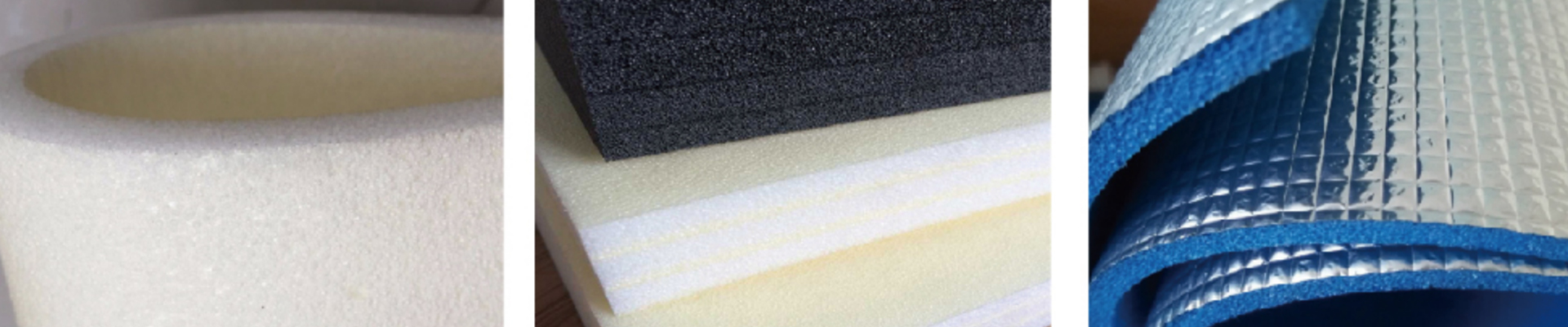
What exactly is XPE? It stands for cross-linked polyethylene. It is a high-density, closed-cell foam material used extensively in premium products. Manufacturers use a specialized thermal bonding process to create it. High heat binds the multiple foam layers together naturally. This entirely eliminates the need for toxic glues or liquid chemical adhesives. It creates a seamless, durable core.
Let us compare it directly to traditional alternatives in the current market.
Play Mat Material Comparison Chart
Feature | Fabric/Cotton | EVA Foam | XPE Foam | Premium TPU |
|---|---|---|---|---|
Cushioning | Very Low | Moderate | High | Very High |
Chemical Safety | High (if organic) | Low (Formamide risk) | High | High |
Hygiene/Cleaning | Poor (absorbs liquids) | Good (wipeable) | Excellent (waterproof) | Excellent (waterproof) |
Cost | Low | Very Low | Moderate | Very High |
First, we evaluate traditional EVA foam. Manufacturers often use EVA in cheap, interlocking puzzle mats. Regulators worldwide are phasing it out rapidly. It carries severe formamide off-gassing risks. Formamide is a toxic byproduct of the EVA manufacturing process. XPE solves this issue by avoiding these harmful chemical compounds entirely.
Next, consider fabric or cotton gym mats. They feel soft but offer very little cushioning depth for hard falls. They also absorb spills, drool, and bodily fluids immediately. This creates serious hygiene challenges and demands constant machine washing.
Finally, look at premium TPU materials. We must transparently acknowledge its specific benefits. TPU is heavier, slightly more durable, and highly scratch-resistant. It withstands pet claws better than other foams. However, an XPE alternative delivers roughly 80 percent of the same benefits. It does this at a fraction of the premium cost. It offers excellent value for the relatively short crawling stage.
Marketing labels often claim a product is completely "non-toxic". You must look beyond these vague marketing promises. Verifiable certifications provide real peace of mind for parents. You should always check for specific compliance acronyms before buying. In the United States, look for ASTM F963 compliance. You also want a valid CPC (Children's Product Certificate). European buyers should seek the stringent EN71 safety standard. These acronyms confirm the product has undergone rigorous third-party laboratory testing. They test for heavy metals, lead, and mechanical hazards.
Many parents fear the infamous "new mat smell". This strong odor stems from chemical off-gassing typically found in cheap PVC products. We can put this common fear to rest immediately. True cross-linked polyethylene is virtually odorless straight out of the box. It requires zero to minimal off-gassing time upon unboxing. You can safely use it in an enclosed nursery almost immediately.
Surface contaminants pose another hidden health danger. Dust mites, mold spores, and bacteria accumulate rapidly in porous materials. Cotton rugs harbor these invisible threats. Closed-cell foam offers a distinct hypoallergenic advantage. Moisture and microscopic debris simply cannot penetrate its outer surface barrier. This keeps your baby's primary play area highly sanitary. It protects infants with sensitive skin or early allergy symptoms.
Practical experience quickly reveals a baby product's true value. Tummy time inevitably involves unexpected spit-ups and messy diaper blowouts. Fabric mats force you to halt playtime and start a laundry cycle. The closed-cell waterproof barrier makes cleaning incredibly simple. You can instantly sanitize the surface using standard baby-safe wipes. Liquids pool on top instead of soaking into the dense core. This drastically reduces your daily cleanup time. You can wipe away a milk spill in five seconds.
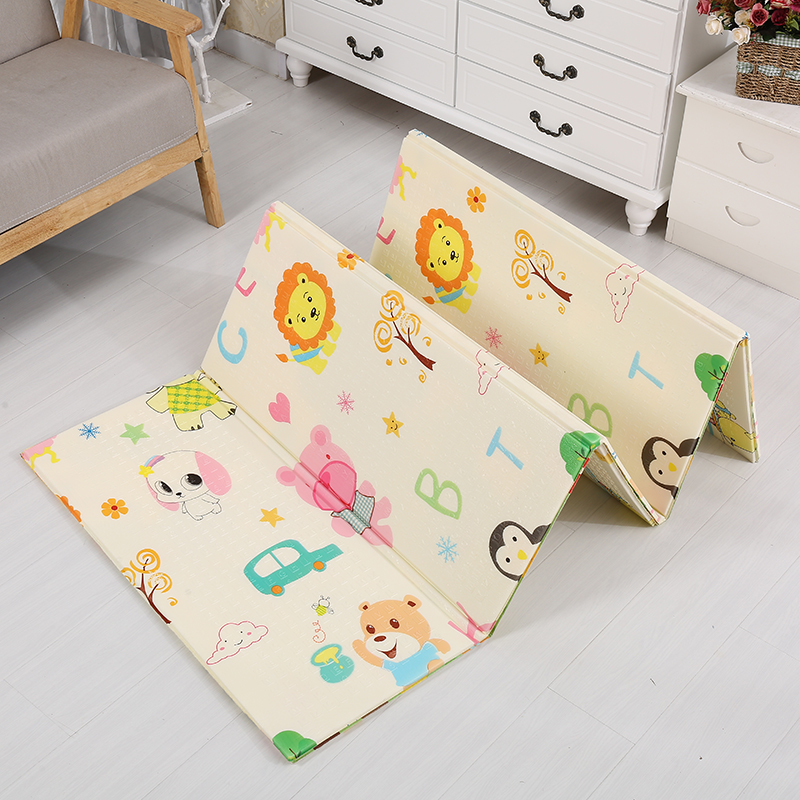
Living room space is a precious commodity for modern families. You likely need to reclaim your floor at night. Consider structural formats carefully when shopping. Foldable models collapse into compact squares for easy closet storage. They fit neatly behind sofas or under cribs. Alternatively, an xpe rolling play mat rolls up swiftly into a tight cylinder. Both options offer excellent portability for dynamic households. You can easily move them between the living room and the nursery.
We must provide balanced, trustworthy caveats regarding durability limits. No product is entirely indestructible. Keep these three specific risk considerations in mind:
Sharp pet claws can easily puncture the protective top layer over time.
Heavy furniture legs will cause permanent surface indentations in the foam.
Sharp-edged plastic toys might scratch or tear the soft outer coating.
Avoiding these common hazards ensures the product lasts through the toddler years.
Choosing the right variation requires evaluating your specific home environment. Follow these practical thickness guidelines based on your primary flooring. If you are placing it over existing plush carpeting, go thinner. A 0.4-inch thickness provides sufficient stability without feeling too spongy. Hardwood, concrete, or tile floors demand much more robust protection. Choose a thickness between 0.6 and 0.8 inches for these harder surfaces. The extra depth prevents bruised knees during crawling practice.
Surface texture directly impacts your infant's developmental progress. We strongly advise choosing mats featuring a raised, anti-slip grid texture. This specialized tactile pattern gives tiny hands and feet proper traction. It prevents frustrating slips during tummy time and early crawling attempts. Smooth surfaces offer no grip for struggling babies.
Finally, consider the delicate balance between aesthetics and function. Neon colors and incredibly busy patterns can easily overstimulate a young infant. They also clash terribly with modern home decor. Briefly consider choosing reversible, muted designs instead. Look for soft pastels, simple geometric shapes, or botanical prints. These subtle patterns blend beautifully with your existing nursery essentials. You get a highly functional developmental play area. You do this without sacrificing your carefully planned interior design.
An XPE baby mat stands as a highly effective foundation for early development. It succeeds primarily due to its supportive density. It offers reliable thermal insulation against cold floors. It also maintains a strict, verifiable safety profile. It strikes the perfect balance between premium features and practical affordability.
Take these actionable next steps before making a final purchase:
Measure your dedicated play space precisely to determine the exact dimensions needed.
Verify that the product carries official CPC or ASTM safety testing certifications.
Decide between a folding or rolling model based on your daily home storage habits.
A: Yes, it is chemically safe. Cross-linked polyethylene is non-toxic and free from harmful chemicals. However, you must supervise your baby closely. If an infant has sharp teeth, they could potentially bite off small pieces of the foam. This creates a severe choking hazard. Always inspect the surface for wear and tear.
A: Cleaning is incredibly straightforward. Use mild dish soap, warm water, and a soft, damp cloth. Gently wipe away spills or dirt. Explicitly avoid using harsh bleach, chemical solvents, or abrasive scrubbers. These aggressive materials will strip away the protective waterproof coating and degrade the foam structure permanently.
A: You can use it outdoors for temporary play sessions. It works well on flat grass or smooth patios. However, you must bring it indoors immediately after use. Prolonged exposure to direct UV sunlight will rapidly degrade the molecular foam structure. This causes the material to become brittle, fade, and eventually crack.
A: No, it absolutely does not. Cross-linked polyethylene is inherently free of BPA, phthalates, and formamide. The physical thermal bonding process eliminates the need for toxic chemical additives or glues. This makes it one of the safest synthetic flooring options available for infant nurseries and playrooms today.