
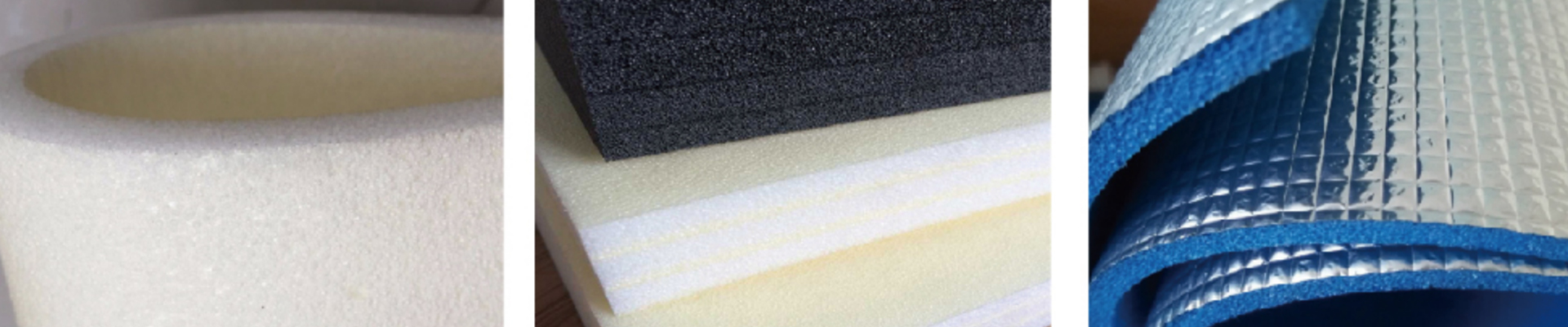
Views: 0 Author: Site Editor Publish Time: 2026-08-07 Origin: Site


Shopping for a safe floor covering often leaves new parents deeply frustrated. You stare at product labels filled with confusing chemical acronyms. You naturally wonder what they actually mean for your child's health. The current market relies heavily on two main foam types. These are EVA (Ethylene-Vinyl Acetate) and XPE (Cross-linked Polyethylene). Both materials offer basic impact protection for your little ones. However, they differ significantly in their chemical makeup and manufacturing processes. Choosing the wrong material might inadvertently introduce unwanted compounds into your home. We provide a strict, evidence-based comparison of EVA and XPE materials below. You will learn the precise science behind each foam type. We help you evaluate their daily performance and safety compliance. This comprehensive guide helps you confidently select the absolute best foundation. You can then build a safer nursery or playroom for your growing baby.
Safety Profile: XPE is generally recognized as a safer, non-toxic alternative to EVA, largely due to the absence of formamide and phthalates in its manufacturing process.
Maintenance & Hygiene: EVA puzzle mats are prone to trapping dirt and liquids in their seams; an xpe baby mat is typically seamless and waterproof, significantly reducing cleaning time.
Durability vs. Cost: While EVA has a lower upfront cost, XPE offers higher density, better shape retention, and longer usable life, making it the more cost-effective long-term investment.
Form Factor: If prioritizing portability and seamless design, an xpe rolling play mat or foldable XPE mat outshines interlocking EVA tiles.
Parents often struggle to understand the actual composition of baby products. Manufacturers use technical terms casually. We need to break down these materials to understand their true properties.
EVA stands for Ethylene-Vinyl Acetate. It is a highly flexible elastomeric polymer. You encounter EVA daily in various household items. Manufacturers use it extensively for gym flooring, cheap puzzle play mats, and sneaker midsoles. The material offers excellent initial softness.
The implementation reality of EVA reveals a few drawbacks. It is extremely inexpensive and fast to produce. However, the manufacturing process often requires chemical plasticizers to achieve that signature squishy texture. These binding agents can compromise the overall safety profile of the final product. The structural integrity relies heavily on these additives. This makes EVA susceptible to degradation over time.
XPE stands for Cross-linked Polyethylene. It represents a more advanced category of foam technology. Industries utilize XPE in premium baby products, high-end medical packaging, and automotive insulation. The material provides exceptional structural stability and reliable thermal resistance.
The implementation reality of XPE highlights its premium nature. Manufacturers create XPE via a physical or chemical cross-linking process. This unique process creates a tight, closed-cell structure. It completely avoids relying on toxic binding agents. The resulting foam is inherently stable. It holds its shape beautifully without needing potentially harmful chemical softeners. This fundamental difference in chemistry makes XPE highly desirable for sensitive applications.
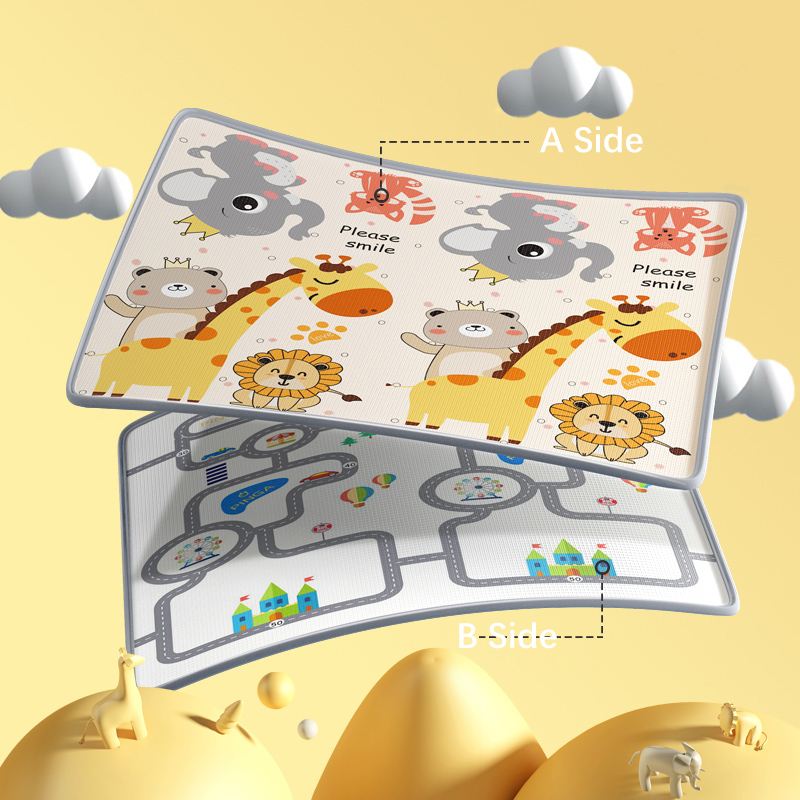
Chemical safety remains the top priority for parents designing a nursery. Babies spend hours doing tummy time on these surfaces. They frequently lick, chew, and breathe heavily directly against the floor. We must scrutinize the chemical emissions of both materials.
Formamide acts as a primary foaming agent in EVA production. It creates the desirable "squishy" texture parents initially love. Unfortunately, experts classify formamide as a Volatile Organic Compound (VOC). The chemical continues to off-gas long after the manufacturing process ends.
European regulatory bodies take this issue very seriously. The French government famously instituted bans on certain EVA puzzle mats due to high formamide off-gassing levels. High exposure to such VOCs can cause respiratory irritation in developing infants. While some manufacturers attempt to air out EVA products before shipping, trace amounts of formamide often remain trapped within the foam matrix.
The XPE manufacturing process completely bypasses the need for dangerous additives. It does not use phthalates, BPA, or formamide. The cross-linking process naturally expands the polyethylene. This creates a soft yet resilient structure naturally.
You should always look for strict industry certifications. Independently verified products provide immense peace of mind. A premium xpe baby mat typically carries essential safety endorsements. Look for standard certifications to guarantee a hypoallergenic and non-toxic surface:
CPC (Children's Product Certificate): Ensures compliance with strict US safety rules.
ASTM F963: A comprehensive standard for toy safety and heavy metal limits.
EN71: The stringent European standard governing mechanical and chemical safety.
Buyers must read labels cautiously. A bright "BPA-free" sticker on an EVA mat does not necessarily mean "VOC-free." BPA is just one specific chemical. Always check for independent, third-party VOC emission testing. Do not rely solely on vague marketing buzzwords.
Theoretical safety only matters if the product performs well daily. A play mat must endure rigorous physical abuse. It faces messy spills, sharp toys, and clumsy falls. Let us evaluate how these materials handle real-world challenges.
Impact absorption dictates how well a mat protects a falling toddler. The two materials handle kinetic energy differently.
EVA Performance: EVA offers a softer initial surface. However, it tends to "bottom out" under focused pressure due to its lower density. A heavier child falling on an EVA mat might still feel the hard floor underneath.
XPE Performance: XPE boasts higher density and superior rebound elasticity. It compresses upon impact but pushes back firmly. This dynamic response provides much better shock absorption for a baby learning to walk.
Hygiene dictates how easily you can maintain a sanitary environment. Closed-cell XPE is completely waterproof. Liquids bead up on the surface immediately. You can sanitize it swiftly using a simple cloth.
Conversely, EVA is often porous. Manufacturers frequently add deep textures to EVA mats to improve grip. These textures absorb spills over time. Traditional EVA puzzle mats pose an even greater hygiene risk. Bodily fluids or milk frequently seep deeply into the interlocking seams. Mold and bacteria can rapidly breed in these hidden crevices.
You must evaluate both materials against common household hazards. Heavy furniture legs will leave permanent dents in EVA mats. XPE resists compression much better, though long-term placement of heavy objects eventually causes minor indentation.
Pet claws present a unique challenge. While XPE is highly durable against blunt force, sharp objects pose a threat. Aggressive scratching from unclipped dog nails can puncture the protective top film of an xpe rolling play mat. Parents should keep pets off the play surface to maximize its lifespan.
Performance Trait | EVA Foam | XPE Foam |
|---|---|---|
Impact Density | Low (Prone to bottoming out) | High (Excellent rebound elasticity) |
Liquid Resistance | Moderate (Seams trap liquids) | Excellent (100% Waterproof) |
Cleaning Effort | High (Requires dismantling) | Low (Simple wipe down) |
VOC Off-gassing | High risk (Formamide present) | Zero to negligible risk |
Material chemistry is only half the battle. The physical design of the mat drastically impacts your daily routine. The market categorizes mats into interlocking puzzle tiles and seamless rolled sheets.
EVA almost always ships in interlocking puzzle formats. This design seems convenient initially. You can customize the shape to fit odd corners. However, practical experience reveals severe flaws.
Toddlers view puzzle mats as giant toys. They quickly learn to pull the interlocking pieces apart. This habit destroys the protective floor barrier. Furthermore, the small edge pieces present a well-documented choking hazard. Beyond safety, the crevices constantly accumulate cracker crumbs, dust mites, and pet hair. Cleaning an EVA puzzle mat requires dismantling the entire structure.
XPE manufacturing allows for large, continuous sheets. This engineering capability gives birth to the foldable and rolling mat designs. A single-piece format eliminates all choking hazards instantly.
The convenience factor cannot be overstated. A rolling design creates a highly hygienic, unbroken barrier over hard floors or dirty living room carpets. There are no seams for dirt to hide in. Furthermore, these designs offer incredible ease of storage. You can simply roll it up and slide it behind a sofa. They travel easily to grandparents' houses or outdoor picnics.
Every household has distinct needs. You must weigh your budget against your safety requirements. We have categorized the buying decision to simplify your choice.
EVA still holds a legitimate place in specific scenarios. You might opt for EVA under the following conditions:
Strict Budget Constraints: If you absolutely must spend under $30, EVA remains the most accessible option.
Older Children: Kids past the chewing and licking stage face lower risks from direct chemical exposure.
Utility Spaces: Basement play areas or garage setups where aesthetic and stringent VOC concerns are naturally lower.
XPE strongly dominates the premium safety category. We highly recommend XPE for the following situations:
Early Development Stages: Buying for newborns, infants, and toddlers entering tummy time or taking their first steps.
Health-Conscious Homes: Prioritizing purely non-toxic environments and demanding zero off-gassing indoors.
Busy Parents: Seeking low-maintenance cleaning routines and seamless, modern aesthetics.
Decision Factor | Best Choice | Reasoning |
|---|---|---|
Newborn Safety | XPE | Zero formamide, phthalates, or BPA. |
Tight Budget | EVA | Cheaper raw materials and manufacturing. |
Quick Cleaning | XPE | Seamless surface wipes clean instantly. |
Custom Room Shapes | EVA | Puzzle tiles adapt to weird corners easily. |
Choosing the right play mat impacts your child's daily comfort and long-term health. For infant use, XPE is objectively superior to EVA in safety, hygiene, and developmental support. The advanced cross-linked structure provides unmatched rebound elasticity. It protects tiny knees and heads much better than standard foams. Furthermore, the seamless design eliminates frustrating cleaning routines.
The premium paid for an XPE mat mitigates the hidden frustrations of replacing degraded, dirty EVA tiles. Most importantly, it completely eliminates parent anxiety over indoor VOC exposure. You should take immediate action for your next purchase. Always check the specific materials list before checking out. Look exclusively for closed-cell XPE foam. Finally, verify third-party safety testing certifications to guarantee a healthy home environment.
A: No, high-quality XPE foam is virtually odorless. If there is a slight manufacturing scent upon unboxing, it dissipates very quickly. This initial scent is completely harmless and is not associated with any harmful VOC off-gassing.
A: While XPE is entirely non-toxic if a pet licks it, it is not scratch-proof. Cats and large dogs with unclipped nails can easily puncture the mat's waterproof outer layer. We recommend keeping pets off the mat to preserve its integrity.
A: Heavy furniture will leave permanent, deep dents in EVA foam quickly. XPE has much better rebound elasticity. However, long-term placement of exceptionally heavy objects will eventually cause permanent compression in XPE as well.
A: Because it has a closed-cell, waterproof structure, you simply wipe it down. Use a damp cloth and mild, baby-safe soap. Avoid harsh chemical cleaners or abrasive sponges, as they can degrade the printed decorative surface over time.