
Views: 0 Author: Site Editor Publish Time: 2026-07-13 Origin: Site


New parents face a daunting challenge: finding a floor surface safe for newborn spine development. It must be completely non-toxic while easily handling frequent spit-ups and daily messes. Navigating the baby gear market often feels overwhelming, but securing the right floor space does not have to be. Enter the XPE (Cross-linked Polyethylene) rolling play mat. This innovative material has quickly become a highly popular alternative to traditional fabric gyms and PVC puzzle mats. It offers a unique, highly desirable blend of structural integrity, chemical stability, and waterproof convenience. We created this evidence-based evaluation guide to help you cut through the loud marketing noise. You will learn exactly how to choose the right mat based on rigid safety standards, optimal firmness, and practical household realities. Read on to discover the specific features to look for, ensuring you make a confident, informed decision for your growing nursery.
Parents need a surface balancing chemical safety with rugged physical durability. Everyday nursery life includes drool, spilled milk, and diaper leaks. You cannot compromise on hygiene, nor can you risk exposing your newborn to harmful off-gassing. Understanding material differences helps you protect your infant's health and your own peace of mind.
For decades, manufacturers relied heavily on EVA (Ethylene-Vinyl Acetate) and PVC (Polyvinyl Chloride) for children's floor products. These materials present legitimate safety concerns. PVC often requires phthalates to make the plastic flexible. These chemical plasticizers can disrupt hormones. Meanwhile, the manufacturing process for EVA foam frequently leaves behind formamide residues. Formamide off-gassing produces a distinct, toxic chemical odor and poses respiratory risks in unventilated spaces.
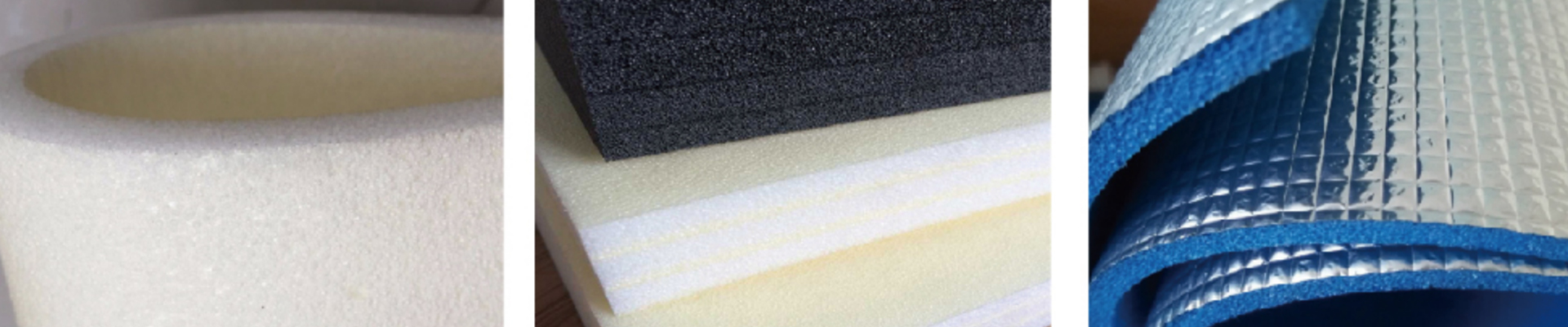
Cross-linked polyethylene offers a superior alternative. It functions as a chemically stable, closed-cell foam. The cross-linking process binds polymer chains together tightly. This structural change prevents the need for toxic additives. Consequently, a genuine XPE foam play mat boasts naturally non-toxic, BPA-free, and hypoallergenic properties. It repels dust mites and resists mold growth. Families gain peace of mind knowing their floor space harbors no hidden chemical dangers.
Structural integrity dictates how well a mat survives daily household chaos. Puzzle mats initially look appealing with their colorful, interlocking borders. However, they present significant choking hazards. Teething infants easily chew off the small, removable edge pieces. Furthermore, the interlocking seams trap liquid. A simple diaper blowout can seep through the cracks, ruining the hardwood underneath.
Folding mats solve the choking hazard but introduce a new problem. The folding hinges degrade rapidly over time. Deep creases accumulate crumbs, pet hair, and bacteria. Scrubbing these crevices becomes a frustrating daily chore.
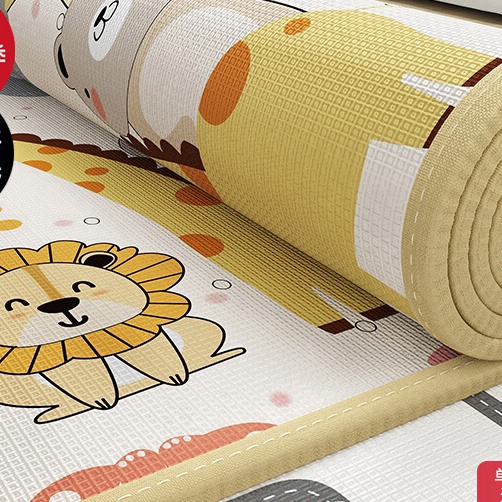
By contrast, a continuous XPE rolling play mat provides a completely seamless surface. It wipes clean in seconds. This wipeable nature proves critical for sanitation during the extraordinarily messy newborn phase. You eliminate liquid traps and ensure a pristine environment for daily floor exercises.
Many parents mistakenly believe softer means safer. They search for highly plush surfaces to protect their infants. However, pediatric and osteopathic principles strongly contradict this instinct. A floor mat should never act like a mattress.
Tummy time serves as an infant's first major physical workout. Babies must push against gravity to lift their heavy heads. They need a high-density surface to gain essential leverage. A firm foundation allows them to engage their neck, shoulder, and core muscles effectively. If the surface absorbs all their force, they cannot pivot or practice reaching. Excessive softness physically hinders motor skill development and delays early crawling attempts.
You must evaluate the mat based on feature-to-outcome results. Look specifically for "high-density" or "rebound" ratings on the product specifications. You can perform a simple physical test at home. Press your hand firmly into the mat. If your hand leaves a deep, lasting indentation, the foam is too soft for safe newborn use. Sinking faces into plush materials also introduces severe suffocation risks.
Note the delicate balance required here. The ideal surface remains firm enough for vital muscle leverage, but forgiving enough to cushion an accidental head drop. High-density cross-linked foam absorbs isolated shock perfectly without compromising overall surface tension.
Choosing the correct dimensions impacts both safety and household aesthetics. You need a product that fits your living space without creating architectural hazards.
Thickness directly influences impact absorption and stability. Market options vary wildly, so understanding the thresholds prevents buyer's remorse.
< 0.4 inches (10mm): Mats thinner than this feel flimsy. They provide insufficient impact absorption for early sitters who frequently topple backward. They also fail to insulate cold tile or hardwood floors adequately.
0.4 to 0.6 inches (10mm - 15mm): This range represents the ultimate sweet spot. It offers excellent cushioning for sudden falls without compromising the firm, stable base needed for crawling. A well-designed baby tummy time mat in this thickness tier ensures infants can bear weight on their wrists without sinking.
> 0.8 inches (20mm+): While ultra-thick options sound protective, they often become a major tripping hazard for parents walking through the room. Additionally, they prove excessively bulky to roll up and store behind furniture.
The table below summarizes the practical applications of different thickness levels.
| Thickness Range | Primary Benefit | Best Use Case |
|---|---|---|
| Under 0.4 inches | Highly portable and lightweight | Travel or outdoor park use |
| 0.4 to 0.6 inches | Balances shock absorption with firmness | Daily nursery and living room use |
| Over 0.8 inches | Maximum shock absorption | Dedicated, enclosed playrooms only |
Practical sizing requires strategic planning. Living rooms generally demand larger dimensions to accommodate rolling infants, while nurseries might only fit compact squares. Avoid guessing your floor dimensions.
Provide a straightforward shortlisting rule for yourself: Measure the designated floor space accurately. Leave exactly a 1-foot clearance from hard furniture edges, such as coffee tables or bookshelves. This buffer zone prevents the rolled edges from curling against furniture bases. It also ensures the product lays completely flat, eliminating subtle tripping risks.
Marketing teams frequently slap the phrase "non-toxic" onto product listings. Do not trust these buzzwords without verifiable testing standards. Authority and compliance framing remain crucial when evaluating infant gear.
You must look for specific global standards in the manufacturer's official specifications. Reputable brands gladly display their compliance badges. Look for CPSIA (Consumer Product Safety Improvement Act) compliance in the US. You should also check for ASTM F963 (the gold standard for Toy Safety) or the EN71 European standard. These independent tests verify the complete absence of hazardous materials.
Examine the fine print regarding heavy metals and plasticizers. Quality brands will explicitly state "0% Phthalates, Lead, and BPA." If a brand hides its chemical testing results, move on to another option.
Finally, set realistic expectations regarding the initial "smell test." Even the safest materials may exhibit a mild, harmless manufacturing odor immediately upon unrolling. Factories seal these products tightly in plastic wrap before shipping. This trapped air carries a slight scent. Place the newly unrolled product in a well-ventilated room. A safe, non-toxic odor should dissipate entirely within 24 to 48 hours.
Real parenting involves mess, chaos, and lack of time. Evaluating a product through a lens of daily implementation saves you from future frustration.
Surface texture directly impacts cleaning speed. Cross-linked mats require a specialized micro-textured surface. This subtle texturing provides vital traction for tiny hands and feet. Completely smooth surfaces cause babies to slip when attempting to crawl. However, you must evaluate how easily this texture wipes clean. Pureed carrots and formula spit-up can dry quickly. A high-quality finish allows you to wipe away messes using just a damp cloth, entirely without requiring heavy, exhausting scrubbing.
Next, consider the pet factor. We offer a transparent warning here: while closed-cell foam is highly durable, it is not indestructible. Sharp dog or cat claws can indeed puncture the surface. Cats may mistake the foamy texture for a scratching post. We strongly advise establishing pet-free zones during floor exercises. If pets must share the space, keep their nails strictly trimmed to prevent permanent surface gouges.
Lastly, acknowledge the physical footprint of storage. A tightly rolled cylinder still takes up vertical closet space. Suggest looking for options that include built-in velcro storage straps or a dedicated travel bag. These accessories prevent the cylinder from unspooling wildly inside your closet.
Use this consolidated decision framework to finalize your purchase. If a product fails any of these criteria, discard it from your list.
An optimal floor setup serves as a foundational investment in your infant's physical development and your household hygiene. You need a dedicated space that encourages confident motor skill progression without exposing tiny lungs to volatile organic compounds. By prioritizing firm, high-density foam over plush alternatives, you actively support early milestone achievements. Seamless, rolled designs guarantee rapid cleanup, freeing you to focus on joyful interactions rather than tedious scrubbing.
Take actionable steps today. First, grab a tape measure and map out your available floor space, remembering the 1-foot clearance rule. Next, verify the independent safety certifications of your top two brand choices. Finally, prepare a dedicated, pet-free zone to ensure maximum longevity for your new purchase. Make these smart choices now, and watch your baby thrive safely.
A: Yes. High-quality cross-linked polyethylene features a closed-cell nature. It contains no peeling toxic layers, heavy metals, or BPA. If your baby licks the surface, they will not ingest harmful chemicals. However, you must practice immediate cleaning of drool or spit-up to maintain general surface hygiene.
A: Curled edges happen because of tight factory packaging. You can flatten them quickly using reverse-rolling. Simply roll the curled edge gently in the opposite direction. Alternatively, place gentle, flat weighted objects like large books on the corners overnight. Keeping the room warm also helps the foam relax faster.
A: You can, but use caution. Stacking high-density foam on top of a plush, thick carpet creates potential shifting dynamics. The floor setup might slide when you walk on it. We strongly recommend placing a high-quality, non-slip rug underlay beneath the foam to ensure it remains stationary.
A: Both provide excellent safety, but they serve different needs. Cross-linked polyethylene is lightweight, highly cost-effective, and offers a high-rebound nature perfect for motor skills. TPU (Thermoplastic Polyurethane) feels much heavier and provides a premium, squishy memory-foam feel. Choose cross-linked foam for portability and firm developmental support.