
Views: 0 Author: Site Editor Publish Time: 2026-07-14 Origin: Site


Parents face a tough daily choice. You want a safe play surface for your baby. Yet, you also face the reality of daily spills. Milk spit-ups and sticky messes happen constantly. Balancing these two needs often feels impossible. Many brands advertise their play mats as completely wipeable. However, the actual structural material behind these claims dictates real hygiene. It also determines physical longevity. If a play surface absorbs liquid, odors and bacteria will eventually follow. Our purpose here is simple. We will objectively evaluate XPE foam mats. Cross-linked Polyethylene offers specific physical properties. We will examine their true water resistance. We will detail their daily maintenance requirements. We will also highlight their structural limitations. By understanding how these mats handle real-world messes, you gain clarity. You can finally make an informed final purchase decision for your home. A high-quality surface truly transforms your daily clean-up routines.
Understanding water resistance starts at the microscopic level. You need to know how manufacturers engineer the foam. A high-quality XPE rolling play mat repels liquid by design. It does not rely on temporary chemical sprays. Instead, its physical structure provides a permanent barrier against moisture.
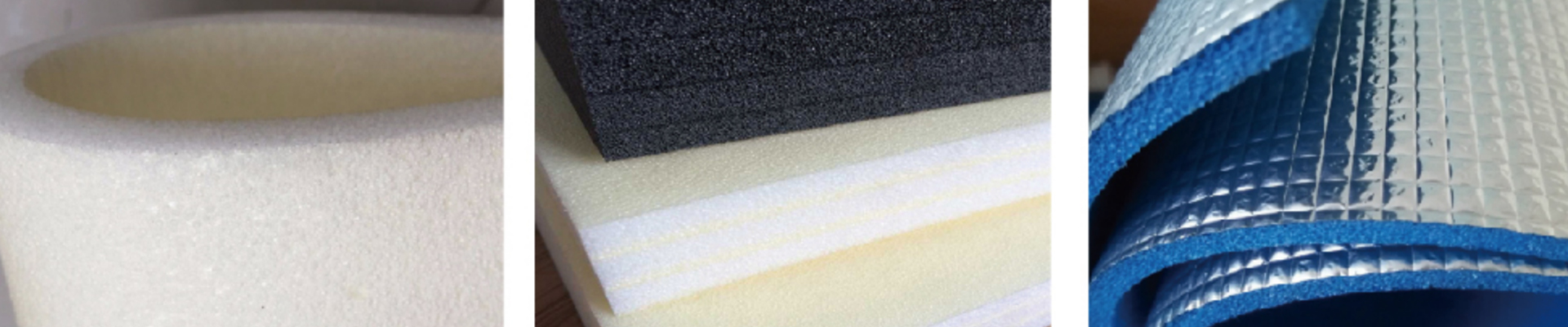
Cross-linked Polyethylene (XPE) features a unique internal geometry. Manufacturers process the plastic molecules to form a complex three-dimensional net. This bonding creates tiny, individual air bubbles. We call this a closed-cell structure. The air bubbles remain completely sealed off from one another. Because these pockets never connect, liquid cannot penetrate the core. Water simply has no physical path to travel through the foam. This makes the core inherently waterproof.
The core foam is only half of the equation. Manufacturers must also protect the printed design. They apply a clear top layer over the patterned film. Factory machines use extreme heat and pressure to bond this layer. They do not use liquid glues. Glues degrade when exposed to moisture. Heat-pressing melts the layers together into one solid piece. This process creates a seamless, non-porous barrier across the entire upper surface.
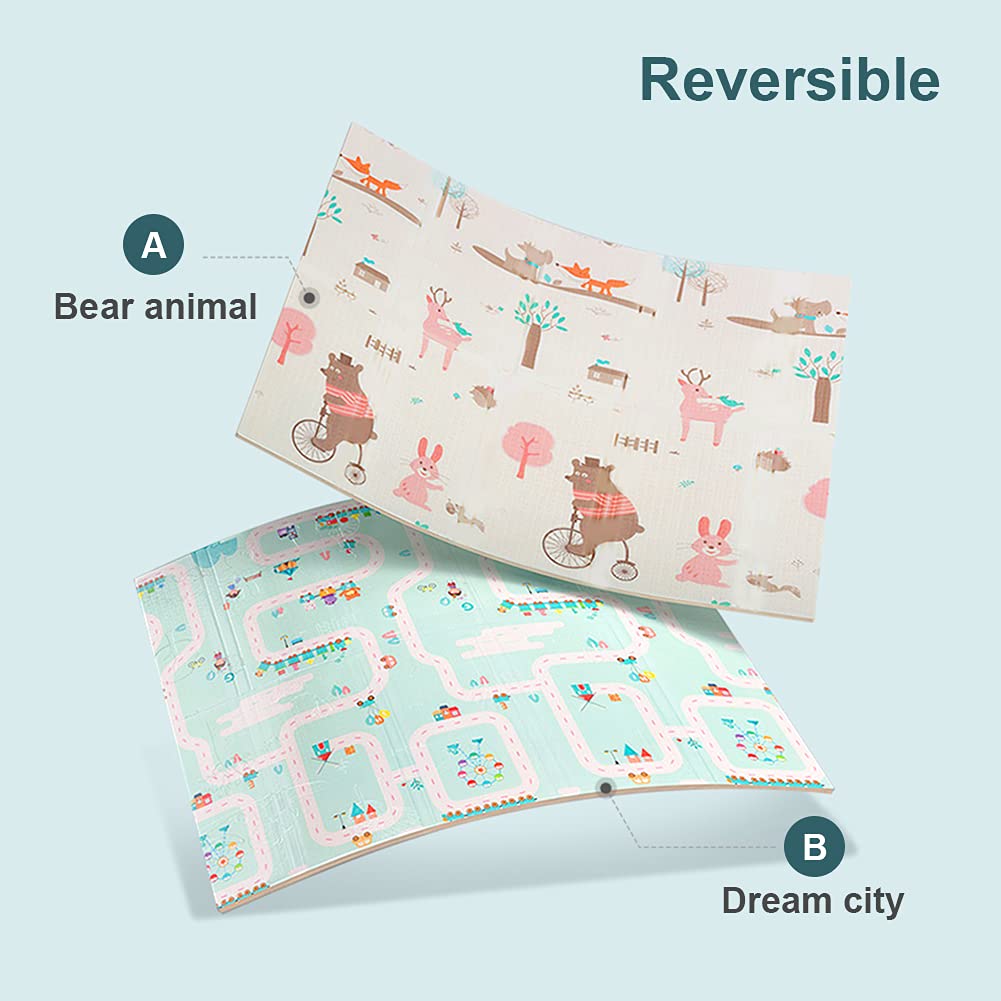
The physical format of the mat matters immensely. We must contrast the one-piece rolling format against traditional puzzle mats. Interlocking puzzle joints create hundreds of tiny seams. Gravity pulls spilled liquids downward. Those puzzle seams act as funnels. They direct milk and urine straight to your expensive hardwood floors. A rolling design entirely eliminates these interlocking gaps. The absence of seams removes the primary entry point for liquids. Your floor remains completely protected underneath.
Scientific theory is helpful. However, parents need practical results. We must evaluate how these surfaces handle actual nursery messes. Testing a waterproof XPE play mat reveals specific behaviors based on the liquid type. The sealed surface behaves predictably under different stress tests.
Everyday liquids behave beautifully on this material. If you spill water or milk, the fluids immediately bead up. The high surface tension keeps the liquid pooled in one spot. You will observe zero absorption into the foam. Resolving the spill requires only a quick swipe from a dry towel. Formula can leave a slight sticky residue as it dries. Even then, a simple damp rag lifts the sugar completely away.
Toddler snacks introduce new challenges. Acidic liquids like orange juice or colored purees test the stain resistance. The mat remains functionally waterproof against these items. However, heavy pigments require caution. Foods like tomato sauce, blueberries, or bright purees carry strong natural dyes. If left unattended for hours, these pigments can temporarily discolor the clear patterned film. Fast response times remain your best defense. Always wipe up pigmented spills quickly to maintain a pristine look.
Hygiene becomes critical when dealing with bodily fluids. Babies regularly spit up. Diaper blowouts happen. The hygienic advantage of XPE shines here. Fabric mats soak up these fluids instantly. Open-cell foams allow bacteria to nest deep inside the material. Those trapped bacteria cause lingering, foul odors. The non-porous surface of XPE blocks these fluids entirely. You can wipe away spit-up and sanitize the surface immediately. Bacteria find no safe harbor, keeping your nursery smelling fresh.
Proper maintenance extends the lifespan of your gear. Caring for an easy clean baby mat requires minimal effort. You just need the right tools. Following a strict cleaning protocol prevents accidental damage. It also ensures the surface remains safe for newborn skin.
Establishing a Standard Operating Procedure (SOP) streamlines your evening routine. Daily maintenance should take less than two minutes. Follow this simple numbered sequence for optimal results:
Microfiber works best because it lifts microscopic dirt. It performs this action without scratching the protective lamination.
Occasional deep cleaning requires sanitization. You must disinfect the surface safely. Babies explore the world using their mouths. Chemical residues pose a serious risk. We recommend using a gentle, natural solution. Mix a 50/50 blend of white vinegar and distilled water in a spray bottle. Spray the surface lightly. Let it sit for two minutes. Wipe it clean with a damp cloth. Alternatively, a few drops of mild dish soap mixed in warm water works perfectly. Always perform a final rinse wipe using plain water.
Knowing what not to do is equally important. Certain common household tools will destroy the foam. Avoid the following items entirely:
Transparency builds trust. No baby product is entirely indestructible. XPE provides fantastic daily durability. However, it possesses specific structural vulnerabilities. You must understand these risk factors to protect your investment.
The core foam remains soft to protect your baby from falls. This softness presents a trade-off. The top laminated layer is highly susceptible to piercing. Sharp pet claws will easily puncture the film. Heavy, sharp plastic toys thrown forcefully can dent it. Walking across the mat in high heels concentrates your body weight into a tiny point. This pressure will punch straight through the material. Once pierced, the structural integrity is compromised. Liquids can now seep into the inner foam through the puncture wound.
Cross-linked Polyethylene is basically plastic. It reacts poorly to high temperatures. XPE is absolutely not heat-proof. Many parents attempt to use steam mops to sanitize their play areas. You should never use a steam mop on this material. The intense, concentrated heat will warp the foam structure. Furthermore, the steam melts the adhesive bond of the laminated surface. The protective film will bubble up and peel away. This destroys the waterproof seal permanently.
Safety regulations require anti-slip features. Manufacturers emboss a raised texture across the surface. You usually see a grid, diamond, or alphabet pattern. This texture gives tiny feet necessary traction. Unfortunately, it occasionally creates cleaning hurdles. Dried mud or sticky fruit purees can settle deep inside these textured grooves. A flat microfiber wipe might glide right over the trapped dirt. When this happens, use a very soft-bristled toothbrush. Gently agitate the groove to lift the debris without scratching the plastic.
Making a final decision requires comparative analysis. How does XPE truly stack up against the competition? We must look at alternative materials available on the market. Each material offers different benefits and drawbacks.
| Material Type | Waterproofing | Seam Vulnerability | Maintenance Effort |
|---|---|---|---|
| XPE (Rolling) | 100% Closed-Cell | None (Seamless) | Low (Wipe & Go) |
| EVA (Puzzle) | Moderate | High (Liquid Funnels) | High (Disassembly needed) |
| PVC (Rolling) | 100% Non-Porous | None (Seamless) | Low (Heavy to move) |
| Cotton/Fabric | Zero (Absorbent) | None | High (Machine Wash) |
EVA foam dominates the budget market. You usually find EVA in interlocking alphabet puzzle mats. XPE easily wins on waterproofing here. The victory comes primarily from the lack of seams. However, XPE also boasts a higher density structure. EVA foam often features larger, more open cells. It is highly prone to surface peeling. Once an EVA mat peels, it begins absorbing spilled liquids rapidly.
Polyvinyl Chloride (PVC) represents the premium tier. PVC is exceptionally waterproof. It is also very easy to clean. It feels slightly squishier underfoot. However, PVC carries notable drawbacks. It is significantly heavier, making it hard to roll up daily. It is much more expensive. Furthermore, PVC raises chemical compliance concerns for eco-conscious buyers. XPE offers a fantastic middle ground. It delivers a lightweight, hypoallergenic alternative. It provides the same seamless waterproofing at a much lower weight.
Many aesthetic nurseries utilize quilted cotton mats. Fabric feels lovely against the skin. Yet, fabric fails completely in a liquid spill scenario. Cotton absorbs milk, urine, and drool instantly. Cleaning a fabric mat requires total downtime. You must pick it up, treat the stain, run it through the washing machine, and wait for it to tumble dry. XPE offers immediate return-to-play. You wipe it down, dry it off, and the baby resumes playing within seconds.
Our objective evaluation yields a clear verdict. An XPE rolling play mat is legitimately and permanently waterproof. It easily ranks at the very top of the nursery category for ease of cleaning. The closed-cell structure completely blocks liquid absorption. The seamless rolling design protects your floors from hidden moisture damage. As long as you keep sharp objects and extreme heat away, the surface film will perform brilliantly for years.
When shortlisting products, we strongly advise buyers to look for specific manufacturing details. Seek out mats featuring properly heat-pressed edges. Always verify clear, non-toxic testing certifications. Look for globally recognized safety standards like ASTM or EN71. These labels guarantee the foam contains no harmful chemical off-gassing.
Ready to upgrade your nursery hygiene? A wipeable, stress-free floor transforms your daily parenting routine. We invite you to explore safer, cleaner play spaces today. Direct your attention to high-quality options that meet these exact hygiene standards. Enjoy peace of mind knowing your floors are protected and your baby is safe.
A: No. You should never use a steam mop on this material. The high heat will warp the internal foam structure. It will also melt the surface lamination, causing the protective layer to bubble and permanently destroy the waterproof seal.
A: They naturally resist most common household stains. However, heavily pigmented items carry risks. Foods like bright markers, crushed berries, or tomato sauce can cause faint surface discoloration. You must wipe these specific items up immediately to protect the visual design.
A: Yes, but you must exercise caution. Only use a vacuum on a bare hard-floor setting. Better yet, use a soft brush hose attachment. You must avoid heavy rotating bristle bars entirely. Rapidly spinning bristles will scratch and tear the waterproof laminated layer.
A: Start by unrolling the mat flat on the floor. Wipe it thoroughly using a soft cloth dampened with mild soapy water. Follow this by wiping it again with plain water to remove any soap residue. Finally, let it air dry completely. This removes lingering factory dust.