
Views: 0 Author: Site Editor Publish Time: 2026-07-15 Origin: Site


The baby product landscape is shifting rapidly as parents increasingly abandon legacy foam puzzle mats. Modern families now demand seamless designs free from harsh chemicals and questionable materials. Retailers and category managers face a complex dilemma in response. You must carefully balance strict non-toxic compliance demands with high aesthetic appeal and viable profit margins. Finding a single product hitting all these marks is notoriously difficult.
This guide reveals why an XPE rolling play mat provides the perfect commercial solution. You will discover how this specific format completely eliminates choking hazards and dirt-trapping seams. We also explore how it bypasses toxic off-gassing fears while keeping your production runs highly cost-effective. By understanding these dynamics, you can confidently upgrade your inventory and capture a highly motivated parent demographic.
Consumers today actively educate themselves before purchasing baby gear. Blogs, social media influencers, and community forums heavily emphasize safety. This extensive market education creates a new baseline expectation for non-toxic baby products. Parents no longer view chemical-free labels as premium perks. They view them as absolute necessities. If a product fails to meet this baseline, buyers simply look elsewhere.
You will notice this trend heavily among highly informed parent demographics. Industry insiders often call this the "granola mom" effect. These environmentally conscious parents actively reject legacy foam products. They fear chemical off-gassing and hidden toxins inside cheap plastics. This massive behavioral shift directly impacts retail sell-through rates. If your shelves stock outdated interlocking puzzle mats, your sales velocity will likely suffer.
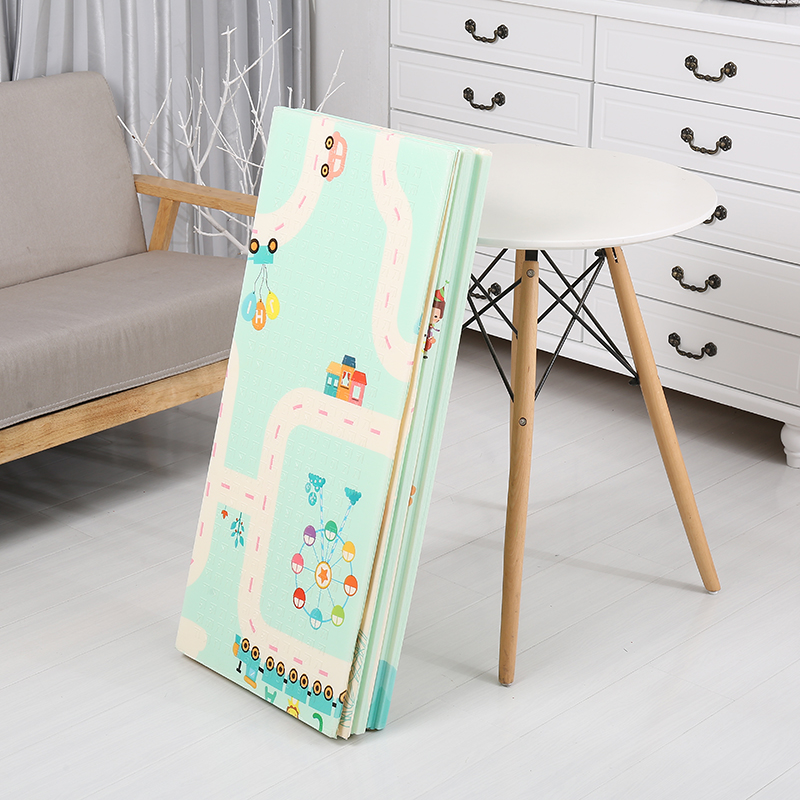
Let us examine the format advantage. The rolling format stands in stark contrast to traditional interlocking puzzle mats. A single-piece, rollable surface quickly resolves very specific consumer pain points. Liquid spills easily seep through the cracks of puzzle pieces, ruining floors underneath. Edge pieces often become dangerous chewing toys for curious family pets. A continuous rolling mat eliminates these hazards entirely. It gives parents ultimate peace of mind and requires significantly less cleanup duty.
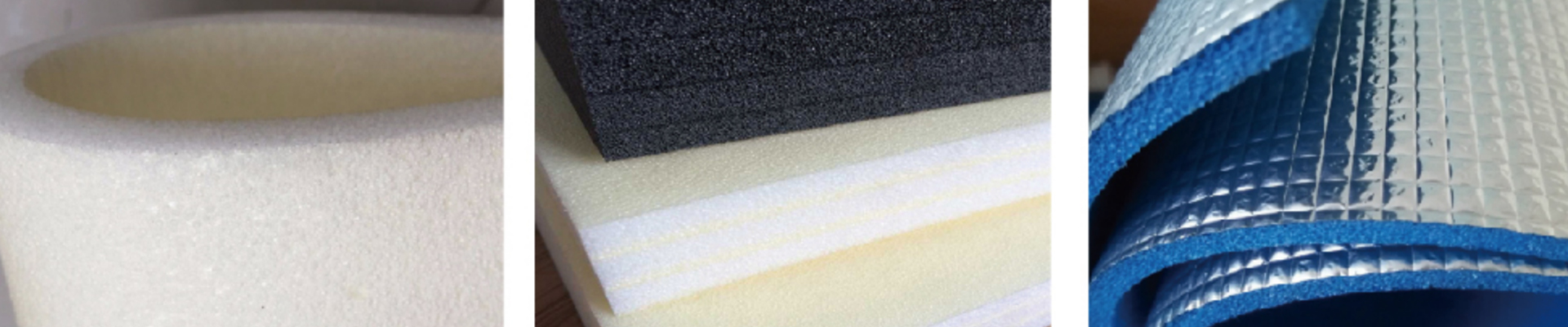
Retail buyers must understand the core differences between popular mat materials. We will compare EVA, PVC/TPU, and XPE directly to highlight where the true value lies.
Manufacturers find EVA extremely cheap to produce. It feels very lightweight, which keeps shipping costs minimal. However, frequent formamide contamination risks plague EVA products. It offers lower durability over time and scratches easily. Modern buyers generally perceive it as a budget or low-quality option. Parents actively avoid it once they read about potential chemical exposure.
These materials provide an ultra-premium feel. They lay completely flat immediately out of the box and remain highly durable against scratches. The downside is significant. They are incredibly expensive. High production costs lower your retail margins drastically. Their heavy weight increases shipping expenses across the supply chain. Furthermore, PVC requires strict plasticizer testing. You must legally prove it contains no toxic additives before hitting the market.
This material represents the definitive retail sweet spot. XPE gives you the seamless look of premium TPU mats. It shares their waterproof nature. However, factories produce XPE at a fraction of the cost. It naturally exists free from BPA, phthalates, and latex. The material also offers exceptionally high shock absorbency. This cushioning greatly supports infant motor development during crucial milestones like crawling and standing.
| Material Type | Cost to Produce | Safety Profile | Durability & Feel |
|---|---|---|---|
| EVA | Very Low | High risk of formamide | Low; easily damaged |
| PVC / TPU | Very High | Requires strict plasticizer testing | Ultra-premium; heavy |
| XPE | Medium | Naturally BPA & Phthalate free | Excellent shock absorbency |
Using "non-toxic" as a simple marketing gimmick presents a massive danger to your brand reputation. Today's consumers actively look for verifiable proof. They read packaging labels closely. They search for specific laboratory certifications online. You must replace vague buzzwords with hard evidence. Verifiable claims always convert better than empty promises in the baby gear sector.
To sell safely across major regions, you must align your products with established legal frameworks. Missing these certifications can result in product recalls or marketplace bans.
You should update your retail listings to explicitly state the "Zero" standard. Shoppers at the bottom-of-funnel evaluation stage look for these exact phrases. Try using bullet points like "Zero Formamide, Zero Off-Gassing, Zero PVC". Highlighting these zeros drastically increases conversion rates. It reassures parents right before they click the checkout button.
Brands can approach product sourcing in two distinct ways. Your choice depends entirely on your available capital and long-term brand strategy.
This route fits rapid market entry perfectly. You can test consumer demand while minimizing upfront capital risks.
Established brands and boutique retailers benefit most here. Companies wanting to command premium pricing should always choose this customized path.
You must acknowledge the volumetric shipping challenge when planning your logistics. Rolling mats simply take up more space in shipping containers and warehouses. They require larger carton dimensions than folding XPE mats. This spatial footprint represents the primary operational drawback of the rolling format.
How do you mitigate this issue? You optimize carton dimensions alongside your manufacturing partners. Small adjustments to the rolled diameter maximize container load efficiency. You fit more units onto every pallet, which brings down the landed cost per unit.
The premium you pay for shipping is almost always worth it due to the unboxing experience. Folding mats suffer from deep, permanent creases along their fold lines. Rolling mats avoid this critical flaw entirely. They deliver a premium, crease-free unboxing experience right away. This immediate customer satisfaction drastically lowers your return rates and negative reviews.
For your pricing strategy, you should base your retail price positioning on thickness and print exclusivity. Thicker mats provide better cushioning and command higher retail prices. Unique OEM designs prevent customers from cross-shopping competitors. This strategy maintains a highly healthy gross margin despite elevated freight costs.
Let us review the core advantages. XPE rolling mats effectively bridge the gap between uncompromising safety requirements and commercial viability. They deliver premium aesthetics and seamless functionality without destroying your profit margins.
We recommend specific next steps for category buyers:
A: Yes, they are completely free from toxic off-gassing. You might notice a faint manufacturing odor upon initial unboxing. This harmless scent occurs because factories seal the product tightly inside plastic packaging immediately after production. The smell naturally dissipates within a few hours in a well-ventilated room. It does not contain harmful VOCs.
A: Industry baselines vary based on your customization levels. If you select standard factory designs and simply customize the packaging, MOQs sit around 300 to 500 units. If you require custom print runs with unique patterns, factories usually require an MOQ of 1,000 to 2,000 units to cover print-film tooling costs.
A: Thickness heavily influences both cost and target audience. A 10mm mat serves as the entry-level baseline for budget-conscious shoppers. A 15mm mat offers the ideal balance of cushioning and cost, making it the most popular retail choice. A 20mm mat represents the ultra-premium tier, appealing strongly to parents with hardwood floors.
A: Both formats have distinct advantages. Folding mats offer superior shipping efficiency because they pack tightly into small cartons. Rolling mats consume more shipping space but deliver a premium, seamless surface. The crease-free experience of a rolling mat generally generates better customer reviews and fewer returns. Choose based on your audience priorities.