
Views: 0 Author: Site Editor Publish Time: 2026-07-09 Origin: Site


Outfitting commercial spaces carries incredibly high stakes for facility managers and business owners today. Whether you operate a high-intensity martial arts studio, a busy daycare center, or a demanding industrial zone, your floor matting directly impacts user safety on a daily basis. Making the wrong flooring choice increases liability risks significantly. It also quickly drains operational budgets through frequent, unexpected replacements. To mitigate these hazards, you need reliable, cost-effective materials capable of handling heavy physical impacts without failing.
Expanded Polyethylene has successfully emerged as a dominant, budget-friendly choice for these intense, impact-heavy environments. This guide will carefully unpack the structural physics behind this versatile material. We will objectively compare it to popular alternatives on the market, helping you understand exactly where it excels. Finally, we provide a practical framework for your procurement evaluation, ensuring you select the best possible flooring solution for your specific commercial facility needs.
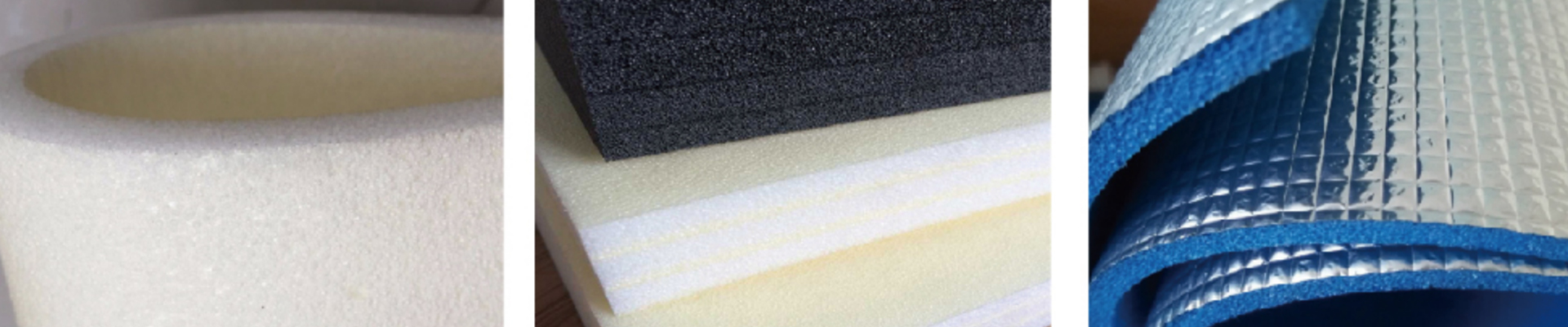
The manufacturing process relies on fascinating physics to protect users from injury. Engineers create it using a specialized non-cross-linked expansion process. This specific method creates a distinct closed-cell structure throughout the core. Microscopic air pockets become permanently trapped inside the plastic matrix. When an athlete applies sudden pressure, these trapped pockets act like thousands of tiny micro-shock absorbers. They quickly compress inward to handle the physical stress, adapting to the exact shape of the impact.
This physical design excels at kinetic energy dispersion. Imagine a gymnast landing heavily from a vault or a judo athlete falling flat onto the mat. Instead of bouncing the impact energy straight back up into the joints, the material spreads the force laterally. The dangerous energy disperses outward across the epe foam surface. This rapid lateral dispersion prevents the abrupt stopping force that commonly causes bone fractures and ligament tears.
Furthermore, this material offers a highly balanced rebound rate. It provides ample resilience to cushion hard, unexpected falls safely. Simultaneously, it maintains enough firmness to support standing athletes during complex movements. If a mat feels too soft, users risk rolling their ankles when pivoting. This specific cell structure achieves the ideal middle ground between deep, protective cushioning and firm structural stability.
Facility managers frequently debate between different polymer foams. Understanding their distinct chemical properties ensures you make the best long-term investment. Let us evaluate how these popular materials compare side-by-side in real-world commercial environments.
First, we look at Ethylene-Vinyl Acetate (EVA). EVA feels much softer to the touch and remains highly flexible during installation. However, it degrades much faster when subjected to repeated heavy impacts. Over time, EVA cells compress completely and fail to regain their original shape. Conversely, EPE maintains far better structural integrity for deep shock absorption over prolonged periods. When making your final decision, choose an EPE floor mat for high-impact sports facilities. Reserve EVA primarily for low-impact, lightweight residential uses like home yoga studios.
Next, consider Cross-linked Polyethylene (XPE). XPE undergoes a complex chemical cross-linking process during manufacturing. This extra step makes it substantially denser and highly tear-resistant. Naturally, this specialized process makes XPE much more expensive to procure. Because EPE skips this intensive cross-linking stage, it remains lighter and much more cost-effective for large spaces. It also boasts excellent recyclability compared to XPE. You should use XPE for premium, permanent professional installations. Choose EPE for budget-conscious facilities needing rapid rollout capabilities, thick padding, and easy replacement cycles.
Material Properties Comparison Chart
| Material Type | Cell Structure | Durability vs. Impact | Cost Profile | Best Commercial Use Case |
|---|---|---|---|---|
| EPE | Closed-cell, non-cross-linked | High shock absorption, moderate tear resistance | Highly cost-effective | Dynamic impact sports, daycares |
| EVA | Closed-cell, elastomeric | Low-impact resilience, compresses over time | Moderate | Light residential, stretching areas |
| XPE | Closed-cell, chemical cross-linked | Extreme tear resistance, highly dense | Premium / High | Permanent professional installations |
This versatile material excels across several distinct commercial industries today. Its unique physical properties make it ideal for specific environments prioritizing daily human safety.
In martial arts and gymnastics, facility owners rely heavily on this exact material. You will frequently find it serving as the thick core padding inside professional judo tatami mats and large gymnastics crash mats. It consistently performs well in standardized drop-tests required by sporting federations. By safely absorbing high-velocity throws and acrobatic dismounts, it offers crucial injury mitigation for athletes. The shock absorbing EPE foam disperses energy fast enough to protect fragile spines and joints during intense, repetitive training sessions.
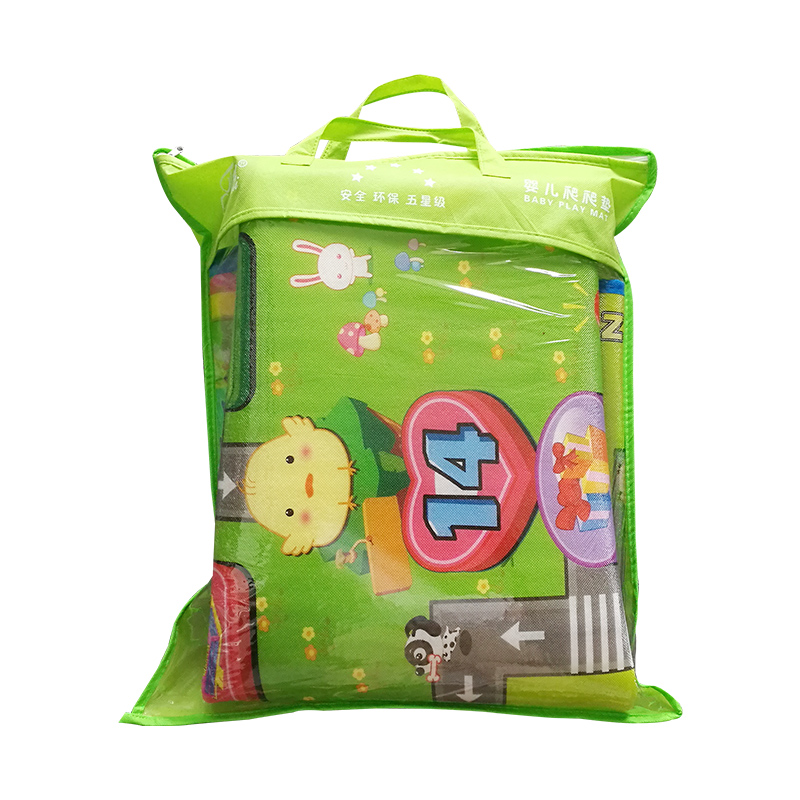
Early childhood and daycare centers represent another major commercial application. Toddlers constantly require safe, soft spaces for active sensory play and daily movement. This material is fundamentally non-toxic, odorless, and hypoallergenic. It provides a cushioned barrier against unforgiving concrete or hard tile floors. Additionally, daycare staff deeply appreciate the ease of cleaning. You can easily sanitize the waterproof surface daily, helping child centers maintain strict hygiene and local safety compliance.
However, outlining transparent limitations builds genuine buyer trust. You should absolutely avoid using this material under heavy, static loads. It performs poorly beneath heavy weightlifting equipment, metal squat racks, or large commercial treadmills. Prolonged localized pressure forces the closed cells to flatten permanently beneath the heavy feet of the machinery. This constant pressure causes irreversible compression indentations. For heavy machinery zones, you must opt for high-density vulcanized rubber flooring instead.
Commercial facility managers must expertly balance initial budgets against long-term durability. When outfitting large square-footage facilities, the cost advantages of this material become incredibly obvious. Purchasing these mats in bulk significantly reduces upfront capital expenditures compared to premium rubber or XPE alternatives. This allows public gyms and expanding school districts to cover massive floor areas while respecting tight operational budgets. The strong return on initial investment stems from the material's everyday reliability and low replacement rate.
Maintenance protocols also drive up facility expenses quickly if mismanaged. Fortunately, closed-cell waterproofing offers a major business benefit for your janitorial staff. The structural design ensures sweat, accidental beverage spills, and high ambient humidity simply cannot penetrate the core. Liquids remain safely pooled on top for quick towel removal. This impermeable barrier actively prevents dangerous mold and bacterial growth deep within the padding. Ultimately, this drastically lowers your long-term daily maintenance costs. Your cleaning staff can confidently use standard commercial sanitizing solutions without chemically degrading the core.
Modern corporate procurement heavily emphasizes Environmental, Social, and Governance (ESG) standards. Facility owners face increasing regulatory pressure to select eco-friendly building materials. This polymer answers that call perfectly for the fitness sector. It remains entirely non-toxic, arriving completely free of BPAs and harmful phthalates. Furthermore, it boasts a highly recyclable end-of-life profile. When the mats finally reach the end of their usable lifecycle, specialized recycling facilities can melt them down for industrial repurposing. This workflow helps modern organizations meet strict environmental compliance standards easily.
Procuring the right material requires understanding specific technical specifications. A blind purchase based purely on price often leads to premature material failure. Follow these structural guidelines when sourcing your next major batch of flooring.
First, thoroughly understand the relationship between density and thickness metrics. Buyers often mistakenly believe thicker padding automatically provides better bodily protection. This assumption is completely false. A very thick but low-density pad will bottom out immediately during a hard fall, offering zero protection. You must match the core density, typically measured in kilograms per cubic meter (kg/m³), to your specific use case. High-impact sports require higher densities for structural resistance, regardless of the overall physical thickness.
Second, carefully consider your surface laminations. The raw polymer core has a natural vulnerability to sharp punctures and friction wear from shoes. To solve this common issue, manufacturers pair the core with highly durable outer layers. Bonding a heavy-duty vinyl or textured PVC layer over the core dramatically increases its commercial lifespan. This hybrid approach gives you maximum internal shock absorption alongside rugged external tear resistance. An EPE floor mat finished with a vinyl cover easily withstands athletic shoes, equipment dragging, and heavy daily foot traffic.
Finally, you must rigorously evaluate your potential suppliers. Ask manufacturers direct, technical questions before signing a bulk supply contract. We highly recommend asking these specific questions to gauge their expertise:
Asking these detailed questions quickly separates premium, reliable manufacturers from low-tier producers who cut corners.
Selecting the appropriate commercial flooring requires careful operational foresight and technical understanding. As we have explored throughout this guide, this versatile polymer strikes the optimal balance between high-end impact protection and budget-friendly scalability. It heavily outperforms basic EVA options in overall durability while costing significantly less than premium XPE materials.
When shortlisting your final material choices, carefully assess your primary facility use. Focus strictly on distinguishing dynamic impact zones from static heavy load areas. Map out your total square footage to determine exactly where you need deep athletic cushioning versus hard rubber support. Using the right material in the right zone actively prevents rapid degradation.
Take action today to secure your facility's safety. Reach out to verified commercial manufacturers to request comprehensive technical specification sheets. Ask for physical material samples so your coaching team can test the density firsthand. Finally, secure a customized bulk pricing quote based on your exact project dimensions and specific density requirements.
A: Yes. Due to its unique closed-cell structure, it completely repels and does not absorb liquids. This physical barrier stops sweat and accidental spills from seeping into the core, making it incredibly easy to sanitize and highly resistant to mold growth.
A: Yes, eventually. While the material is highly durable, repetitive high-velocity impacts in the exact same spot will permanently compress the cell structure over several years. This natural wear necessitates standard replacement cycles for high-traffic gymnasiums to maintain optimal safety standards.
A: Absolutely. It is fundamentally non-toxic, completely odorless, and hypoallergenic. Because it contains no harmful BPAs or phthalates, manufacturers widely use this identical material in infant play mats and even food packaging products worldwide.
A: It possesses excellent thermal insulation properties, making it highly stable in standard indoor environments. It easily maintains its structural integrity at room temperature. However, users should note that the material can become slightly rigid in sub-freezing conditions, which marginally reduces its immediate flexibility.