
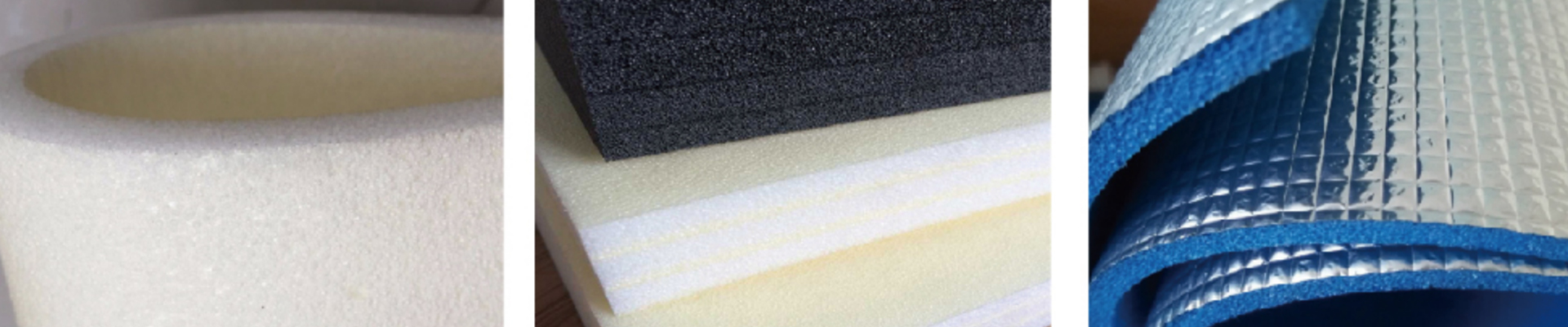
Views: 0 Author: Site Editor Publish Time: 2026-07-03 Origin: Site


Packaging failures cost businesses millions annually. Selecting the wrong packaging thickness leads to either unacceptable damage rates (under-packaging) or inflated dimensional weight (DIM weight) shipping costs (over-packaging). Under-packaging exposes delicate goods to severe transit shocks. Over-packaging drains your logistics budget through excessive volumetric freight charges. You need a reliable method to find the perfect middle ground.
We will provide a quantifiable, engineering-based framework for your operations. You will learn how to select the exact specifications of epe material required for specific product weights, fragilities, and transit conditions. Supply chain managers and packaging engineers can use this guide. It helps balance shock absorption perfectly against material cost efficiency.
Packaging engineers rely on the fragility factor, commonly called the G-factor. This metric defines the maximum deceleration a product can survive without sustaining damage. Highly sensitive items have a low G-factor. Precision optics and delicate medical devices fall into this category. They require higher deceleration distances to slow down a fall gradually. Thus, they demand thicker, specialized shock absorbing EPE foam. The foam must compress deeply enough to cushion the impact.
Contrast this requirement against rugged items. Machined metal parts and solid hardware boast a high G-factor. They withstand sudden impacts easily. These items require much thinner foam. Your goal here shifts from impact absorption to simple scuff resistance. You only need a thin layer to prevent scratches during transit vibration.
You cannot select thickness based on fragility alone. You must also calculate static loading. This involves evaluating how the weight of the product distributes over the surface area of the foam. A heavy object resting on a small foam contact point creates intense pressure. This dictates the required support capacity.
Engineers carefully watch for the risk of "bottoming out." Bottoming out happens if the material is too thin for a heavy, localized load. The foam compresses fully under the weight. It loses all cushioning ability. When a drop occurs, the flattened foam transfers 100% of the shock directly to the product. Proper static loading calculations prevent this catastrophic failure.
Manufacturers produce very thin sheets for specific, lightweight applications. You usually buy these in large rolls.
Mid-range thicknesses serve as the workhorse for standard e-commerce shipping. They provide a versatile balance of flexibility and structure.
When protecting expensive or heavy machinery, you need maximum deceleration space. You achieve this using thick blocks.
Standard Foam Thickness Reference
| Thickness Range | Primary Function | Typical Product Matches |
|---|---|---|
| 0.5mm - 5mm | Scratch prevention, interleaving | Glassware, painted metals, dishes |
| 10mm - 25mm | Vibration dampening, light drops | Laptops, small appliances, routers |
| 30mm - 100mm+ | Heavy impact deceleration, blocking | Servers, engines, large displays |
Many buyers assume a thicker pad guarantees better protection. This assumption causes frequent packaging failures. Thickness alone is a flawed metric. You must evaluate density alongside thickness. A 50mm low-density plank might seem thick enough. However, it may compress too quickly under a heavy weight. The product hits the box floor anyway.
Conversely, a 20mm high-density plank introduces a different problem. It might feel incredibly sturdy. Yet, it might transfer shock directly to a lightweight, fragile item due to excessive stiffness. The foam must yield to absorb energy.
You achieve optimal protection by matching product characteristics to foam specifications. Consider these core rules:
Variable Matching Chart
| Product Profile | Recommended Density | Recommended Thickness |
|---|---|---|
| Heavy & Rugged | High (Firm) | Low to Medium |
| Heavy & Fragile | Medium-High | High (Deep Cushion) |
| Light & Rugged | Low | Low (Surface Only) |
| Light & Fragile | Low (Soft) | High (Deep Cushion) |
You might wonder how suppliers create massive blocks of protective material. Custom-extruding a single ultra-thick block presents significant manufacturing challenges. It requires specialized machinery and long cooling times.
Instead, laminating multiple layers of standard-thickness epe material is often more cost-effective. Suppliers use heat to bond thinner sheets together. This process creates thick, resilient planks. The thermal bonds do not compromise the shock absorption. In fact, laminated layers perform exceptionally well during multiple impacts.
Carriers charge based on volume, not just actual weight. This practice is known as dimensional weight pricing. Increasing your foam thickness by just 10mm on all sides of a box creates a cascading effect. A box measuring 300mm across suddenly becomes 320mm. This slight increase can push your package into a higher volumetric billing tier.
You pay to ship empty air. Over-engineering your foam thickness directly inflates freight overhead. You must design the packaging strictly to meet the G-factor requirement. Do not add extra padding "just to be safe."
Smart packaging design reduces overall package size without sacrificing protection. You do not always need to fully encapsulate the product in thick foam. Instead, employ value engineering strategies.
Utilize targeted corner blocks. Most impacts happen on the corners or edges of a box. Place thick foam only where it matters most. You can also use end-caps to suspend the product in the center of the carton. This approach leaves empty space along the flat sides. It drastically reduces material usage while maintaining strict drop survival rates.
Compare the unit cost of your material sourcing options carefully. Standard rolls offer the lowest unit cost. They require no special tooling. However, their protection limits are strict.
Custom-fabricated thick inserts cost more upfront. You must factor in tooling charges and die-cut setup fees. Yet, they reduce labor times on the assembly line. Workers simply drop the product into a pre-cut cavity. You must project these material costs against potential freight savings. Smaller custom inserts often save more in shipping than they cost in tooling.
Never rush into high-volume production without physical prototypes. Digital designs cannot perfectly simulate physical compression behavior. We recommend requesting sample cuts from suppliers. Ask for varying thickness options based on your initial math.
Test the fit manually. Check the tolerance around the product. It should fit snugly. Loose items generate kinetic energy before hitting the foam. This renders your thickness calculations useless.
Real-world validation separates good design from guesswork. You must subject your prototypes to formalized testing. Organizations like ISTA and ASTM provide standardized drop testing protocols. They simulate the exact shocks a package encounters during transit.
You must know how to interpret test results accurately. Sometimes the product survives the drop, but the packaging fails. Inspect the material carefully. If the foam cell structure ruptures permanently, a thicker or denser specification is required. Flattened cells cannot protect the item on multi-leg shipping journeys. The foam must bounce back.
Your design is only as good as your supplier's execution. Communicate your technical requirements clearly. Ask your supplier key technical questions.
Strict tolerances prevent unexpected box bulging. Consistent density guarantees reliable shock absorption every time.
We have explored the transition from guesswork to calculated packaging engineering. Relying on intuition for packaging thickness creates unnecessary risks. By calculating G-factors and static loading, you secure reliable transit safety.
Always remember that the right thickness optimizes the balance between localized shock absorption, material spend, and freight overhead. You do not need to over-pack to achieve zero damage rates. You simply need to engineer the spacing intelligently.
Take action today. Audit your current damage claims against your packaging specifications. Identify whether you are over-packaging or under-packaging. Request new prototypes, run standard drop tests, and refine your designs.
A: Yes, thermally bonded layers perform similarly to solid extruded blocks. This is a standard industry practice for achieving custom thicknesses without expensive extrusion setups.
A: EPE offers multi-impact memory (it bounces back). This means you often need less thickness for repeated drops compared to EPS, which shatters or permanently deforms after a single impact.
A: True shock absorption (drop protection) typically requires a minimum of 15mm to 20mm thickness, depending on the product's weight and the drop height standard being tested.
A: No. Because EPE is a closed-cell material, even thin sheets (1mm) provide an effective moisture and vapor barrier, provided they are securely sealed.