
Views: 0 Author: Site Editor Publish Time: 2026-06-30 Origin: Site


Navigating protective packaging options often reveals a confusing terminology overlap. Packaging professionals frequently struggle to differentiate various plastic foams. You might find your team debating the merits of different polymers. The industry often uses terms interchangeably. This creates significant confusion during procurement.
"EPE" (Expanded Polyethylene) is fundamentally a subset of the broader "PE" (Polyethylene) foam family. Procurement and engineering teams comparing the two usually weigh standard non-cross-linked forms against other variants. They often compare molded items or thick planks to basic extruded rolls. They might also evaluate them against XLPE (Cross-Linked Polyethylene). Choosing the wrong polymer structure leads to damaged shipments. It can also waste your packaging budget.
This guide provides an objective, metric-driven evaluation of these cushioning options. We will explore cushioning performance, fabrication trade-offs, and supply chain considerations. You will learn how to make an informed final vendor or material selection.
You must establish a firm technical baseline before evaluating protective packaging. Misunderstanding core definitions leads to poor material choices. Let us break down the exact polymer terminology. This helps you specify the correct materials.
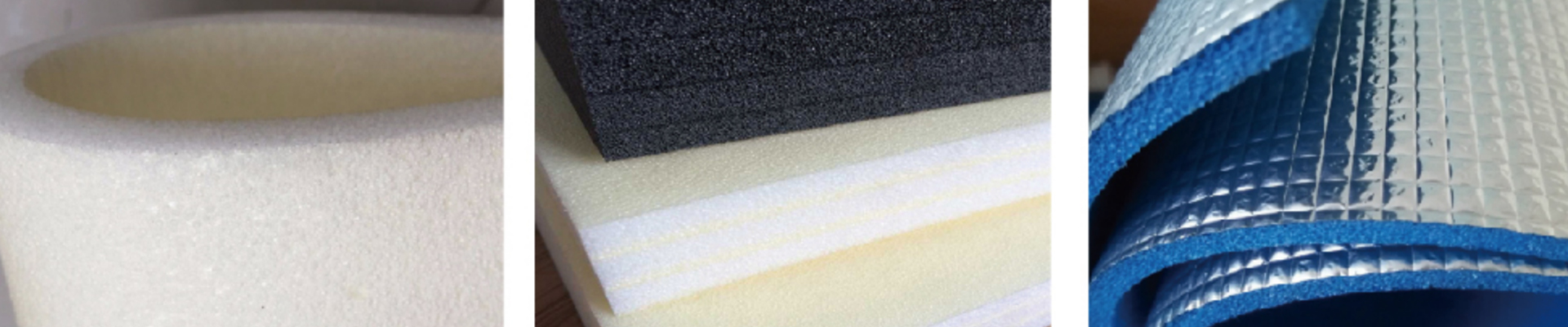
Polyethylene foam represents the parent category of closed-cell plastics. Manufacturers create it by introducing a blowing agent into heated polymer resins. The resulting material traps gas bubbles within the plastic matrix. This cellular structure provides inherent shock absorption. It also offers excellent moisture resistance. The broad "PE" label encompasses many different manufacturing methods. It includes cross-linked, non-cross-linked, extruded, and molded variations. Every EPE product is a PE foam. However, not every PE foam qualifies as EPE.
Expanded Polyethylene (EPE) has very specific physical properties. It remains un-cross-linked during production. This means its molecular bonds do not chemically tie together. The manufacturing process relies entirely on physical expansion. This creates a highly flexible, closed-cell structure. epe material feels soft to the touch. It bends easily without snapping. It also resists shattering under sudden impacts. Engineers value it for exceptional cushioning. It serves as an ideal safeguard for delicate electronics.
Procurement contexts usually use "PE foam" more loosely. Buyers often use this term to describe thin, extruded surface-protection rolls. These basic rolls prevent scratches during shipping. Alternatively, "PE foam" sometimes refers to structurally rigid cross-linked variants. The industry calls this XLPE. Automotive manufacturers use XLPE for Class A surface dunnage. XLPE feels much stiffer than standard EPE. It provides better structural support for heavy parts. Understanding this contrast prevents costly specification errors. You must clarify exact polymer types during vendor discussions.

Packaging engineers evaluate materials based on precise physical metrics. Cushioning performance dictates how well a product survives transit. We must analyze deceleration profiles and vibration resistance. Let us examine how these plastics handle kinetic energy.
Engineers measure impact resistance using G-value curves. These charts show how materials disperse kinetic energy. Lower G-values indicate better shock absorption. Standard epe material excels in this area. It compresses softly upon impact. This extends the deceleration timeframe. Fragile items experience less sudden force. Denser XLPE variants behave differently. They stop impacts abruptly. This transfers more kinetic shock to the packaged product. You should request specific G-curve data for your required drop heights.
Products face continuous vibration during truck and rail transit. Standardized ISTA testing replicates these harsh conditions. Poor vibration dampening causes surface abrasion. It can also loosen internal product components. Highly flexible polymers dampen resonant frequencies effectively. They absorb micro-impacts generated by road bumps. Rigid cross-linked foams sometimes amplify specific vibration frequencies. This phenomenon causes resonance fatigue in sensitive electronics. Non-cross-linked variants typically provide broader frequency absorption. They perform exceptionally well during prolonged transit scenarios.
Materials must survive multiple impacts during a single journey. We call this capability multi-drop resilience. A dropped package might fall again. The packaging must recover its original shape. This recovery rate is known as material memory. Some brittle alternatives fracture after one hit. They lose all protective value instantly. Expanded polyethylene resists this type of failure. It maintains dimensional stability over multiple drops. The closed-cell structure gently re-inflates after compression. It rarely snaps or crumbles under stress. This resilience prevents catastrophic transit damage.
Selecting the right polymer involves more than just physical testing. You must evaluate implementation realities. Scalability and manufacturing risks play huge roles. Let us look at how fabrication methods impact your supply chain.
Manufacturers process these plastics using various cutting methods. Die-cutting remains the most common technique. Waterjet cutting provides higher precision for complex shapes. Heat-welding joins multiple layers together. Working with thick EPE foam material planks is generally straightforward. The un-cross-linked structure melts evenly. This allows for excellent heat-welding results. You can easily build deep custom cavities. Cross-linked variants often resist heat-welding. They require expensive adhesives instead. They do, however, cut much cleaner on a waterjet. You must align your material choice with your fabricator's capabilities.
Form factor heavily influences manufacturing waste. Custom packaging runs generate significant offcuts. Buying blocks or thick planks changes the yield equation. You carve cavities out of solid blocks. This generates substantial scrap volume. Routing deep pockets wastes a lot of raw material. Conversely, working from rolls creates different yield challenges. Extruded roll stock is usually thin. Fabricators must laminate many thin layers to build thickness. This adds processing time. You need to calculate scrap rates carefully. High scrap rates destroy unit economics rapidly.
Shipping costs depend on bulk and density. These materials are inherently lightweight. However, they consume massive amounts of space. You pay for volumetric weight during shipping. Bulk expanded polyethylene requires significant warehouse space. A single truckload carries very little actual mass. Dense cross-linked polymers weigh slightly more. They still consume enormous trailer volumes. You must optimize your inbound logistics. Sourcing locally reduces these exorbitant freight penalties. Many companies fail to calculate warehouse footprint requirements accurately.
Here is a generic breakdown of fabrication characteristics:
| Material Variant | Heat Welding Ease | Waterjet Precision | Typical Form Factor |
|---|---|---|---|
| Standard Expanded PE | Excellent | Good | Thick Planks / Blocks |
| Cross-Linked (XLPE) | Poor (Needs Adhesive) | Excellent | Sheets / Boards |
| Extruded PE Rolls | Good | Fair | Continuous Thin Rolls |
Sustainability concerns now drive packaging decisions. Regulatory pressures demand environmentally responsible solutions. You cannot ignore end-of-life disposal realities. Let us examine how these materials fit into modern ESG frameworks.
The chemical structure dictates recycling viability. Non-cross-linked polymers hold a major advantage here. They are 100% recyclable under standard programs. Facilities process them as LDPE (Resin ID Code #4). You can melt them down repeatedly. They become new plastic products easily. Cross-linked PE foams face severe recycling hurdles. The chemical bonds prevent standard melting. Recycling facilities generally reject them. They end up in landfills. This reality makes un-cross-linked variants far more attractive for green initiatives.
Evaluating energy intensity provides a clearer environmental picture. Manufacturing any plastic requires fossil fuels. The extrusion and expansion processes consume significant electricity. However, closed-loop recycling programs mitigate this impact. Many fabricators collect clean manufacturing scrap. They feed it back into the extrusion process. This greatly reduces the overall carbon footprint. Cross-linked manufacturing often generates unrecyclable scrap. This inefficiency increases the lifetime carbon burden. You should audit your supplier's internal scrap management. Closed-loop systems indicate a mature, responsible manufacturing partner.
Governments are actively changing packaging laws. Extended Producer Responsibility (EPR) regulations are expanding globally. These laws hold brands accountable for disposal costs. Packaging that ends up in landfills incurs heavy taxes. This forces a shift away from hard-to-recycle materials. Rigid, mixed-plastic foams face strict bans in many regions. Brands are migrating toward pure, easily categorized plastics. Adopting Resin ID #4 materials protects your company from future regulatory fines. Some brands are even exploring novel biodegradable alternatives. However, standard recyclable polymers remain the most viable commercial choice today.
You need a direct, actionable selection matrix. Theory must translate into practical procurement decisions. Review your project requirements against these specific guidelines. They will help you choose the correct polymer profile.
A thin PE foam sheet provides incredible value for these tasks. It unrolls easily on packing lines. It adds almost no weight to the final shipment.
Using thick planks gives you immense design flexibility. You can route precise pockets for complex geometries. It guarantees excellent multi-drop recovery.
XLPE justifies its higher cost in returnable scenarios. Its rigid nature survives hundreds of transit cycles. It resists oils and industrial solvents effectively.
The choice between general polyethylene rolls and specific expanded planks requires careful analysis. You must balance impact requirements against strict ESG mandates. Unit costs also play a critical role in final selection. Standard expanded variants offer an optimal blend of multi-drop resilience and excellent recyclability. They outperform brittle alternatives easily. Conversely, thin extruded rolls provide unbeatable economy for simple surface protection.
We advise packaging buyers to move beyond generic spec sheets. Always request specific G-curve deceleration data from your suppliers. Demand prototype drop-test reports tailored to your exact product weight. Do not guess on material density.
Take action today to optimize your packaging line. Request a comprehensive material audit from your current vendor. You should also order prototype samples for standardized ISTA transit testing. Real-world physical testing provides the ultimate proof of performance.
A: Yes, it is highly moisture-resistant. It features a closed-cell structure. The internal plastic bubbles do not connect with one another. This prevents water from soaking into the material. It acts as an excellent barrier against humidity and rain during transit. It will not act like a sponge.
A: Yes, you can successfully heat-bond them together. Both materials are fundamentally un-cross-linked polyethylene. They share very similar melting points and thermal properties. When heated, their surfaces melt and fuse cleanly. This thermal compatibility allows fabricators to create complex, multi-layered packaging designs without using harmful liquid adhesives.
A: It degrades slowly if exposed to direct sunlight. Ultraviolet (UV) rays break down the polymer chains over time. This causes the surface to become brittle and yellow. However, in standard, dark warehouse conditions, it boasts a remarkably long shelf life. It will maintain its cushioning properties for years if stored properly indoors.