
Views: 0 Author: Site Editor Publish Time: 2026-07-05 Origin: Site


Procurement managers and packaging engineers face a constant challenge. They must balance impact protection, shipping costs, and sustainability. Finding a single material to hit all three targets is difficult. You need a reliable solution for your supply chain. Expanded Polyethylene (EPE) foam offers a compelling answer. It is a closed-cell, non-cross-linked material. It bridges the gap between rigid plastics and fragile alternatives. This article provides a realistic evaluation of the material. We will explore its technical properties, commercial applications, and distinct limitations. Our goal is simple. We want to help you determine if it fits your specific operational needs. You will learn exactly when to deploy this material and when to avoid it entirely.
To make informed material choices, we must look at the science behind the product. Expanded Polyethylene is a thermoplastic polymer. Manufacturers use a blowing agent to expand the base resin. This process creates millions of tiny, independent bubbles. We call this a closed-cell structure. The closed cells trap air tightly. This structure provides high elasticity and exceptional shock absorption.
The material is also non-cross-linked. This means its polymer chains do not share chemical bonds. They merely tangle together physically. Because it is non-cross-linked, you can easily melt and recycle it. The trapped air also blocks moisture. Water cannot pass between the independent cells. This creates a highly effective vapor barrier and robust thermal insulation.
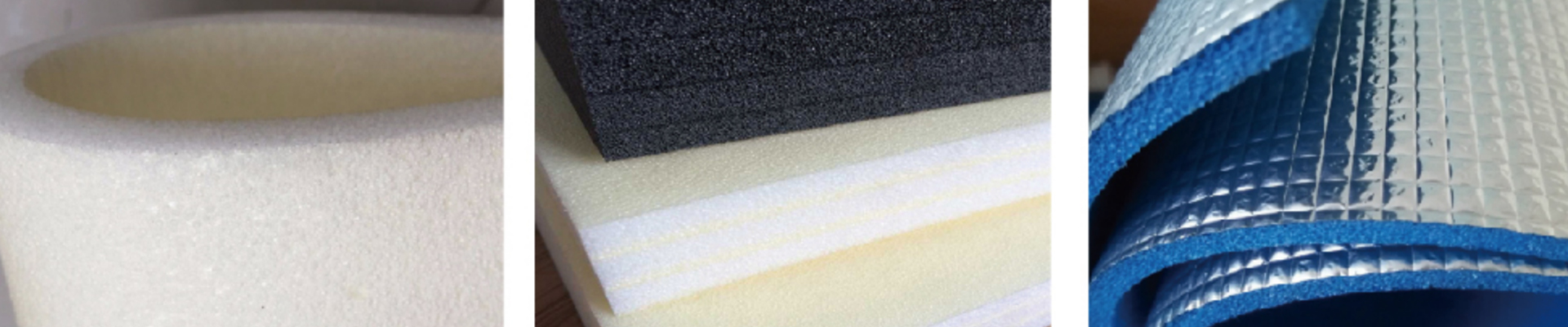
You can procure this material in various physical formats. Your choice depends entirely on your packaging line or construction needs. Consider the two primary form factors:
General claims about durability are rarely helpful for engineers. You need objective specifications. When evaluating epe foam, look for these standard metrics:
Knowing the specs is only half the battle. You must link these properties to real-world business outcomes. The material shines in industries that demand reliable protection without excess weight. It helps companies lower dimensional weight compared to using heavier alternative packaging.
Modern supply chains are rough. E-commerce packages endure an average of 15 touchpoints before delivery. EPE absorbs repeated impacts without losing its shape. This drastically reduces Return Merchandise Authorization (RMA) rates due to transit damage.
In the electronics sector, manufacturers use static-dissipative variants. These pink-tinted foams prevent electrostatic discharge from destroying delicate printed circuit boards. In the automotive industry, parts ship across the globe. Auto manufacturers use custom die-cut inserts to hold painted bumpers and mirrors. The soft surface prevents micro-scratching caused by road vibrations.
Builders value materials that block moisture and insulate efficiently. EPE delivers on both fronts. Construction crews use it as expansion joint fillers in concrete work. It compresses easily as the concrete expands in hot weather.
HVAC technicians use pre-slit EPE tubes for pipe insulation. Copper refrigerant lines sweat in humid environments. The foam prevents condensation buildup. This stops water from dripping into wall cavities and causing mold. Its low thermal conductivity also improves HVAC system efficiency.
The closed-cell structure traps air permanently. This gives the material immense natural buoyancy. Manufacturers use it extensively in marine equipment and safety gear. You will find it inside life jackets, pool noodles, and floating marine markers. Because it has zero water absorption, the equipment never becomes waterlogged or heavy over time.
Best Practice: Always align the material density with the application. Use 20 kg/m³ for light electronics and 30 kg/m³ or higher for automotive parts and buoyancy aids.
Choosing the wrong protective material leads to product damage or bloated budgets. You must compare the alternatives objectively. The three most common poly-foams serve distinctly different purposes.
Material Comparison Matrix
| Feature | EPS (Expanded Polystyrene) | EPE (Expanded Polyethylene) | XLPE (Cross-Linked Polyethylene) |
|---|---|---|---|
| Structure | Rigid, brittle beads | Flexible, non-cross-linked | Flexible, chemically cross-linked |
| Impact Resilience | Single-use (crumbles) | Multi-drop (recovers shape) | Extreme durability (long-term) |
| Surface Texture | Rough, abrasive | Smooth, soft | Ultra-smooth, premium feel |
| Relative Cost | Low | Moderate | High |
| Primary Use Case | Insulation boards, cheap coolers | E-commerce packaging, electronics | Class-A automotive, medical cases |
EPS is the classic white "Styrofoam" we all know. It is cheaper and highly rigid. However, it is extremely brittle. It crumbles under repeated impacts. If a delivery driver drops an EPS package, the foam shatters. It absorbs the shock once, but subsequent drops will damage the product inside.
EPE costs slightly more, but it remains flexible. It retains its shape after multiple impacts. This makes it the superior choice for multi-drop shipping scenarios. You avoid the nightmare of customers opening boxes filled with broken white beads.
XLPE commands a premium price. Manufacturers chemically cross-link the polymer chains during production. This creates a dense, extremely durable material with a beautifully smooth surface. It regularly achieves Class-A automotive approval for direct contact with luxury finishes.
EPE provides a cost-effective alternative. It is non-cross-linked. While it degrades faster under heavy, repeated mechanical stress, it is sufficient for 80% of standard commercial packaging needs. Choose XLPE for reusable, high-end medical transit cases. Choose EPE for standard commercial logistics.
Regulatory pressure on plastic packaging is growing worldwide. Governments are mandating extended producer responsibility. Procurement teams must navigate complex greenwashing claims. We need to view this material through a strict compliance lens.
Technically speaking, EPE is 100% recyclable. It usually falls under Resin Identification Code #4 (LDPE). Because it lacks chemical cross-linking, recyclers can easily shred it. They melt it down and extrude it into new plastic products like trash bags or composite lumber. On paper, it looks perfectly eco-friendly.
The reality of recycling is primarily a logistical hurdle. This material is mostly trapped air. If you fill a 53-foot trailer with loose foam waste, you are essentially paying to transport air. Shipping this waste to a recycling facility is often cost-prohibitive.
The math only works if the generating facility uses a foam densifier or compactor. A densifier melts or crushes the foam on-site. It turns massive piles of fluff into heavy, dense plastic bricks. Recyclers will happily buy these dense bricks.
Skeptical-Friendly Advice: Never claim "green packaging" credentials blindly. We highly recommend you verify the end-of-life disposal options in your specific geographic region. Check if local municipal facilities actually accept Resin #4 foams. If they do not, your packaging will end up in a landfill despite being technically recyclable.
Integrating a new material into your operations involves hidden friction points. Buyers frequently overlook handling and fabrication constraints. Keep these implementation factors in mind to avoid costly surprises.
The "shipping and storing air" problem affects procurement as much as recycling. Buying large quantities of pre-cut sheets or thick rolls requires a massive warehouse footprint. A few pallets can easily consume your valuable rack space. You must balance the volume discounts of bulk purchasing against your internal warehousing costs. Implement just-in-time (JIT) delivery schedules with your suppliers if space is tight.
Do not store this material outdoors. Untreated EPE foam degrades rapidly when exposed to ultraviolet light. Extended exposure to direct sunlight breaks down the polymer chains. The material will turn yellow, become brittle, and eventually crumble into dust. If outdoor storage is unavoidable, you must request UV-stabilized additives from your manufacturer.
Fabrication can be tricky. Polyethylene has notoriously low surface energy. It behaves a lot like a Teflon pan. Standard liquid adhesives, PVA glues, or solvent-based cements simply will not bond well to it. The glue will peel right off once dry.
To assemble custom inserts, fabricators use specialized hot melt adhesives. Better yet, they use heat welding processes. Heat welding melts the surface slightly and fuses two layers together permanently. Factor this into your tooling costs if you plan to fabricate in-house.
Not all suppliers maintain strict quality control. You must audit your vendors carefully. Look for three main indicators of quality:
Common Mistake: Failing to request physical samples. Always squeeze, cut, and test the material in your own facility before committing to a bulk contract.
Selecting the right protective material determines how well your products survive the supply chain. You must base your decision on objective data. If you need exceptional moisture resistance, high shock absorption, and moderate costs, EPE is your best option. It bridges the gap perfectly for e-commerce and commercial transit. However, you should avoid it if your project demands heavy structural rigidity. In that case, choose EPS. If you need extreme, long-term durability for reusable cases, you must upgrade to XLPE.
Take proactive next steps today. Reach out to your suppliers and request material samples of different densities. Calculate your available warehouse storage capacity to see how bulk rolls or sheets will fit into your footprint. Finally, consult with a packaging engineer. They will help you determine the exact density and form factor required for your specific SKU profile. Smart material choices protect your products, your budget, and your brand reputation.
A: Yes. Because it features a closed-cell structure, it has an extremely low water absorption rate. Water cannot penetrate the independent air bubbles. This makes it highly moisture-resistant, excellent for vapor barriers, and perfectly suited for demanding marine applications.
A: For large-scale commercial applications, fabricators use die-cutting presses, CNC routers, or hot-wire cutters to achieve precise shapes. For low-volume operations or prototyping, you can easily cut it using sharp industrial utility knives. Always use a fresh blade to prevent jagged edges.
A: It provides basic sound dampening, specifically for impact noise reduction. Builders often use it under flooring to muffle footfalls. However, it is not a true acoustic foam. It is not designed to absorb or block airborne sound frequencies like voices or music in a recording studio.