
Views: 0 Author: Site Editor Publish Time: 2026-07-07 Origin: Site


When browsing for baby gear, you will see countless lightweight mats heavily marketed to parents. These products are highly affordable. They are incredibly easy to find. However, buyers are rightfully skeptical about how long a simple, lightweight material can survive daily toddler activity. We should not evaluate these products by asking if they are completely indestructible. Instead, ask if they meet the specific lifecycle needs of your own household. Every family navigates different daily routines, diverse flooring layouts, and unique hazards like active pets or heavy furniture.
This guide will unpack the material science behind epe foam. We will help you set realistic durability expectations. We will clarify exactly how this material behaves under pressure. By the end, you will know how to evaluate if this play space is the right investment for your home.
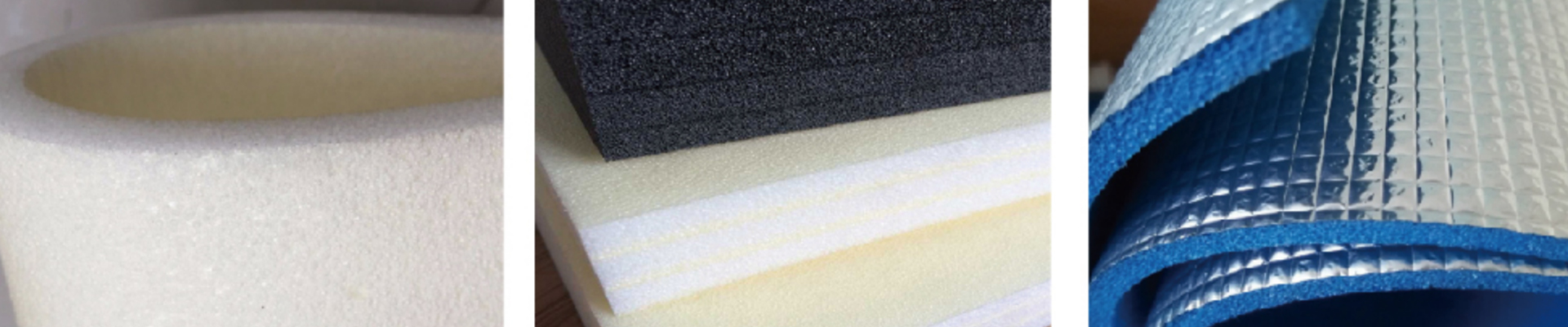
Expanded Polyethylene represents a standard baseline in the plastics industry. Manufacturers define it as a lightweight, semi-rigid plastic. The creation process expands polyethylene resin into a highly cushioned, cellular structure. This structure dictates how the material performs in your living room.
We often praise its "closed-cell" advantage. A closed-cell structure means the microscopic air bubbles inside the plastic do not connect to one another. Liquids cannot pass between these cells. Therefore, liquid absorption remains virtually impossible. Spills wipe away instantly. The surface prevents bacteria from breeding inside the core. Furthermore, these trapped air pockets provide high initial impact resistance. They absorb the sudden shock of a toddler tumbling backward. This makes the material crucial for infant safety during early crawling stages.
To understand its limitations, we must look at the density versus durability matrix. Density changes everything about performance. Industry experts often contrast infant-grade materials against martial-arts-grade padding.
Density Comparison Guide
| Application Type | Density Profile | Primary Benefit | Vulnerability |
|---|---|---|---|
| Infant Play Mats | Low Density | Maximum shock absorption for light bodies. | Low shear strength; tears easily. |
| Gymnastics Padding | Medium Density | Balances firm footing and moderate impact. | Heavier; difficult to roll or fold. |
| Martial Arts Mats | High Density | Resists high-impact shear forces and tearing. | Too firm for delicate infant falls. |
Play spaces use lower-density structures. Manufacturers prioritize cushioning over high-impact shear strength. They want to protect a falling baby, not support a sprinting athlete. This design choice inherently limits its resistance to tearing. You cannot expect a low-density core to survive abrasive, high-friction environments.
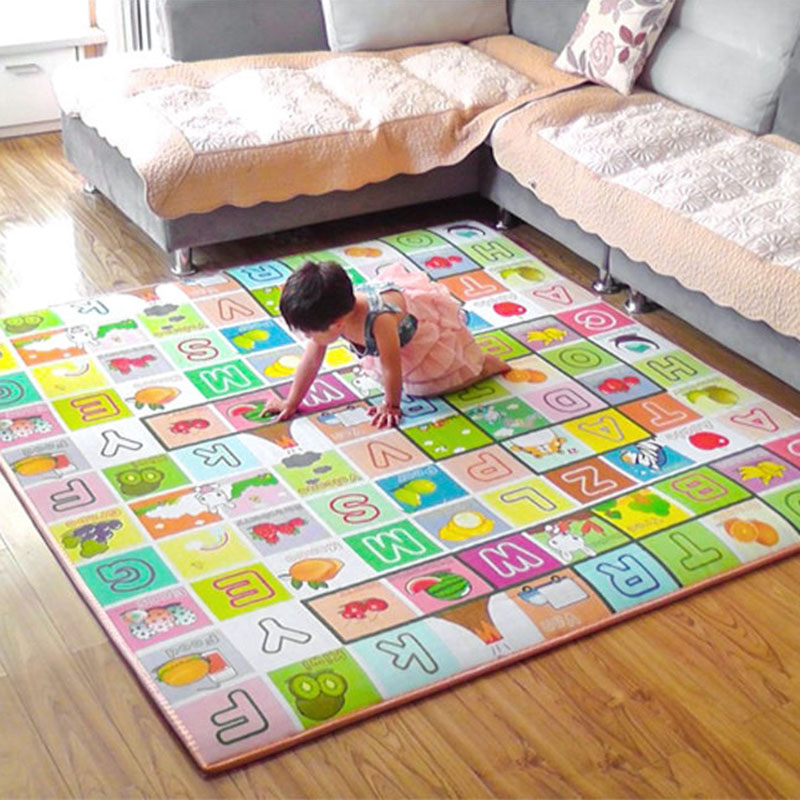
Durability rarely relies on a single metric. To understand how long your purchase will survive, you must evaluate three distinct household risk factors. Each risk factor attacks the material differently.
The Risk: The material completely lacks memory recovery. In material science, "compression set" refers to a foam's ability to bounce back after bearing a heavy load.
The Reality: Leaving heavy furniture on the surface causes permanent structural dents. If you place a wooden playpen, a heavy coffee table, or an adult exercise bike on the mat, the cells underneath will collapse. They burst under sustained pressure. Once they burst, they never reinflate. You will notice permanent craters left behind. If you plan to anchor a baby gate on top of it, expect irreversible damage at the contact points.
The Risk: The top laminate layer lacks puncture resistance. Cat and dog claws easily pierce this thin film. Hard-edged toys or dropped keys can also slice through it.
The Reality: The structural integrity relies heavily on its printed top laminate. This film acts as a skin. Once a pet's claw breaks this skin, the exposed core becomes vulnerable. The core can slowly degrade. It may begin to flake away. Toddlers often pick at these broken spots, worsening the damage. Households containing active pets will see an accelerated decline in visual and structural quality.
The Risk: Aggressive friction separates the layers. Frequent abrasive scrubbing stresses the chemical bonds.
The Reality: Manufacturers bond the printed protective film to the base using heat. Abrasive cleaning tools generate localized heat and friction. Repeatedly scrubbing dried food spills can cause the printed protective film to peel away from the base. Delamination ruins the waterproof barrier. Moisture can then seep under the peeled sections, creating unsanitary pockets.
The manufacturing format drastically alters the expected lifespan. A single piece of material behaves differently than one scored into folding panels. Let us analyze the structural differences.
Structural Vulnerability: A foldable EPE play mat relies on grooves. Engineers call these grooves "living hinges." These hinges are the very first points of failure. Repeated folding and unfolding continuously stresses the thermal lamination at these joints. Over time, the constant bending causes the laminate to crack. Heavy foot traffic directly on a folded crease will accelerate this tearing.
Ideal Use Case: This strategy works best for temporary deployments. It shines during trips to a grandparent's house. It performs wonderfully during park picnics. You can deploy it quickly and pack it away easily. However, you should not view it as a permanent living room installation. The living hinges simply cannot endure years of daily pacing from adults.
Structural Vulnerability: A rolling EPE foam play mat completely eliminates hinge weak points. However, it introduces a different problem. It is highly susceptible to edge-curling. It can suffer from permanent warping if stored tightly rolled in varying temperatures. The core develops "memory" of the rolled shape. Getting the edges to lay flat against the floor can become a frustrating daily chore.
Ideal Use Case: This design serves better as a dedicated, semi-permanent play zone. If you have a designated playroom where the mat is rarely moved, choose the rolling format. The lack of seams makes it easier to sanitize. It offers a smooth, uninterrupted surface for toy cars and blocks.
Parents often feel overwhelmed by chemical acronyms. You deserve a transparent, skeptical-friendly comparison. Let us contrast our baseline material against the three most common alternatives in the industry. This will help you shortlist your options or pivot to a different product entirely.
Manufacturers frequently use EVA to create interlocking puzzle mats. EVA is slightly more durable. It offers a much firmer surface. Toddlers learning to walk often find EVA easier to balance on. However, safety standards shift constantly. Experts generally consider Expanded Polyethylene safer regarding volatile organic compounds (VOCs). EVA often requires rigorous outgassing to release formamide odors. If you prioritize immediate, out-of-the-box non-toxic safety, Expanded Polyethylene provides a better profile.
PU mats usually feature a dense core wrapped in soft, vegan leather. PU is vastly superior in almost every metric. It offers incredible longevity. It boasts high tear resistance. Its aesthetic durability allows it to blend into modern living rooms seamlessly. However, this premium quality carries a steep price tag. PU options typically cost three to five times more. If budget is your primary constraint, PU will not fit the bill.
PVC represents the heavyweight champion of durability. It is the heaviest material available. It stands up beautifully against pet claws, adult shoes, and heavy furniture. Yet, it raises historical toxicity concerns for some parents. PVC requires chemical plasticizers to become soft. Unless a PVC product boasts rigorous, independent certifications proving it is free from harmful phthalates, many parents avoid it. Expanded Polyethylene wins on overall safety and lightness. PVC easily wins on total lifespan and ruggedness.
Even a budget-friendly purchase deserves proper care. If you decide this material fits your current needs, you must implement specific maintenance strategies. Extending the functional life requires adjusting your daily habits.
Understanding the science behind your baby gear empowers you to make smarter purchases. Our final verdict remains objective: epe foam is not a "forever" purchase. It serves as a strategic, highly functional, one-to-three-year solution for your family.
A: Yes, it can. If sharp toys or claws pierce the top lamination, the exposed core becomes vulnerable. Repeated friction on these damaged areas causes the material to peel and flake. If you notice large chunks degrading or peeling away, you must retire the product immediately to prevent a choking hazard.
A: It works well for brief outdoor trips on soft grass. However, dragging it across rough concrete will quickly shred the bottom layer. Furthermore, prolonged UV exposure from direct sunlight makes the plastic brittle. Always bring it back indoors after your picnic or yard time.
A: It usually takes 24 to 48 hours to flatten completely. You can speed up this process by gently reverse-rolling the curled edges. Placing it in a warm room also helps the plastic relax. Avoid placing heavy books on the corners, as this might leave permanent structural dents.
A: No. It suffers from a poor "compression set." This means it cannot bounce back from heavy, concentrated point-loads. If you place a wooden or metal playpen directly on it, the pressure will permanently crush the cells underneath. You will be left with deep, irreversible indentations.