
Views: 0 Author: Site Editor Publish Time: 2026-07-30 Origin: Site


The nursery products market is experiencing a massive shift in consumer expectations. Modern parents demand absolute safety, driving demand away from traditional EVA foam toward newer, non-toxic alternatives. As a B2B buyer, importing foam products involves specific logistical hurdles and strict regulatory risks. Your business success requires perfectly aligning product specifications with stringent target market standards. This article serves as a practical, technical guide for wholesale importers. We will evaluate suppliers, dissect material specifications, and unpack exact compliance requirements for Cross-linked Polyethylene products. You will discover how to verify crucial safety certifications and optimize container space. We also explore how selecting the correct form factor impacts profitability and warehousing costs. Prepare to streamline your sourcing process and protect your brand reputation.
XPE foam provides an optimal balance of cost, safety (BPA/phthalate-free), and durability compared to EVA, EPE, or PU alternatives.
Verified compliance with regional safety standards (CPC/ASTM for the US, CE/EN71/REACH for the EU) is non-negotiable for customs clearance and retail distribution.
Freight volume is the primary profit variable; choosing between folding designs and an xpe rolling play mat significantly impacts shipping density and warehousing costs.
Successful OEM partnerships require strict vetting of mold costs, minimum order quantities (MOQs), and verifiable non-toxic printing technologies.
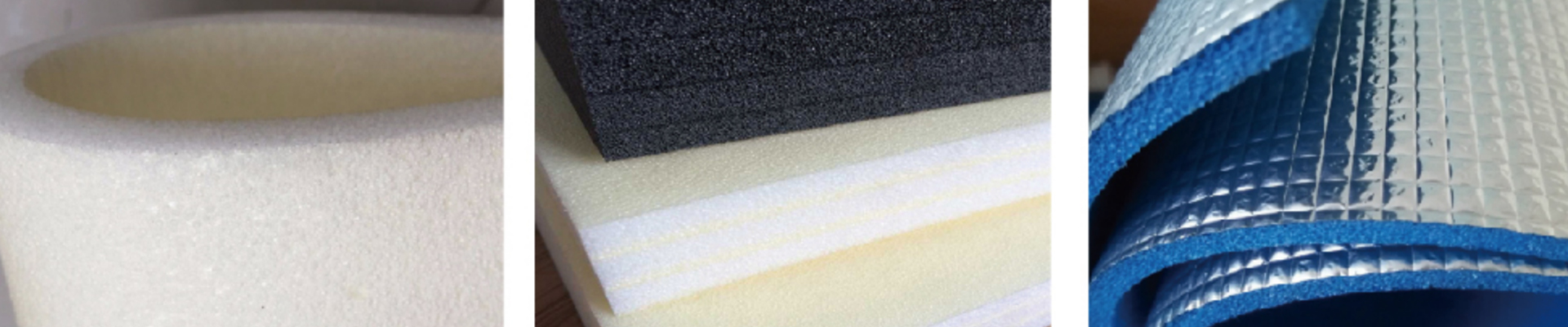
We must first understand material realities before committing to bulk manufacturing orders. Cross-linked Polyethylene stands out due to its closed-cell structure. This specific cellular arrangement blocks moisture absorption entirely. It creates a waterproof surface. Parents can wipe away spills instantly. Furthermore, this structure inhibits mold growth. You get an inherently hygienic product. The manufacturing process uses heat and pressure to cross-link polymer chains. This thermal bonding creates exceptional resilience without relying on harmful chemical plasticizers.
Let us compare this material to EPE (Expanded Polyethylene). EPE remains significantly cheaper to produce. Many budget-tier brands use it. However, it lacks long-term durability. It tears easily under daily stress. The cellular structure breaks down quickly under repeated compression. You will face higher return rates from dissatisfied customers.
Next, we evaluate EVA (Ethylene-vinyl acetate). EVA offers incredible durability and firmness. Decades ago, it dominated the interlocking puzzle floor category. However, it now faces increasing regulatory scrutiny worldwide. The curing process often releases formamide off-gassing. Formamide carries known toxicity risks. Many European countries strictly limit formamide parts-per-million (PPM) in children's products. You risk severe customs seizures if you import non-compliant EVA products.
We also look at PU (Polyurethane). PU delivers a premium, soft feel. High-end boutiques often stock PU products. But PU brings a significantly higher production cost. It also carries a heavier shipping weight. This weight severely cuts into retail margins when calculating overseas freight.
The verdict for importers remains clear. Cross-linked Polyethylene sits exactly at the commercial sweet spot. It provides a safe, odorless, and waterproof solution. It scales perfectly for mid-to-high-end retail markets. You gain premium functional features without bearing premium manufacturing costs.
Material Category | Durability Rating | Toxicity & Safety Risks | Production Cost Level |
|---|---|---|---|
Cross-linked Polyethylene | High | Very Low (BPA/Phthalate-free) | Moderate |
Expanded Polyethylene | Low | Low | Low |
Ethylene-vinyl acetate | High | High (Formamide risks) | Moderate |
Polyurethane | Very High | Low | High |
You cannot judge foam quality by merely looking at photographs. We must evaluate density and recoil. Foam density directly determines overall shock absorption. High-density material prevents long-term compression damage. Heavy furniture will not permanently crush it. High-density Cross-linked Polyethylene feels firmer to the touch initially. However, it offers far better injury prevention. When toddlers fall, firm foam absorbs kinetic energy safely. Soft, low-density foam bottoms out. The child impacts the hard floor beneath.
When sourcing a xpe baby mat, thickness standards dictate your entire logistics strategy. Manufacturers typically offer distinct thickness tiers.
1.0 cm: This represents the standard entry-level thickness. It remains much easier to ship in bulk. You will find it perfectly suitable for basic crawling on carpeted surfaces. It targets budget-conscious consumers.
1.5 cm to 2.0 cm: This premium thickness drives higher consumer demand. Parents actively seek thicker padding for hardwood or tile floors. However, this thickness dramatically increases cubic meter (CBM) volume per container. You will fit fewer units per shipment.
Lamination and printing require meticulous factory audits. Detail the requirement for plant-based inks. Non-toxic inks are mandatory across all major jurisdictions. Reputable factories press these inks beneath a transparent, waterproof PE film layer. This specific lamination process prevents color fading over time. Crucially, it prevents babies from scratching off and ingesting printed pigments.
Best Practice: Always request cross-section physical samples from suppliers. Use a coin to scratch the surface aggressively. Test the lamination bonding strength yourself.
Common Mistake: Accepting surface-printed products to save pennies. They scratch easily and immediately pose dangerous ingestion risks to infants.
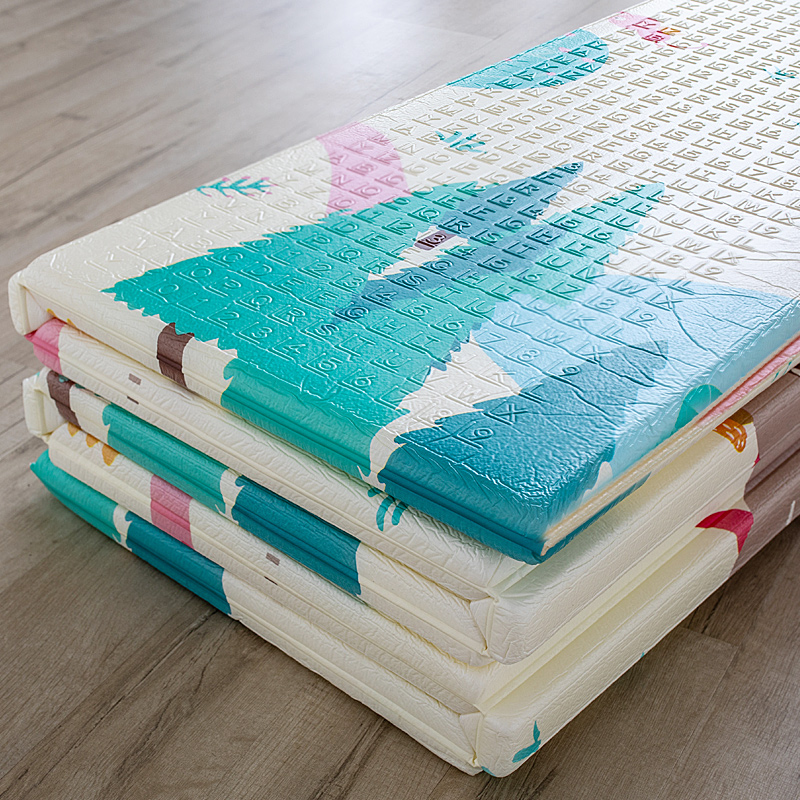
Importers must choose between two dominant physical structures. Your choice directly influences warehouse shelving and online fulfillment rates.
We look first at folding designs. They feature engineered accordion-style folds. These built-in hinges allow instant collapsing.
Pros: This design maximizes container space brilliantly. It is highly portable for the end-user. Parents love packing them into car trunks. You can easily package them in compact retail boxes. They stack beautifully on retail shelves.
Cons: The folding crevices inevitably collect household dust over time. The manufacturing process requires highly specific mold pressing. You might face higher initial tooling fees for custom folding patterns.
Alternatively, we examine the xpe rolling play mat. It consists of a single continuous sheet. Consumers roll it tightly into a tall cylinder for storage.
Pros: You get a completely seamless surface. It provides a vastly easier cleaning experience for parents. Interior designers and parents prefer it for permanent nursery setups. It looks like a traditional area rug when deployed.
Cons: It requires bulky, elongated packaging. You will face a substantially higher CBM per unit. This bulk severely limits the number of units you can load into a 40HQ container. It directly increases your per-unit inbound freight costs. Over-sized shipping surcharges may apply during last-mile courier delivery.
You must weigh these factors carefully. If you sell primarily through e-commerce, the folding design often yields better net margins. If you sell to high-end boutique stores, the seamless rolled design commands a higher retail price point.
Navigating global regulatory landscapes prevents catastrophic business losses. Customs agencies frequently seize non-compliant nursery goods. You must demand airtight documentation from every factory.
The North American market strictly enforces ASTM F963. This serves as the Standard Consumer Safety Specification for Toy Safety. Additionally, a CPC (Children's Product Certificate) remains entirely non-negotiable. The factory must back this certificate with third-party testing. You must ensure a CPSC-accepted laboratory conducted these specific tests.
The European Market demands equally rigorous proof. EN71 represents the primary hurdle. Parts 1, 2, and 3 cover mechanical hazards, flammability, and chemical migration limits. REACH compliance serves as the secondary barrier. REACH verifies the total absence of SVHCs (Substances of Very High Concern). It ensures no hidden endocrine disruptors exist in the foam.
Verification tactics separate successful importers from failed businesses. We must warn you against fake certificates. Unscrupulous suppliers frequently forge PDF documents. Advise your compliance team to demand recent, verifiable test reports. The report must display the manufacturer's exact registered name. Always insist on reports generated by recognized agencies like SGS, TÜV, or Intertek.
Best Practice: Contact the issuing laboratory directly via their official website. Input the report number to verify authenticity.
Common Mistake: Accepting a test report issued three years ago. Chemical formulations change frequently. Demand testing conducted within the last twelve months.
Building a resilient supply chain requires looking beyond unit prices. OEM (Original Equipment Manufacturer) and private labeling allow you to build brand equity. The process for creating custom patterns involves upfront investments. Factories charge tooling and cylinder fees for custom prints. Typical Minimum Order Quantities (MOQs) range from 500 to 1000 pieces per design. These volumes justify the expensive setup time required on industrial printing presses.
Quality control integration prevents disastrous consumer reviews. You should implement strict pre-shipment inspection criteria. Hire an independent inspector. Have them check for film delamination along the edges. They must verify exact pattern alignment across double-sided prints. Mandate an odor test upon unboxing. Any chemical smell indicates improper curing. Finally, they must measure precise thickness tolerance. A promised 2.0 cm product should never arrive measuring 1.7 cm.
Freight and volumetric weight constraints dictate your actual profit margins. Importers constantly fight the "shipping air" problem. Because foam is exceptionally lightweight but voluminous, packaging dimensions directly dictate profitability. We must compare vacuum-sealed packaging against standard cartons.
Vacuum sealing compresses the foam. It allows you to cram more units into a container. However, excessive compression permanently damages closed-cell structures. The product may arrive permanently wrinkled. Standard cartons offer excellent physical protection. They present beautifully in retail environments. Yet, they consume vast amounts of CBM. You must calculate your landed costs meticulously before finalizing carton dimensions.
Success in importing nursery products requires a systematic evaluation framework. You must prioritize verifiable material safety above all other metrics. Balance consumer demands for thicker products against escalating volumetric shipping costs. Select the precise form factor that aligns with your target retail channel and fulfillment capabilities. Moving forward, you should take deliberate, measured actions. We recommend requesting physical material swatches first. Demand direct access to independent lab reports. Finally, request a comprehensive CBM packing list from shortlisted suppliers before you ever commit capital to custom molds. These steps will secure your margins and protect your brand reputation.
A: Most manufacturers require a Minimum Order Quantity of 500 to 1000 pieces per custom design. This volume justifies the expensive cylinder tooling fees required for non-toxic printing setup.
A: You should avoid heavy compression. While closed-cell foam recovers slightly, severe vacuum sealing can permanently distort the material. It compromises the structural integrity and aesthetic appeal of the final product.
A: Always contact the issuing laboratory directly. Use reputable testing agencies like SGS, TÜV, or Intertek. Provide the lab with the exact report number to confirm its authenticity and check the original issue date.
A: Standard wholesale orders typically take 25 to 35 days to manufacture. If you require custom molds or private-label cylinder printing, expect an additional 10 to 15 days for initial setup.
A: No, closed-cell foams are durable but not puncture-proof against sharp claws. You should set transparent expectations with consumers. Sharp pet claws or heavy furniture will leave permanent dents or scratches.