
Views: 0 Author: Site Editor Publish Time: 2026-06-03 Origin: Site


Choosing your training equipment involves more than picking a visually pleasing color. You are making a critical investment in joint health, movement stability, and long-term practice safety. Today, the market overflows with highly affordable synthetic foam options. Buyers frequently struggle to distinguish between EVA (Ethylene Vinyl Acetate) and TPE (Thermoplastic Elastomer). This confusion often leads to frustrating purchases. Cheap mats might wear out quickly or fail to support your specific training style properly.
We want to clear up this industry confusion. This article provides a strict, evidence-based evaluation of both materials. We look past the standard marketing claims to examine actual material science, lifespan realities, and practice-specific performance. Understanding these functional differences prevents wasted money and potential alignment injuries. You need gear designed for how you actually move.
Our goal is straightforward. We want to equip you with the technical knowledge needed to confidently select the right yoga mat for your unique movement needs. We will cover grip mechanics, foam degradation curves, and ecological impacts to guide your final decision.
EVA is highly affordable, lightweight, and offers excellent initial softness, making it ideal for budget-conscious beginners or light stretching, but it suffers from poor "memory effect" (permanent denting over time).
TPE delivers superior tear resistance, better wet/dry grip, and eco-friendly recyclability, making it the superior long-term investment for dynamic practices.
Training context dictates material: Yin Yoga and Pilates favor the dense cushioning of TPE, while hard-support cross-training (calisthenics + yoga) can uniquely benefit from high-density EVA interlocking tiles.
Thickness matters: 6–8mm is the industry standard for joint relief, while advanced practitioners require thinner 3mm mats for grounded balance control.
Before comparing performance metrics, we must understand how manufacturers build these materials. The base chemistry determines how a mat reacts to body weight, friction, and sweat over time. Let us look closely at the distinct properties of EVA and TPE.
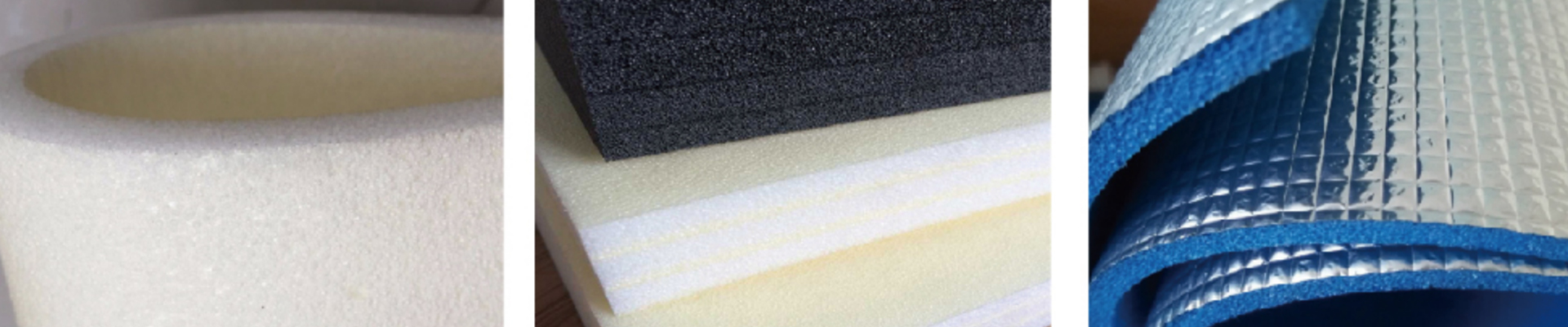
EVA stands as one of the most common synthetic foams in the global fitness industry. We define it as a closed-cell foam known for its extreme buoyancy and lightweight properties. It feels incredibly soft to the touch straight out of the packaging. You will often find EVA used in running shoe midsoles, kickboards, and budget-friendly fitness mats.
From a manufacturing context, global supply chains heavily favor EVA for entry-level products. It is incredibly easy to cut, shape, and heat-press. Brands love it because they can easily emboss their logos into the soft surface. More importantly, EVA is mostly trapped air. This keeps global shipping weights exceptionally low. Retailers can pack thousands of these lightweight mats into a single shipping container. This logistics advantage explains why EVA dominates the low-cost retail market. However, this same lightweight structure limits its long-term durability under heavy mechanical stress.
TPE represents a massive evolutionary step in synthetic manufacturing. We define TPE as a sophisticated plastic-rubber hybrid. Crucially, producers formulate high-quality TPE free of toxic plasticizers, such as phthalates, which are commonly found in older PVC products. TPE molecules physically cross-link under heat but maintain flexibility at room temperature.
Engineers specifically designed TPE to stretch further without tearing. It bridges the performance gap between cheap synthetic foams and expensive natural rubber. TPE provides the dense, heavy feel of real rubber without the allergy risks or strong odor. Furthermore, manufacturers designed TPE to be fully recyclable and biodegradable under the right conditions. When you practice on TPE, you experience a highly engineered surface optimized for human movement rather than just cheap shipping logistics.
Understanding material science is helpful, but you need to know how these mats perform on the studio floor. We evaluated both materials across three critical categories: ground adherence, point-loading resilience, and overall degradation curves.
Evaluate ground adherence first. A mat slipping across a hardwood floor poses a severe safety hazard during jumping transitions. TPE generally provides better native slip-resistance. Its hybrid rubber-like texture naturally clings to hard surfaces. When you push into a downward dog pose, a TPE mat stays firmly anchored beneath you.
Conversely, EVA is notoriously slippery when exposed to sweat. Its slick, foamy surface lacks micro-textures to grip the floor or your hands. Both materials feature a closed-cell structure. This means they resist absorbing sweat entirely, making them incredibly easy to wipe down and sanitize after a workout. However, because the sweat cannot sink in, it pools on top. While moisture challenges both materials, TPE maintains its friction coefficient significantly better during heated, sweaty practices.
We must discuss the mechanical failure inherent in cheap foams. When you assess cushioning, you must look beyond initial plushness. EVA provides excellent immediate softness. It feels incredibly comfortable when you first lie down. Unfortunately, it lacks structural resilience. When you apply repeated point-loading—like pressing your elbows down during plank poses—the internal foam cells burst or flatten. This structural failure causes permanent indentations, widely known as a poor "memory effect". Over time, the mat becomes uneven and useless for joint protection.
TPE offers a completely different experience. It utilizes high-density shock absorption. When you press into TPE, it resists the weight and then quickly bounces back to its original flat shape. This rebound factor is vital. It actively protects your knees, wrists, and hips during prolonged holds without warping the mat's structural integrity.
You need to set realistic expectations for your equipment. Heavy use on a budget eva yoga pilates mat often leads to rapid deterioration. If you practice dynamically three times a week, you will likely notice surface flaking, tearing, and structural failure within four to five months. The foam simply cannot handle repetitive friction.
In contrast, TPE represents a smart mid-tier long-term investment. While it costs slightly more upfront, it significantly outlasts EVA. A quality TPE mat can endure daily practice for over a year before showing any severe signs of structural fatigue. You avoid the frustrating cycle of constantly replacing cheap, shredded foam.
Performance Metric | EVA Foam | TPE Hybrid |
|---|---|---|
Dry Grip | Moderate | Excellent |
Wet/Sweat Grip | Poor (Becomes slippery) | Good (Retains friction better) |
Shape Memory (Rebound) | Poor (Prone to permanent dents) | Excellent (Bounces back instantly) |
Average Lifespan | 4–5 Months (Heavy use) | 12–18 Months (Heavy use) |
No single material is perfect for every human activity. You must match your chosen foam to the specific biomechanical demands of your daily routine. Let us break down how these materials handle popular training styles.
Winner: TPE. Dynamic styles require constant, rapid shifting between postures. You jump from plank to chaturanga, then push up into upward dog. The necessity for immediate grip transitions makes TPE the baseline requirement here. If your hands slide forward during a fast vinyasa flow, you risk severe alignment injuries to your shoulders and wrists. Furthermore, dynamic flows generate intense body heat. TPE handles the resulting surface sweat far better than slick EVA.
Winner: TPE (in thicker profiles). These practices look gentle but actually place immense, sustained pressure on targeted joints. Yin yoga requires you to hold deep stretches for up to five minutes at a time. Pilates heavily involves rolling on your spine and balancing on your tailbone. Long-hold, joint-heavy poses require sustained pressure resistance rather than just surface softness. A thick TPE mat prevents your bones from grinding against the hard studio floor.
Winner: High-Density EVA. Many modern athletes combine stretching with hard-support bodyweight workouts like push-ups, burpees, and split squats. For these users, standard soft cushioning actually impairs balance. Sinking into a plush mat ruins your wrist alignment during push-ups. Here, we suggest a highly stable, budget-friendly hack. Look for standard 10mm interlocking EVA gym tiles. Placing three 60x180cm tiles together creates a firm, hard-support surface superior to a traditional soft roll-up mat for hybrid fitness.
Modern consumers rightfully demand transparency regarding chemical safety and environmental impact. Both EVA and TPE offer distinct narratives regarding their ecological footprints. You should understand these factors before bringing synthetic materials into your home.
TPE stands out in the sustainability conversation. We must highlight TPE's primary value proposition. It acts like heavy-duty rubber under physical stress, but it melts down exactly like plastic under industrial heat. This thermoplasticity allows for true end-of-life recycling. Facilities can shred old TPE mats, melt the polymer down, and reshape it into new products without degrading the base material structure.
Furthermore, TPE offers this ecological benefit without the pungent odor of natural rubber. Many users suffer from latex allergies or simply hate the strong, tire-like smell of pure rubber mats. TPE delivers eco-friendly biodegradability and rubber-like performance while remaining completely hypoallergenic and odorless.
We must acknowledge a modern shift in EVA production. Historically, traditional EVA is heavily criticized because it is not naturally biodegradable. It sits in landfills for centuries. However, advanced manufacturing techniques are changing this narrative.
Today, innovative factories can successfully blend up to 40% pre-consumer recycled material directly into new EVA foams. This process reuses industrial scraps that would otherwise become waste. While it does not make the final product biodegradable, it slightly improves its environmental footprint. Compliance-aware brands actively seek out these recycled EVA blends to reduce their reliance on virgin petrochemicals.
You now understand the science, performance metrics, and ecological contexts. It is time to make a practical purchasing decision. Follow this simple two-step framework to finalize your selection.
Your return on investment depends entirely on your commitment level. Assess your practice timeline honestly before spending money.
Testing the waters: If you are simply trying out a 30-day beginner flexibility challenge at home, buy EVA. It is cheap, soft, and requires virtually zero financial commitment.
Committing long-term: If you plan to attend classes three times a week for the next year, upgrade to TPE immediately. You will avoid the frustrating replacement costs associated with shredded, dented EVA mats.
Once you choose the material, thickness dictates your physical comfort. Do not assume thicker always means better. Thicker mats create instability during one-legged balance poses.
6mm – 8mm: This represents the industry sweet spot. It provides ample joint buffering for standard practice and Pilates without compromising your grounding too much.
5mm – 6mm: This serves as the upper limit for travel-friendly portability. Any thicker, and the rolled mat becomes too bulky to strap onto a backpack.
3mm: This is a strict performance thickness designed exclusively for advanced yogis. It offers maximum floor feedback, allowing toes to grip firmly for difficult balance poses.
When evaluating synthetic foam options, the data points to a clear winner for dedicated practitioners. TPE is objectively the better material. It functions as a highly durable upgrade, offering the necessary grip, tear resistance, and resilient joint support that cheap EVA inherently lacks over time. While EVA serves an important purpose for extreme budgets and hybrid gym flooring, TPE remains the premier choice for traditional studio flows.
As your next step, audit your current practice frequency. Assess your specific joint sensitivity and preferred movement style. When you begin shopping, read the manufacturer specification sheets carefully. Look specifically for terms like "closed-cell TPE" or "high-density EVA interlocking." Do not rely on vague marketing adjectives like "premium comfort" or "eco-foam." Let material science guide your final purchase.
A: Yes. Factory manufacturing often leaves a slick protective film on new mats. You can remove this using the "salt scrub" hack. Gently rub coarse sea salt and a warm, damp cloth over the entire surface. This safely wears down the slippery film without mechanically degrading the underlying foam cells. Wipe it clean and let it air dry completely before your next session.
A: While PU and natural rubber offer elite, professional-grade grip, they come with notable trade-offs. Unsealed rubber absorbs sweat rapidly and requires intensive, daily hygiene maintenance. PU mats possess extreme surface grip, but they often lose their sticky surface coating within about 12 months of daily use. Additionally, PU is highly susceptible to holding permanent oil and sweat stains.
A: Both materials thankfully avoid the strong, fishy odor associated with synthetic NBR foams. They also lack the heavy, tire-like latex smell of natural tree rubber. EVA may have a very slight, sweet synthetic scent initially upon unrolling, but it fades quickly. Quality TPE is largely odorless straight out of the packaging, making it perfect for sensitive users.