
Views: 0 Author: Site Editor Publish Time: 2026-08-09 Origin: Site


Parents face a challenging dilemma when setting up a safe playroom. You want maximum fall protection for your baby during those wobbly early months. Yet, choosing a surface that is too thick creates a frustrating tripping hazard and impedes natural crawling movements. Finding the perfect balance often feels overwhelming for new families.
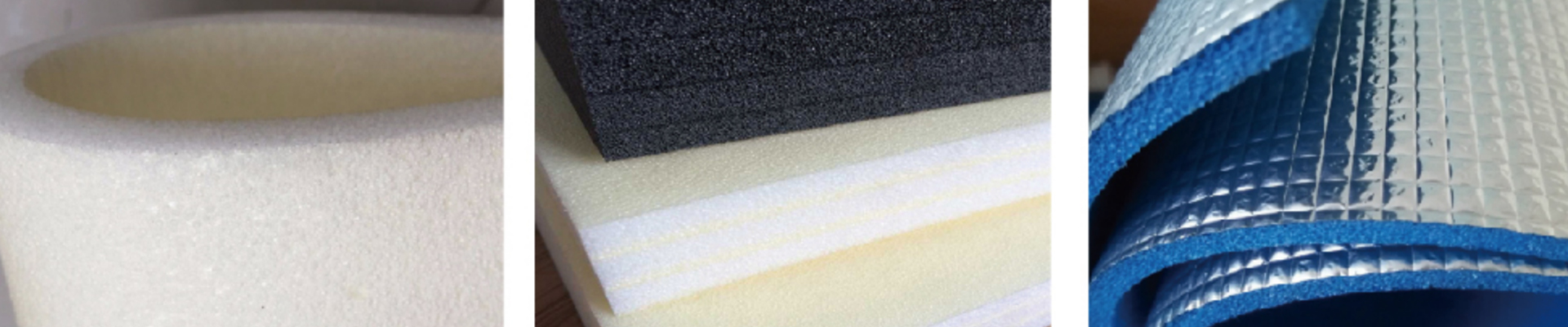
Cross-linked Polyethylene (XPE) serves as the modern industry standard for non-toxic, hypoallergenic play mats. It features a unique, highly resilient cellular density. Because of this specialized molecular structure, thickness rules for XPE differ significantly from standard EVA or memory foam alternatives. You cannot simply apply traditional foam metrics here.
This guide breaks down essential ergonomic requirements, floor-type considerations, and practical storage realities. We will help you evaluate these critical factors step-by-step. By the end, you can confidently choose the exact thickness needed for your home environment. You will secure both safety and developmental support for your child.
1cm (0.4"): Best for layering over existing carpets, travel, or outdoor use.
1.5cm (0.6"): The industry "sweet spot" for standard hardwood floors, balancing shock absorption with firm motor-skill support.
2cm (0.8"+): Ideal for tile or concrete subfloors, and for toddlers actively learning to walk (maximum fall height protection).
Material Reality: In an xpe baby mat, high density matters just as much as raw thickness for injury prevention.
Foam thickness directly correlates to impact reduction. Industry safety testing often utilizes the Head Injury Criterion (HIC). This standard measures how effectively a surface absorbs kinetic energy during a fall. Hard surfaces like concrete score dangerously high. A quality foam barrier lowers this score significantly. Thicker foam provides a longer deceleration path. When a baby tips backward, the extra millimeters of foam absorb the shock before it reaches the skull. This physical reality drives many parents toward the thickest available options.
However, safety involves more than just crash protection. We must also consider crucial motor skill development. Babies rely heavily on proprioception. This is the body's ability to sense its position in space. To learn to crawl, infants need a firm, predictable surface. They must push up onto their hands and knees. If the surface is too soft or overly thick, their limbs sink. They lose essential traction. The medical and ergonomic reality is clear. Too much cushioning hinders gross motor development. It forces tiny muscles to work overtime just to stabilize joints. A firm foundation promotes confident, independent movement.
Finally, we must address the tripping hazard threshold. A play space does not exist in a vacuum. Parents, grandparents, and older siblings constantly navigate this area. Mats measuring over 2cm thick create a distinct, elevated ledge on your floor. This sudden "step" easily trips early walkers. It also presents a hazard for sleep-deprived parents carrying infants across a dim room. A seamless transition between the bare floor and the play area minimizes these everyday risks. You must weigh fall protection against the very real danger of creating a new tripping obstacle.
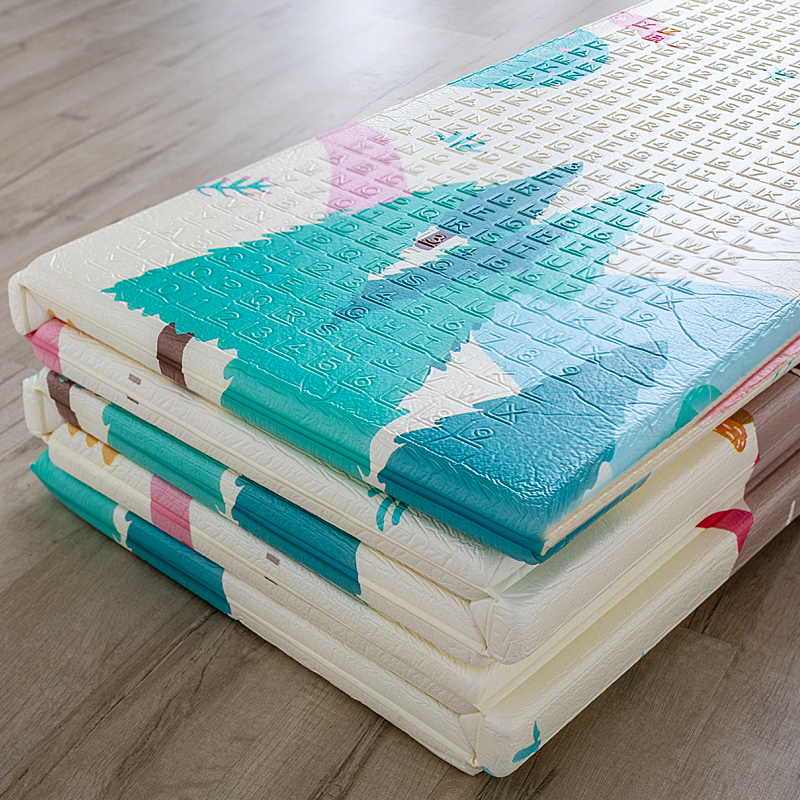
Choosing the right specification requires understanding how each option performs in daily life. Below, we break down the three primary categories available on the market.
Thickness | Ideal Subfloor | Impact Protection Level | Primary Advantage |
|---|---|---|---|
1cm (0.4 inches) | Carpet, Plush Rugs | Basic (Prevents scratches/minor bumps) | Maximum portability and lightweight |
1.5cm (0.6 inches) | Hardwood, Laminate | Moderate to High (Absorbs seated falls) | Optimal balance of firmness and safety |
2cm (0.8 inches+) | Tile, Concrete | Maximum (Protects against standing falls) | Superior shock absorption for hard floors |
Pros: This profile is incredibly lightweight. It remains highly portable for busy families. You will find it the easiest to roll, fold, and pack into a car trunk. It effectively blocks cold temperatures rising from basement floors.
Limitations: A 1cm profile bottoms out quickly under heavy adult weight. If you kneel on it, your knees will likely feel the hard floor underneath. It provides insufficient impact protection for babies falling on uncarpeted concrete or ceramic tile.
Best Use Case: We strongly recommend this thickness for layering over existing plush rugs. It works beautifully for grandparent visits. It also serves excellently as a dedicated outdoor or travel mat.
Pros: This represents the optimal industry balance. It feels firm enough for daily tummy time. Babies can establish excellent crawling traction. Simultaneously, it remains thick enough to absorb seated backward falls on rigid hardwood. It rarely creates a tripping hazard for adults. When searching for an xpe baby mat, most parents find this thickness perfectly meets their everyday needs.
Limitations: It provides slightly less joint relief for adults sitting on the floor for hours compared to maximum-thickness options.
Best Use Case: This is your primary living room solution. It thrives over standard hardwood, engineered wood, or laminate floors.
Pros: You gain superior cushioning for unsteady toddlers. It offers exceptional joint relief for parents constantly kneeling or sitting on the floor. It handles the heavier impacts of enthusiastic, growing toddlers learning to jump and run.
Limitations: These bulky items are notoriously harder to store. They do not easily slide under standard sofas. More importantly, they create a highly visible ledge on the floor, increasing tripping risks.
Best Use Case: Reserve this thickness for hard tile floors and concrete subfloors. It suits designated permanent playrooms where the item rarely moves. It also supports high-impact toddler gymnastics phases.
Your unique home environment dictates your purchasing requirements. We must evaluate what lies beneath the play area. Base flooring compatibility changes everything. Hard tile and concrete possess zero flexibility. A fall on these surfaces transfers 100% of the impact kinetic energy back to the child. Therefore, tile demands a 2cm thickness to artificially create a safe deceleration zone. Hardwood and laminate floors possess a microscopic amount of natural give. For these rooms, a 1.5cm thickness provides ample safety. Carpeted rooms already offer baseline shock absorption. Adding a 1cm layer simply provides a waterproof, easy-to-clean sanitary surface.
Next, we must analyze storage and format variables. You will choose between foldable designs and rolled designs. Let us compare the footprint and implementation reality. Foldable mats accordion into compact squares. They slide into closets easily. However, they feature deep hinges. These creases trap dust, food crumbs, and pet hair daily. This becomes a major parental pain point. Foldable seams also naturally compress over time, reducing thickness right where the baby might fall.
Conversely, consider an xpe rolling play mat. Rolling mats lack hinges entirely. They offer a perfectly smooth, continuous surface. They maintain their thickness integrity much better over years of heavy use. Wiping them down takes seconds. While they require a taller vertical storage space, their structural durability and cleanliness usually outweigh the storage inconvenience.
Finally, we must acknowledge durability and pet considerations. Dogs and cats share our living spaces. Pet owners frequently worry about claws tearing up foam surfaces. Thicker XPE variations withstand dog paws and cat claws slightly better than thin 1cm variants. The extra material depth prevents punctures from reaching the subfloor. However, XPE remains inherently puncture-sensitive. It prioritizes softness and non-toxicity over industrial armor. Keep pet nails trimmed to maximize longevity, regardless of which thickness you select.
Many buyers obsess over raw dimensions. They assume bigger always equals safer. This is a dangerous misconception. The true metric of fall protection lies in cellular density. High-quality XPE foam features a tight, cross-linked molecular structure. This structure creates dense micro-bubbles.
Explain the density rule this way. A 1.5cm high-density XPE product offers vastly better fall protection than a 2cm cheap, low-density foam alternative. Low-density foam contains too much air. When a child falls, cheap foam immediately bottoms out. It flattens instantly against the hard floor. High-density XPE actively resists this compression. It slows the impact down gradually, functioning like a premium car shock absorber. It also prevents permanent indentations from furniture or heavy toys.
We educate buyers on evaluating recovery time through the simple "Pinch Test." You can easily perform this at home. Squeeze the material firmly between your thumb and index finger. Apply maximum pressure. Then, release your fingers quickly. High-quality XPE should immediately rebound. It snaps back to its original shape in a fraction of a second. If the material stays pinched or recovers sluggishly, you are handling a low-density product. It will not provide adequate protection, regardless of its overall thickness.
Beyond physical protection, density relates directly to chemical safety. Genuine, high-density XPE requires no chemical plasticizers to achieve its thickness or bounce. Cheap PVC or low-grade EVA foams often rely on phthalates to create artificial softness. Cross-linked polyethylene utilizes a physical heat process to expand its cells. This completely eliminates volatile organic compounds (VOCs). It ensures a truly VOC-free environment. You never have to worry about toxic off-gassing in your baby's nursery.
To simplify your purchasing process, match your specific household situation to one of our three standard profiles below.
Scenario A (The Standard Home): You have standard hardwood or laminate floors. Your baby is currently transitioning from tummy time to the early crawling stage. You need a daily driver that balances safety and motor skills. Action: Choose 1.5cm.
Scenario B (The Hard Surfaces): Your primary play area sits over ceramic tile, basement concrete, or stone flooring. You have an active toddler who is learning to walk, run, and frequently tumbles backward from a standing position. Action: Choose 2cm.
Scenario C (Space Constrained / Mobile): You live in a smaller apartment. Your floors are already carpeted. You need something highly portable for frequent travel, outdoor park visits, or easy storage behind a door. Action: Choose 1cm.
Thicker is not universally better when selecting a safe play surface. The right choice always requires a careful calculation of your specific floor type and your baby's current developmental stage. A well-chosen surface protects fragile heads while firmly supporting developing muscles.
Measure Your Floor Space: Determine the exact dimensions of your room to ensure the product fits without creating awkward overlapping edges.
Assess Storage Capacity: Decide whether your daily routine favors the seamless hygiene of a rolling mat or the compact nature of a folding design.
Verify Density Specifications: Look past the raw thickness numbers. Check the brand's density ratings and customer reviews regarding compression recovery.
Prioritize Firmness: Remember that babies need resistance to build core strength and master crawling mechanics safely.
A: Generally, no. A 1cm profile effectively prevents scratches and provides a sanitary barrier. However, it lacks sufficient impact absorption for a baby falling backward from a seated position onto unyielding wood. You will likely hear a loud thud, and the child will feel the hard impact. We recommend upgrading to 1.5cm for hardwood environments.
A: High-density XPE is highly resilient against normal daily wear. Normal baby play, crawling, and walking will not permanently compress it. However, leaving heavy furniture, like a sofa leg or a heavy wooden toy box, on it for weeks will cause permanent indentations. Protect the material by moving heavy items regularly.
A: A rolling mat offers 100% uniform thickness across its entire surface area. It provides uninterrupted protection. Foldable mats feature deep micro-valleys at their folding seams. These mechanical hinges naturally reduce the actual thickness at those specific joints, creating tiny vulnerabilities where a child might land.
A: Yes, they are significantly harder if the material is too soft. Squishy foam traps the baby's limbs, preventing proper traction. However, because XPE is a firm, physically cross-linked foam, even a thicker 2cm version provides enough surface tension. A baby can still push off effectively without sinking deeply into the floor.