
Views: 0 Author: Site Editor Publish Time: 2026-08-06 Origin: Site


Every new parent faces a stressful nursery dilemma when their infant begins to roll and crawl. You desperately want a soft floor covering to cushion those inevitable tumbles. At the same time, you dread introducing volatile organic compounds or hidden toxic chemicals into your home. Unfortunately, "non-toxic" often functions as an empty marketing buzzword across the baby product industry. Parents evaluating different foam options need objective material science facts rather than vague brand promises to make a truly safe purchase. This comprehensive guide breaks down the exact chemical makeup of cross-linked polyethylene foam. It also compares this material against traditional alternatives dominating the current market. We provide a strict, evidence-based evaluation framework to help you confidently select a safe xpe baby mat for your growing child.
Material Reality: XPE (Cross-linked Polyethylene) is generally recognized as a safer, non-toxic alternative to PVC and EVA foams, free from BPA and phthalates.
The Safety Caveat: While the raw material is safe, manufacturing processes vary. Independent third-party certifications (e.g., CPC, ASTM, EN71) are mandatory to verify the absence of formamide and VOCs.
Practical Application: An XPE rolling play mat offers high durability and water resistance but requires specific care to prevent pet-puncture damage.
Purchasing Rule: Never rely on "eco-friendly" packaging claims; demand transparent lab testing results before purchasing.
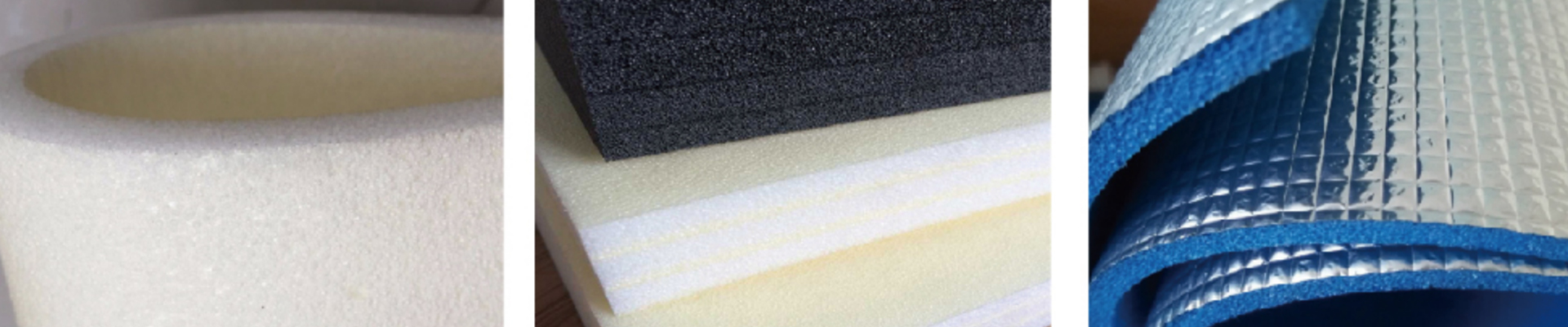
To understand foam safety, we first need to look closely at its chemical structure. XPE stands for Chemically Cross-Linked Polyethylene. Manufacturers create it by deliberately altering the basic molecular structure of standard polyethylene plastic. They use a highly specific thermal process called cross-linking. This complex process binds the polymer chains together, creating intricate three-dimensional webs. It effectively transforms a rigid plastic into a highly durable, flexible material. The resulting internal structure consists of millions of tiny, permanently sealed pockets of air. Industry professionals call this a closed-cell foam.
The actual foaming process determines the final safety profile of the product. Many traditional foam types require harsh chemical blowing agents to expand properly. These toxic agents frequently leave behind hazardous residues. High-quality manufacturing differs significantly. It relies on a much cleaner expansion process. Reputable factories apply precise thermal heat to cross-link the polymers effectively. They purposely avoid relying on toxic blowing agents. This careful thermal management prevents dangerous chemical trapping within the foam matrix.
Its closed-cell nature provides immense practical benefits for households. Water simply cannot penetrate the top surface. Spills pool cleanly on top for easy removal. This inherently waterproof characteristic makes it exceptionally hygienic. The sealed surface thoroughly prevents moisture absorption deep into the core. Consequently, mold and bacteria cannot easily grow inside the material. Furthermore, the foam is naturally hypoallergenic. It strongly repels dust mites, pet dander, and other common allergens. These traits remain critical for infant environments. Babies spend hours face-down on these surfaces daily. They absolutely require a pristine, easily sanitized play area.
Health organizations maintain a highly vigilant stance on children's foam products. Groups like the Center for Environmental Health (CEH) frequently issue serious consumer warnings. They highlight the persistent dangers of formamide and chemical off-gassing in cheap play items. Parents rightfully feel skeptical about introducing any new foam material. We must carefully scrutinize every individual chemical component. A genuine, certified xpe baby mat successfully passes these strict evaluations, provided you source it from a verified manufacturer.
Formamide remains a massive red flag in the baby goods industry. Standard EVA foam notoriously requires this specific toxic chemical. Formamide keeps the otherwise stiff EVA material soft and pliable. Without adding formamide, cheap EVA puzzle mats quickly become brittle and snap. Conversely, premium manufacturing does not require formamide at all. The underlying cross-linking process naturally yields a soft, flexible texture. You completely avoid the primary chemical hazard associated with budget-friendly nursery mats.
Many parents panic when they initially open a new product box. They often notice a distinct, unusual odor. We must clearly differentiate between harmless manufacturing odors and hazardous chemical off-gassing. Safe products sometimes retain a mild "new" smell directly from their thermal processing. This faint odor typically dissipates within 24 to 48 hours in a properly ventilated room. Hazardous chemical off-gassing behaves very differently. It persists strongly for weeks or even months. It continually releases dangerous volatile organic compounds (VOCs) into your indoor air. Certified items guarantee zero hazardous VOC emissions.
You must constantly insist on strict chemical absences. A truly safe product hits absolute zero across the board for all known toxins. The regulatory baseline is completely non-negotiable for infants. Safe mats explicitly guarantee:
0% BPA (Bisphenol A - a known endocrine disruptor)
0% Phthalates (dangerous chemical plasticizers)
0% Lead and heavy metals (often hidden in cheap color dyes)
0% Latex (a common severe allergen)
You should never compromise on these four critical metrics. They form the absolute foundation of nursery safety.
We provide a bottom-of-funnel comparative lens below. This specific framework helps buyers confidently finalize their ultimate material choice. You must objectively weigh safety against cost, durability, and weight. We evaluated the most common playroom options side by side to highlight key differences.
Material Comparison Summary
Material Type | Safety Profile | Durability Level | Relative Price Point | Tactile Feel |
|---|---|---|---|---|
XPE Foam | High (No formamide or phthalates) | Moderate to Good | Medium | Springy and slightly textured |
EVA Foam | Low (High formamide risks) | Low to Moderate | Low | Squishy but prone to flaking |
PVC Foam | Low (High phthalate risks) | High | High | Heavy, dense, and cool |
TPU Film | High (Medical grade options) | Very High | Premium | Smooth and rubbery |
EVA dominates the vast budget market segment. It frequently appears in cheap, brightly colored alphabet puzzle mats. EVA is incredibly cheap and fast to produce. However, it carries a substantially higher risk of long-term formamide exposure. The alternative feels slightly firmer than standard EVA. Yet, it offers a significantly safer chemical profile overall. You trade a tiny amount of unnatural squishiness for total parental peace of mind.
PVC creates exceptionally heavy, ultra-durable floor surfaces. Manufacturers often use it for premium memory foam items. Unfortunately, standard PVC relies heavily on toxic plasticizers for flexibility. Phthalates make the naturally rigid PVC soft enough for babies to crawl on comfortably. These plasticizers carry severe global health warnings. Our recommended material provides a much safer alternative. It weighs far less while eliminating dangerous phthalate exposure entirely.
TPU represents the absolute premium tier of playroom flooring. Brands frequently use it as a thin outer cover over heavy memory foam cores. It offers excellent safety records and supreme scratch resistance. The cross-linked alternative serves as a much more cost-effective choice for average families. It remains much lighter and easier to roll up. However, you should note it is slightly less scratch-resistant than high-end TPU surfaces.
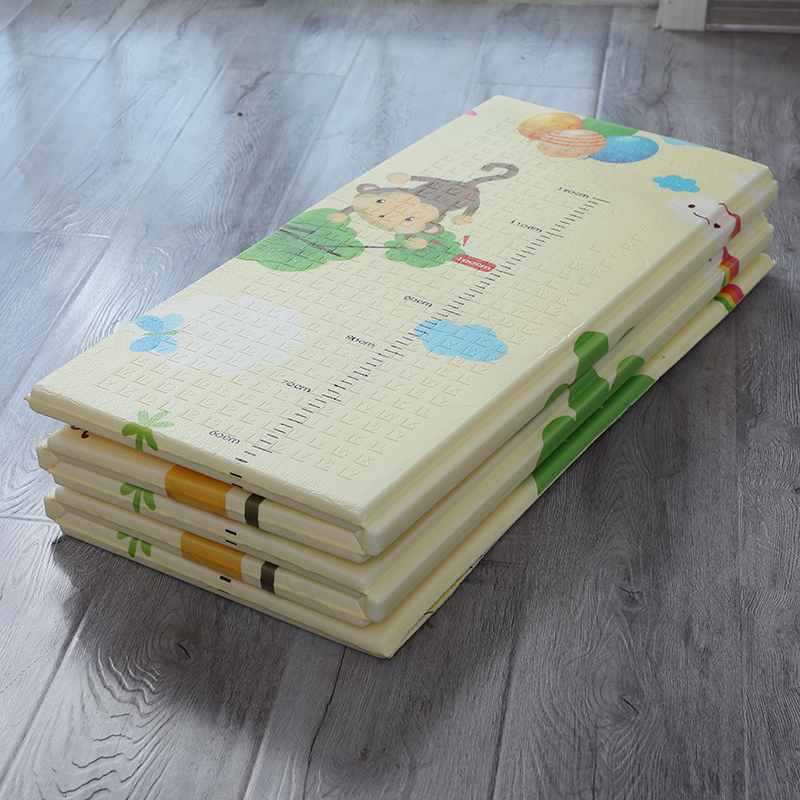
You must intentionally choose the right physical format for your living space. Parents usually decide between folding squares, puzzle-piece sections, and continuous rolling designs. We strongly recommend comparing the xpe rolling play mat style directly against its modular competitors. Each specific style dictates exactly how you will clean and maintain the nursery.
A continuous roll provides an entirely seamless surface area. You instantly eliminate the frustrating, crumb-catching crevices found in traditional puzzle mats. It is incredibly easy to wipe down rapidly after a messy toddler snack. Furthermore, the solid piece fully prevents liquid seepage. Heavy spills will not leak through the cracks to ruin your expensive hardwood floors beneath.
Rolling formats do present a few minor logistical challenges. They are noticeably harder to store than folding variations. You simply cannot collapse them into a tiny, compact square for closet storage. Additionally, the far corners may initially curl up slightly after unboxing. You usually need to weigh the outer edges down with heavy books for a few days to flatten them perfectly.
No material exists that is entirely invincible. You must proactively address the primary physical vulnerabilities of this foam. The closed-cell structure is somewhat susceptible to accidental punctures. Sharp toys dropped from a high height can pierce the waterproof surface layer. Heavy furniture indentations also often become permanent over time. You should never place heavy wooden cribs or loaded bookshelves directly on the soft foam. Finally, family pet claws pose a highly significant threat. Energetic dogs and cats can easily scratch or puncture the soft surface during daily play.
You need a highly structured approach to narrow down your final choices. Use this practical, step-by-step evaluation checklist before completing any online purchase.
Always instruct yourself to look for explicitly stated testing standards on the packaging. Vague marketing claims mean absolutely nothing regarding safety.
US Standards: Ensure full compliance with CPSIA and ASTM F963. ASTM verifies the mechanical safety and tests for hazardous heavy metals.
EU Standards: Look carefully for EN71 certification and strict REACH compliance. REACH specifically protects human health from severe chemical risks.
These specific certifications prove independent testing labs verified the product for heavy metals and hidden toxins.
Select the ideal thickness based entirely on your child's current developmental stage.
0.4 Inches (1 cm): This thickness works best for general daily play. It suits older toddlers who are already walking confidently.
0.6 Inches (1.5 cm) or higher: This provides the ideal depth for early tummy time, independent sitting, and unsteady first steps. It cushions hard backward falls much better.
Proper texture provides crucial physical traction. Babies desperately need a solid grip to push themselves up onto their knees. Raised, anti-slip patterns effectively prevent frustrating slips. However, you must carefully avoid overly deep grooves. Deeply etched patterns easily trap tiny crumbs, spilled milk, and dangerous bacteria. They quickly turn routine daily cleaning into a highly frustrating chore. A shallow, softly raised texture offers the perfect practical balance.
You should walk away immediately from online listings exhibiting these specific warning signs:
Vague material descriptions listed simply as "foam" without properly specifying the exact chemical polymer used.
A complete lack of customer service transparency. Trustworthy brands must gladly share their official lab reports upon your request.
Overwhelmingly strong, persistent chemical odors reported frequently in recent verified customer reviews.
Finding the right floor covering greatly impacts your infant's daily physical comfort and long-term respiratory health. Based on accurate material science and practical household usage, we can draw a few definitive conclusions.
This specific cross-linked foam sits perfectly in the modern parental sweet spot. It effectively balances strict chemical safety with highly accessible pricing.
It successfully eliminates the hidden phthalate and dangerous formamide risks commonly found in budget-friendly nursery alternatives.
Choosing a continuous, seamless design drastically reduces your daily cleaning burden. It thoroughly prevents liquid seepage and trapped debris.
A clear awareness of puncture vulnerabilities helps you actively protect your financial investment from heavy furniture and eager household pets.
Your crucial next step requires active, diligent verification. Review your current online shortlist of nursery items immediately. Check the exact safety certification labels on their packaging or digital listings. If the manufacturer does not publicly display their independent third-party testing documents, you must email their support team. Demand to see these official documents before ever clicking the final buy button.
A: Certified, high-quality material has minimal to zero hazardous VOC off-gassing. Unlike cheap EVA or PVC options, it does not rely on toxic blowing agents or chemical plasticizers during manufacturing. You might notice a slight, harmless thermal processing odor upon opening the box. However, this safely and completely dissipates within 48 hours in any well-ventilated room.
A: You should use a simple, non-toxic cleaning solution of mild dish soap and warm water. Wipe the surface gently with a soft microfiber cloth or sponge. You must strictly avoid using harsh chemical bleaches, highly acidic cleaners, or abrasive scrubbers. These aggressive cleaning methods will rapidly degrade the waterproof top layer and damage the closed-cell structure.
A: Like all standard petroleum-based polymers, it will eventually melt and burn when directly exposed to high, sustained heat or open flames. However, reputable brands intentionally design their products to pass standard consumer flammability tests automatically. They achieve this critical baseline fire safety without ever treating the material with highly toxic chemical flame retardants.
A: We strongly advise keeping cats and dogs off the surface area entirely. While the material resists liquid pet messes beautifully, its soft, closed-cell structure remains highly vulnerable to physical punctures. Pet claws can easily pierce the top layer during energetic zoomies or deep stretches. This leaves permanent scratches and ultimately compromises the waterproof seal.