
Views: 0 Author: Site Editor Publish Time: 2026-06-07 Origin: Site


Three-dimensional wall panels have recently surged in popularity for incredibly quick room makeovers. However, exaggerated marketing claims often cloud their true functional capabilities. We need an objective, expert perspective to cut through this noise.
Choosing the wrong interior cladding can ruin your existing wall paint and waste your renovation budget. You must know exactly where these adhesive panels excel and where they inevitably fail. Understanding the chemical and physical limits of these materials prevents costly installation mistakes.
In this comprehensive guide, you will learn the optimal use cases and strict environmental limitations of these panels. We will explore the true lifecycle realities, adhesive properties, and professional installation techniques. This information helps you evaluate if a foam wall sticker is the right choice for your specific project.
Best For Temporary/Rapid Revamps: Ideal for rental upgrades, commercial space refreshes, and kids' rooms, offering a realistic functional lifespan of 6 to 18 months.
Surface Sensitivity is High: Requires flat, fully cured surfaces; industry tests show a 70% failure rate on textured walls.
Distinct Advantages over Wallpaper: 6-8mm thickness provides excellent minor flaw concealment and anti-collision properties, though traditional wallpaper wins on premium visual aesthetics.
Removal Nuances: Removal difficulty increases significantly after 12 months due to adhesive cross-linking.
These specialized cladding materials serve distinct functional roles in modern interior design. They perform exceptionally well under specific environmental conditions.
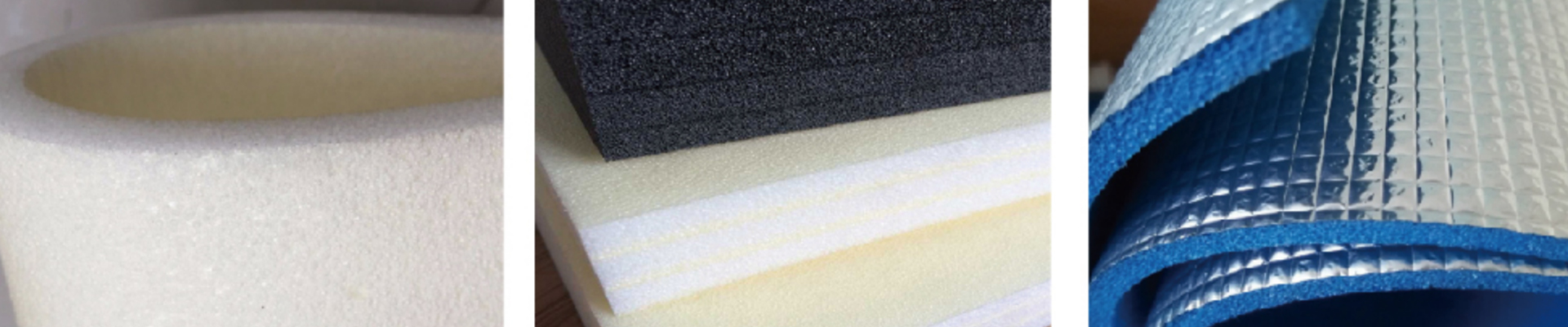
Manufacturers engineer these panels using cross-linked polyethylene. They typically feature a standard thickness ranging from 6mm to 8mm. This dense internal structure acts as a built-in cushion for your walls. It provides highly effective anti-collision protection. You will find them incredibly useful in nurseries, playrooms, and high-traffic daycares. When designing a playroom, parents often worry about toddlers bumping into hard plaster. These panels mitigate those impact risks perfectly.
Commercial spaces often require rapid visual updates to match seasonal trends. They work perfectly for short-term retail pop-up shops. Restaurant owners frequently use them for quick accent walls. Rental properties benefit immensely from these fast aesthetic improvements. In these scenarios, speed and budget usually outrank decades-long durability. Retailers frequently lease spaces for just a few months. They need high-impact visual changes quickly. Traditional construction wastes too much time and requires extensive clean-up. These stickers solve those logistical problems efficiently. They eliminate the need for specialized installation labor.
Minor wall imperfections often frustrate DIY renovators. Thin traditional wallpaper telegraphs every tiny bump and scratch directly to the surface. Conversely, the dense closed-cell structure of an XPE foam wall sticker performs quite differently. It easily bridges minor dents and hairline cracks. Older homes frequently suffer from minor settling cracks. Traditional wallpaper sinks right into these depressions. The thick foam bridges the gap completely. They hide structural flaws without requiring extensive plastering or sanding work.
Despite their versatility, these panels cannot survive every environment. We must acknowledge their physical and chemical limitations to prevent project failures.
The XPE material itself remains completely waterproof. However, the adhesive backing remains highly vulnerable to moisture penetration. Constant steam softens the glue over time. This inevitably leads to severe edge curling and complete panel detachment. Many people mistakenly apply them inside active shower enclosures. The constant deluge of hot water destroys the acrylic bond rapidly. Edge curling starts within weeks, not months. You should only apply them to splash zones above bathroom sinks. You can artificially extend their lifespan in humid areas. Apply a clear silicone sealant strictly along the top exposed edge. This specific technique pushes the functional lifespan to three to five years.
Adhesives require maximum surface contact to function properly. On textured paint, the glue only touches the raised peaks. This drastically reduces the overall grip area. Industry tests reveal a staggering 70% failure rate on non-smooth surfaces. Builders often apply heavy knockdown textures to drywall. This creates a challenging landscape of peaks and valleys. The sticker only grabs the highest peaks. Gravity quickly pulls the heavy panel down. You must avoid using them entirely on orange peel or brushed finishes.
Thermal stability remains a significant weakness for polyethylene products. Prolonged exposure to direct heat sources causes severe structural damage. Radiators, stoves, or intense direct sunlight will melt the liquid polymer structure. Consider the risks of kitchen backsplashes near gas ranges. The open flame radiates intense ambient heat. This heat permanently degrades the adhesive backing. They will detach quickly and pose a potential fire hazard. Always maintain a safe distance from active heat zones.
Consumers frequently debate between these temporary panels and traditional wallpaper. Each material offers distinct structural and visual advantages for specific renovation goals.
Traditional wallpaper undeniably wins on overall visual aesthetics. It offers superior color precision and incredible texture diversity. Wallpaper simply provides a more premium architectural feel. Standard foam stickers look noticeably synthetic up close. However, foam panels dominate in physical durability metrics. They offer superior moisture resistance and excellent impact absorption. Some demanding projects require both premium visuals and physical resilience. For these situations, we recommend high-end composite options. Consider IXPE foam bonded directly to a high-definition PET film overlay. This advanced combination delivers excellent photographic aesthetics alongside robust structural protection.
The backing glue determines the true quality of a foam wall sticker. You cannot easily see this differentiator, but it dictates the product's lifespan. Budget products typically use 20 to 30 g/m² of standard hot melt glue. This cheap glue hardens aggressively over time. It behaves like a permanent cement. It is highly prone to causing severe wall damage upon removal. Premium options utilize 50 to 80 g/m² of acrylic Pressure Sensitive Adhesive (PSA). PSA remains slightly flexible indefinitely. It maintains a gentle but firm tack. This superior chemistry allows for significantly cleaner removal. It also ensures much better long-term aesthetic longevity.
Comparison Chart: Foam Panels vs. Traditional Wallpaper | ||
Feature | XPE Foam Panels | Traditional Wallpaper |
|---|---|---|
Visual Aesthetics | Basic 3D textures, limited color precision | Premium feel, infinite texture diversity |
Physical Protection | High impact absorption (6-8mm thickness) | Minimal to zero impact protection |
Moisture Resistance | Excellent (closed-cell structure) | Poor (highly vulnerable to humidity) |
Adhesive Type | Hot melt or Acrylic PSA | Standard wallpaper paste |
Installation Difficulty | Low (Simple peel and stick) | High (Requires paste and booking) |
Proper surface preparation guarantees a successful installation. You must follow strict standard operating procedures to avoid premature failure.
Wall surfaces must remain completely dry before any application. Trapped moisture instantly destroys the chemical adhesive bond. Newly painted walls require special attention. They must cure for a minimum of 30 days. Paint undergoes a complex curing process over several weeks. It feels dry to the touch within mere hours. However, the internal solvents continue evaporating for weeks. This off-gassing process creates a microscopic vapor barrier. If you apply panels too early, this invisible gas destroys the adhesive. It causes massive air bubbles to form beneath the panel.
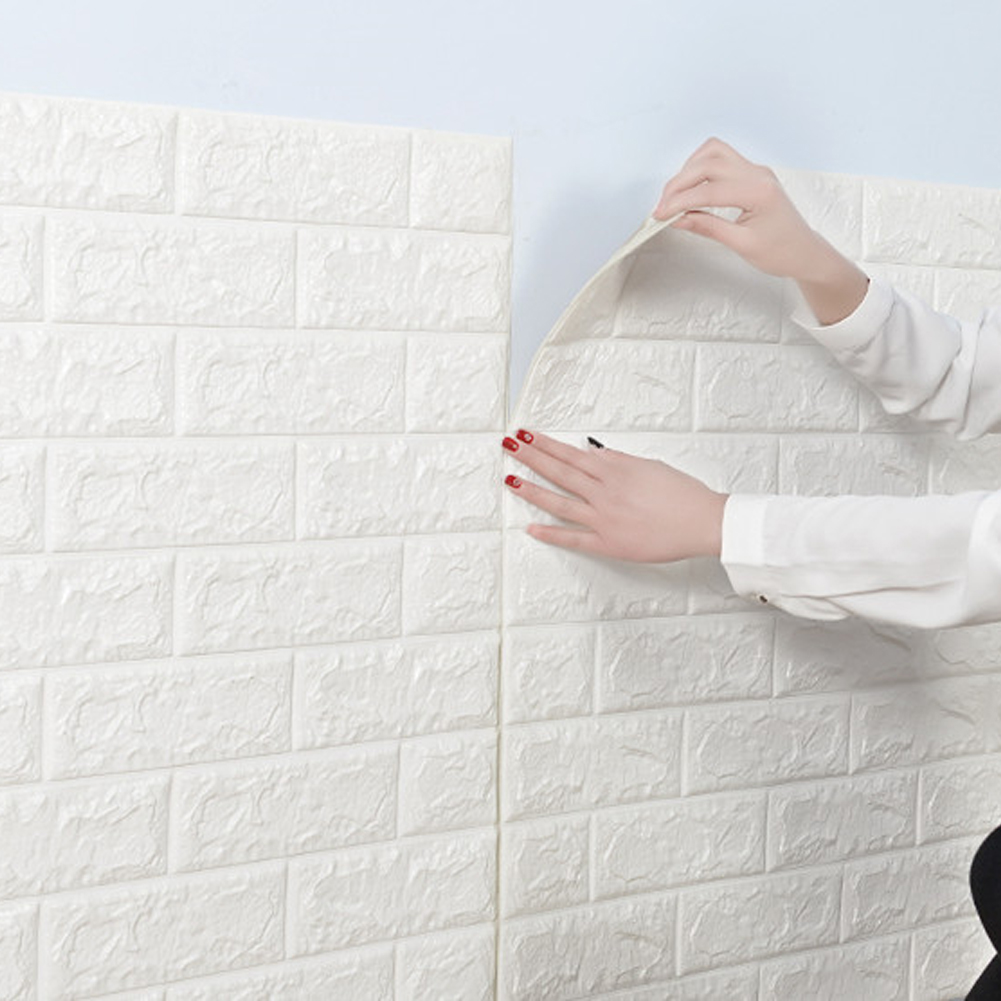
Your application technique directly impacts the final visual result. Amateurs often peel the whole backing off at once. The panel then sticks to itself or misaligns completely. Follow these specific steps for a flawless professional finish:
Never peel the entire adhesive backing at once.
Peel only a single top corner to start the process.
Align the panel perfectly on your designated wall marker.
Use a soft cloth or a felt squeegee to smooth the material.
Push firmly outward from the center to the outer edges.
By peeling just a corner, you retain total control. You can pivot the panel into perfect alignment. This specific technique prevents trapped air bubbles. It also eliminates the risk of structural warping during installation.
Many buyers hold unrealistic expectations regarding durability. We must dispel exaggerated marketing claims immediately to set correct baselines.
You will often see advertisements promising a five-year lifespan. This bold claim rarely holds up in real-world interior applications. Even under ideal conditions, expect a 24-month maximum. Ideal conditions mean a climate-controlled room featuring smooth walls and zero UV exposure. Sunlight attacks the delicate chemical bonds in plastics. Without heavy UV inhibitors, white foam turns noticeably yellow. This discoloration happens gradually. You might not notice it until you move a piece of furniture. After two years, UV discoloration and edge degradation typically begin.
Time dictates how easily you can remove these panels. Within the first six to twelve months, premium adhesives release cleanly. You can generally remove them without damaging the substrate. However, a significant chemical change occurs after 12 months. The adhesive undergoes a severe chemical cross-linking reaction. Cross-linking refers to polymer chains fusing directly together. The adhesive basically becomes one solid mass bonded to the paint. It bonds fiercely to the underlying drywall paper. This reaction makes safe removal exponentially more difficult.
If you need to replace your cladding, approach the process carefully. Never pull the panel straight outward. This aggressive action will tear your drywall paper immediately. Employ these proven best practices for safe removal:
Heat the glue lightly using a hairdryer strictly on a low setting.
Apply a warm soap-and-water solution directly to the panel edges.
Peel the material very slowly at a sharp 180-degree angle.
Keep rubbing alcohol or a dedicated adhesive remover nearby.
Wipe away any residual tack immediately after peeling.
The heat from the hairdryer softens the rigid polymer chains. The warm soap water breaks the surface tension securely. Peeling at 180 degrees minimizes the upward pulling force on your paint.
An XPE foam panel serves as a highly effective tactical material. It excels at delivering short-term aesthetic upgrades quickly. They also provide excellent functional cushioning for vulnerable play spaces. However, you should never evaluate them as a permanent architectural finish. They serve a specific, temporary purpose in modern interior design.
Before starting your next project, follow these actionable steps. First, measure your total square footage accurately. Always add 10% extra material to account for cutting waste. Second, request a physical sample from the supplier. Test this sample to verify adhesive compatibility on your specific wall paint. Finally, always verify the adhesive weight before bulk ordering. Ensure they use high-quality acrylic PSA rather than cheap hot melt glue.
A: No. PE (polyethylene) is inherently impermeable and highly resistant to chemical bonding. Paint will not adhere properly to this surface. If you attempt to paint it, you will experience immediate flaking and an uneven finish.
A: It depends heavily on time and adhesive quality. Removal within 12 months using a low-heat hairdryer method is usually safe. However, cheap hot melt adhesives or stickers left for multiple years are highly likely to lift the top layer of drywall paper or paint.
A: No. Bare masonry constantly generates dust and retains moisture. Both of these elements instantly neutralize the sticker’s adhesive backing. You must seal or prime the wall completely before attempting any installation.