
Views: 0 Author: Site Editor Publish Time: 2026-06-08 Origin: Site


Evaluating wall treatments often involves a strict trade-off. You must balance visual impact against installation friction and overall project budget. Finding the right compromise frustrates many homeowners and contractors alike. Traditional wallpaper remains the standard for permanent, high-end design. However, it requires intense preparation work. You also need flawless surfaces. Fortunately, peel-and-stick options have emerged as a high-efficiency solution. They allow for rapid, highly satisfying DIY renovations. We will explore this shift in modern interior design. This article provides an objective, evidence-based breakdown of your options. You will discover exactly where a foam wall sticker outperforms traditional wallpaper. We will also detail its practical limitations. This knowledge helps you align material specifications with your actual project realities.
Total Cost: Traditional wallpaper has a lower baseline material cost but a significantly higher Total Cost of Ownership (TCO) due to required tools, paste, and professional labor.
Moisture & Impact Resistance: The closed-cell structure of an XPE foam wall sticker inherently blocks water vapor and provides physical cushioning that paper or vinyl cannot match.
Wall Prep: Foam stickers conceal minor wall imperfections and uneven surfaces, whereas traditional wallpaper demands extensive, flawless skim coating.
Lifespan Reality: XPE wall stickers are optimized for 6- to 24-month design cycles; extending beyond this risks adhesive cross-linking and difficult removal.
Traditional wallpaper comes in paper, vinyl, and fabric varieties. Each type requires an external bonding agent. Installers use a specific paste or glue. This creates a strong structural bond. It also allows for infinite pattern depth. Designers appreciate the rich textures. However, wallpaper requires careful climate control. High humidity causes peeling edges. Temperature shifts create trapped air bubbling.
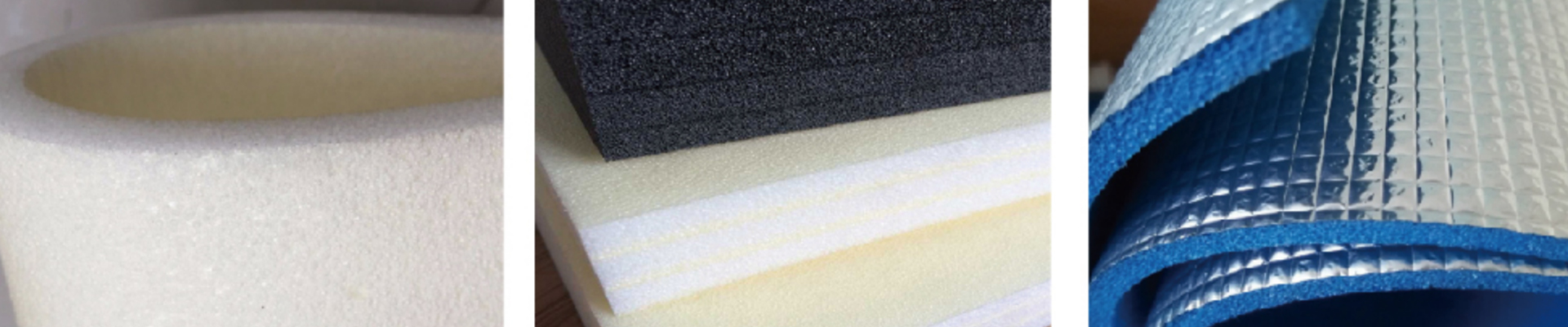
In contrast, let us examine the foam alternative. An XPE foam wall sticker relies on a completely different structure. It starts with a waterproof polyethylene foam core. Manufacturers engineer this core for daily durability. Next, they add a printed surface layer. Finally, they apply a Pressure Sensitive Adhesive backing. You simply peel off the protective film. You stick it directly to the wall.
We must evaluate these products through a structural lens. The physical composition dictates real-world performance. Traditional wallpaper acts purely as a decorative skin. It adds zero insulation. It offers no physical padding. A foam panel acts as a functional barrier. It insulates against slight temperature changes. It actively blocks moisture.
Feature | Traditional Wallpaper | XPE Foam Wall Sticker |
|---|---|---|
Core Material | Paper, Vinyl, or Fabric | Polyethylene Closed-Cell Foam |
Adhesive Type | External Paste or Glue | Pre-applied Pressure Sensitive Adhesive |
Primary Function | Decorative Skin | Protective and Decorative Barrier |
Thickness | Less than 1mm | 3mm to 8mm |
Buyers often make critical errors during material selection. Many assume all peel-and-stick products share the same core. They buy cheap, flat vinyl stickers instead. A true foam panel provides a thick, protective barrier. Always verify the material thickness before purchasing.
People often overlook the hidden setup costs. Traditional wallpaper demands intensive wall sizing. You must perfectly match complex patterns. You need specific smoothing tools. You handle messy, wet paste. You risk catastrophic alignment failure. These challenges frustrate eager beginners. This frequently necessitates costly professional installation. You pay heavily for expert labor.
Traditional wallpaper projects often stall due to unexpected delays. Preparing the room takes immense effort. You must lay down protective tarps. You mix the glue carefully. Any lump in the paste ruins the final finish. You apply the paste uniformly. You wait for the paper to book. Booking allows the paper to absorb moisture. This complex ritual demands extreme precision. One small mistake wastes an entire roll. The financial risk remains quite high.
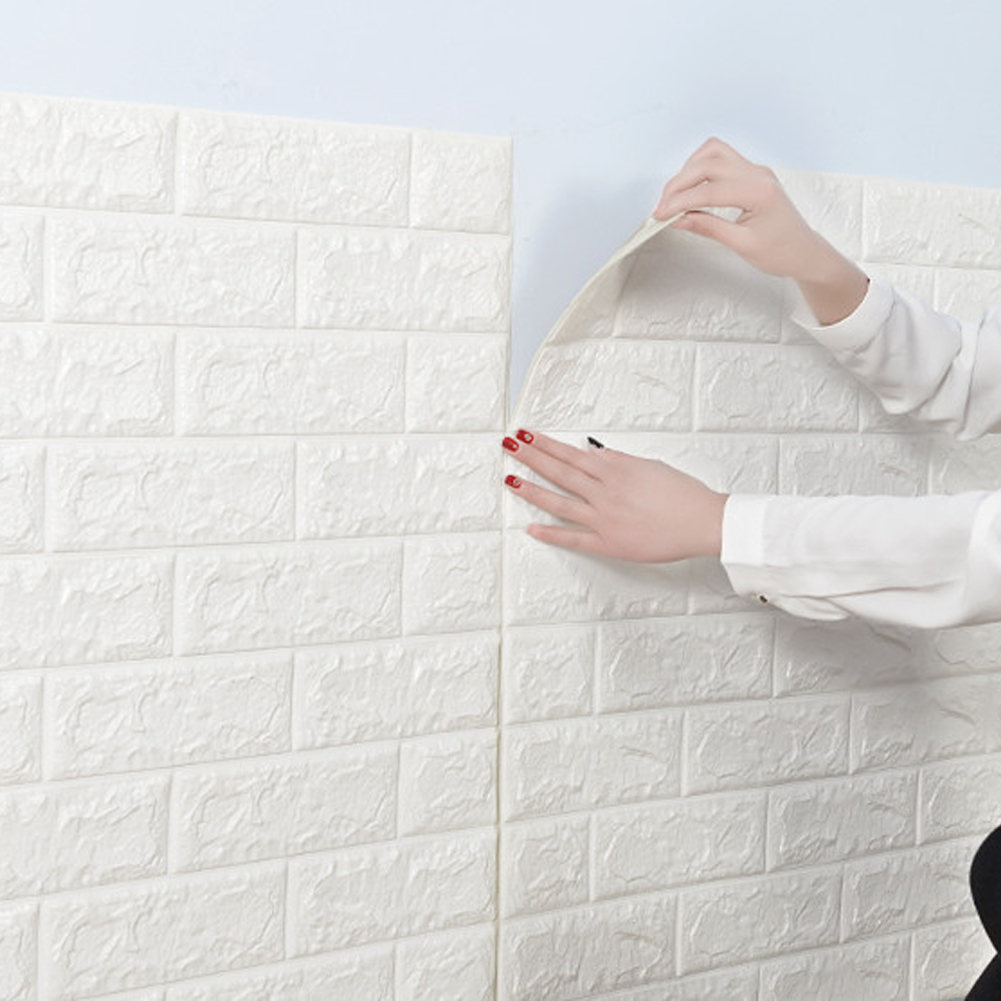
Now consider the DIY advantage. Foam panels offer true peel-and-stick application. You face zero cure time. You avoid toxic paste fumes entirely. You only need minimal tools. A standard utility knife works perfectly. A simple level ensures straight lines. You skip the messy glue process.
Conversely, peel-and-stick materials eliminate these stressful rituals. You measure the space. You cut the panel. You stick it firmly. The simplicity empowers average homeowners. You transform a drab room over a single weekend. You avoid hiring costly contractors entirely. You retain full control over your renovation timeline. This represents a massive shift in home improvement.
Project completion time drops significantly. Installers typically finish faster. You reduce the required labor hours by sixty to eighty percent. You bypass the traditional paste-the-wall methods completely. You achieve immediate visual results.
Wall Primer: Specialized sizing liquid required before application.
Installation Tools: Smoothing brushes, seam rollers, and paste brushes.
Adhesives: Expensive heavy-duty paste mixtures.
Professional Labor: High hourly rates for experienced paperhangers.
Follow specific steps for the best results. Always wipe your walls thoroughly. Use a damp cloth before application. Dust destroys the adhesive bond quickly. Let the wall dry completely. Measure your space twice. Cut your panels carefully. Press firmly across the entire surface. This activates the adhesive properly.
Let us look closely at waterproofing realities. Standard wallpaper absorbs ambient moisture easily. This absorption leads to trapped dampness. Mold eventually grows behind the paper. Seams start splitting under stress. XPE material solves this severe issue. It features a dense closed-cell structure. This makes it completely impervious to water vapor. It becomes a highly viable option for damp environments. You can confidently use it near laundry areas.
Next, we must consider impact absorption. Wallpaper offers zero physical protection. It tears upon minor impact. The thick design of foam provides real cushioning. It protects against daily scuffs. It absorbs physical impacts well. This offers a distinct advantage. High-traffic corridors benefit greatly. Children's play areas stay protected. You worry less about damaged walls.
Wall preparation presents another major hurdle. Wallpaper requires perfectly flat surfaces. It needs level, smooth drywall. Any imperfection easily telegraphs through the thin paper. You see every single bump. Foam panels bypass this strict requirement. They feature a generous thickness. They act as an excellent bridging material. They effectively hide minor dents. They cover small nail holes effortlessly. They conceal slight wall waviness. You avoid heavy, messy plastering work entirely.
Let us examine the thermal properties briefly. Traditional paper feels cold against an exterior wall. It provides zero thermal resistance. Foam panels offer a slight insulating effect. The trapped air slows heat transfer slightly. While not a replacement for true fiberglass insulation, it makes a room feel cozier. It dampens slight echoing noises. This acoustic benefit surprises many first-time users. It creates a quieter, more comfortable living environment.
The secret lies in the microscopic structure. A closed-cell design encapsulates air bubbles securely. These bubbles never connect. Water cannot travel through the material matrix. This prevents any internal moisture buildup. This stops mold before it starts.
Buyers must understand the absolute longevity truth. Marketing claims often advertise five or more years. You should view these bold claims cautiously. Realistic optimal performance varies greatly. Temporary foam panels perform best for a limited window. Expect six to twenty-four months of peak performance. They are not permanent lifetime fixtures. They serve immediate aesthetic needs.
Adhesive cross-linking poses a significant future challenge. The backings use strong acrylic glues. Leaving a foam wall sticker up too long changes the chemistry. Beyond eighteen months, the glue cures aggressively. It bonds permanently to the latex drywall paint. The removal process transitions drastically. A simple, clean peel becomes entirely impossible. You face a labor-intensive scraping job. You must use heat guns. You will need strong chemical solvents.
We must also discuss ultraviolet light exposure. Direct sunlight degrades foam materials over extended periods. The vibrant printed colors may fade slightly. The polyethylene structure can become brittle. Traditional vinyl wallpapers often feature UV-resistant coatings. They withstand sunny rooms much better. You should carefully consider your window placements. Avoid installing foam panels directly facing large, unshaded windows.
Finally, we must address aesthetic ceilings. Foam panels have strict visual limits. They cannot replicate intricate textures perfectly. You will never match real grasscloth. You cannot duplicate authentic woven silk. High-end embossed vinyl wallpapers look distinctly premium. Foam offers a decent imitation. However, it lacks the sophisticated depth of premium paper.
Set realistic goals for your renovation. Plan to replace the panels eventually. Do not expect them to outlast traditional paint. Treat them as dynamic design elements. Enjoy the flexibility they offer. Change your room design frequently. Keep your interior spaces feeling fresh.
How do you choose between these two distinct options? Follow this strategic evaluation framework. It clarifies your purchasing decision immediately. You must match the material to your specific environment. Do not force a product into the wrong space.
The project involves a rental unit or leased apartment.
You need a temporary commercial setup for an event.
You want a fast, low-budget DIY room refresh.
The installation area sees mild ambient moisture.
The existing drywall has minor cosmetic damage.
You lack the budget for professional installers.
The specific goal requires a permanent architectural statement.
You plan to keep the identical design for many years.
The room space demands premium, complex textural aesthetics.
You are actively working with professional paper installers.
Your underlying walls are perfectly pristine and smooth.
You want intricate, repeating floral or geometric patterns.
Make your decision based on logic. Evaluate your timeframe carefully. Assess your available DIY skills honestly. Check your wall surface condition first. This ensures long-term project success.
This deep comparison reveals clear operational differences. Foam panels provide an unmatched advantage in raw installation speed. They deliver excellent moisture resistance. They offer superb imperfection-hiding capabilities. They remain perfect for short-to-medium-term interior projects. Traditional wallpaper still dominates permanent, luxury applications. However, it demands significant labor and perfect walls.
You must take deliberate next steps. Assess the intended lifespan of your specific renovation first. Evaluate your current wall condition honestly. Order material samples from manufacturers. Test the adhesive compatibility on a small hidden area. Check the visual finish in your actual room lighting. You will make a confident, highly informed choice.
A: If removed within six to twelve months, premium backing typically peels off cleanly. To mitigate damage on longer installations, apply heat. Use a standard hairdryer to soften the adhesive layer. Peel the panel back slowly at a flat 180-degree angle. Fresh paint must cure for at least thirty days prior to application.
A: Yes, but with strict limitations. The material itself will not grow mold. However, you should only use it above splash zones. It cannot be directly exposed to shower streams. Sealing the top edges with clear silicone extends the lifespan significantly in humid spaces.
A: No. While thick foam easily hides uneven walls, it fails completely on heavily textured surfaces. Surface contact area drops significantly on orange peel textures. This leads to a high failure and peeling rate. Sanding or skim-coating is strictly required for heavy textures.