
Views: 0 Author: Site Editor Publish Time: 2026-07-26 Origin: Site


Parents constantly face a difficult dilemma when creating floor spaces for their infants. They need a designated area guaranteeing absolute material safety. Simultaneously, they want a design blending beautifully into their adult living spaces. The current market overwhelms new buyers. Conflicting claims about foam toxicity saturate parenting forums. Brands heavily debate the merits of PVC, EVA, and XPE materials. Some materials trap dirt, while others degrade quickly under daily use. How do you choose the right surface for your home?
The solution lies in choosing an xpe baby mat. This material represents the current industry standard for modern nurseries and living rooms. It perfectly balances strict chemical safety and essential physical impact absorption. It also delivers incredible home design versatility. Read on to discover why this specific foam technology protects your child and preserves your home’s aesthetic.
Material Safety First: XPE (Cross-linked Polyethylene) foam eliminates common risks associated with PVC and EVA, specifically phthalates and formamide.
Dual Utility: Reversible designs solve the "aesthetic vs. developmental" compromise—offering sensory patterns on one side and neutral home decor on the other.
Form Factor Matters: Choosing between a folding mat and an xpe rolling play mat impacts daily storage, portability, and surface seamlessness.
Verification is Required: A credible purchase mandates independent third-party certifications (e.g., CPC, EN71).
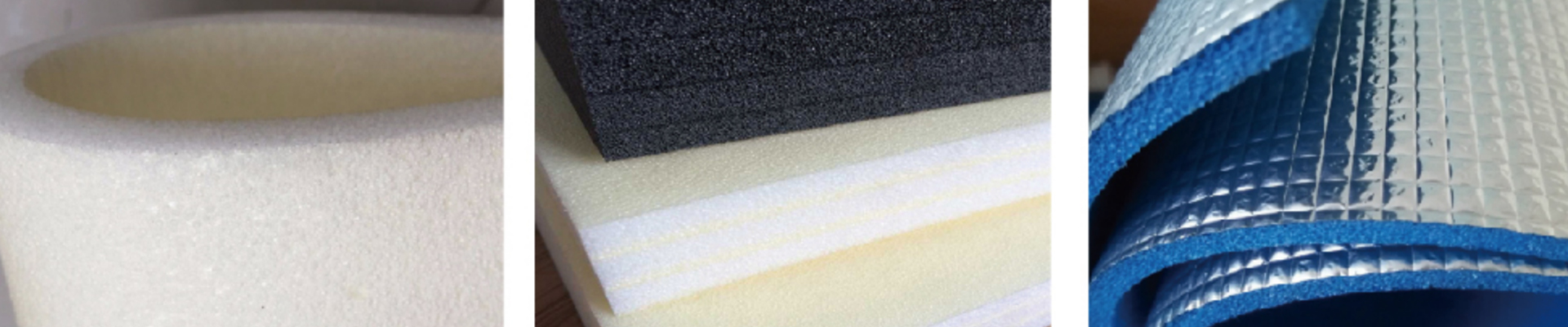
You cannot evaluate a product for your infant without understanding its core composition. XPE stands for Cross-linked Polyethylene. Manufacturers create this material by forming strong molecular bonds across polyethylene chains. This unique manufacturing process results in a highly stable closed-cell structure. In a closed-cell foam, millions of tiny bubbles trap air tightly within the material. Liquids cannot penetrate these individual cells. This makes the mat naturally waterproof. More importantly, it creates a highly hygienic environment. Because moisture cannot seep into the foam core, mold and dangerous bacteria cannot grow.
We must also address the toxicity skepticism many new parents feel. You have likely heard disturbing stories regarding volatile organic compounds (VOCs) and off-gassing in nursery furniture. These are valid anxieties. Many traditional synthetic products release chemical fumes over time. XPE specifically addresses this fear by excluding harmful compounds entirely.
When you choose this material, you actively avoid several known hazards. It contains no PVC, meaning it requires no plasticizers or phthalates to remain soft. It contains no BPA. It contains no latex, making it safe for children prone to early allergies. XPE serves as a chemically stable alternative to older EVA foam puzzle mats. EVA mats have historically faced intense regulatory scrutiny. Several countries banned specific EVA products due to high formamide content. Formamide is an industrial chemical linked to developmental toxicity. By selecting cross-linked polyethylene, you eliminate these specific chemical risks from your home.
Choosing the right floor padding involves more than just safety. It dictates how your child interacts with their environment. It also affects how you feel about your living space. The features of a modern xpe baby mat translate directly into measurable daily benefits.
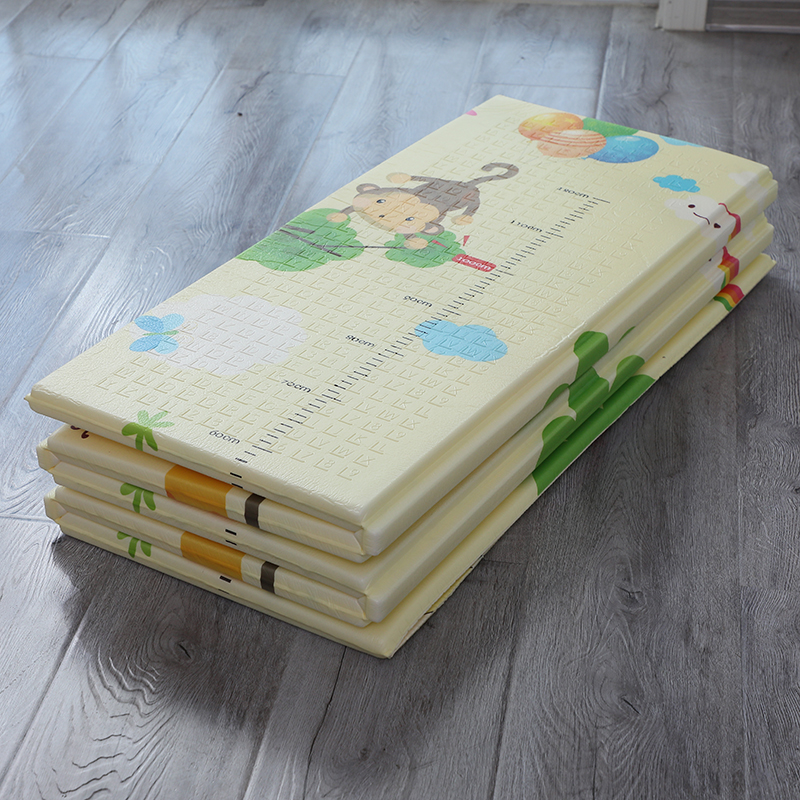
Modern homes often feature open floor plans. The living room doubles as the playroom. A double-sided mat provides an exceptional return on investment by solving the aesthetic compromise. One side features high-contrast imagery, numbers, or educational patterns. Infants need this visual stimulation. Bold patterns encourage cognitive and sensory development during crucial tummy time sessions. However, you probably do not want bright cartoon animals dominating your living room during an evening dinner party. The reverse side solves this problem. It offers subtle, interior-design-friendly motifs. You might find faux rug textures, soft geometric shapes, or neutral terrazzo prints. You get a dedicated developmental tool and a stylish floor covering in one single product.
The physical density of XPE foam perfectly supports early childhood milestones. A mat cannot just be soft; it must offer resistance. The specific density of this foam provides a firm but forgiving surface. This exact balance is necessary for safe crawling, rolling, and early walking. If you place a baby on an overly plush mat, they experience a "sinking" effect. They cannot find the necessary leverage to push up onto their hands and knees. XPE offers enough firmness for them to practice motor skills effectively. At the same time, it provides excellent shock absorption to protect their heads and joints during inevitable tumbles.
Many homes feature beautiful hardwood, concrete, or tile flooring. These surfaces turn ice-cold during winter months. Cold floors make play uncomfortable and can lower your infant's body temperature rapidly. The closed-cell bubbles inside the foam act as tiny thermal barriers. They block the cold transferring from the hard floor upward. They also reflect the ambient room heat. This maintains a consistently comfortable and warm play environment year-round.
You will encounter several acronyms while shopping. Understanding how they compare helps you make an informed investment. We break down the main competitors below.
EVA (Ethylene-vinyl acetate) heavily dominates the budget market. You typically see it formatted as interlocking puzzle pieces. While affordable, EVA presents severe practical challenges. The interlocking seams trap crumbs, pet hair, and spilled liquids. Cleaning milk out of twenty puzzle joints is incredibly frustrating. Furthermore, EVA has a questionable chemical safety profile regarding formamide. XPE offers better waterproofing, zero crumb-trapping seams, and superior chemical safety.
PVC (Polyvinyl chloride) mats are common in high-end spaces. They are heavier and lay very flat. They often resist punctures better than lighter foams. However, PVC carries significant baggage. The environmental and health debates surrounding polyvinyl chloride are extensive. Manufacturing PVC creates toxic byproducts. To make PVC soft, manufacturers sometimes use controversial plasticizers. Additionally, PVC is extremely heavy. Moving a large PVC mat to clean underneath it requires significant effort. XPE is significantly lighter, highly portable, and entirely avoids the environmental controversies associated with PVC.
TPU (Thermoplastic polyurethane) represents the ultra-premium tier. It is highly durable, safe, and gorgeous. However, it often costs three to four times as much as other options. TPU is fantastic if budget is completely unrestricted. However, XPE provides an excellent middle-ground. It offers nearly identical safety benefits, impressive lightweight portability, and deep affordability.
Material Type | Waterproofing | Chemical Safety | Weight/Portability | Price Range |
|---|---|---|---|---|
XPE | Excellent (Seamless) | High (No PVC/Formamide) | Very Light | Moderate |
EVA | Poor (Due to seams) | Questionable | Light | Low |
PVC | Excellent | Debated (Plasticizers) | Heavy | High |
TPU | Excellent | High | Moderate | Very High |
Not all products on the market meet strict quality standards. You must evaluate several structural and regulatory criteria before checking out. Use these five criteria to filter out inferior products.
Thickness dictates comfort and safety. The standard ranges for this material usually fall between 0.4 and 0.6 inches. We strongly recommend selecting the 0.6-inch thickness. This is especially crucial if you place it over hard flooring like wood, tile, or concrete. A 0.4-inch model might suffice over thick carpet, but it lacks adequate shock absorption for hard surfaces. Babies drop heavy toys and fall backwards frequently. The extra 0.2 inches makes a massive difference in preventing bruises.
You must decide between a folding structure and an xpe rolling play mat. Your choice depends entirely on your lifestyle.
Folding Mats: These feature engineered crease lines. They accordion-fold into compact squares. They are best for travel, small apartments, and quick daily storage. However, the crease lines can trap minor dust.
Rolling Mats: These arrive rolled up like a traditional rug. They are best for semi-permanent living room setups. A rolling design provides a completely seamless, crease-free surface. This seamless nature makes it exponentially easier to wipe down after a messy snack time.
Look closely at the product macro photos. You should never buy a completely smooth surface. Smooth foam becomes dangerously slick when a baby drools or spills a bottle. Look for raised, anti-slip textures pressed directly into the material. High-quality products often feature raised letters, tiny pyramids, or grid patterns. This texture provides essential traction. Babies need this grip to push up, pivot, and crawl without sliding.
Always map out your exact floor plan. Mats come in various sizes, often labeled ambiguously. Match the specific dimensions (e.g., Extra Large 79" x 71") to your room dimensions. More importantly, check these measurements against any baby playpen you intend to use. If you use a containment fence, the mat should ideally fit snugly inside it. If it is too large, the playpen will not sit flat. If it is too small, hard floor gaps will expose your child to injury.
This is the most critical step. Never trust a brand simply claiming their product is "non-toxic." Marketing buzzwords mean nothing without proof. Advise buyers to explicitly look for accredited certifications. If you live in the US market, look for a valid Children’s Product Certificate (CPC). If you live in Europe, demand EN71 certification. Reject any brands that refuse to list specific testing standards or fail to provide certification documents upon request.
Even the best products have limitations. Setting transparent expectations prevents buyer's remorse. You must understand how to maintain this material to extend its lifespan.
XPE foam is engineered to be lightweight and soft. By definition, this means it can be punctured. You must treat it differently than a standard rug. We strongly warn against placing heavy furniture on it. Heavy coffee tables, sofas, or thick wooden playpens will compress the foam cells. Over time, this causes permanent dents that will not rebound. Furthermore, you must monitor your pets. Dogs and cats with unclipped claws will quickly puncture the protective top layer. Treat this surface as an exclusive baby zone.
Proper cleaning preserves the bright colors and structural integrity. Fortunately, maintenance is generally straightforward if you follow basic rules.
Best Practice: Use mild dish soap diluted in warm water. Wipe the surface with a soft microfiber cloth. Dry it immediately with a towel to prevent slip hazards.
Risks to Avoid: Never use alcohol-based sanitizers, bleach, or harsh industrial chemicals. These aggressive liquids will strip the protective laminate film. Once the film degrades, the printed patterns will flake off, and the foam will begin absorbing liquids. Also, avoid abrasive scrubbing brushes, which will scratch the anti-slip texture.
Creating a safe, engaging, and beautiful space for your baby does not require impossible compromises. An xpe baby mat remains the most balanced investment you can make for safety, aesthetics, and overall price. It completely removes the chemical anxieties associated with older foam types while actively supporting your child's physical development.
When you finalize your shortlisting logic, keep it simple. Base your final decision on three things. First, assess your flooring type; this dictates the thickness you need. Second, evaluate your room aesthetic; this dictates the reversible pattern you choose. Third, consider your storage needs; this decides whether you buy a folding or rolling model.
Your immediate next action is practical. Grab a tape measure and map out your designated play space. Write down those dimensions. Then, verify the CPC or EN71 certifications on your top two product choices. You are now ready to make a confident, safe purchase for your family.
A: No. While they provide excellent safety for supervised tummy time and active play, they are not designed for sleep. Pediatric sleep guidelines strictly dictate that infants should only sleep on firm, flat crib mattresses. These environments must be entirely free of any soft padding to prevent suffocation risks.
A: XPE is highly stable and does not emit toxic VOCs. However, you might notice a mild "new product" scent when you first unbox it. This scent comes from the manufacturing and sealed packaging process. It typically dissipates completely within 24 to 48 hours in a well-ventilated room.
A: When a mat stays rolled tightly in a box, the edges may curl. To fix this, reverse-roll the mat loosely and hold it for a few minutes. Alternatively, lay it flat on the floor and place heavy, non-sharp objects like large books on the corners for 24 hours. This trains the foam structure to lay flat.