
Views: 0 Author: Site Editor Publish Time: 2026-07-31 Origin: Site


As parents, we constantly seek safer environments for our growing children. During early developmental stages, infants spend countless hours on the floor. They transition from supervised tummy time to rapid crawling and eventual walking. This constant floor contact makes the underlying surface incredibly important. Cross-linked Polyethylene (XPE) is widely marketed as a safer, lighter alternative to traditional EVA foam. However, manufacturing standards vary significantly across the baby product industry. You cannot simply trust every basic "non-toxic" label you see.
The purpose of this article is to equip you with a skeptical, evidence-based framework. We want to help you separate premium, genuinely safe products from low-quality, easily degraded alternatives. True quality evaluation requires looking deeply beyond clever marketing claims. You must understand chemical testing protocols. You should verify structural density metrics. You need to assess surface durability realistically. By the end of this guide, you will know exactly how to scrutinize these crucial elements. This knowledge ensures your child plays on a secure surface designed for optimal protection and hygiene.
Safety goes beyond "Non-Toxic" labels: Genuine quality requires verifiable third-party testing for Formamide, VOCs, BPAs, and Phthalates (e.g., ASTM, CPC, or EN71 certifications).
Density matters more than thickness: High-density XPE prevents "bottoming out" during falls and resists structural compression over time.
Surface lamination is the weakest link: High-quality mats utilize heat-pressed, scratch-resistant TPU/plant-based films to prevent the common XPE peeling issue.
Format impacts longevity: Choosing between a folding mat and an xpe rolling play mat depends on your primary use case—seamless aesthetics vs. portable storage.
Marketing buzzwords constantly surround baby products. Brands casually toss around terms like "eco-friendly" and "safe." However, you must educate yourself to demand verifiable compliance data. A premium xpe baby mat distinguishes itself through rigorous laboratory testing. You cannot rely on brand promises alone when your child's health is at stake.
Identify high-risk chemical omissions first. Many companies declare their products safe while ignoring specific harmful compounds. Off-gassing occurs when volatile chemicals vaporize at room temperature. Infants possess developing lungs and breathe at a much faster rate than adults. This makes them highly susceptible to indoor air pollutants. You must explicitly check for the absence of the following chemicals:
Zero Formamide: Manufacturers often use this toxic foaming agent to make cheap mats soft and bouncy. It poses severe respiratory risks and is banned in several countries for children's products.
Zero BPA and Phthalates: These dangerous endocrine disruptors can easily transfer to a child's skin during prolonged floor play.
Low-to-No VOC Emissions: Volatile Organic Compounds cause indoor air pollution. They directly contribute to the harsh off-gassing smell found in inferior foam.
You should demand third-party certifications. Transparency is a mandatory requirement for baby gear. Look for verifiable laboratory testing results directly on the product page. Recognized international standards provide the strongest reassurance. In the United States, look for CPC (Children’s Product Certificate) compliance. The CPC involves rigorous third-party testing by accepted laboratories. In Europe, the EN71 standard dictates stringent mechanical and chemical thresholds. If a brand cannot produce these certificates upon request, you should walk away immediately.
Finally, perform the unboxing smell test. Even incredibly safe materials might carry a faint scent from sealed packaging. This normal scent dissipates entirely within a few hours in a well-ventilated room. Conversely, a sharp, persistent chemical odor indicates cheap manufacturing. It often points directly to hazardous off-gassing. If the smell causes headaches or lingers for days, the product fails the baseline safety test.
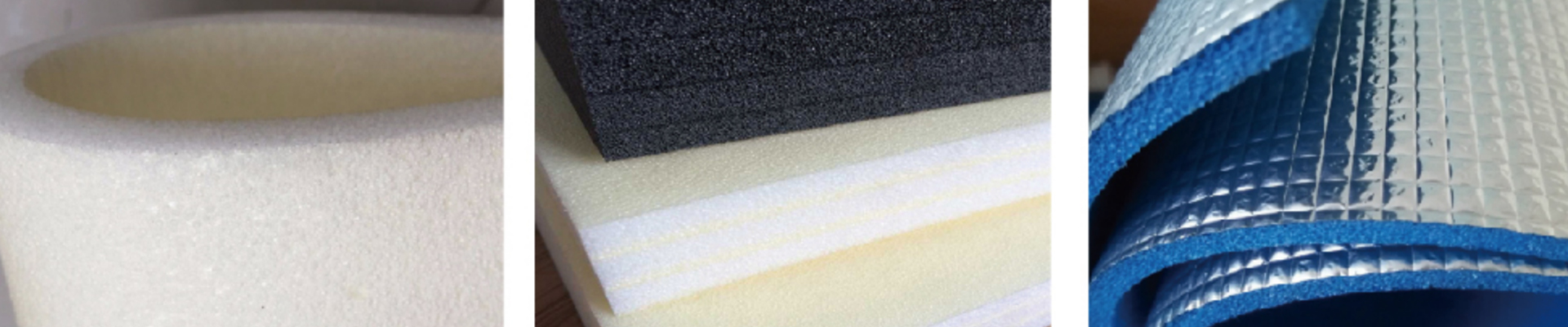
Density determines a mat's true protective value. Many buyers mistakenly focus solely on thickness. They assume a thicker profile automatically provides better cushioning for their baby. This is a dangerous misconception that can lead to painful injuries.
The density versus thickness rule dictates actual performance. A 0.4-inch high-density mat consistently outperforms a 0.8-inch low-density mat in standardized drop tests. Think of it like comparing a firm yoga block to a cheap kitchen sponge. High-quality XPE feels remarkably firm to the touch. It should never feel excessively spongy or overly soft. When you pinch the foam, it must spring back immediately. When babies learn to walk, they fall abruptly. Low-density foam compresses entirely under their sudden weight. It allows the child to "bottom out" during a fall. This transfers the kinetic energy directly to the hard tile or hardwood floor beneath. High-density foam disperses this energy laterally, protecting fragile heads and wrists.
Follow these stage-appropriate thickness guidelines for your child:
Tummy Time & Crawling: Focus heavily on firmness. Babies need a highly stable surface to push against. A firm grip aids proper motor skill development and strengthens neck muscles.
Toddler Walking & Tumbling: Focus on maximum shock absorption. A thickness between 0.6 and 0.8 inches works best for this active stage. High-density foam at this thickness protects against sudden head bumps effectively.
Use the heavy furniture test to verify structural integrity at home. High-quality XPE foam recovers its original shape after bearing weight. You can place a heavy chair on it temporarily. Once removed, the premium foam expands back perfectly within a few hours. Cheap XPE suffers permanent dents. It lacks the internal cross-linked cellular structure necessary for long-term resilience.
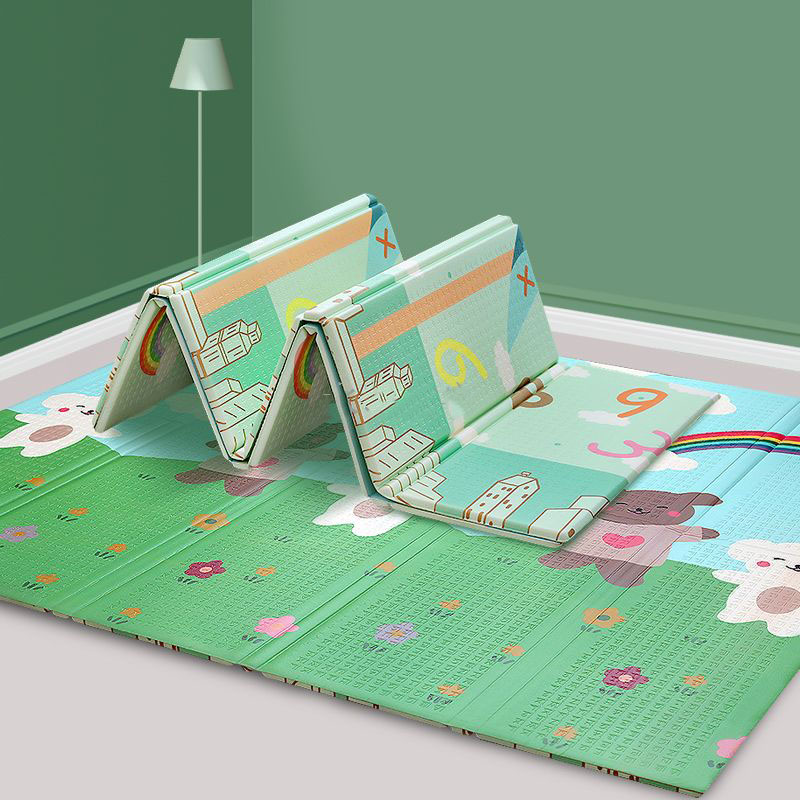
Consumer reviews frequently highlight peeling and tearing issues. These recurring problems originate from poor surface construction. The structural foam core is ultimately only as good as its protective top layer.
You must evaluate the top film layer carefully. Manufacturers print beautiful, intricate designs on a thin film layer. They then attach this film to the foam base. Premium brands use an advanced, heat-pressed lamination process. They often utilize highly durable TPU (Thermoplastic Polyurethane) or tough plant-based materials for this top layer. This precise method bonds the layers seamlessly without relying on toxic glues. Avoid products where the top film feels papery or flimsy. If you can easily scratch it off using a fingernail, it will not survive daily playtime.
Scratch and puncture resistance matter immensely in a busy household. Families deal with sharp pet claws, heavy plastic toys, and constant friction. No foam product is completely indestructible. However, high-grade cross-linking provides superior tensile strength. It defends exceptionally well against accidental punctures. A quality film layer prevents minor surface scratches from developing into large, irreparable tears.
Waterproofing and seamless edges dictate household hygiene. Babies spill milk daily. They drool constantly during difficult teething phases. Toddlers often experience unexpected diaper leaks. Pets might also have occasional accidents on the floor. A premium mat must feature fully sealed edges. If moisture seeps into the vulnerable foam core, dark mold and unseen mildew will grow rapidly inside the material. You need a slick surface you can wipe completely dry within seconds. Seamless edges block liquid penetration entirely.
Your physical space dictates the ideal product format. You must align the design with your specific aesthetic and functional requirements. Buyers generally choose between two primary configurations.
Consider the functional case for an xpe rolling play mat carefully. These models offer a completely seamless surface from end to end. The seamless nature prevents frustrating dirt traps. Over time, folding creases collect an astonishing amount of debris. Rolling mats eliminate these crevices entirely. Crumbs, dirt, and stray pet hair cannot accumulate in hidden folds. Furthermore, they typically lay much flatter against the floor without raised joints. This smooth profile provides a cleaner, rug-like aesthetic suitable for high-traffic living rooms.
Conversely, evaluate the case for folding mats. Portability serves as their primary advantage. You can pack a folding mat away in seconds when guests arrive. You can easily throw it in the trunk for a quick trip to the grandparents' house. However, you must scrutinize the hinge quality rigorously. Good folding mats use heavily reinforced creases. These strong joints withstand friction and will not tear after a few months of daily packing and unpacking.
Aesthetic integration remains a key factor for modern parents. Today's buyers prefer home-decor-friendly designs. They actively avoid garish, overstimulating primary colors that disrupt a room's harmony. Premium brands offer subtle, neutral patterns. These elegant designs blend beautifully into contemporary living spaces, allowing the play area to feel like a natural extension of the home.
Feature | Rolling Format | Folding Format |
|---|---|---|
Surface Continuity | Completely seamless across the entire area | Segmented by deep creases and joints |
Hygiene & Cleaning | Extremely easy, features no hidden dirt traps | Requires detailed cleaning inside the folds |
Portability | Bulky to store, meant for permanent placement | Highly portable, folds into a compact block |
Aesthetic Appeal | Resembles a high-end, smooth area rug | Clearly looks like functional playroom gear |
The final purchase decision requires strict disqualification criteria. You must eliminate inferior products quickly to protect your investment and your child.
Vague material descriptions: Marketing teams cleverly disguise cheap components. If a brand simply says "premium foam" without disclosing the exact polymer, disqualify it immediately. They must explicitly specify 100% pure XPE. Some manufacturers secretly blend XPE with cheap EVA to lower production costs. This blending compromises both safety and durability. Walk away from any listing lacking clear material transparency.
No accessible safety certificates: Laboratory test results should be easily found on the product page. If you must hunt for them, be highly suspicious. If customer service refuses to provide PDF copies, assume the product failed testing. Unverified items present far too much risk for infants.
Abnormally low pricing: Pure, high-density XPE carries significant manufacturing costs. Sourcing raw, uncontaminated materials is expensive. Rigorous safety testing also requires substantial financial investment. Budget-basement prices usually indicate severe compromises. They often point to low density, excessive air injection, or the use of recycled, untested scrap materials.
Excessive consumer reviews mentioning "flaking": Instruct yourself to search user reviews strategically. Look specifically for terms like "peeling," "flaking," or "delamination." If these structural issues appear within the first three months of use, the heat-pressing lamination process failed. Do not dismiss these reviews as isolated incidents.
Evaluation Metric | Warning Sign (Red Flag) | Premium Standard |
|---|---|---|
Material Description | "Premium Foam" or "Proprietary Soft Blend" | 100% Pure Cross-Linked Polyethylene |
Safety Documentation | "Tested for Safety" (No files available) | Downloadable CPC or EN71 Certificates |
Price Point | Suspiciously cheap (Well under market average) | Priced appropriately for lab-tested baby gear |
Customer Feedback | Mentions of early peeling or strong chemical odors | Consistent praise for firm support and easy wiping |
Investing in a high-quality floor surface significantly impacts your child's daily safety. It directly influences overall household hygiene and peace of mind. A premium mat serves as a secure foundation for healthy physical development. You no longer need to guess which product offers genuine protection.
Summarize your final shortlisting logic clearly. Prioritize verified chemical safety first. Never compromise on proper non-toxic laboratory certifications. Evaluate structural density second. Ensure the internal foam prevents painful impact injuries and supports motor skills. Finally, review surface durability and physical format. Choose the specific style that best fits your daily living space and cleaning habits.
We encourage you to audit your shortlisted brands strictly. Compare them against the safety certification and density criteria provided above. Look past the clever marketing slogans and demand verifiable proof. Do this before you proceed to checkout. Protecting your baby starts from the ground up.
A: Yes. XPE is mechanically cross-linked and typically manufactured without Formamide. Formamide is a toxic foaming chemical often used to make EVA soft and bouncy. This crucial manufacturing difference makes XPE the inherently safer baseline choice for modern nurseries.
A: A high-density mat typically lasts two to four years under heavy daily use. Lifespan expectations depend heavily on core density and surface lamination quality. Keeping pets with sharp claws away from the surface will significantly extend its usable life.
A: Premium rolling mats will relax and lay completely flat within 24 to 48 hours at normal room temperature. Conversely, cheap, low-density mats often retain their curled memory indefinitely, creating a persistent and dangerous tripping hazard for unsteady toddlers.
A: You should avoid harsh bleach or highly acidic cleaners entirely. These aggressive chemicals easily strip the protective top film layer. Instead, use mild dish soap, warm water, and baby-safe sanitizers to maintain a hygienic surface without causing premature material degradation.