
Views: 0 Author: Site Editor Publish Time: 2026-07-10 Origin: Site


Selecting the right foam material dictates critical business outcomes across your supply chain. It directly impacts your product damage rates during shipping. It also ensures strict end-user safety compliance for retail brands. Expanded Polyethylene foam acts as a highly versatile, closed-cell material. You will often see it competing directly against EVA, PU, and PVC. It currently dominates across diverse packaging and consumer goods sectors globally. Many businesses unfortunately struggle to choose the correct density or optimal format. This guide provides an objective framework for evaluating your available options. We will explore various form factors to suit your specific industry needs. You will learn how to vet important chemical safety claims confidently. Finally, we show you how to specify orders to ensure long-term commercial success.
Expanded Polyethylene stands out due to its incredibly unique closed-cell structure. Countless tiny, independent bubbles trap air securely inside the material matrix. This advanced structural design offers exceptional moisture resistance across applications. Water simply cannot penetrate the robust cellular barrier. You also gain impressive thermal insulation properties suitable for temperature-sensitive freight. The incredibly high strength-to-weight ratio remains another major advantage for logistics managers. This means you achieve maximum impact protection without adding heavy shipping weight. Manufacturers appreciate how easily it molds to complex geometric shapes.
Consider your upfront investment when reviewing cost versus performance metrics. Using epe foam serves as a high-yield asset for protective packaging. It works perfectly for demanding bulk shipping requirements. Mid-tier consumer goods benefit greatly from this reliable cushioning mechanism. You get superior shock absorption per cubic inch. Standard paper-based void fill simply cannot compete here over long transit times. Paper crushes easily under sustained pressure and loses its protective volume. Foam bounces back rapidly and sustains its supportive shape indefinitely.
Environmental compliance now drives many critical purchasing decisions globally. Modern brands heavily prioritize their ESG (Environmental, Social, and Governance) targets. Expanded Polyethylene boasts a massive edge here because it is fundamentally 100% recyclable. Many cross-linked foam alternatives unfortunately end up directly in landfills. Choosing easily recyclable materials helps companies meet strict sustainability goals efficiently. You can protect your valuable products while simultaneously protecting the environment.
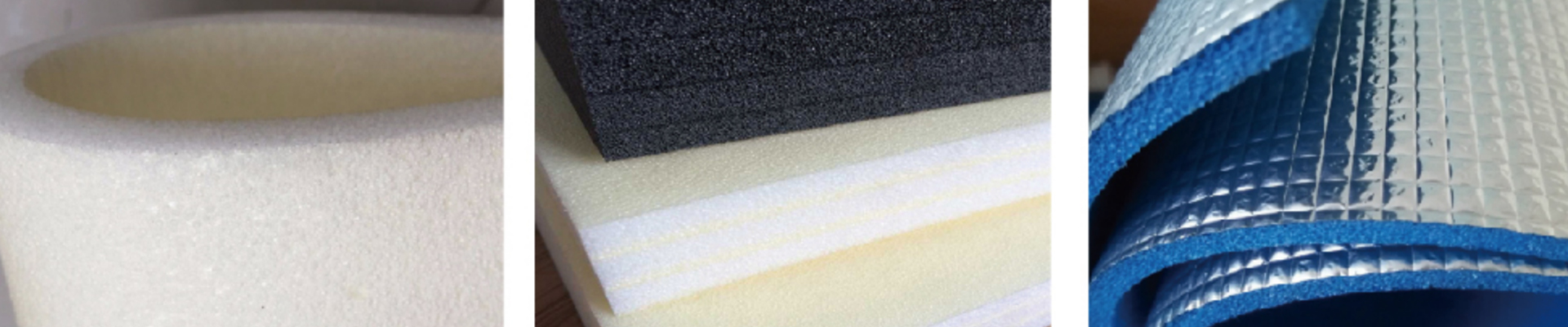
Rigid protective layers often rely entirely on custom EPE foam sheets. Their operational success depends heavily on specific manufacturing criteria. Die-cut precision determines how well your product fits inside the designated cavity. You must ensure absolute dimensional stability during turbulent transit scenarios. Multi-layer lamination capabilities allow you to combine different core densities. This creates tailored shock profiles specifically engineered for fragile items.
We see these versatile sheets heavily utilized in specific industrial areas:
Fast-paced fulfillment centers typically prefer continuous foam rolls over precut sections. Scalability requires protective materials you can cut quickly on demand. Success here relies intensely on maintaining high tear resistance. You also need a highly consistent gauge across very long production runs. Uneven thickness severely compromises the protective barrier around your goods. Anti-static (AS) treatment options actively prevent dangerous static buildup near sensitive electronics.
Rolls naturally dominate specific high-volume use cases in the commercial sector. Furniture manufacturers use them constantly for vital surface protection against scratches. Construction crews unroll them as reliable, noise-dampening flooring underlayment. Adaptive e-commerce fulfillment centers use them as highly flexible void fill. They wrap oddly shaped items perfectly before sliding them into cardboard boxes.
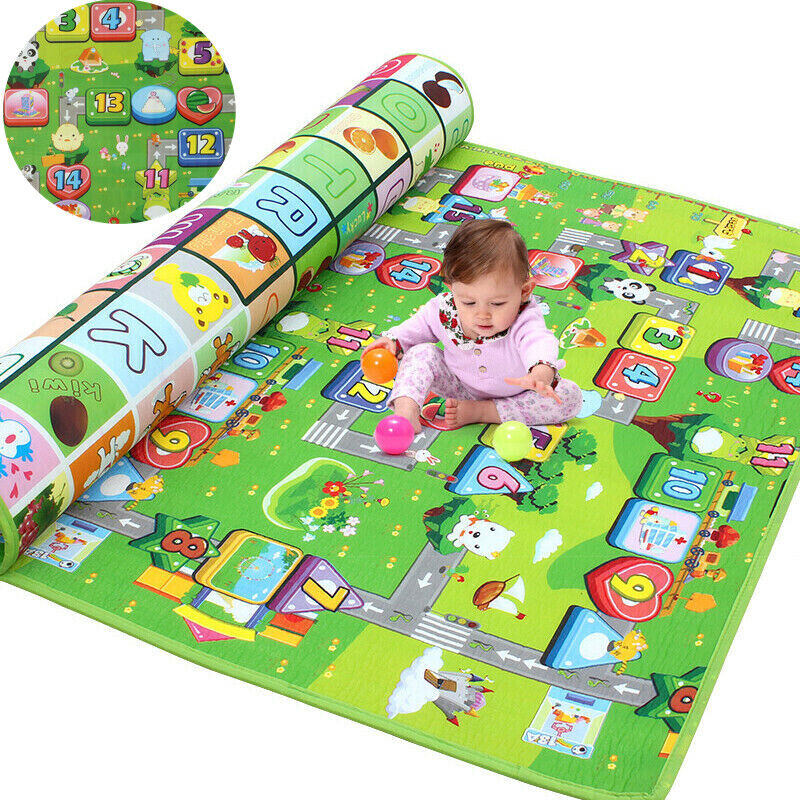
Consumer-facing products demand a completely different manufacturing approach. Success requires excellent visual aesthetics alongside structural integrity. The print quality on the outer lamination must look vibrant and engaging. Folding mechanisms need extreme durability to survive daily residential use. You must also calculate the optimal core density for proper impact absorption. Toddlers need a surface firm enough for walking but soft enough for unexpected falls.
These formats dominate the lucrative childcare and retail sectors today. Baby crawling mats represent the largest market share in this category. Active kids' playrooms rely heavily on these easy-to-clean surfaces for daily safety. Portable outdoor mats use the exact same technology for family picnics. Well-designed EPE foam play mats deliver lightweight convenience for incredibly busy parents.
Navigating safety claims requires sharp attention to detail from procurement teams. The term "non-toxic" functions mostly as an unregulated marketing phrase. It holds almost no legal weight on its own in many jurisdictions. Buyers must always demand verifiable chemical testing reports from their factory partners. You cannot assume a finished product is safe just by looking at it.
Mandatory testing frameworks exist strictly to protect vulnerable consumers. Your chosen supplier must pass specific regional standards to enter global markets. In the United States, CPSC guidelines remain strictly enforced at borders. The ASTM F963 protocol dictates rigorous physical and chemical safety requirements. European markets require comprehensive EN71 compliance before shelves are stocked. These frameworks ensure rigorous laboratory scrutiny over every single batch.
Watch closely for specific chemical red flags during your vendor vetting process. You must verify the absolute absence of Formamide in the core material. Ensure laboratory reports confirm no BPA exists anywhere in the product layers. Phthalates and heavy metals must also show up as completely undetected. Ask for independent, third-party lab certificates to definitively prove these safety claims.
We must address the extremely common odor reality associated with foam products. Off-gassing complaints happen frequently in this specific industry. However, a distinct new-product smell does not automatically indicate toxic chemicals. Quality manufacturing processes include proper curing times in well-ventilated factory zones. Allowing raw materials to breathe properly eliminates harmless manufacturing air odors. This crucial airing step must happen long before consumer packaging occurs.
Selecting the perfect base material requires careful technical comparison. We often evaluate lightweight shock absorption against denser, heavier options. Expanded Polyethylene provides incredible cushioning at a significantly lower weight profile. Ethylene-Vinyl Acetate (EVA) offers a heavier, denser surface memory preferred in gyms. Polyurethane (PU) delivers a premium, soft squish often found in luxury furniture items.
We must acknowledge primary material weaknesses honestly to make smart decisions. Susceptibility to pet claws or sharp objects remains a known issue here. Raw, unlaminated material punctures quite easily under concentrated point loads. Manufacturers mitigate this specific vulnerability using advanced surface engineering techniques. They apply durable TPU or PE film lamination tightly over the core. This protective outer skin drastically improves the lifespan of consumer goods.
You should base your final choice on empirical physical data. Surface vulnerability matters just as much as overall impact resistance.
| Material Classification | Density Profile | Impact Absorption Capabilities | Surface Resilience (Unlaminated) | Recyclability Rating |
|---|---|---|---|---|
| Expanded Polyethylene | Extremely Lightweight | High Shock Dissipation | Low (Prone to puncturing) | Excellent (Class 4 LDPE) |
| Ethylene-Vinyl Acetate | Medium to Heavy | High Rebound Memory | Moderate (Resists tearing) | Poor (Cross-linked structure) |
| Polyurethane | Very Heavy | Premium Soft Squish | High (Highly durable) | Moderate (Requires special processing) |
Clear technical communication dictates your overall procurement success. You must define specs accurately to any domestic or overseas manufacturer. Always communicate your desired density clearly in kilograms per cubic meter. Specify your exact thickness tolerances to avoid receiving unusable bulk batches. Detail the cellular structure size you expect to see upon inspection. Smaller internal cells typically yield a much smoother surface finish.
Evaluate extensive customization capabilities rigorously before signing any purchasing agreements.
Procurement brings several warning signs you must spot early in negotiations. Refusing to provide independent lab results remains the biggest single issue. Inconsistent batch weights suggest terrible manufacturing controls on the factory floor. Unusually high minimum order quantities might indicate desperate operational cash flow. Walk away immediately if you spot these obvious supplier red flags.
Take specific next-step actions to secure your optimal supply line. Initiate the shortlisting process safely with multiple vetted factory candidates. Request A4-sized material samples for your own physical laboratory inspection. Ask for their most recent, verifiable compliance certificates from recognized authorities. Touch and feel the samples thoroughly before signing any binding contracts.
Choosing the correct product requires careful balance and extensive research. You must weigh specific application demands carefully against material realities. Structural rigidity matters deeply for industrial shipping inserts and electronics protection. Chemical safety reigns supreme for consumer nursery products and household goods.
A: Yes. Its closed-cell nature completely prevents liquid water absorption. The internal structure acts as a reliable barrier against moisture penetration. This natural resistance stops mold and mildew from forming inside the core. It remains highly sanitary, making it perfect for baby play areas and demanding marine applications where dampness is common.
A: It generally lasts several years providing proper surface lamination is applied. However, it naturally dents easier than high-density EVA tiles if you place heavy furniture directly on it. EVA handles static compression better due to its heavier memory profile. For active daily play and regular folding, laminated options offer excellent, lightweight durability.
A: Absolutely. The material is classified universally as a Class 4 plastic (LDPE). Specialized recycling facilities can melt it down and reprocess it fully. This completely avoids adding unnecessary waste to local landfills. Always check with your municipal recycling center to confirm they accept bulky Class 4 plastics before disposal.
A: You are noticing standard manufacturing off-gassing. During production, harmless manufacturing air often gets trapped inside the tight packaging. This distinct smell differs completely from toxic chemical VOCs. Reputable factories cure their materials to minimize this effect. The faint odor dissipates rapidly once you allow the newly opened product to breathe in a ventilated room.