
Views: 0 Author: Site Editor Publish Time: 2026-07-17 Origin: Site


Parents face a sea of baby gear choices right from day one. Choosing the perfect floor padding often feels like pure guesswork. You want something soft enough to cushion newborn tumbles but resilient enough to handle later toddler chaos. Before investing in a primary play space, you must calculate its realistic lifespan to gauge true value. Differentiating between gentle baby crawling, daily adult foot traffic, and high-impact wear like sharp pet claws helps set honest expectations. Understanding these daily use factors prevents frustration when natural wear inevitably appears on your floor covering. In this guide, we break down exactly how long you can expect these popular foam mats to survive. We will explore structural material strengths, real-world degradation variables, and actionable maintenance protocols. Read on to discover how to maximize your baby's play area safely and efficiently.
We track mat survival through specific developmental milestones. Babies grow fast, and their impact on floor surfaces changes monthly. A standard XPE rolling play mat experiences vastly different stress levels depending on your child's mobility. You can anticipate distinct wear patterns across three primary growth stages.
You must define success criteria realistically. If the mat bridges the gap between tummy time and independent walking without exposing raw foam, it has succeeded. This usually spans 18 to 24 months. Surviving this critical window means the product successfully fulfilled its primary lifecycle.
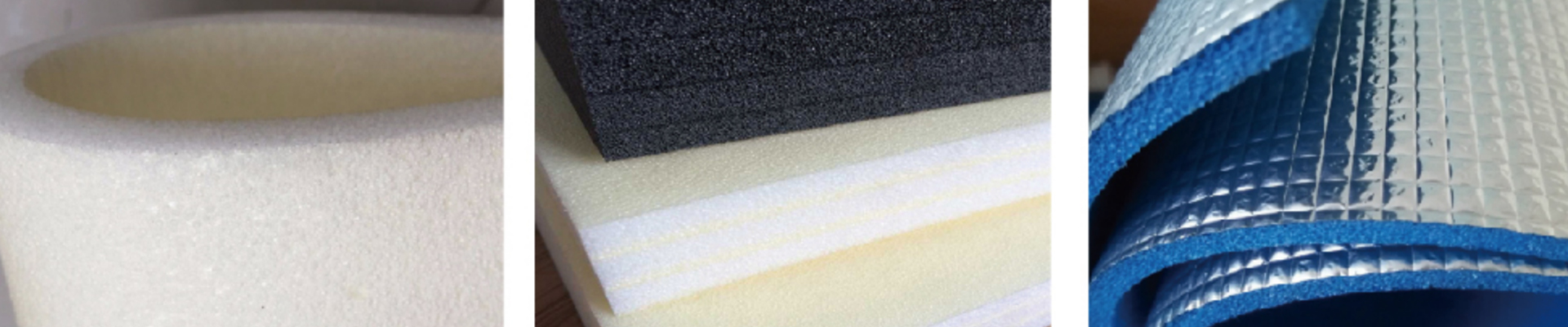
Understanding foam architecture helps you set realistic durability expectations. A high-quality durable XPE foam mat relies on specific manufacturing techniques. These methods prioritize infant safety over industrial-grade indestructibility.
XPE features a closed-cell architecture. This structure completely prevents liquid absorption. Spilled milk, water, or bodily fluids sit on the surface instead of soaking inward. You can sanitize it easily daily. This moisture barrier also prevents mold-related degradation inside the core. The closed cells act like millions of tiny air bags, offering excellent shock absorption for falling toddlers.
Top-tier XPE mats use thermal lamination rather than toxic glues. Manufacturers use heat to bind the printed film directly to the foam layer. This heat-bonding technique significantly reduces toxic off-gassing. You will not experience harsh chemical smells upon unboxing. However, we must acknowledge a structural trade-off. Heat-laminated films remain susceptible to peeling under heavy, repetitive friction. Without industrial adhesives, the top layer sacrifices some longevity for elevated safety.
We often compare XPE against EVA (Ethylene-Vinyl Acetate) and PU (Polyurethane). This comparison grounds your purchasing expectations.
| Material Type | Toxicity & Safety | Structural Density | Expected Durability |
|---|---|---|---|
| XPE Foam | BPA/Phthalate-free, lowest off-gassing | Low to Medium (Lightweight) | 1 to 3 Years |
| EVA Foam | Often contains formamides | Medium (Firmer surface) | 2 to 4 Years |
| PU (Polyurethane) | Safe, but often uses synthetic leathers | High (Heavy and dense) | 5+ Years |
XPE is much softer and safer than standard EVA. It avoids the controversial chemicals often found in cheap puzzle mats. However, it is structurally less dense than premium PU. This makes XPE a mid-tier investment. It delivers a shorter, but substantially safer, lifespan for your home.
Controlled laboratory testing rarely matches living room realities. Daily use introduces unpredictable variables. Specific household habits degrade foam structures much faster than standard walking.
Pets pose the largest threat to soft foam. Unsealed dog and cat claws easily puncture the top laminated film. Once an animal pierces this protective film, the inner foam core degrades rapidly. Moisture and dirt enter these micro-punctures, weakening the surrounding cells. If you have active indoor pets, expect a significantly reduced lifespan.
Heavy furniture creates another major hazard. Placing couches, coffee tables, or heavy wooden playpens directly onto the mat causes irreversible compression. XPE foam does not possess 100% rebound memory. It absorbs sudden impacts beautifully but collapses under sustained heavy weight. The crushed cells will never regain their original thickness.
Improper cleaning agents silently destroy the surface over time. Harsh chemicals strip the protective laminated film. Using bleach or alcohol-based wipes leads to premature fading and peeling. The film becomes brittle and flakes off, exposing the porous core underneath.
Robotic vacuums also inflict hidden damage. The aggressive friction from heavy-duty brush rolls easily frays bound edges. Daily automated vacuuming can scratch the delicate surface layer. The stiff bristles act like sandpaper against the heat-laminated film.
Strategic care routines drastically extend your mat's usability. You have considerable control over how quickly the surface degrades. Implementing a proactive maintenance plan ensures even wear.
The flipping strategy offers the highest return on effort. A double sided play mat allows you to distribute foot traffic evenly. You should rotate and flip the entire unit every three to four months. This ensures even wear across both printed surfaces. It also distributes UV exposure. Sunlight flowing through living room windows gradually fades the printed ink. Flipping prevents one side from looking old while the bottom remains pristine.
Correct maintenance protocols protect the thermal lamination. We strongly recommend using neutral pH cleaners. A simple mixture of mild dish soap and warm water works best. You must use soft microfiber cloths. Never use abrasive scrubbers or stiff sponges. Gentle wiping removes sticky residues without scratching the protective top film. After washing, dry the surface completely using a clean towel. Standing water near stitched edges can weaken the binding over time.
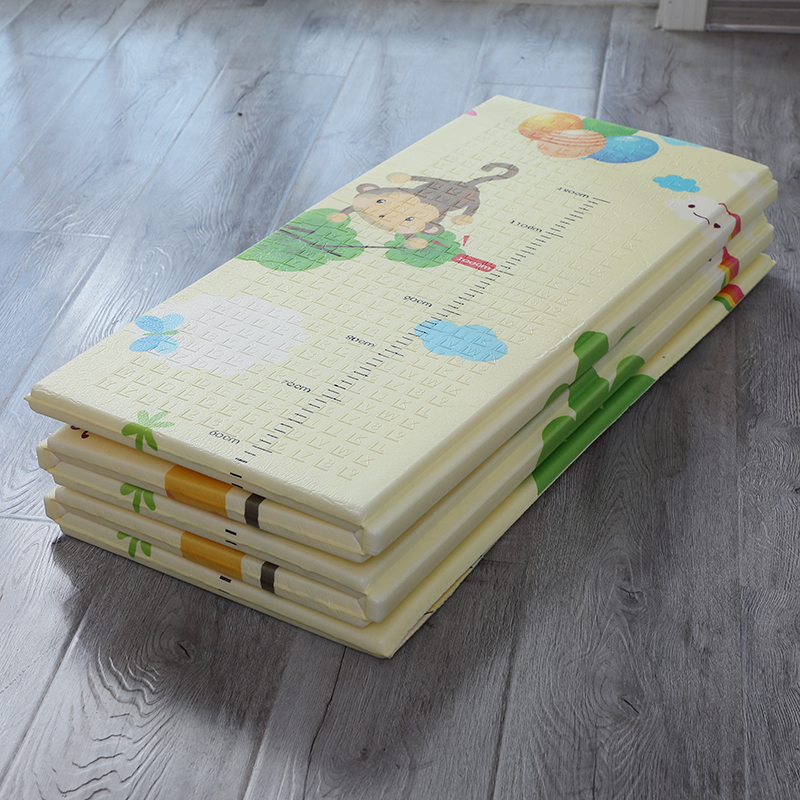
Storage best practices prevent structural stress. Sometimes you need to reclaim your living room floor. When rolling the mat for temporary storage, roll it loosely. You must always roll it so the top design faces outward. Rolling it too tightly causes internal cell compression. Keeping the top design facing outward prevents the edges from curling upward when unrolled later. This simple habit keeps the mat lying perfectly flat against the floor.
Every soft floor covering eventually reaches its limit. Knowing when to retire the mat keeps your child safe. You should monitor the surface closely once it passes the two-year mark.
Safety indicators signal the immediate need for replacement. An exposed foam core presents a serious choking hazard for teething babies. Toddlers easily pick at peeling film, breaking off small foam pieces. You also need to check for a loss of shock absorption. We call this "bottoming out." If the foam feels permanently flat in high-traffic zones, it no longer protects against falls. Furthermore, persistent odors indicate trapped moisture. Deep punctures sometimes trap milk or pet accidents. If thorough cleaning cannot remove the smell, bacteria has colonized the core.
Reaching the end of its primary aesthetic lifespan does not mean immediate disposal. You can successfully transition the mat from a living room centerpiece to secondary uses. Old mats work beautifully underneath indoor climbing triangles or sliding boards. They offer excellent sub-flooring for unfinished basement play areas. You can even use them outdoors as temporary patio padding under splash pads during summer.
As your child ages out of the crawling phase, you should apply strategic shortlisting logic for next steps. Toddlers require different sensory feedback. Transitioning to a more rigid washable rug often makes sense. You might also consider an interlocking foam system for dedicated playrooms. These harder surfaces support building blocks and toy cars much better than soft XPE.
You now possess a clear understanding of foam mat durability. An XPE play covering delivers an affordable, highly safe, and adequately durable solution. Manufacturers engineer these products specifically for the critical first three years of a child's mobility. They prioritize chemical safety and impact absorption above all else.
We recommend buying based entirely on daily safety and ease of cleaning. Do not expect multi-generational durability from soft foam. Setting realistic expectations ensures you get maximum value during the toughest developmental stages.
A: Yes, but only temporarily. Direct UV rays fade the printed film quickly. Abrasive outdoor surfaces like concrete or rough wooden decks can easily scratch the underside. You should limit outdoor use to temporary, shaded setups. Always place a protective tarp underneath if using it on grass.
A: XPE is highly stable and non-toxic, so it does not release harmful off-gassing even when warm. However, it remains subject to color fading. Prolonged, direct UV exposure breaks down the color pigments in the laminated film, though the structural foam itself remains safe.
A: Punctures cannot be structurally healed due to the closed-cell nature of the foam. However, you can prevent further damage. Smooth down any raised edges carefully. Apply specialized, transparent vinyl repair tape over the hole. This prevents moisture intrusion and stops teething babies from peeling the damaged film.