
Views: 0 Author: Site Editor Publish Time: 2026-08-06 Origin: Site


Unmitigated heat transfer leads to rapid energy loss in commercial settings. It also causes intense physical discomfort in everyday consumer scenarios. You might experience this as a freezing floor in a nursery. You might feel it as a sudden, sharp chill during a winter camping trip. Stopping this unchecked thermal bleed matters for both safety and efficiency. While many materials offer basic insulation, Expanded Polyethylene (EPE) provides a highly specific balance. It delivers exceptional thermal resistance, total moisture impermeability, and vital structural flexibility.
We will deconstruct the underlying physical mechanics driving EPE foam's unique thermal properties. We will also compare it objectively to alternative foams like EPS. Finally, you will receive a clear, actionable framework for evaluating EPE materials for your end-use applications. This ensures you specify the right barrier for optimal performance in any environment.
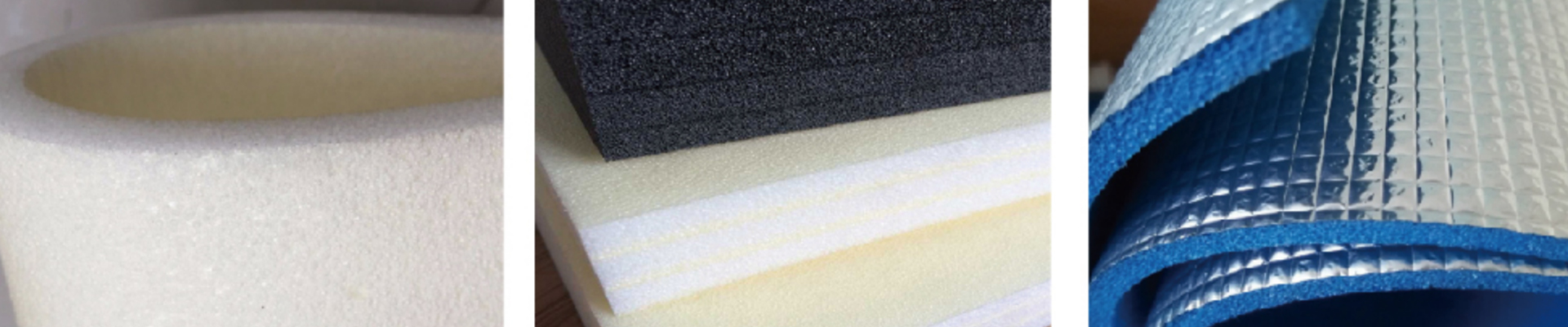
Closed-Cell Mechanics: An epe foam mat relies on a closed-cell structural matrix that traps millions of microscopic air pockets, physically blocking heat conduction.
Low Thermal Conductivity: EPE possesses inherently low thermal conductivity (k-value), making it highly resistant to temperature fluctuations.
Moisture-Resistant Insulation: Unlike open-cell materials, EPE’s water resistance prevents moisture ingress, ensuring thermal performance does not degrade in damp environments.
Application Versatility: Due to its flexibility and non-toxic properties, it serves dual functions ranging from heavy-duty commercial insulation to a compliant, impact-absorbing epe foam play mat.
How does heat actually move? Heat travels through solid objects via molecular collision. Scientists call this process thermal conduction. When warmer molecules vibrate rapidly, they bump into cooler neighboring molecules. They pass the thermal energy along the physical chain. To stop heat transfer, you must interrupt this physical pathway. The cellular structure of epe foam actively disrupts this chain. It introduces microscopic physical gaps into the solid material.
Manufacturers create EPE through a specialized, highly controlled extrusion process. They melt raw polyethylene resin pellets under extreme pressure. Next, they inject blowing agents directly into the molten mix. This rapidly expands the plastic into a froth. As it cools, the material forms a strict closed-cell matrix. This means every individual bubble remains completely sealed off from its neighbors. They do not share walls or open channels.
These encapsulated pockets trap static gas or ambient air inside. Still air is a notoriously poor conductor of heat. By trapping millions of these microscopic air bubbles, the material forms a powerful thermal barrier. Heat simply cannot travel efficiently across these static air gaps. The energy dissipates before it can cross the barrier.
You might wonder about convective heat loss. Convection happens when fluids or gases circulate freely. The dense, uniform cell distribution within EPE prevents internal air circulation entirely. Because the trapped air cannot move between the sealed cells, internal convection stops. This dual-action blocking makes the material highly effective. It addresses multiple avenues of heat transfer simultaneously.

The baseline metric for any insulation is the K-value. This measures thermal conductivity. It tells us precisely how easily heat passes through a specific material. Lower numbers indicate superior insulation capabilities. Industry benchmarks show typical EPE possesses a K-value between 0.03 and 0.04 W/m·K. This places it firmly alongside high-performance industrial insulators. It achieves this high rating without relying on exaggerated marketing claims.
Next, we must evaluate the R-value. This metric measures overall thermal resistance. R-value depends heavily on material thickness and core density. If you double the physical thickness of an epe foam mat, you generally double its thermal resistance. Density also plays a critical role in this equation. A higher density means more plastic matrix and smaller air cells. This structural shift can slightly alter the resistance profile for specialized applications.
We must also acknowledge practical temperature operating ranges. EPE functions exceptionally well between -40°C and 80°C. It thrives in freezing conditions. However, it does possess strict physical limitations. You should not use it in extreme, high-heat industrial environments. Sustained temperatures exceeding 90°C can melt or warp the polymer structure. For those extreme situations, you might require specialized aerogels or rigid fiberglass products.
Standard EPE Thermal Performance Estimates
Density (kg/m³) | Approximate K-Value (W/m·K) | Optimal Operating Temp (°C) |
|---|---|---|
20 - 25 | 0.035 - 0.040 | -40 to +70 |
30 - 35 | 0.032 - 0.036 | -40 to +75 |
40 - 50 | 0.030 - 0.033 | -40 to +80 |
Let us compare EPE directly to EPS (Expanded Polystyrene). Both fall under the broader plastics category. However, their physical behaviors differ drastically in real-world applications. We will look at flexibility and durability first. EPE absorbs multiple harsh impacts without shattering. It bends, compresses, and reliably rebounds to its original shape. EPS is notoriously brittle. It cracks, snaps, and crumbles easily under repeated stress or sudden weight drops.
Regarding thermal retention, both materials insulate exceptionally well on paper. Yet, EPE maintains its structural integrity far better under heavy physical loads. If you walk repeatedly on an EPS sheet, it crushes. It permanently loses its insulative air gaps. EPE bounces back. It preserves its thermal barrier despite heavy foot traffic.
Now, we will compare EPE to EVA (Ethylene-Vinyl Acetate). EPE is typically much lighter in weight. It is also significantly more cost-effective for large-scale floor insulation projects. EVA offers higher density and a pleasant, rubbery texture. It works well for small yoga mats. However, outfitting a massive commercial floor or a warehouse with EVA becomes prohibitively expensive and needlessly heavy.
Finally, consider moisture barrier performance. EPE excels dramatically in wet environments. It acts as an absolute vapor barrier. This feature proves critical for applications involving constant ground condensation. Think about bare concrete subfloors or rough tent camping outdoors. EPE repels the water entirely.
It actively stops dampness from penetrating upward from cold earth.
It fundamentally prevents mold and mildew growth within the material core.
It maintains perfectly stable R-values even when fully submerged or soaking wet.
Where do we actually deploy this material for maximum impact? Let us break down the primary environments where EPE outperforms alternatives.
Consumer and nursery safety comes first. Hard residential floors stay dangerously cold in the winter months. A high-quality epe foam play mat combines essential thermal safety with crucial impact compliance. It completely protects infants from the freezing floor temperature. Simultaneously, it effectively cushions them from inevitable falls and daily tumbles.
Outdoor and survival gear relies heavily on this specific polymer. Winter campers and hardcore backpackers adopt these materials enthusiastically. User-driven forums frequently cite a strong reliance on foam tiles to block dangerous ground-chill. When you sleep on packed snow, convective heat loss into the ground can become deadly. EPE stops this severe thermal transfer cold.
Industrial packaging and construction also benefit significantly. Temperature-sensitive logistics demand perfectly stable internal shipping climates. EPE lines vital medical containers and specialized food shipping boxes. In the construction sector, builders use it frequently as underlayment for flooring systems. It effectively prevents thermal bridging between the cold concrete slab and the finished wood surface.
Cold-chain shipping containers designed specifically for temperature-sensitive pharmaceuticals.
Moisture vapor barriers installed beneath expensive laminate flooring installations.
Thermal wrapping wrapped tightly around exposed residential plumbing pipes.
Shock-absorbing thermal pads utilized in heavy automotive part transport.
How do you choose the right specification for your project? First, you must size the density and thickness appropriately. You must match the foam density to your required thermal target. You also must strictly consider your load-bearing expectations. Heavy foot traffic requires denser foam to prevent the material from bottoming out. For standard residential insulation, densities between 20 and 30 kg/m³ often suffice perfectly.
Safety and compliance standards remain non-negotiable. You must evaluate chemical stability very carefully. Look actively for BPA-free, phthalate-free, and non-toxic certifications. These chemical clearances are absolutely vital for any consumer-facing goods. For commercial building insulation, you must verify fire retardancy requirements. Untreated polyethylene is naturally flammable. Ensure your supplier provides treated, flame-resistant grades for construction projects.
Address physical implementation risks early in your planning phase. Consider potential UV degradation heavily. If you leave EPE exposed outdoors to direct sunlight, it will degrade. The polymer chains break down, causing the material to become brittle and flake over time. You must implement proper lamination or external covering requirements. A simple foil backing or tough fabric layer ensures long-term longevity. It protects the vital polymer bonds from solar radiation.
EPE foam's impressive thermal efficiency is not a happy accident. It is a direct result of its microscopic closed-cell architecture. Combined with absolute moisture resistance, it delivers reliable, long-lasting insulation across multiple industries.
Remember to match your structural requirements to your specific use case. Do not simply buy based on thickness alone. You must carefully balance flexibility, impact resistance, and the required thermal rating. Always consider the environmental stresses the material will face daily.
Take direct control of your next project's insulation needs. We strongly encourage you to request material spec sheets. Ask your manufacturer for independent K-value testing data. Order physical product samples to verify density and structural integrity before making a final commitment.
A: Generally, increasing thickness improves the R-value by providing a wider physical barrier. However, this relationship is not perfectly linear in all real-world applications. You will experience diminishing returns at extreme thicknesses. Once the material reaches a certain depth, ambient air circulation around the edges becomes the primary source of heat loss. Choose thickness based on your specific load requirements and space constraints rather than assuming thicker is universally better.
A: EPE possesses strong thermal stability, but you must use caution with radiant heating. Because EPE is such an effective insulator, it actively blocks radiant heat from traveling upward into the room. This traps intense heat beneath the mat. This trapped heat can potentially damage delicate subfloors or force your HVAC system to overwork. You must factor this insulative barrier into your overall heating calculations before installation.
A: Moisture does not degrade EPE foam's insulating properties. Because it utilizes a strict closed-cell matrix, the material cannot absorb water. Even if you place it in a damp basement or directly on wet soil, the internal air pockets remain completely dry. Therefore, its thermal resistance stays perfectly stable. This contrasts sharply with open-cell foams or fiberglass, which lose their insulating power instantly when saturated with water.