
Views: 0 Author: Site Editor Publish Time: 2026-07-08 Origin: Site


Setting up a safe play environment demands careful material choices. Parents face high stakes when selecting floor surfaces for nurseries and playrooms. You must balance adequate fall protection, strict non-toxic safety rules, and household budget constraints perfectly. Buyers often feel overwhelmed comparing various polyethylene foams online. These materials usually look identical on a computer screen. However, they perform drastically differently in real-world scenarios. It is incredibly easy to make a mismatched choice when generic product descriptions blend together confusingly.
This guide provides an evidence-based breakdown of epe foam against XPE foam. We will help you decode the core chemical and physical differences clearly. You will gain the exact knowledge needed to make a confident, long-term purchasing decision. Your child deserves a safe surface, and you deserve a product built to last.
Evaluating play mats requires a basic understanding of polymer science. The physical properties of any foam dictate its performance under stress. Manufacturers use entirely different methods to create EPE and XPE materials.
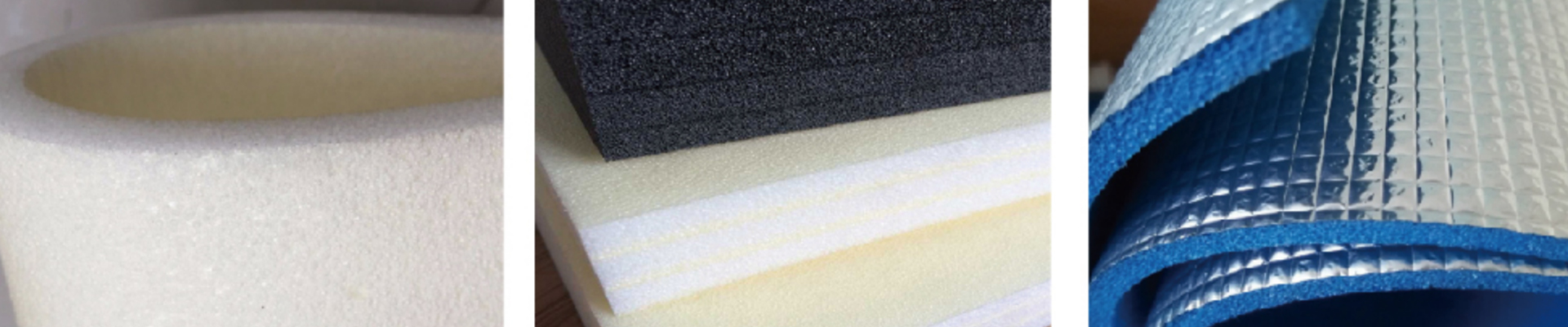
Manufacturers create Expanded Polyethylene (EPE) using a straightforward physical foaming process. Gas is injected directly into the melted polymer during extrusion. This physical process creates a non-cross-linked structure. The resulting internal air cells are large and relatively unstable. The final material feels exceptionally lightweight and soft to the touch. However, these larger bubbles lack structural integrity. They compress easily under sustained pressure. The molecular chains remain separate and unbound.
Cross-linked Polyethylene (XPE) undergoes a much more complex chemical process. A specialized cross-linking agent binds the individual polymer chains together chemically. This reaction creates a tight, uniform, closed-cell three-dimensional matrix. The strong chemical bonds reinforce the entire internal structure. The resulting foam becomes highly dense and incredibly resilient. This chemical alteration permanently changes the physical behavior of the plastic.
Chemistry dictates everyday performance in your living room. The chemical cross-linking in XPE prevents the foam from tearing easily. It also stops liquids from penetrating the core. Non-cross-linked EPE lacks this dense barrier. It remains much more vulnerable to punctures from sharp toys. A simple comparison reveals stark practical differences for daily parenting.
Material Structure Breakdown
| Feature | EPE (Expanded Polyethylene) | XPE (Cross-linked Polyethylene) |
|---|---|---|
| Manufacturing Process | Physical foaming (gas injection) | Chemical cross-linking (molecular bonding) |
| Cell Structure | Large, open or semi-closed cells | Tight, uniform, fully closed cells |
| Tear Resistance | Low to Moderate | Extremely High |
| Core Density | Lower density, softer feel | Higher density, firmer support |
Parents rightly prioritize non-toxic environments for vulnerable infants. Crawling babies spend hours in direct dermal contact with these surfaces. They frequently lick or chew on the edges. Material safety is non-negotiable.
Both EPE and XPE serve as excellent, safe baselines for child products. They are inherently safer alternatives to traditional EVA and PVC foams. Industry watchdogs heavily scrutinize EVA due to formamide residues. Formamide acts as a toxic reproductive hazard. Similarly, experts criticize PVC for utilizing harmful phthalates as plasticizers. Polyethylene foams naturally avoid these specific chemical dangers entirely. They do not require plasticizers to achieve softness.
We must address off-gassing concerns transparently. You might notice a mild odor upon unboxing a new mat. This smell comes from the standard manufacturing and sealing process. It is completely normal for newly packaged synthetic products. Simply unroll the mat in a well-ventilated room. The mild odor usually dissipates completely within 24 to 48 hours. Neither EPE nor XPE should emit harmful Volatile Organic Compounds (VOCs). The base material is chemically inert.
Marketing claims regarding safety require solid laboratory proof. You must always verify brand claims by looking for specific tests. Authentic, safe products carry recognized global certifications.
Best Practice: Always request the actual testing certificate from the manufacturer before buying.
Common Mistake: Purchasing uncertified generic mats purely based on a vague "non-toxic" website badge.
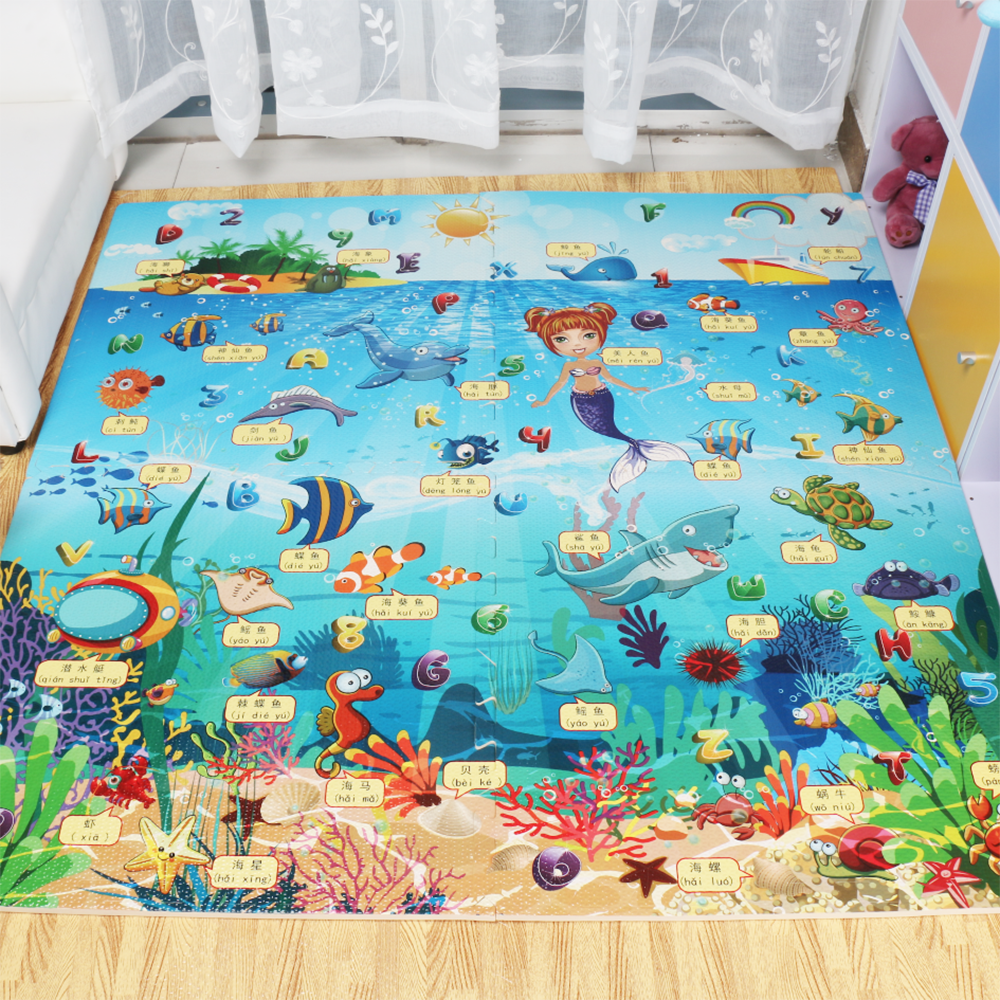
A play mat must endure rigorous daily abuse. Heavy toys, adult footsteps, and climbing furniture constantly test the material. Understanding how foams react to impact helps you choose the right density.
Heavy furniture exposes a major weakness in basic polyethylene mats. An EPE foam mat compresses significantly under coffee tables or adult weight. The large internal air cells permanently flatten under sustained load. The material rarely regains its original shape once crushed. Conversely, XPE retains its structural memory beautifully. The cross-linked chemical structure forces the foam to bounce back instantly. You can place a heavy baby gate on XPE without fearing permanent dents.
Toddlers love to pick at textured surfaces constantly. Pets frequently scratch floors during enthusiastic play sessions. EPE has a softer, looser outer layer. It can flake or peel off over time due to friction. This surface peeling creates a potential choking hazard for curious infants. XPE proves highly resistant to surface flaking. Its tight molecular bonds keep the top layer entirely intact. The surface withstands aggressive scratching and picking safely.
Parents often assume a thicker mat automatically provides better safety. This logic fails dangerously if the foam density is too low. A very thick EPE mat might bottom out during a sudden fall. The infant's head could easily compress the soft air cells completely. They would still hit the hard wooden floor beneath. A moderately thick XPE mat provides significantly better shock absorption. The dense cells absorb the kinetic impact energy evenly across the matrix. This rapid energy dispersion makes XPE ideal for infants learning to walk.
Play areas attract spills, drool, and accidental messes daily. Your chosen material must facilitate rapid, thorough cleaning. Biological hazards develop quickly inside porous materials.
Both materials claim theoretical water resistance on their packaging. However, their physical structures react differently to pooling liquid. XPE features a completely tight closed-cell structure. It repels liquid spills entirely at the surface level. Spilled milk or juice cannot seep into the foam core. This complete seal prevents harmful mold and mildew growth inside the mat. EPE is largely water-resistant, but deep punctures can allow minor liquid ingress.
Daily sanitizing is a practical reality for modern parents. You can clean an XPE foam play mat effortlessly. Use standard non-abrasive household cleaners or simple soap and water. The harsh wiping will not degrade the premium material. The surface prints remain vibrant and completely unfaded over years of scrubbing. EPE requires slightly more gentle handling. Aggressive scrubbing can cause premature surface abrasion on non-cross-linked foams.
Product construction style impacts overall hygiene significantly. We typically see interlocking puzzle edges or large seamless folding designs. Liquids easily become trapped inside puzzle seams. Spills leak directly through the interlocking cracks onto your actual floor. This frustrating mess happens regardless of the underlying foam type. Seamless folding designs eliminate these dangerous liquid traps entirely. A single wipe cleans a seamless surface completely.
Budgeting for nursery furniture requires looking beyond the initial price tag. You must evaluate how long the product will actually survive. True value emerges from calculating the replacement frequency.
Financial constraints play a huge role in family decision-making. Manufacturers produce non-cross-linked foams much more cheaply. The physical gas injection process requires less specialized equipment. Consequently, you can purchase EPE at a significantly lower upfront price. This makes it highly attractive for immediate, short-term needs.
Initial savings often mask frustrating long-term expenses. EPE typically shows heavy wear within six to twelve months. Daily use flattens the high-traffic zones rapidly. You will likely need to discard and replace it quickly. In stark contrast, XPE easily lasts three to five years under heavy abuse. Some high-quality mats even survive multiple children passing through developmental milestones. The longevity of XPE offsets the higher initial purchase price completely.
We recommend using this simple logic framework before swiping your card. Analyze your specific use case carefully.
Choose EPE if:
Choose XPE if:
XPE foam stands out as the definitively superior investment for dedicated play areas. It delivers unmatched daily durability, excellent rebound rate, and perfect shape retention. The tightly cross-linked surface makes daily cleaning incredibly simple and hygienic. EPE serves a clear, practical purpose for temporary or budget-restricted needs. However, XPE provides genuine long-term peace of mind for rigorous daily use.
Your next steps are clear and straightforward. Measure your exact play space dimensions first. Finalize your aesthetic choice between folding or seamless roll-up styles. Finally, always verify the safety testing certificates of your shortlisted brands before purchasing. Ensure your supplier clearly states the exact material composition on the final invoice.
A: No, polyethylene is naturally free of BPA and PVC. This makes it an incredibly safe baseline material for infants. You do not have to worry about these specific industrial chemicals leaching into your home environment.
A: Yes, you can use it outdoors for temporary play sessions. However, you must not leave it outside permanently. Continuous direct sunlight causes severe UV degradation. The vibrant colors will fade quickly, and the foam will eventually become brittle and crack.
A: Your mat lacks chemical cross-linking. The internal air bubbles are large and physically unstable. Continuous downward pressure from footsteps or heavy toys causes these fragile bubbles to burst. The material permanently compresses because it cannot spring back into its original shape.