
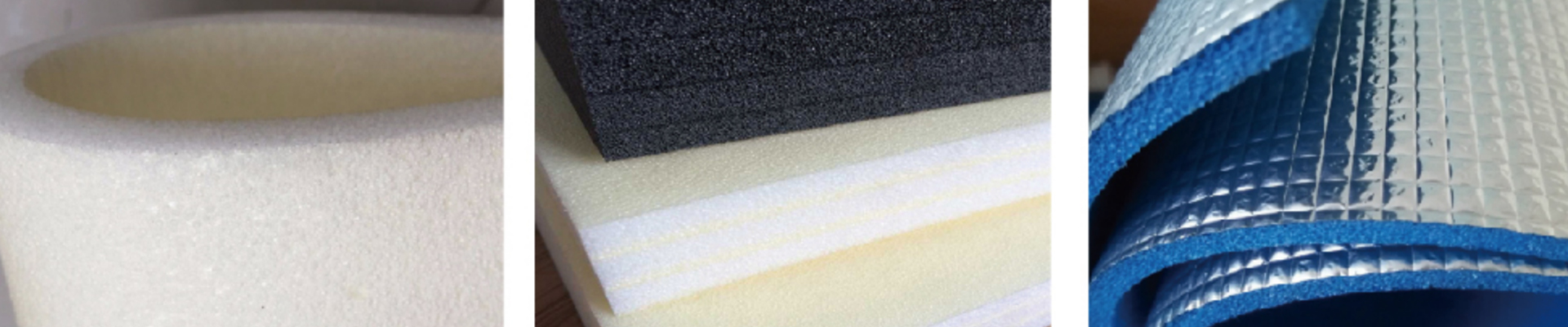
Views: 0 Author: Site Editor Publish Time: 2026-06-09 Origin: Site


Upgrading your space should feel exciting, rather than stressful. Yet, the persistent fear of permanently ruining perfectly good walls holds many renters and homeowners back from DIY renovations. The primary anxiety revolves around losing a costly rental deposit or destroying expensive underlying paint. When you stick a self-adhesive wallcovering onto drywall, you introduce complex chemistry directly into your living room. Different adhesives react unpredictably depending on your specific environment and surface conditions.
This guide offers an objective, evidence-based evaluation of adhesive behavior, surface compatibility, and removal science. We will provide you an actionable risk assessment framework to use before starting your project. By the end, you will understand how temperature, paint porosity, and time affect sticky materials. You will know exactly if a foam wall sticker serves as the safest temporary or semi-permanent solution for your specific home.
Adhesive quality dictates risk: High-quality acrylic pressure-sensitive adhesives (PSA) offer safer removal than cheap hot-melt glues.
Paint finish is the ultimate variable: Matte and flat paints face the highest peeling risk due to their porous nature; semi-gloss and satin finishes offer the safest barrier.
Time changes the chemistry: Leaving an XPE foam wall sticker on for over 12 months often triggers a cross-linking reaction, making damage-free removal exponentially harder.
Preparation and removal technique matter more than the product: Applying heat and utilizing a 180-degree diagonal peel technique significantly minimizes the risk of pulling off drywall paper or paint.
We must first understand the fundamental mechanics of adhesion. It functions exactly like a microscopic tug-of-war. The sticker grips the paint firmly on one side. The paint grips the drywall paper securely on the other side. Standard ASTM tape adhesion tests prove this physical principle. They show paint failure happens when external tensile force exceeds the internal cohesive strength of the paint film. Damage occurs exclusively when the adhesive bond defeats the paint's foundation. If the glue pulls harder than the paint can hold, the wall flakes, chips, or peels under the pressure.
Let us compare adhesive specifications carefully. Premium products utilize 50 to 80 grams per square meter of water-based acrylic pressure-sensitive adhesive (PSA). This specific acrylic PSA allows for safer, non-destructive removal. It maintains a flexible bond for longer periods. Conversely, cheaper alternatives rely on 20 to 30 grams per square meter of industrial hot-melt glues. These synthetic hot-melt adhesives dry out rapidly. They leave stubborn, gum-like residue upon removal. They act more like permanent cement than removable tape. We strongly advise checking the adhesive type before you purchase a XPE foam wall sticker.
You must also address the reality of adhesive curing over time. Curing is a gradual chemical process. After 6 to 12 months, continuous physical pressure changes the bond. Daily temperature fluctuations trigger a cross-linking reaction. The adhesive molecules chemically fuse into the wall surface. This cross-linking permanently increases the overall bond strength. Once this chemical fusion happens, removing the material cleanly becomes exponentially harder. A sticker removed at month three peels away easily. The identical sticker removed at month eighteen fights back aggressively.
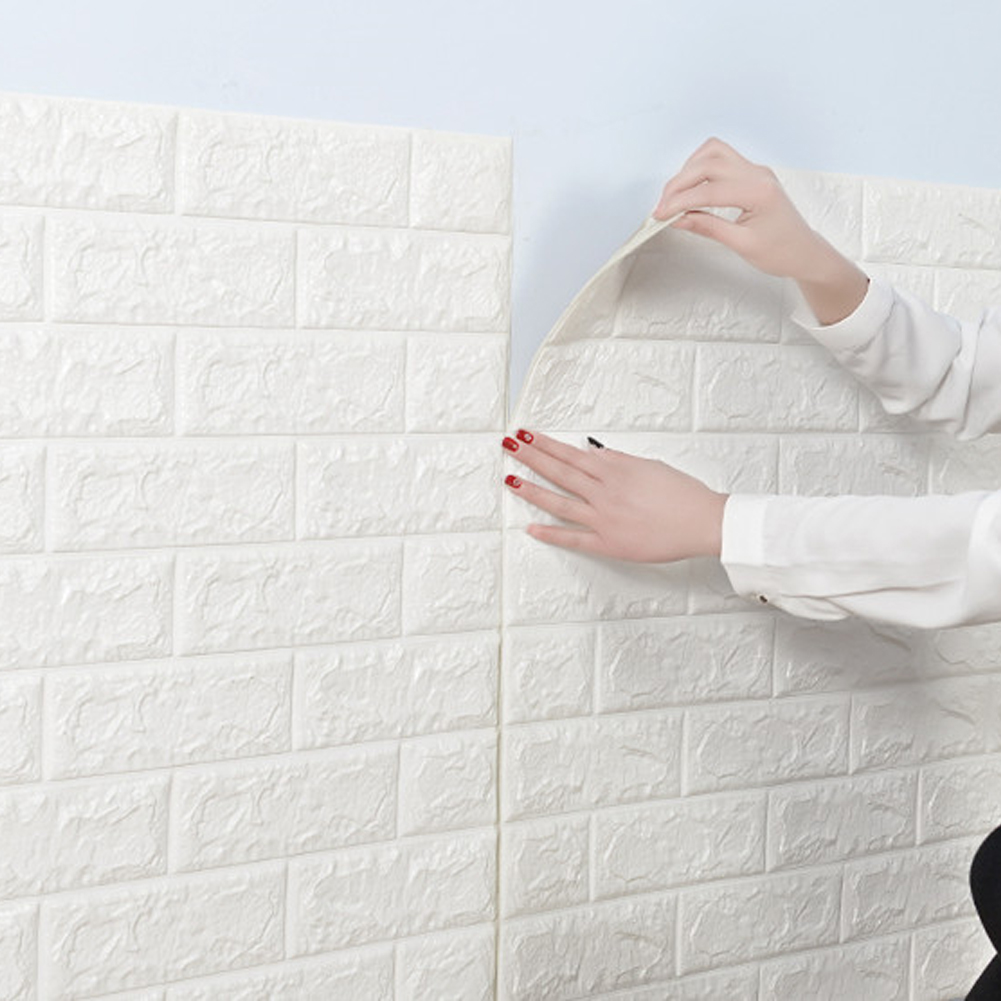
Paint finishes behave differently under sticky materials. We categorize them primarily by their porosity and smoothness. You can test your wall using a simple water drop test. Flick water onto the wall. If it absorbs and darkens, you have a highly porous surface. If it beads up, your wall is properly sealed.
High risk surfaces include matte and flat finishes. These paints contain almost no gloss. They feature a highly porous, chalky microscopic structure. This porosity allows the adhesive to penetrate deeply. The glue seeps into the micro-pores and bonds directly to the underlying drywall paper. Pulling the sticker off almost always tears these finishes.
Low risk surfaces include semi-gloss and satin finishes. These paints contain higher amounts of resin and binder. They create smooth, heavily sealed surfaces. The slick barrier resists deep adhesive penetration. The glue merely sits on top of the paint film. This makes safe removal highly probable.
Paint Finish / Surface | Porosity Level | Removal Risk | Compatibility Assessment |
|---|---|---|---|
Matte / Flat Paint | High | Severe | Micro-pores allow glue penetration. High risk of tearing the drywall paper backing. |
Eggshell Paint | Medium | Moderate | Offers slight protection. Needs very careful, heat-assisted removal to prevent chipping. |
Satin / Semi-Gloss | Low | Minimal | Smooth barrier prevents deep bonding. Offers the safest application environment. |
Fresh Paint (Under 30 Days) | Variable | Extreme | Off-gassing VOCs fuse directly to the adhesive. Guaranteed damage upon removal. |
Unprimed Drywall | Very High | Extreme | Glue sticks directly to raw paper. Complete structural tearing is inevitable. |
Let us discuss the crucial 30-day cure rule. You must never apply any adhesive to freshly painted walls. Paint feels dry to the touch within hours. However, it requires a strict 30-day curing period to fully harden. During this time, the paint releases volatile organic compounds (VOCs) into the air. This process is called off-gassing. If you cover fresh paint, these gases get trapped. The off-gassing paint will chemically bond directly to the adhesive backing. The two layers will permanently fuse into one stubborn mess.
We must establish absolute boundaries for unprimed drywall and historic plaster. Applying foam stickers to raw, unprimed drywall guarantees severe structural damage. The paper face of drywall rips instantly under tension. Fragile plaster walls in century-old homes share a similar fate. They cannot handle strong surface tension. You will face high repair costs if you ignore this boundary.
Finally, we must dispel the myth of universal application regarding textured walls. Independent material testing labs demonstrate a massive 70% failure rate on heavy textures. This includes popular styles like orange peel or knockdown. The adhesive only grips the high points of the bumps. It fails to make full surface contact. Gravity eventually wins. The panels experience sudden detachment. Sometimes, the heavy isolated tension rips small pieces of paint directly off the textured peaks.
Many consumers fall into environmental traps due to misleading waterproof claims. The XPE material itself remains 100% waterproof. Water physically repels off the front surface perfectly. However, the adhesive backing is highly vulnerable to vapor and humidity. You cannot treat the entire product as waterproof simply because the front consists of plastic.
Applying these panels in high-humidity zones introduces severe moisture trapping risks. Bathrooms often suffer from poor ventilation. Hot showers generate thick steam rapidly. The vapor creeps behind the panel edges. It condensates against the cold wall when the room reaches its dew point. Because the waterproof foam front blocks moisture from escaping, water remains trapped behind the panel. This degrades the acrylic adhesive rapidly. Even worse, it fosters hidden mold growth deep within the wall cavity. You might not see the mold until you peel the panel off months later.
Temperature fluctuations also destroy adhesive integrity over time. Exterior-facing walls endure constant heating and cooling throughout the seasons. Areas near HVAC vents experience similar artificial cycles. The adhesive expands and contracts continuously. Cold drafts harden the glue aggressively. The hardened glue increases brittleness, making safe removal nearly impossible without heat. Alternatively, constant heat from radiators softens the glue into a gummy paste. This leaves massive amounts of sticky residue upon removal.
Preparation and removal technique matter much more than the product itself. You need a strict, tested protocol. Forceful, vertical pulling causes most paint delamination. People grab a corner, step back, and yank downward. This rips the drywall paper instantly. Follow this structured standard operating procedure to minimize your risks.
Preparation Phase: Assess the wall temperature first. Ensure the room feels comfortably warm. Gather a hairdryer, a step stool, and a plastic scraper. Avoid metal tools completely, as they scratch underlying paint easily. Maintain high patience. Rush jobs cause damage.
Thermal Softening (The Heat Method): Set your hairdryer to low or medium heat. Hold it 5 to 8 inches away from the surface. Warm a small section for 20 to 30 seconds. The heat reactivates the acrylic polymer. It softens the grip temporarily. Do not use high heat, as it will melt the foam surface entirely.
The 180-Degree Diagonal Peel: This physical technique dictates success or failure. Peel from the top corner carefully. Pull downwards at a sharp 180-degree angle. Keep the material as close to the wall as possible. Pull diagonally across the panel. This specific angle converts tensile force into shear force. Paint films tolerate shear force much better than direct outward pulling.
Addressing Residue: You might encounter leftover adhesive spots. We recommend water and mild solvents for water-based adhesives. Warm soapy water dissolves high-quality acrylic PSA effectively. Do not reach for harsh chemicals like Goof-Off immediately. Heavy solvents often ruin the underlying paint finish. Furthermore, they prove completely ineffective on cheap synthetic hot-melt glues.
Even with perfect execution, accidents occasionally happen. You must set realistic expectations. Micro-chipping can occur easily during removal. This depends heavily on the age, quality, and number of underlying paint layers. Sometimes, a poorly applied primer from a decade ago causes an unexpected failure today. If you experience peeling, follow these reality-check fixes.
Fixing Minor Blemishes: Small paint chips require minimal effort to fix. Use a high-grit sanding sponge, preferably 220-grit. Lightly sand the sharp edges of the chip until they feel perfectly smooth. Wipe away the dust. Apply a targeted drop of touch-up paint using a small artist brush.
Preparing Major Tears: If you pull off the outer drywall paper layer, you expose the brown kraft paper underneath. Remove all loose or flaking paper carefully using a sharp utility knife. Do not pull further, or you will worsen the tear.
Sealing the Damage: You must seal the exposed brown paper before applying wet mud. Use a solvent-based primer, such as a shellac spray. If you use water-based primer, the brown paper will bubble aggressively and ruin the repair.
Skimming and Sanding: Once the primer dries completely, apply a thin coat of standard joint compound over the area. Let it dry overnight. Sand it flush against the surrounding wall using a 120-grit sponge.
Final Repainting: Apply a standard drywall primer over the newly sanded patch. Finally, roll on your matching wall paint to seamlessly blend the repair into the room.
Self-adhesive decorative panels serve as highly effective, budget-friendly tools for modernizing your space quickly. You must simply respect the physical limits of the adhesive. You must also understand the complex chemistry of your wall paint before pressing them firmly into place. The primary takeaway remains clear: damage is preventable through education and patience.
We recommend three actionable steps before you begin any installation. First, always perform a 7-day patch test in an inconspicuous corner of the room. Second, invest exclusively in premium products utilizing acrylic pressure-sensitive adhesives. Finally, strictly follow the thermal removal protocol when you decide it is time for a change. Following these steps ensures your walls stay completely intact.
A: No. The waterproof PE foam surface repels moisture aggressively. This prevents normal paint adhesion. If you apply liquid paint, the coating will sit on top without bonding. This inevitably leads to rapid peeling and flaking once the paint dries completely.
A: They realistically last 6 to 18 months in standard interior conditions. If placed in optimal, climate-controlled environments without direct sunlight, they can endure up to 24 months. We recommend removing them before the two-year mark to prevent the adhesive from permanently curing.
A: Yes. Their 3D thickness provides excellent coverage for bridging minor structural imperfections. Thin, traditional wallpaper easily magnifies every tiny bump or crack. Conversely, the dense foam layer effectively swallows minor dents, offering a much smoother visual finish on uneven surfaces.
A: Yes. Mild solvents like rubbing alcohol or warm soapy water work highly effectively for water-based acrylic glues. They dissolve the chemical bonds safely. However, you must strictly avoid abrasive scraping tools. Heavy scrubbing often ruins the underlying paint finish permanently.