
Views: 0 Author: Site Editor Publish Time: 2026-07-24 Origin: Site


Parents opening a new play mat often face a noticeable plastic odor. This strong smell instantly sparks anxiety. You might wonder if your baby will breathe in harmful toxins during daily tummy time. Parenting forums frequently buzz about the toxic smell of foam gear. To protect your baby, you must accurately distinguish between dangerous chemical off-gassing and harmless packaging scents. This article provides an evidence-based breakdown of popular foam materials. We explore exactly why an xpe baby mat behaves differently from older, traditional alternatives. You will gain clear evaluation criteria to safely vet products. Ultimately, you will learn how to make a safe, confident decision for your nursery. By understanding basic material science, you can confidently skip the confusion. You will secure a clean, safe play space for your family.
High-quality XPE (Cross-linked Polyethylene) baby mats are inherently low-odor and do not emit toxic Volatile Organic Compounds (VOCs) like formamide or BPA.
Any faint smell upon unboxing an XPE mat is typically trapped manufacturing air or packaging material, which dissipates safely within 24 hours.
Compared to PVC and EVA foams, XPE utilizes a physical foaming process rather than chemical plasticizers, making it the safer, hypoallergenic standard for modern nurseries.
Verifiable third-party certifications (e.g., CPSIA, ASTM, OEKO-TEX) are the only reliable metrics for confirming a mat's non-toxic claims.
Consumers often misinterpret any factory scent as a direct health threat. We must clearly define the scientific difference between harmful chemical off-gassing and residual packaging odors. Off-gassing involves the continuous release of Volatile Organic Compounds (VOCs). These chemicals seep into the air over weeks or months. They often originate from industrial adhesives, chemical blowing agents, or liquid plasticizers. Prolonged exposure to high VOC levels can cause headaches or respiratory irritation.
Conversely, harmless residual odors simply result from sealed environments. Factories pack manufactured items in airtight shrink-wrap right off the production line. This process traps ambient factory air inside the packaging. A brand-new xpe baby mat might carry a faint, sterile scent initially. However, it is not releasing hazardous chemicals into your living room. The scent remains superficial. It fades rapidly once exposed to fresh air.
We must prioritize scientific transparency over deceptive marketing hype. Absolute odorless claims rarely reflect reality. No manufactured product escapes the factory completely devoid of scent. All goods confined in shipping materials will hold some initial odor. Safety ultimately depends on the actual molecular makeup of the product.
Characteristic | Chemical Off-Gassing | Packaging Odor |
|---|---|---|
Source | Unstable chemical compounds, plasticizers, and adhesives. | Trapped factory air and airtight plastic wrapping. |
Duration | Persists for weeks or months. | Dissipates safely within 12 to 24 hours. |
Odor Profile | Harsh, sharp, ammonia-like, or heavy chemical scent. | Mild, sterile, or faint plastic smell. |
Health Risk | High. Can cause respiratory irritation or allergic reactions. | Low to None. Completely harmless once aired out. |
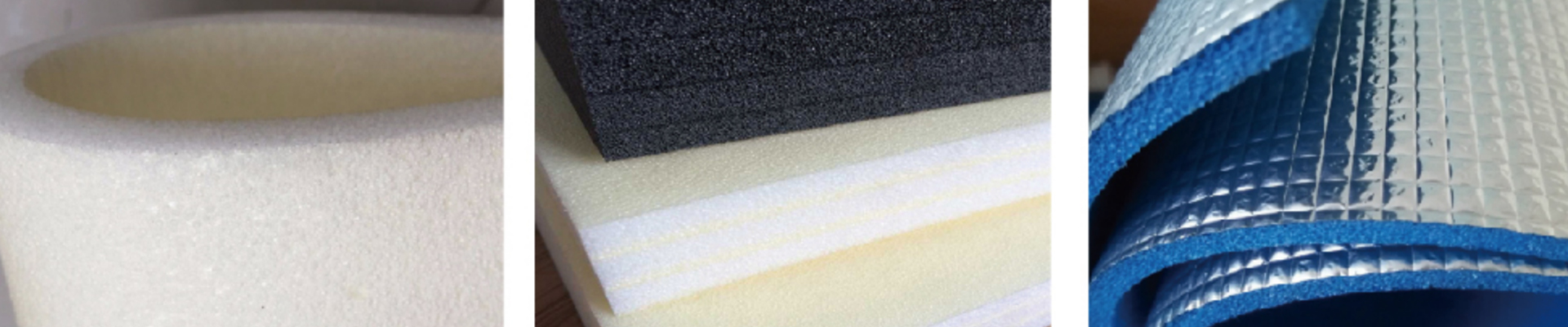
Comparing the three dominant play mat materials validates XPE as the superior choice. Historically, brands manufactured cheap puzzle mats using EVA (Ethylene-Vinyl Acetate). EVA requires formamide during its foaming process. Formamide acts as a highly effective chemical blowing agent. Unfortunately, it is also a known source of toxic, ammonia-like smells. Regulatory bodies frequently flag formamide due to serious reproductive toxicity concerns. European markets have heavily restricted formamide levels in children's products.
PVC (Polyvinyl Chloride) presents another risky option for cautious parents. Manufacturers utilize PVC for its extreme durability and low cost. However, raw PVC is naturally rigid and brittle. It requires chemical plasticizers known as phthalates to remain soft and flexible. Phthalates do not bind permanently to the PVC molecules. They can leach out of the mat over time. These leaching chemicals carry heavy, lingering odors. Babies spending hours on PVC mats face unnecessary exposure risks.
XPE (Cross-linked Polyethylene) bypasses these exact issues entirely. Manufacturers utilize a specialized physical foaming process for XPE. They bake the raw polyethylene resin under precise, high heat. This heat causes the cells to expand physically. The molecules form a stable three-dimensional net structure. This cross-linking process eliminates the need for heavy chemical blowing agents. It also requires zero toxic plasticizers to achieve softness. The final result is a highly stable, non-toxic foam structure. It delivers excellent cushioning without compromising your indoor air quality.
You should critically audit any brand before making a purchase. Do not take generic non-toxic claims at face value. Marketing labels often obscure the actual chemical makeup of the product. You need verifiable proof of safety.
Look for mandatory regulatory standards in the product specifications. Independent laboratory testing provides objective validation.
US CPSIA Compliance: Ensures the product tests strictly below safe limits for lead, phthalates, and other heavy metals.
European EN71: Validates safety standards specifically for toys. It rigorously checks for mechanical safety and toxic migration.
ASTM F963: Represents the standard consumer safety specification for toy safety in the United States.
OEKO-TEX Standard 100: Confirms independent testing against hundreds of potentially harmful substances.
Beyond chemical makeup, you must evaluate material density. A high-quality mat features tight, uniform cell structures. Structural integrity prevents moisture from penetrating the core. Babies constantly topple over while learning to sit. A proper thickness provides optimal impact absorption. This protects delicate heads during inevitable tumbles.
Excellent sealing is equally crucial. High-density XPE usually incorporates a sealed TPU (Thermoplastic Polyurethane) top film. This waterproof barrier resists liquid absorption. It stops baby spit-up, spilled milk, or urine from soaking in. This prevents mold and mildew growth deep inside the foam. Mold is a notorious secondary cause of foul odors in baby gear. Proper sealing ensures the mat remains hygienic and fresh over years of daily use.
Setting realistic expectations helps ensure a smooth transition into your home. When your product arrives, you should follow a specific protocol. Proper handling maximizes safety and eliminates harmless scents quickly.
Here is an actionable step-by-step guide for unboxing an xpe rolling play mat:
Remove the outer cardboard shipping box immediately upon delivery.
Carefully cut away the airtight shrink-wrap. Avoid nicking the actual mat surface.
Unroll the mat fully flat in a spacious, well-ventilated room.
Leave windows open or run a ceiling fan for 12 to 24 hours.
Wipe down the entire surface lightly using a damp cloth.
Allow the mat to dry completely before letting your baby play on it.
Cold temperatures can make the foam slightly stiff initially. Unrolling it in a warm room helps the material relax. It flattens out much faster in a temperate environment.
You must avoid common cleaning mistakes. Do not use harsh chemical solvents. Avoid bleach or heavy-duty household disinfectants. Never scrub the surface using abrasive brushes or scouring pads. These aggressive methods degrade the protective TPU film. Damaging the waterproof surface might trigger unwanted chemical reactions. It can also introduce new, unpleasant smells. Degraded films allow moisture to seep into the foam core. Instead, rely on gentle, baby-safe cleaning solutions. Mild dish soap mixed in warm water works perfectly. It removes surface dirt efficiently without compromising the structural integrity.
After validating safety, you must weigh practical purchasing considerations. Modern parents demand functional items matching their interior design. You no longer have to settle for primary colors. Many older products resemble a chaotic daycare setting. Today, premium options offer reversible, minimalist designs. They feature subtle geometric patterns or neutral tones. They blend seamlessly into elegant living rooms.
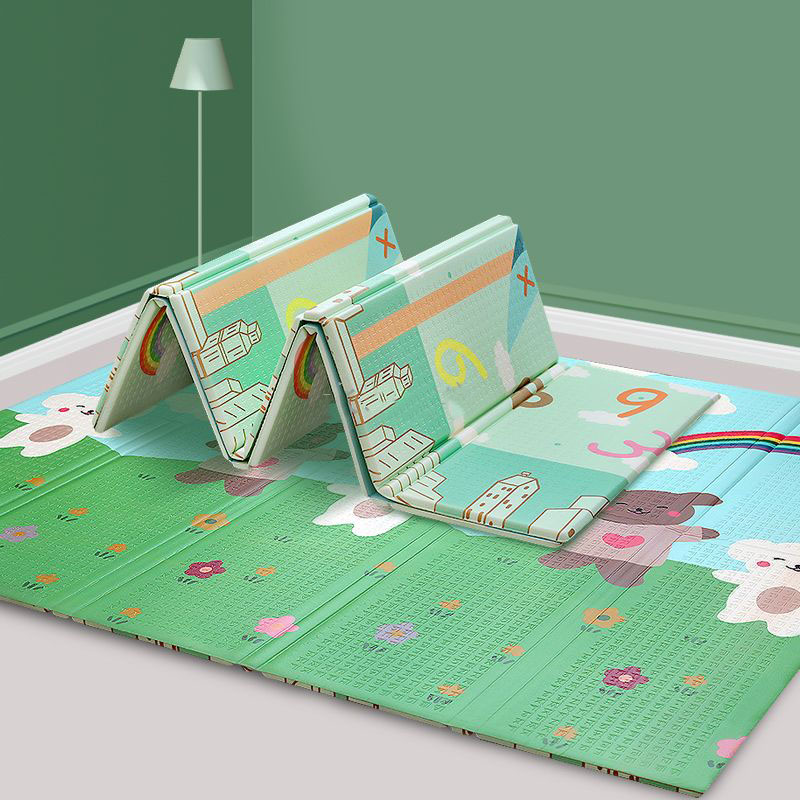
Consider the physical structure carefully. You should contrast a seamless xpe rolling play mat against traditional folding alternatives. A rolling mat provides a single, unbroken surface. It lacks annoying, crumb-catching crevices. This seamless nature makes it incredibly easy to wipe clean daily. Folding mats offer convenient portability. However, they demand much more effort to keep sanitary. Dust and food particles constantly wedge into the fold lines.
Families owning pets face unique challenges. Cat claws or dog nails can puncture inferior materials easily. High-density XPE coated in durable TPU resists minor scratches better than exposed EVA foam.
Premium XPE models carry a slightly higher upfront price point. Frame this expense as an investment in longevity and peace of mind. Replacing cheap, smelly puzzle mats multiple times becomes highly frustrating. Interlocking puzzle mats often separate during aggressive play. They create tripping hazards and collect massive amounts of dirt. High-density XPE withstands years of heavy toddler use without degrading. It retains its cushioning and structural integrity long past the baby crawling stage.
An XPE baby mat remains the safest, most odor-neutral option available today. It effectively protects parents and infants concerned about heavy chemical exposure. It bypasses the toxic formamide found in EVA completely. It avoids the dangerous phthalates heavily utilized in PVC. You can enjoy a clean nursery environment free from persistent off-gassing.
Take these actionable steps for your next purchase:
Verify third-party safety badges like CPSIA or OEKO-TEX before checking out.
Prioritize high-density XPE featuring a sealed, waterproof surface to prevent mold.
Choose a seamless rolling design to minimize trapped dirt and simplify daily cleaning.
Air out any new mat for 24 hours in a well-ventilated space to clear packaging odors.
Stick to mild dish soap and warm water for your routine cleaning protocol.
A: Typically 12 to 24 hours in a well-ventilated room. Any initial scent usually stems from trapped air inside the factory packaging. It is not harmful chemical off-gassing. Opening a nearby window speeds up this natural airing process significantly.
A: Yes, high-quality, certified XPE is manufactured completely without formamide. The physical foaming process eliminates the need for toxic blowing agents. Independent lab tests confirm XPE falls well below established safety thresholds for VOC emissions.
A: No, diluted white vinegar acts as a highly safe cleaning agent for XPE. The sharp vinegar scent dissipates completely once the surface dries. It sanitizes the mat effectively without degrading the protective outer film or altering the foam.