
Views: 0 Author: Site Editor Publish Time: 2026-07-25 Origin: Site


Hardwood and tile floors bring distinct aesthetic appeal and easy maintenance to modern homes. However, they present significant impact and thermal risks for infants learning to crawl or walk. These unforgiving surfaces demand a highly protective barrier. XPE (Cross-linked Polyethylene) foam is frequently marketed as the premium, non-toxic standard for these exact play areas. We hear many parents question if this material actually lives up to the hype on rigid surfaces. This article will objectively evaluate how an xpe baby mat interacts with hard floors. We will address slip risks, impact attenuation, and long-term floor protection. Our primary goal is to help you make a finalized, confident purchasing decision for your child's safety. You will learn exactly how these specialized mats perform against cold tiles and slippery wood, ensuring your living space remains both beautiful and highly secure.
Verdict: Yes, XPE mats are highly effective on hardwood and tile, providing superior thermal insulation and impact absorption compared to EVA or standard polyurethane foam.
Format Matters: An xpe rolling play mat is generally safer for slippery hard floors than puzzle tiles, which are prone to shifting and separating under lateral movement.
The Slip Factor: While XPE is anti-slip on the top, its lightweight nature means it can slide on high-gloss finished hardwood; a non-slip rug pad underlay may be required for aggressive play.
Floor Safety: High-quality XPE is chemically stable and will not discolor, scratch, or off-gas onto engineered wood, solid hardwood, or porous tile.
Hard floors pose severe and immediate challenges for active infants. Hardwood and tile possess zero natural "give" upon impact. When a baby falls from a standing height, they hit the ground hard. These sudden falls require high-density shock absorption. Without it, you risk serious injury to your child. Furthermore, temperature regulation becomes a massive hurdle. Tile aggressively pulls heat away from an infant's body. Wood does this to a lesser extent, but cold floors still cause discomfort. This thermal bridging makes extended floor play completely unpleasant for babies.
We also face a complex dilemma between traction and abrasion. Babies need adequate surface friction. They rely on it to learn proper crawling mechanics. Without friction, their knees slip outwards. Yet, your expensive floor needs protection too. Hard toys and repetitive scraping quickly ruin pristine finishes. Unprotected wood floors easily sustain deep, permanent scratches from daily play activities.
Finally, shifting hazards complicate safe mat placement. Mats placed on low-friction surfaces quickly become dangerous tripping hazards. Sealed hardwood lacks natural grip. If a play surface lacks structural integrity, it slides easily. A mat sliding during a fast crawl can cause an awkward fall. Parents must account for all these environmental factors. Designing a safe play area requires careful consideration of the underlying surface dynamics.
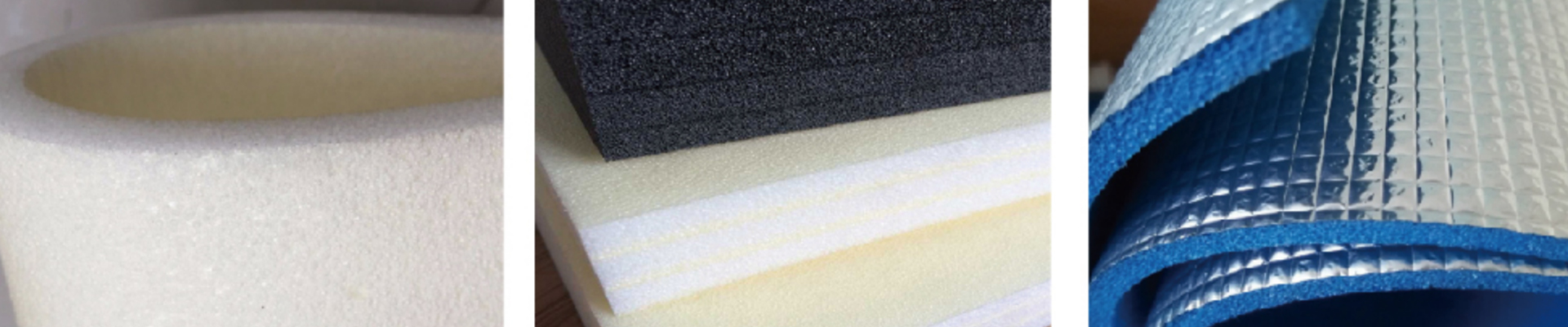
Let us examine the exact material density of these mats. The cross-linked cellular structure of XPE dictates its impact attenuation. Standard polyurethane foam often bottoms out under direct pressure. It flattens completely when a heavy toddler falls on it. XPE acts quite differently. The cross-linked cells compress upon impact and rebound instantly. This dynamic action provides a highly necessary buffer. It protects vulnerable heads and knees against unyielding tile or solid wood.
Thermal insulation represents another major functional advantage. XPE functions as a robust, closed-cell barrier. It completely blocks the rapid transfer of cold from the subfloor. Basement-level concrete tiles lose their harsh bite. Drafty hardwood floors no longer chill your baby during winter. Your infant stays warm and comfortable during extended floor time.
Many parents worry heavily about chemical stability. They need reliable floor protection for expensive renovations. Cheap PVC or rubber mats often react negatively to floor treatments. They can discolor or damage delicate polyurethane floor finishes over time. High-quality XPE remains chemically inert. You can safely leave it on expensive hardwood for years. It will never cause discoloration or chemical bonding.
Waterproofing ensures maximum spill containment during messy play. Hardwood warps quickly if liquid spills seep through. Moisture ruins expensive flooring structures from the inside out. XPE features a completely impermeable top surface. It keeps all liquids entirely above the floorline. You can easily wipe up juice or water. This protects your home investment effortlessly.
Choosing the right layout format dictates long-term usability. We must thoroughly evaluate structural integrity on low-friction floors. Puzzle tiles frequently fail in these specific environments. A child running and suddenly stopping generates significant lateral force. This sheer force causes interlocking teeth to separate on slippery wood. The tiles break apart and scatter across the room.
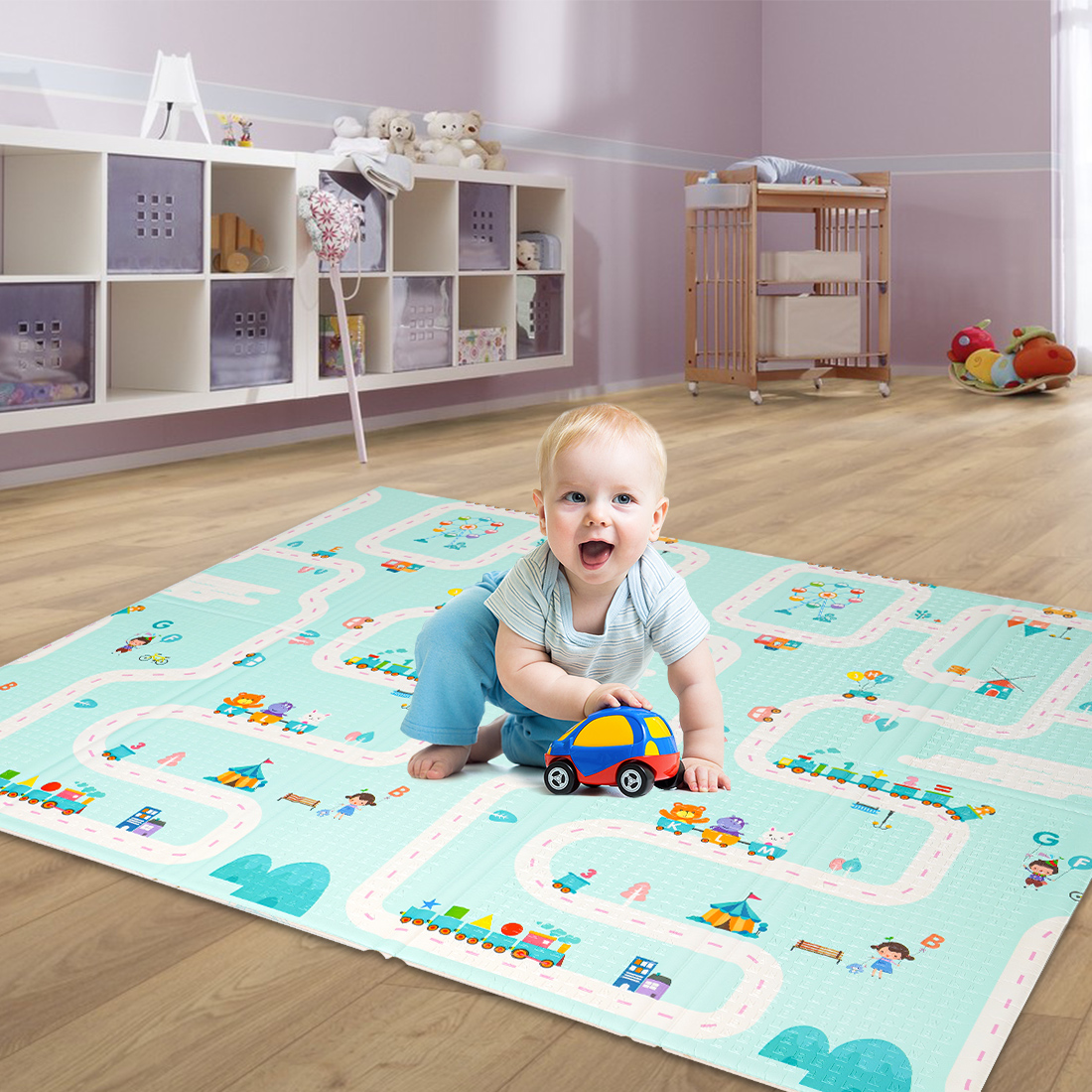
An xpe rolling play mat neatly solves this exact issue. It utilizes a single, continuous piece of sturdy material. This seamless design distributes force across a much wider surface area. It significantly reduces the likelihood of the mat sliding. It prevents the edges from buckling under sudden, jerky movements.
Spill mitigation is equally important for floor safety. Seamless rolling mats excel at protecting underlying hardwood. They prevent sticky liquids from reaching the vulnerable subfloor. Puzzle tiles contain dozens of interlocking gaps. Spills easily travel through these tiny cracks. The liquid then sits directly on the wood beneath, causing hidden water damage.
Storage and rollout efficiency matter immensely for shared spaces. Rolling mats offer quick, temporary deployment. You can unroll them in multi-use living rooms instantly. When guests arrive, you just roll them back up. Puzzle tiles require intensive, repetitive labor. Assembling and disassembling them daily becomes a highly frustrating chore. Most parents eventually leave puzzle tiles out permanently due to the immense hassle.
Finding the absolute best mat requires evaluating specific criteria. The thickness-to-surface ratio heavily dictates overall performance. Thick mats block cold better but can cause tripping. You must balance these two conflicting factors.
Here is a detailed comparison chart outlining optimal thickness based on your specific floor type.
Floor Type Environment | Minimum Required Thickness | Primary Performance Rationale |
|---|---|---|
Ceramic or Concrete Tile | 0.6 inches (1.5 cm) | Effectively counters extreme surface hardness and blocks intense cold transfer from the subfloor. |
Engineered or Solid Hardwood | 0.4 to 0.6 inches | Maximizes necessary shock absorption without creating a severe, dangerous tripping ledge for early walkers. |
Surface texture design plays a massive role in daily safety. You must look for raised, micro-textured patterns. Pyramids, numbers, or letters provide excellent tactile grip. This micro-grip helps the baby push up and crawl effectively. Crucially, the texture must remain non-abrasive. It must protect their delicate skin from friction burns during active play.
Toxicity and certification transparency are absolutely non-negotiable. You must mandate third-party testing verification before buying any foam product. Certifications like CPC, ASTM, or EN71 prove the product is safe. They explicitly confirm the mat contains zero BPA, Phthalates, Formamide, and heavy metals. Always demand to see these official testing certificates.
Edge finishing separates premium mats from cheap, disposable alternatives. Pressed or heat-bound edges prevent the material from curling over time. Curled edges create a primary tripping hazard on flat, hard floors. Flat, securely bound edges keep the play space seamless and completely secure for everyone.
Even the best materials possess inherent limitations. We must address the "sliding mat" reality directly and honestly. XPE is remarkably lightweight by design. This low density provides a key benefit for easy portability. However, it lacks the heavy dead-weight of dense PVC. On highly polished hardwood, it will shift during active play.
You can easily mitigate this movement. We highly recommend using double-sided rug tape designed for delicate floors. Alternatively, place a thin, grippy silicone rug pad underneath the foam mat. This hidden layer anchors the lightweight material securely to the slick wood.
Pet vulnerability stands as another practical reality to consider. XPE features a soft, responsive cellular structure. It is definitively not puncture-proof. Dog or cat claws can dent, scratch, or completely puncture the material. Active dogs running across the surface will leave visible marks. We strongly suggest keeping pets away from the designated play area. This simple rule vastly prolongs the mat's pristine lifespan.
Beware of heavy furniture indentations. Heavy living room furniture easily destroys soft foam over time. Placing heavy coffee tables or couches on XPE causes permanent compression. The trapped foam cells crush under sustained weight and never rebound. You should use the mat strictly in open, unobstructed play areas to maintain its integrity.
Our objective evaluation yields a clear consensus. An xpe baby mat serves as the safest protective option for hard surfaces. It remains chemically inert and highly durable. It actively protects both your developing baby and your expensive floors. Buyers simply need to understand its lightweight nature and prepare accordingly.
Our decision matrix recap strongly prioritizes single-piece rolling formats. We firmly recommend choosing them over interlocking puzzle tiles for hard surfaces. They ensure much better structural stability. They provide far superior hardwood protection against unexpected liquid spills.
Follow these actionable next steps to finalize your setup:
Measure your intended open floor space precisely to determine the exact required mat dimensions.
Verify your home's floor finish type to decide if a silicone under-pad is necessary for added grip.
Shortlist continuous rolling mats featuring verified third-party non-toxic laboratory certifications.
Establish a strict pet-free and heavy-furniture-free zone for the new play area.
A: No. XPE is chemically inert and does not contain the plasticizers that cause yellowing. Cheap PVC mats often chemically bond with polyurethane wood finishes. XPE will never react with or discolor your sealed hardwood floors.
A: Yes, up to standard residential heating temperatures. However, because XPE is a strong insulator, it will trap the heat beneath the mat. This potentially causes the floor beneath to become warmer while keeping the top of the mat neutral. Always monitor floor temperatures carefully.
A: Use a standard non-slip rug pad cut slightly smaller than the mat. Alternatively, apply hardwood-safe silicone gripper tape to the corners. Because the mat is incredibly lightweight, these simple additions easily stabilize it against active, lateral movements.
A: No. While firmer than memory foam, the density is specifically engineered for infants. It provides the necessary resistance for motor skill development like pushing up and crawling. At the same time, it adequately absorbs the shock of inevitable tumbles on hard floors.