
Views: 0 Author: Site Editor Publish Time: 2026-08-10 Origin: Site


Navigating the baby product market often feels completely overwhelming today. Brands frequently rely on aggressive greenwashing tactics to quickly sell their items. Parents remain rightfully skeptical of bold "100% non-toxic" marketing claims. When evaluating an xpe baby mat, buyers need precise answers to protect their infants. You must know exactly what Cross-Linked Polyethylene (XPE) is before buying. It is crucial to understand the specific chemicals used in manufacturing. You also need to know how the material actually holds up to daily use. We aim to provide a transparent, chemically grounded evaluation below. This practical guide thoroughly explores the physical realities of XPE foam. Our ultimate goal is to help you easily make an informed, safety-first purchasing decision. You want total peace of mind when your baby plays on the floor. Let us demystify the science behind these popular play mats.
Material Baseline: XPE (Cross-Linked Polyethylene) is widely recognized as one of the safest foam alternatives on the market, inherently free from BPA, phthalates, and latex.
The Formamide Advantage: Unlike EVA foam, manufacturing XPE does not require formamide, eliminating the risk of toxic off-gassing commonly associated with cheap puzzle mats.
Regulatory Compliance: High-quality XPE mats easily pass stringent global safety standards (CPSIA, EN71), provided they are sourced from transparent, tested brands.
Practical Limitations: While chemically inert and highly water-resistant, XPE foam is softer than PVC and requires specific care to prevent punctures from pets or sharp toys.
Cross-Linked Polyethylene (XPE) sounds highly technical at first glance. However, it is simply a dense, durable version of standard polyethylene. You interact with standard polyethylene daily in food-grade plastics. The medical and food industries rely heavily on this base polymer. Scientists widely consider it one of the safest commercial plastics available today. It forms the perfect foundation for safe nursery products.
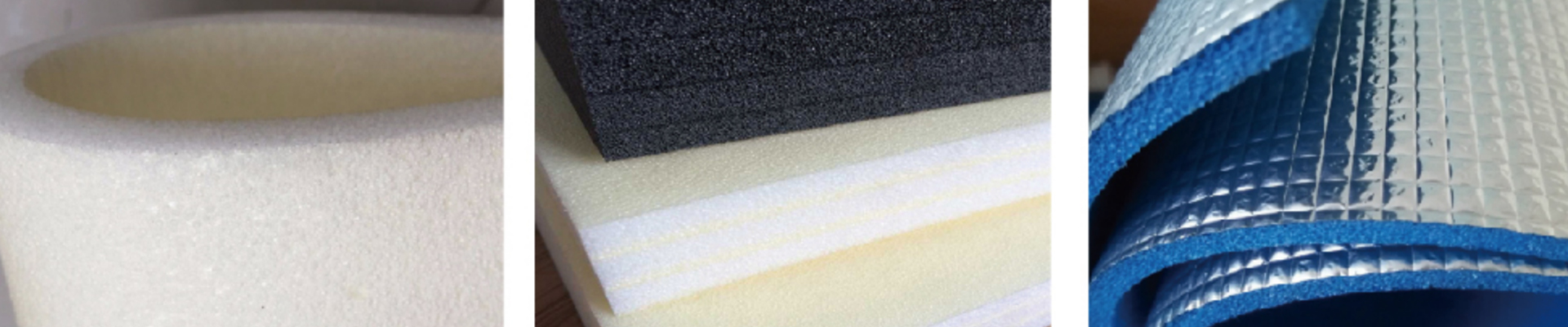
The true magic happens during the crucial cross-linking phase. During manufacturing, specialized processes link individual polymer chains together. They form a tight, complex three-dimensional web. We call this a cellular structure. This specific structure makes the foam highly supportive and completely waterproof. It stays physically stable over years of heavy use. Manufacturers do not need to add harmful chemical plasticizers to achieve this resilient softness. The physical structure itself provides the necessary bounce.
While the raw base material is exceptionally safe, we must consider manufacturing realities. The safety of your final product depends heavily on factory assembly methods. Unscrupulous factories might use cheap, toxic dyes for surface patterns. They might rely on harsh solvent-based adhesives to bind different foam layers together. You must always verify exactly how a brand assembles its finished mats. The best brands use advanced heat-pressing technology instead of chemical glues.
Best Practice: Always look for brands specifying heat-pressed layers.
Common Mistake: Assuming all soft foams share the same chemical makeup.
In scientific terms, everything carries some toxicity at a certain dose. Even pure water can become toxic in extreme amounts. When evaluating consumer goods, we must redefine "non-toxic" practically. In this context, it means the product is completely free from known endocrine disruptors. It must lack dangerous carcinogens and harmful Volatile Organic Compounds (VOCs). A truly safe product will not negatively impact infant development.
Parents often worry endlessly about BPA and phthalates. Fortunately, XPE naturally does not contain these harsh chemicals. Manufacturers typically use phthalates to soften harder plastics like PVC. Because cross-linking naturally softens XPE, it simply does not require these liquid additives. This inherent softness eliminates a major source of indoor chemical exposure. You can rest easy knowing these specific disruptors are absent.
Heavy metals like lead and cadmium pose another major risk. You usually find these toxic elements in cheap surface paints. Safe XPE products utilize plant-based or rigorously tested non-toxic inks. They apply these safe inks for all colorful surface patterns. The ink is then sealed safely away from your child.
The formamide issue serves as the most critical market differentiator. Formamide is a highly toxic blowing agent. Factories commonly use it to expand cheap EVA foam. XPE relies entirely on mechanical or thermal expansion instead. This cleaner method completely bypasses the need for liquid formamide. Therefore, XPE completely eliminates the dangerous off-gassing risks associated with cheaper alternatives.
Choosing the right material requires comparing the most popular market options. We can evaluate PVC, EVA, and XPE to see how they stack up. Each material offers distinct advantages and notable drawbacks. Understanding these differences helps you match the product to your specific household needs.
Polyvinyl Chloride (PVC) is extremely heavy and highly durable. It lays flat perfectly on the floor right out of the box. However, PVC often requires toxic plasticizers like phthalates to remain soft. This material carries high environmental and health controversy worldwide. Many health advocates strongly recommend keeping PVC out of modern nurseries.
Ethylene-Vinyl Acetate (EVA) is very cheap to produce globally. You commonly see it in interlocking puzzle mats at budget stores. Unfortunately, EVA is highly prone to formamide off-gassing over time. It crumbles easily under stress and traps dirty debris in its seams. This makes long-term sanitization incredibly frustrating for busy parents.
XPE represents the optimal middle ground for most families. It offers superior chemical safety compared to PVC and EVA. You get excellent, shock-absorbing cushioning for your little ones. While it lacks the heavy-duty scratch resistance of premium PVC, its safety profile is unmatched. It balances affordability, comfort, and verified chemical safety perfectly.
Material Type | Overall Durability | Toxicity Risks | Best Household Use Case |
|---|---|---|---|
PVC Foam | Very High | High (Phthalate reliance) | Commercial daycare spaces |
EVA Foam | Low | High (Formamide risk) | Short-term budget buys |
XPE Foam | Moderate | Very Low | Daily infant floor play |
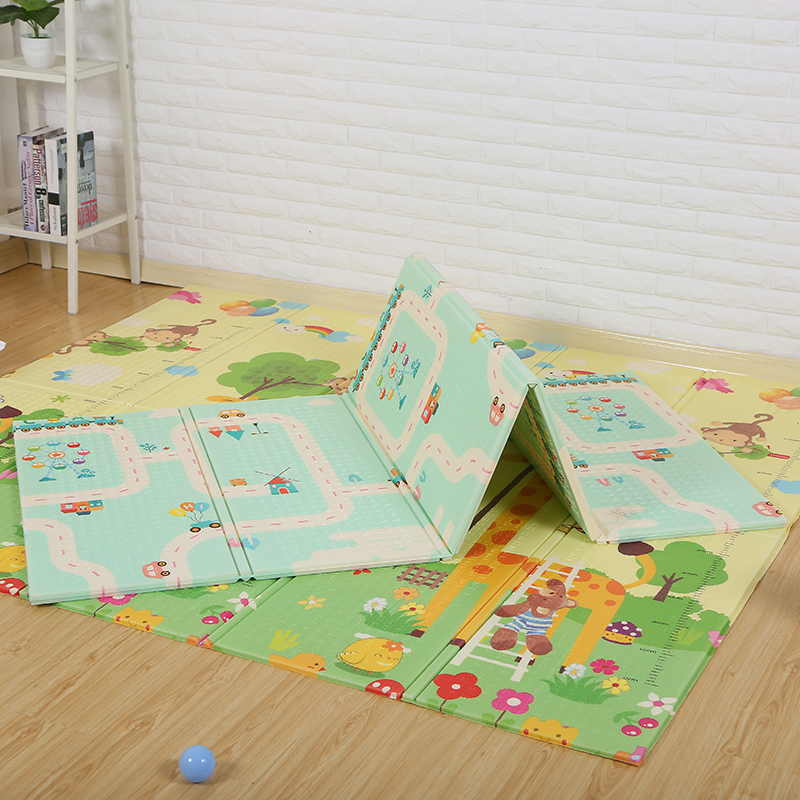
Let us evaluate the physical performance of an xpe rolling play mat in daily life. This specific material is exceptionally lightweight. Parents find it incredibly easy to roll up and store away quickly. The waterproof surface makes cleaning up messy spills a complete breeze. You just wipe it down quickly using a damp cloth. It does not absorb liquids or trap foul odors over time.
However, we must provide transparent warnings about physical limitations. XPE is highly susceptible to accidental puncture damage. Pet claws can easily scratch or pierce the soft foam surface. Sharp furniture legs will leave permanent indentations if left in place. Aggressive biting by teething toddlers can also break the top surface layer. You must manage the play environment carefully to extend the product lifespan.
You must also closely consider general heat sensitivity. XPE foam maintains its structural integrity perfectly at normal room temperatures. You should always keep it far away from intense direct heat sources. Never place a space heater directly on or near the foam. Extreme localized heat can warp the material quickly. It may also degrade the protective food-grade film on the surface.
What to watch out for: Unclipped dog nails running across the mat.
What to watch out for: Heavy coffee tables placed permanently on the foam.
What to watch out for: Using harsh bleach cleaners that strip the protective film.
Knowing the underlying science is only half the battle. You need a reliable framework to evaluate specific products before buying. The market is flooded with varying levels of quality. Follow these critical steps to verify material safety confidently.
Demand Third-Party Testing: Never trust generic marketing claims printed on a box. Outline the specific safety certifications you need. Look for verifiable CPSIA compliance in the US market. Seek out EN71 certification in Europe or the OEKO-TEX Standard 100 label globally.
Examine the Printing and Coating: The surface design should never touch your child directly. Ensure the mat uses a safe, food-grade PE film layer. This clear layer sits securely over the printed design. It effectively prevents any accidental ink ingestion during tummy time.
Avoid Unverified Importers: Be wary of unbranded, drastically underpriced options online. Many drop-shipping marketplaces sell cheap, untested knockoffs. These foreign vendors frequently skip mandatory chemical compliance testing to cut costs. You cannot guarantee their chemical makeup.
Check the Binding Method: Investigate how the manufacturer seals the edges. Heat-sealed edges are far superior to glued edges. Glues can introduce unwanted VOCs into the nursery environment.
Protecting your child requires strict vetting of every brand. Reputable companies will proudly display their testing certificates online for anyone to read. If a company hides its safety documentation, you should look elsewhere immediately. Transparency is the ultimate indicator of a trustworthy baby brand.
Our final verdict is clear and scientifically grounded. XPE is objectively one of the safest materials available today. It remains highly chemically inert for daily baby floor play. You can trust high-quality XPE to protect your child from harmful toxins. It avoids the severe pitfalls of older, outdated foam technologies.
To move forward confidently, follow these action-oriented next steps:
Prioritize reputable brands providing transparent, third-party testing certificates.
Weigh your need for high portability against your home's specific hazards.
Carefully check all safety documentation before completing your online purchase.
Inspect the protective top layer upon arrival to ensure ink encapsulation.
A: New XPE mats may have a mild odor straight out of the box. This smell usually comes from harmless manufacturing dust. Sometimes, it is just trapped air inside the sealed packaging. It is not harmful VOC off-gassing. The scent typically dissipates completely within 24 to 48 hours. Simply unroll it in a well-ventilated room.
A: You must consider both physical and chemical risks. Chemically, XPE is highly inert. It will generally pass through the digestive tract without causing toxic reactions. Physically, however, any loose piece of foam presents a severe choking hazard. You should always supervise teething toddlers closely. Remove heavily damaged mats from the play area immediately.
A: Yes, they are incredibly safe for all flooring types. XPE does not contain the harsh chemical plasticizers found in PVC. Therefore, it will not discolor or degrade expensive hardwood finishes over time. You do not need to worry about the mat stripping your floor's varnish. Unlike cheap PVC-backed rugs, XPE rests gently on delicate surfaces.