
Views: 0 Author: Site Editor Publish Time: 2026-06-10 Origin: Site


Every renter knows the struggle of dealing with blank, sterile walls. You want to personalize generic or dated spaces. However, you also fear forfeiting your security deposit due to wall damage. Traditional paint almost always requires explicit landlord approval. Meanwhile, standard wallpaper demands tedious installation and a messy removal process. Because of these hurdles, "peel and stick" solutions have flooded the rental market.
Among these options, an XPE foam wall sticker stands out. It provides a highly effective, budget-friendly way to upgrade your rental. This holds true provided you select the correct adhesive type. You must choose Acrylic Pressure Sensitive Adhesive (PSA) over cheaper Hot Melt glues. You also need to understand the strict 12-to-18-month removal window. We commit to a strictly evidence-based evaluation here. We will bypass exaggerated "lasts forever" marketing claims. Instead, we focus heavily on realistic implementation, true lifespan, and safe removal techniques for temporary homes.
Deposit Safety: High-quality foam wall stickers using Acrylic Pressure Sensitive Adhesive (PSA) can be removed safely, whereas cheaper hot-melt alternatives risk tearing drywall paint.
Realistic Lifespan: Expect optimal aesthetics and easy removal within a 6 to 18-month window; beyond 12 months, adhesive cross-linking makes removal progressively harder.
Surface Constraints: XPE foam performs exceptionally well at hiding minor wall imperfections but faces a >70% failure rate on heavily textured walls (e.g., orange peel).
Application Limits: They are 100% waterproof and ideal for kitchen backsplashes, but should never be installed inside active shower enclosures due to steam-induced adhesive failure.
The highest-friction concern for any renter is moving out. You need your security deposit back in full. You might wonder why some renters experience severe wall damage while others remove their decor flawlessly. The secret rarely lies in the renter’s skill. Instead, it comes down to exact manufacturing specifications.
The adhesive backing determines whether your project succeeds or ruins the drywall. Manufacturers use two main types of glue for wall coverings. Understanding this difference protects your wallet.
Acrylic Pressure Sensitive Adhesive (PSA): This defines the gold standard for "renter-safe" products. High-quality stickers use 50-80 g/m² of Acrylic PSA. This glue creates a strong initial tack but remains flexible. You can pull it off cleanly later.
Hot Melt Glue: Many low-cost options use 20-30 g/m² of hot melt glue. Manufacturers prefer it because it costs less. However, hot melt glue fuses aggressively to interior paint over time. When you pull the sticker off, the hardened glue takes chunks of drywall paint along.
Landlords often apply cheap, single-coat flat paint between tenants. This "landlord special" looks clean initially but lacks structural integrity. Applying a high-tack adhesive over fresh paint guarantees a disaster later.
You must adhere to the mandatory 30-day curing rule. If your landlord just painted the apartment, wait a full month before applying any decor. Paint feels dry to the touch within hours. However, it takes weeks for the chemical solvents to fully evaporate. Applying a foam wall sticker over uncured paint traps these solvents. The adhesive will bond permanently to the soft paint layer, causing severe peeling upon removal.
No decor product works perfectly in every single room. Establishing strict use-case boundaries ensures your rental project looks professional. Scalability relies on knowing exactly where to put these panels.
When deployed in the right spaces, these stickers provide massive visual impact. They cost a fraction of traditional renovation materials.
Renters often face ugly, outdated kitchen walls. Foam stickers offer high-impact visual upgrades without the cost of real ceramic tile. The closed-cell PE foam construction makes everyday maintenance simple. Grease splatters wipe away easily with a damp sponge. You get the aesthetic appeal of a subway tile backsplash without mixing messy grout.
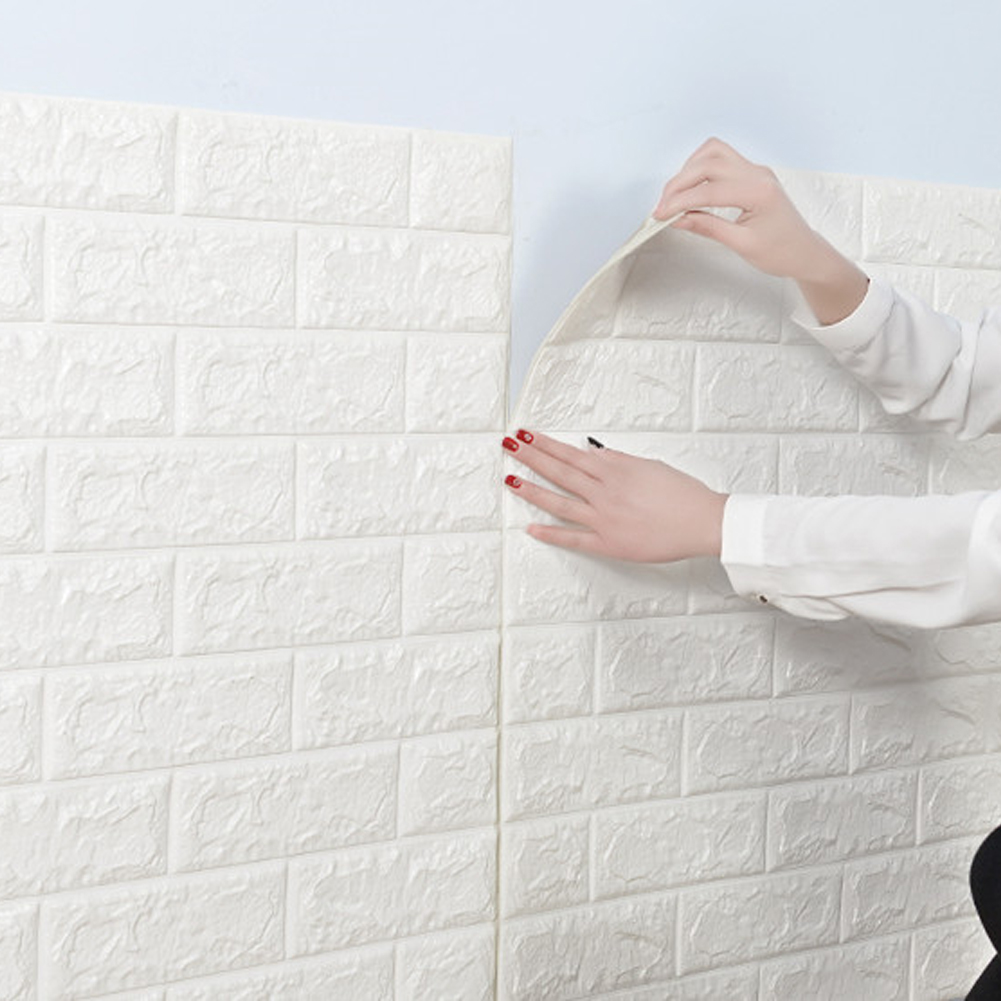
Rental walls endure years of abuse. Previous tenants leave behind nail holes, minor dents, and uneven patches. Thin vinyl decals and standard wallpaper fail miserably here. They "telegraph" every bump, highlighting the damage underneath. Foam stickers hold a distinct structural advantage. Their 3D thickness completely masks these minor imperfections. They create a smooth, highly textured illusion over battered drywall.
Just as you need to know where to apply them, you must know where to avoid them. Ignoring these constraints leads to wasted money and ruined walls.
Foam panels require smooth, flat contact to adhere properly. Industry tests show a failure rate exceeding 70% on heavily textured surfaces. If your rental features heavy stucco or deep orange-peel textures, avoid these products. The adhesive cannot make sufficient surface area contact. The heavy panels will inevitably lift at the corners and fall off.
The XPE material itself remains completely waterproof. It repels moisture perfectly. However, the adhesive backing does not share this trait. Continuous steam and direct water pooling will soften the glue. Applying them directly inside a shower enclosure guarantees failure. Keep them well above the immediate splash zone. Always ensure proper bathroom ventilation to protect the adhesive bond.
You need to set realistic expectations for your investment. Industry marketing often exaggerates the capabilities of peel-and-stick products. We need to evaluate true return on investment for temporary spaces.
Many online sellers claim their temporary panels last five to ten years. We must challenge these industry exaggerations. While the foam material might survive a decade, the adhesive behaves differently. For a renter, a five-year lifespan rarely matters anyway. Your functional goal is keeping the apartment looking great for a standard lease duration. This usually ranges from one to two years.
Renters should aim for a 12-to-18-month application window. Within this specific timeframe, the panels maintain excellent visual integrity. They do not shrink or discolor dramatically. More importantly, they remain relatively simple to peel off when your lease ends. Pushing beyond this timeline increases the risk of the adhesive hardening onto the wall.
How do foam options compare to other temporary upgrades? Let us look at a basic breakdown of common renter upgrades. This comparison focuses on upfront costs, installation time, and expected realistic utility.
Product Type | Upfront Cost Level | Installation Speed | Wall Smoothness Required | Renter Suitability |
|---|---|---|---|---|
XPE Foam Wall Stickers | Low | Fast (Peel & Stick) | Low-Medium (Hides damage) | Excellent (1-2 Year Leases) |
Temporary Wallpaper | Medium | Slow (Requires alignment) | High (Must be perfectly smooth) | Good (Visuals only) |
Traditional WPC Panels | High | Very Slow (Requires tools) | Medium | Poor (Permanent/15-25 yr lifespan) |
Temporary wallpaper requires perfectly smooth walls to look decent. Traditional WPC (Wood Plastic Composite) panels offer incredible durability. They often last 15 to 25 years. However, WPC is far too expensive and permanent for a temporary rental. Foam strikes the perfect balance for short-term visual upgrades.
Moving out brings enough stress already. You do not need the added panic of damaged drywall. Mitigating end-of-lease risk requires a step-by-step approach to panel removal.
Why does a sticker behave differently after three years compared to six months? The answer lies in adhesive cross-linking. As time passes, the polymer chains in the glue link together more tightly. They also form a stronger bond with the porous wall paint. An adhesive removed at six months yields easily. The same adhesive removed at thirty-six months fights back, pulling the drywall paper along.
Never grab a corner and rip it outward like a band-aid. This guarantees paint damage. Instead, follow this mandatory removal procedure:
Apply Gentle Heat: Use a standard household hairdryer on a low or medium setting. Hold it roughly six inches from the panel. Move it slowly over a specific section for thirty seconds. The heat gently softens the cross-linked adhesive backing.
Find the Right Angle: Peel the top corner back slowly. Do not pull outwards toward your body.
Pull at 180 Degrees: Pull the sticker flat against itself at a sharp 180-degree angle. This specific angle stretches the adhesive bond. It forces the glue to release its grip without exerting outward pulling force on the drywall paper.
Work Slowly: Repeat the heating and pulling process systematically down the wall.
Even with perfect technique, some minor sticky spots might remain. Do not panic or use abrasive scouring pads. You will scratch the paint. Recommend non-abrasive, citrus-based adhesive removers. Apply a small amount to a microfiber cloth. Gently rub the residue until it dissolves. This ensures you leave the wall exactly as the landlord handed it over.
The market offers countless variations. Wading through product listings requires actionable evaluation criteria. Use this logic during your purchasing stage to avoid low-quality traps.
Do not trust generic marketing claims like "super sticky" or "high-stick." These phrases usually hide cheap hot melt glue. Look for explicit mentions of "Acrylic PSA" in the product specifications. Alternatively, look for the word "removable." Manufacturers who use premium renter-safe glue will proudly advertise it.
Thickness determines the functional value of your purchase. If you plan to cover damaged rental walls, avoid ultra-thin options. Shortlist products with a minimum thickness of 4mm to 5mm. Thicker panels possess the structural density capable of absorbing surface variations. They prevent existing dents from showing through your new decor.
Your goal is to elevate the rental's interior, not make it look artificial. Advise against buying panels with ultra-glossy finishes. In natural light, high-gloss foam looks incredibly cheap and plastic-like. Instead, recommend matte finishes for faux-brick, stone, or wood-grain textures. A matte finish diffuses light beautifully. It creates realistic shadows that trick the eye, making the 3D texture look authentic.
Renters no longer have to settle for depressing, blank spaces. XPE foam wall panels provide an excellent, renter-friendly decoration tool. They bypass the hassle of paint approvals and wallpaper mess. However, success depends entirely on setting strict boundaries.
Here are your crucial next steps before diving in:
Target the Right Upgrades: Use them for short-to-medium-term projects lasting under two years.
Prioritize Safe Glue: Always verify the use of Acrylic PSA to protect your lease deposit.
Test First: Order a small sample pack. Test both the aesthetic fit and the adhesive compatibility in an inconspicuous corner of your apartment.
By following these guidelines, you can completely transform your living space. You will enjoy a customized home environment without sacrificing your financial security upon move-out.
A: No. PE foam has a completely non-porous surface. Standard interior house paints will not adhere properly to this material. If you attempt to paint over them, the paint will sit on the surface. This quickly leads to peeling, flaking, and a highly uneven finish. It is better to replace the panels if you want a new color.
A: Keep them above the main splash zones. To prevent moisture ingress behind the panels, apply a thin bead of transparent silicone sealant along the top edges. This stops water vapor from settling behind the foam and degrading the adhesive over time.
A: While they will adhere securely to the surface, you should avoid this. Removing the foam panel later will almost certainly tear and destroy the underlying wallpaper. This creates a major risk for a renter's security deposit. Ensure application only occurs on bare, cured, painted drywall.