
Views: 0 Author: Site Editor Publish Time: 2026-07-18 Origin: Site


Supply chains today face unprecedented scrutiny over traditional packaging and insulation choices. Operators must reconsider legacy materials like EPS, commonly known as Styrofoam. Relying on brittle solutions often spikes transit damage rates. This creates severe bottlenecks for modern logistics networks. Shifting compliance standards and skyrocketing freight costs further complicate these decisions. Because of these challenges, you need a resilient, multi-use alternative capable of protecting high-value goods.
Expanded Polyethylene is frequently proposed as the leading candidate to solve these issues. This article provides an objective, data-oriented evaluation of its mechanical properties and thermal capabilities. We will examine actual implementation realities to determine if it justifies procurement for your commercial needs. You will learn how it handles multi-impact shocks, acts as a moisture barrier, and fits into evolving sustainability mandates.
Reducing product damage during long-haul transit is a top priority. High Return Merchandise Authorization (RMA) rates drain company profits. They also damage brand reputation. However, bulking up packaging layers introduces a new problem. It exponentially increases dimensional weight (DIM weight) costs. Logistics carriers charge based on the space a package occupies, not just its actual weight. You must find a protective barrier that absorbs massive kinetic energy without adding excessive volume. epe material offers a compelling solution to this exact problem.
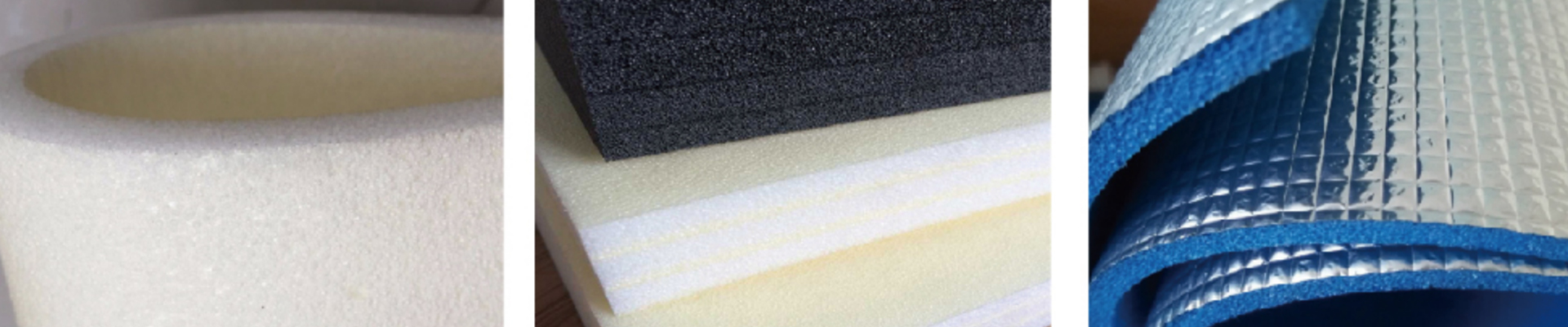
We must analyze the underlying closed-cell cross-linked structure of this polymer. Millions of microscopic bubbles trap air inside the plastic matrix. When a heavy box drops, these internal air pockets compress. They absorb the kinetic energy of the fall. The true advantage lies in evaluating "compression set" recovery. This metric defines a material's ability to bounce back after taking a hit.
Unlike brittle alternatives, it does not permanently deform after a single impact. It survives multiple consecutive drops. This elasticity is crucial for parcel delivery networks. A package might fall off a conveyor belt, tumble in a delivery truck, and hit the ground hard. Superior compression set ensures the product inside remains perfectly safe throughout the entire journey.
Shock absorption is only half the battle. Surface abrasion destroys the value of Class-A parts. Automotive components, consumer electronics, and freshly painted goods require delicate handling. The smooth, non-abrasive nature of this polymer prevents micro-scratches during transit vibrations. It acts as a soft cushion against harsh external friction.
Furthermore, industrial transit exposes packages to various hazards. Chemical resistance is a vital consideration. This polymer demonstrates remarkable inertness. It resists degradation from oils, greases, and most industrial solvents. If a hydraulic leak occurs in a shipping container, the internal packaging will not melt or compromise the goods inside.
Engineers often assess the R-value per inch of any insulating substance. R-value measures resistance to heat flow. The trapped air bubbles in this closed-cell matrix slow down thermal transfer significantly. It performs remarkably well for temporary temperature control. We see it used heavily in short-term cold-chain packaging.
However, we must establish practical boundaries. It succeeds brilliantly in applications like HVAC duct wrapping and flooring underlayment. It stops drafts and dampens cold floors. Yet, it does not replace rigid boards like Extruded Polystyrene (XPS) or Polyisocyanurate (PIR) for structural building envelopes. You should deploy it where flexibility and moderate thermal resistance intersect.
Water damage ruins shipments instantly. The closed-cell matrix prevents water absorption entirely. Moisture cannot penetrate the sealed microscopic bubbles. This makes it an incredibly effective vapor barrier. When transporting goods across different climate zones, rapid temperature shifts cause condensation. This internal "sweating" is dangerous.
For packaged metal components, condensation leads to immediate rust. Utilizing this moisture barrier prevents condensation build-up inside the carton. It eliminates the conditions necessary for mold, mildew, and corrosion. Your precision metal gears or sensitive electronics arrive factory-fresh, regardless of external humidity levels.
Facility managers need clear comparisons to make informed procurement decisions. We evaluate materials based on tooling costs, durability, and practical application.
| Material Type | Impact Resistance | Tooling Costs | Primary Use Case |
|---|---|---|---|
| EPS (Styrofoam) | Low (Shatters) | High (Molds Required) | Single-use cheap transit |
| Expanded Polypropylene (EPP) | Very High (Multi-drop) | Very High | Automotive bumpers, heavy goods |
| Expanded Polyethylene | High (Multi-drop) | Low (Die-cut friendly) | Electronics, sensitive surfaces |
EPS dominates cheap packaging. However, its brittleness is a major flaw. It boasts a high single-impact survival rate. Once it takes a hit, the rigid beads crack. It offers zero protection for subsequent drops. Conversely, flexible polyethylene absorbs repeated shocks. Additionally, custom EPS requires expensive aluminum molds. Polyethylene planks can be cheaply die-cut or CNC-routed, saving thousands in upfront tooling budgets.
EPP represents the premium tier of structural foams. It is incredibly strong and handles high heat environments flawlessly. It dominates the automotive interior market. However, you must consider the cost-to-performance ratio. EPP comes at a significant cost premium. Unless your product weighs hundreds of pounds or faces extreme thermal stress, this premium is largely unnecessary. Polyethylene provides 80% of the performance at a fraction of the cost.
Traditional alternatives pose hidden labor costs. Evaluating warehouse space efficiency reveals massive gaps. Corrugated inserts require workers to fold and assemble complex shapes. This labor time destroys operational efficiency. Bubble wrap rolls consume massive rack space. Furthermore, bubble wrap often pops under heavy static loads. Using pre-cut EPE foam sheets eliminates folding time. Workers simply drop the pad into the box, dramatically accelerating fulfillment lines.
Sustainability mandates dictate modern supply chain strategies. Structurally, this material is 100% recyclable. It falls under the LDPE (Plastic #4) classification. In theory, it melts down cleanly to create new plastic goods. However, we must address the infrastructure reality. Municipal curbside pickup rarely accepts low-density foams. The extreme volume-to-weight ratio makes transportation inefficient for standard recycling trucks.
Real-world recycling requires specialized densification equipment. These machines melt or compress the foam blocks into heavy, stackable bricks. Once densified, recyclers readily purchase the material. Facilities generating high volumes must invest in these densifiers to bridge the gap between theoretical recyclability and practical waste diversion.
Despite curbside challenges, it shines in closed-loop systems. A true circular economy values reusability over single-use disposal. The immense durability allows for returnable packaging systems. Manufacturers use it to line custom totes and returnable dunnage. Parts travel from supplier to assembly line, and the empty totes return for reloading. This cycle repeats hundreds of times, drastically reducing single-use waste.
Regulatory compliance is another driving factor. Lawmakers globally are passing incoming bans on single-use EPS. These local packaging compliance laws force brands to pivot. Switching away from brittle styrene to flexible polyethylene often satisfies local environmental boards, provided the company utilizes a closed-loop return system or partners with commercial recycling networks.
Procuring lightweight materials introduces distinct logistical hurdles. The primary deployment risk of expanded foams is "paying to ship air." Because the material is 95% air, freight costs escalate quickly if you source it from distant suppliers. You end up paying full truckload rates for very little actual weight. Assessment of supplier proximity is mandatory. You must calculate landed freight costs to ensure profitability.
Matching the form factor to your operational layout determines success.
Criteria for auditing a supplier should focus on flexibility. You need partners who offer densification support or take-back programs. Scrutinize their Minimum Order Quantity (MOQ) flexibility. Sudden shifts in your product dimensions require rapid packaging redesigns. Evaluate their lead times for custom die-cuts. A responsive local supplier trumps a cheaper, distant supplier when you factor in freight and agility.
Our objective evaluation clearly outlines the commercial value of this versatile polymer. It bridges the gap between fragile single-use plastics and hyper-expensive engineering foams. The mechanical memory, chemical inertness, and thermal boundaries align perfectly with modern logistics requirements.
Final Verdict: This material is a highly capable, cost-effective solution for applications demanding multi-drop protection, moisture resistance, and surface defense.
Next Steps:
A: No. Styrofoam is a trademarked term often used for Expanded Polystyrene (EPS). EPS is rigid, brittle, and shatters upon hard impacts. EPE (Expanded Polyethylene) is highly flexible. It behaves like a sponge, absorbing multiple impacts and returning to its original shape.
A: It offers very limited acoustic dampening. Its closed-cell structure makes it a great thermal insulator and moisture barrier, but it reflects sound waves rather than absorbing them. Open-cell acoustic foams are much better suited for soundproofing rooms or studios.
A: It depends on the material density and the drop height. For a standard 1.5 to 2.0 pcf (pounds per cubic foot) density, heavy industrial parts typically require at least 2 inches of thickness to prevent bottoming out during a 36-inch drop test.
A: Standard versions are not anti-static. However, manufacturers produce specific pink anti-static (ESD) variations. These pink versions contain chemical additives that dissipate static charges, making them completely safe for packaging bare circuit boards and sensitive microelectronics.