
Views: 0 Author: Site Editor Publish Time: 2026-08-28 Origin: Site


Choosing the wrong gym flooring ruins equipment and strains joints. It also damages your subfloor over time. Buyers often struggle to balance flooring costs effectively. Pure commercial rubber runs incredibly high. Cheap foam often feels inadequate for serious training. You need a reliable middle ground for your facility.
We will clarify exactly what a rubber foam mat is. You will learn where it performs optimally and where it fails. This guide helps facility owners make a risk-free purchasing decision. Home gym builders can also use it to build a cost-effective space. You will discover how to evaluate thickness, texture, and installation requirements before buying.
Best For: Low-to-medium impact zones, including bodyweight exercises, yoga, martial arts, and under cardio machines.
Not Recommended For: Olympic weightlifting, heavy deadlift drop zones, or high-traffic commercial free-weight areas where dense vulcanized rubber is required.
Material Reality: A "rubber foam mat" (often sold as a Rubber EVA Gym Mat) provides a hybrid solution—offering the lightweight, shock-absorbing properties of EVA foam with improved surface durability.
ROI Focus: They significantly reduce flooring costs for large square footage but require strict adherence to weight limits to prevent permanent compression damage.
Pure rubber is heavy. It is also extremely rigid. Pure foam feels too soft for heavy fitness equipment. A rubber foam mat bridges this structural gap perfectly. Manufacturers engineered this hybrid material to solve common gym design problems. They wanted something lighter than vulcanized rubber but tougher than basic foam. This combination offers unique biomechanical advantages for athletes.
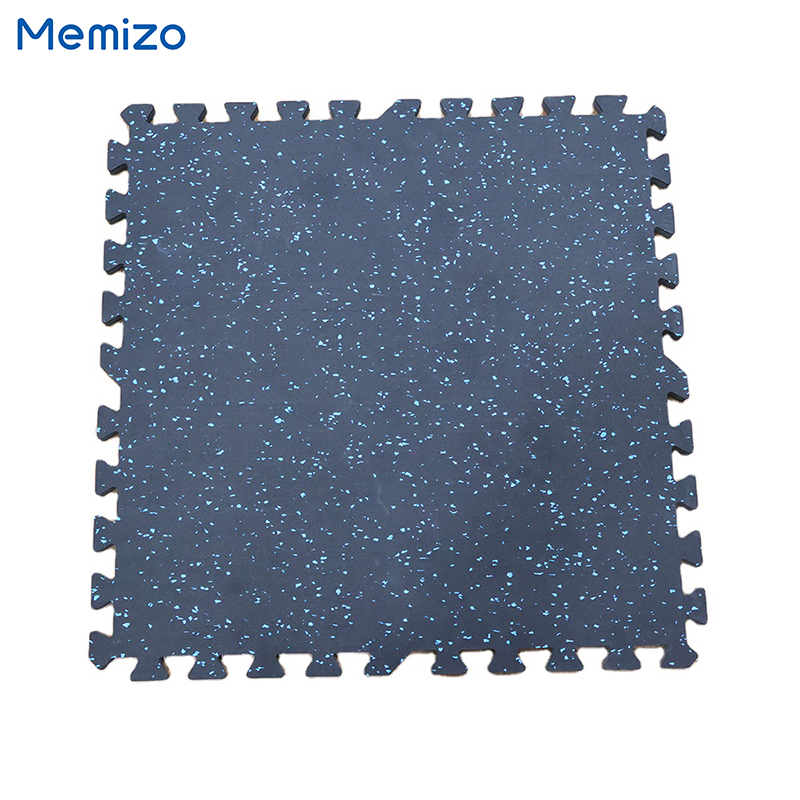
Most products in this category consist of high-density cross-linked EVA foam. Some manufacturers build a composite structure instead. They fuse an EVA foam base to a thin rubber top layer. This top rubber layer provides essential surface traction. You often see this specific composite sold as a Rubber EVA Gym Mat. The bottom foam layer absorbs shock efficiently. The top rubber layer prevents scuffing and tearing. This dual-layer approach maximizes durability while keeping the overall weight manageable.
Compression deflection is a key industry metric here. This metric measures how much a material yields under weight. Hard vulcanized rubber resists compression entirely. Rubber foam compresses under load and then rebounds. This rebounding action makes it ideal for joint protection. It absorbs the kinetic energy of jumps and falls. However, this same property creates a distinct vulnerability. It remains highly susceptible to permanent indentations under prolonged heavy loads. We must respect these material limits to ensure long-term performance.
These mats perform beautifully in specific training environments. We must match the flooring material to the intended activity. Doing so maximizes your investment and protects your athletes.
Bodyweight exercises require excellent joint cushioning. Plyometrics and burpees generate high impact forces on ankles and knees. Rigid stall mats often cause shin splints during these dynamic movements. Foam absorbs this initial shock much better. Athletes experience less fatigue when training on a softer surface. Floor exercises also become much more comfortable. You do not need a separate yoga mat for basic stretching.
Concrete floors stay incredibly cold during winter months. Foam provides necessary thermal insulation from cold concrete subfloors. It creates a warm, welcoming environment for ground-based work. It also offers critical fall protection for martial arts. Thicker interlocking tiles prevent injuries during throws and takedowns. Many dojos rely on this specific flooring for student safety. It strikes the perfect balance between firmness for footwork and softness for falls.
Cardio machines generate significant noise and vibration. Treadmills strike the floor hard with every running step. Rowers create a constant rhythmic hum. A hybrid mat effectively dampens this vibration. It minimizes acoustic transfer to the rooms below. This noise reduction is crucial for second-floor home gyms. Furthermore, it protects underlying hardwood or tile floors. Heavy machines will easily scratch delicate residential flooring without a protective barrier.
Heavy commercial rubber costs a fortune to ship. A single stall mat can weigh nearly one hundred pounds. Foam is incredibly lightweight by comparison. This lighter weight makes them much easier to ship. You can carry them upstairs without hiring movers. You can also install them entirely solo. This convenience saves home gym builders significant time and money.
You cannot use this flooring for every single fitness application. Recognizing its limitations prevents expensive mistakes. Misusing the material voids warranties and ruins the aesthetic of your gym.
Many people mistakenly build powerlifting zones on foam tiles. Dropping a loaded barbell here is dangerous. The metal plates will punch directly through the foam layer. Heavy dumbbells will also permanently compress the material if dropped repeatedly. The foam core simply cannot absorb that much concentrated kinetic energy. We highly recommend pure vulcanized rubber for these areas. Dedicated wooden lifting platforms also serve this purpose well. Keep heavy drops away from hybrid foam products.
Dynamic impact is not the only risk factor. Heavy static loads also destroy these mats over time. Squat racks exert massive downward pressure through small metal feet. Multi-gyms do the exact same thing. Heavily loaded plate trees focus hundreds of pounds onto tiny contact points. These loads create permanent divots in EVA-based mats. The foam cells collapse entirely under sustained pressure. They will never rebound to their original shape.
Rolled commercial rubber creates a seamless surface. Interlocking rubber foam tiles inherently have seams. These seams introduce a unique moisture vulnerability. Sweat easily seeps into these puzzle joints during intense workouts. Spilled water from drink bottles does the same. Liquid cleaning solutions can also permeate the cracks. This trapped moisture creates serious problems. It can potentially cause mold if you lay the mats over unsealed concrete. You must manage moisture carefully in these spaces.
You must evaluate several technical factors before purchasing. Not all products in this category share the same quality standards. We recommend analyzing thickness, texture, edges, and odor.
Thickness Level | Metric Equivalent | Best Suited Applications |
|---|---|---|
3/8 inch | 10mm | General fitness, stretching, light cardio equipment. |
1/2 inch | 12mm | Functional fitness, moderate dumbbell use, home gyms. |
3/4 inch | 20mm | Martial arts, grappling, heavy traffic bodyweight zones. |
Your intended activity dictates the required thickness. A 3/8-inch (10mm) profile works perfectly for general fitness. It supports light cardio equipment without issues. However, martial arts require more protection. A 1/2 to 3/4-inch (12mm–20mm) profile suits functional fitness better. It handles moderate dumbbell use and provides better fall protection. Never buy thin mats for high-impact activities.
You must evaluate the slip-resistance carefully. Manufacturers offer various textures like diamond plate, pebble, or tatami. Tatami works exceptionally well for barefoot martial arts. Diamond plate provides great grip for athletic shoes. You must remember how moisture affects these surfaces. Moisture reduces traction on foam much faster than on pure rubber. A sweaty foam surface becomes very slick. Choose an aggressive texture if athletes will sweat heavily.
The puzzle edges must fit together seamlessly. Precision-cut puzzle edges are vital for structural integrity. Poorly cut edges will separate easily. They fail under the lateral force of dynamic workouts. Lateral bounds and agility drills push the seams apart. Once a seam separates, it creates a serious tripping hazard. Always inspect the tightness of the interlocking teeth before committing to a brand.
You must address the common "new mat smell." Foam and rubber products release volatile organic compounds initially. Poor-quality materials smell terrible for months. High-quality mats should be VOC-compliant. They should explicitly state a low-odor manufacturing process. Good indoor air quality keeps athletes healthy and focused. We recommend asking manufacturers for their chemical testing certificates.
Proper installation guarantees the longevity of your floor. Careless installation ruins even the best materials. You must prepare the room properly before laying a single tile.
The subfloor must be entirely flat and clean. You must sweep and vacuum all debris. Bumps in concrete will "telegraph" directly through foam mats. The material conforms to whatever lies beneath it. This unevenness causes puzzle seams to disconnect eventually. You must patch large cracks or holes in the concrete first. A smooth subfloor ensures a perfectly flat training surface.
Clear the room of all furniture and sweep the subfloor completely.
Start in one corner of the room to establish a straight baseline.
Connect the interlocking teeth firmly, ensuring no gaps remain between tiles.
Use a straight edge and a sharp utility knife to cut border pieces.
Leave an expansion gap around the perimeter of the entire room.
Materials react to environmental changes. Rubber expands with heat. Foam expands and contracts with temperature fluctuations too. You must advise your installers to leave a 1/4-inch gap near walls. This gap gives the floor room to breathe. Without this space, the tiles will push against the drywall. This pressure causes the floor to buckle and warp in the center of the room.
Maintenance dictates how long your floor will last. You must establish strict daily cleaning protocols for your staff.
Do's: Damp mopping works best. Always use pH-neutral cleaners. Wipe up sweat immediately after classes. Ensure the room has good ventilation to dry the floor quickly.
Don'ts: Never use harsh chemical solvents. Bleach degrades EVA foam rapidly. Avoid using excessive water during mopping. Too much water permeates the interlocking seams and damages the subfloor.
The hybrid mat remains the ultimate middle-ground floor. It serves low-impact, multi-purpose fitness spaces exceptionally well. It protects your joints, insulates cold floors, and saves you money. However, you must respect its physical limitations regarding heavy static loads and dropped weights.
Your next step is to calculate your exact square footage. You should always add a 10% overage to account for cutting mistakes around walls. We strongly advise you to order physical samples first. Test your specific equipment compression on these samples. This small step ensures complete confidence before you finalize a bulk purchase.
A: Yes, you can place them over low-pile carpet safely. However, high-pile carpet lacks the necessary firmness. Thick carpet will cause the interlocking seams to bend and disconnect under your weight. It creates an unstable surface for heavy lifting.
A: It typically takes 3 to 7 days in a well-ventilated room. You can open windows and run fans to speed this up. Wiping the surface with a mild soap and water solution also accelerates the off-gassing process significantly.
A: Yes, heavy static loads will leave permanent indentations in the foam. The weight concentrates on small metal feet. Plywood or hard rubber squares should be placed under the rack feet. This distributes the weight and protects the softer floor.
A: The material itself is closed-cell foam and highly water-resistant. Sweat will not soak into the actual tile. However, the interlocking seams are not watertight. Large liquid spills will eventually seep between the cracks and reach the subfloor.


