
Views: 0 Author: Site Editor Publish Time: 2026-08-28 Origin: Site


Selecting materials for high-moisture or submerged environments carries exceptionally high stakes across multiple industries. Material failure often leads to rapid structural degradation, dangerous buoyancy loss, or unchecked bacterial growth. Engineers and product designers frequently evaluate various foams for these demanding applications to mitigate these risks. However, generic product specifications often fail to account for real-world environmental variables. Factors like high salinity, aggressive chemical exposure, and prolonged dampness drastically alter material behavior over time. We need reliable solutions capable of enduring harsh conditions without degrading. This guide breaks down the objective performance metrics of an eva foam board under severe moisture conditions. It compares this material against common market alternatives to clarify your sourcing decisions. Furthermore, this article outlines critical implementation risks and details exactly what to look for during the procurement process. You will learn how to verify quality and specify the right material for your next water-exposed project.
Impermeability Mechanism: The closed-cell cross-linked structure of an EVA (Ethylene-Vinyl Acetate) foam board limits water absorption to negligible levels, typically under 1% by volume.
Superior to Open-Cell & EPS: Unlike EPS (Expanded Polystyrene) which can suffer from long-term moisture retention, EVA maintains its physical integrity and insulation properties when wet.
Compliance is Crucial: Specifying a CE EVA Foam Board ensures verifiable manufacturing standards, particularly critical for marine, construction, and consumer safety applications.
Secondary Vulnerabilities: While the foam itself resists water, environmental failures usually stem from incorrect adhesive selection or unmitigated UV exposure in outdoor applications.
When assessing material longevity, engineers face a major business problem. You must know whether a chosen material will act as an impenetrable moisture barrier or a destructive sponge over a 5-to-10-year lifecycle. Water ingress destroys thermal properties and adds dangerous dead weight to engineered products. EVA solves this through its specific chemical architecture.
We must detail the closed-cell advantage to understand this performance. The internal structure of the material consists of millions of tightly sealed, impermeable gas bubbles. Water physically cannot migrate through this solid polymer matrix. Each individual cell acts as an independent, microscopic barrier against liquid intrusion. Unlike open-cell polyurethane, which features interconnected pores, EVA forces water to remain strictly on the outer surface.
Evaluating absorption rates requires looking at industry-standard testing metrics. Engineers rely on tests like the ASTM standards for water absorption to gather objective data. You can frame your expectations confidently here. EVA foam typically exhibits nearly zero moisture ingress during these rigorous tests. It maintains its core thermal and acoustic insulation properties even when continuously submerged for long periods. Standard grades typically limit water absorption to under 1% by volume. This reliable metric allows you to calculate buoyancy and insulation values with high precision.
Biological resistance represents another major benefit. We can explain how the complete lack of moisture retention inherently prevents biological degradation. Mold, mildew, and fungi require standing water or high internal dampness to colonize a substrate. By denying them moisture, EVA inherently prevents their growth. This material characteristic significantly reduces ongoing maintenance costs. It proves especially vital in damp industrial facilities, HVAC systems, or architectural settings where indoor air quality remains a top priority.
Controlled laboratory tests only tell part of the story. We must analyze how these materials perform across diverse and extreme real-world applications. Environmental variables often combine to test the absolute limits of polymer engineering.
Marine environments introduce a punishing combination of saltwater and direct UV exposure. We often see EVA utilized in marine decking, boat fenders, and personal buoyancy aids. The material is highly resistant to aggressive saltwater corrosion. Salt crystals cannot penetrate the closed cells to cause internal abrasion. However, long-term UV exposure combined with constant moisture presents a distinct challenge. Unprotected polymers will eventually chalk, crack, or fade under intense sunlight. Therefore, outdoor marine applications require specific UV-stabilized EVA formulations. These chemical additives protect the molecular bonds from ultraviolet degradation.
Industrial and chemical runoff creates another harsh operational environment. Address environments where water regularly mixes with machine oils, spilled fuels, or harsh industrial chemicals. EVA offers moderate to high resistance to common oil and grease. It generally repels these substances without immediate structural failure. However, extreme solvent exposure requires careful pre-deployment chemical compatibility testing. Highly concentrated solvents can swell the polymer matrix and degrade its physical properties over time.
Temperature fluctuations severely test materials in wet conditions. Discuss how EVA foam handles rapid freeze-thaw cycles. Because it does not absorb water, no liquid freezes inside its internal structure. It does not suffer from internal ice expansion. This destructive phenomenon, known as spalling, rapidly degrades concrete, wood, and open-cell foams. EVA remains flexible, structurally intact, and highly functional across extreme temperature ranges.
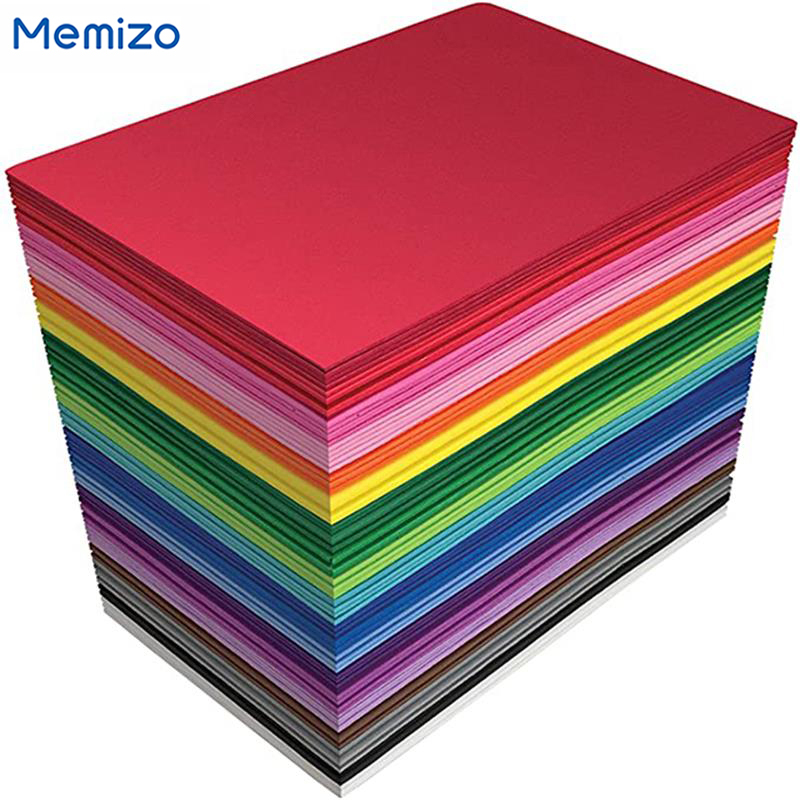
Product designers frequently choose between EPS, PE, and EVA when specifying foam for wet environments. Let us analyze their distinct properties to guide your engineering choices effectively.
Expanded Polystyrene (EPS) vulnerabilities represent a common industry pain point. EPS can easily accumulate water over time through the microscopic interstitial spaces between its expanded beads. When submerged or exposed to continuous dampness, water migrates into these gaps. This ingress leads to substantial weight gain. It also causes a rapid, irreversible loss of the material's R-value. EPS essentially acts like a slow sponge under constant hydrostatic pressure.
We also evaluate Polyethylene (PE) foam against EVA. Both materials feature a closed-cell structure and offer excellent waterproof properties. However, their mechanical behaviors differ significantly.
Flexibility & Compression: PE tends to be much stiffer than EVA. It is highly prone to permanent compression set. Once crushed under a heavy load, PE struggles to regain its original shape.
Durability: EVA offers significantly higher resilience, elasticity, and overall tear resistance. It performs exceptionally well in dynamic wet environments. You frequently see it used for marine flooring, boat decking, and athletic impact pads.
Use a strictly objective lens for your decision matrix. PE remains highly cost-effective for static damp proofing applications inside walls or under concrete slabs. However, an eva foam board is the required upgrade when the application demands repeated impact resistance. It provides the necessary flexibility and premium aesthetics alongside core water resistance.
Decision Matrix Chart: Material Comparison in Wet Conditions
Material Type | Water Absorption Rate | Flexibility / Resilience | Best Application Environment |
|---|---|---|---|
EPS (Expanded Polystyrene) | High (Water fills bead gaps) | Rigid / Brittle under impact | Dry, static insulation |
PE (Polyethylene) Foam | Very Low (<1%) | Stiff / High compression set | Static damp proofing, packaging |
EVA Foam | Very Low (<1%) | High elasticity / Tear resistant | Dynamic impacts, marine decking |
Materials rarely fail in a vacuum. Environmental failures usually stem from systemic implementation errors rather than the foam itself. You must anticipate and mitigate these risks during the design phase.
Adhesive delamination represents a crucial risk factor. The EVA foam will not fail in water, but the chemical bonding agent absolutely might. Standard adhesives dissolve or lose their tack when exposed to prolonged moisture. Discuss the absolute necessity of specifying marine-grade, moisture-curing adhesives. Pressure-sensitive adhesives (PSAs) matched specifically to low-surface-energy substrates are essential for permanent bonding.
Consider the dangers of compression set under heavy load. Evaluate how sustained, heavy mechanical loads in saturated environments affect the material. Continuous pressure can permanently compress lower-density EVA boards. Once compressed, the board loses its cushioning and insulation value. You must match the material density to the expected physical load.
Thermal expansion presents another serious implementation risk. Address how dark-colored boards behave in outdoor, wet-to-dry environments. Dark surfaces absorb significant solar radiation, causing the material to rapidly expand and contract. This cyclical thermal movement places extreme shear stress on joints and adhesives. Designers must require proper expansion gaps during installation to prevent buckling.
Common mistakes to avoid during implementation:
Using indoor-rated adhesives for outdoor marine applications.
Failing to thoroughly clean and prime the substrate before applying the foam.
Selecting a foam density too low to support constant foot traffic.
Ignoring thermal expansion gaps when installing large continuous sheets.
Purchasing raw materials demands strict adherence to engineering specifications. Altering the density (measured in kg/m³) directly impacts both buoyancy and long-term durability. Higher density increases tear resistance and tensile strength. It allows the material to withstand heavy mechanical abuse. However, higher density also adds weight and reduces overall flexibility. You must dictate exact density requirements based on the specific end-use application.
Validating quality remains a major hurdle for procurement teams. Discuss the market reality of inconsistent manufacturing. Unverified products often suffer from rushed curing processes. They exhibit severe off-gassing, emitting harsh chemical odors long after installation. Poor curing also leads to uneven cell structures, compromising the material's moisture resistance.
Detail why looking for verified standards matters immensely. Specifying a CE EVA Foam Board ensures your materials meet rigorous benchmarks. It proves compliance with stringent European health, safety, and environmental protection standards. This certification provides a verifiable baseline of trust for enterprise procurement teams. It guarantees the absence of banned toxic substances and ensures consistent batch-to-batch quality. Most importantly, it heavily mitigates liability in consumer-facing applications, ranging from protective footwear to marine safety gear.
An eva foam board stands out as an objectively superior choice for moisture-prone environments. Its closed-cell structure prevents water ingress, while its polymer matrix maintains high flexibility and tear resistance. However, it only performs optimally when matched with the correct density, appropriate UV treatments, and specialized marine-grade adhesive systems. By understanding its capabilities compared to EPS and PE, you can engineer more durable and reliable products.
To ensure project success, buyers should take the following action-oriented next steps:
Request physical samples and technical data sheets (TDS) directly from manufacturers before bulk ordering.
Verify chemical resistance properties carefully if the target moisture contains industrial solvents, fuels, or oils.
Require explicit proof of CE certification to ensure consistent batch-to-batch quality and strict regulatory compliance.
Consult with adhesive specialists to match your bonding agent precisely to the substrate and environmental conditions.
A: It absorbs a negligible amount (typically <1% by volume) due to its closed-cell structure. This means it will not become waterlogged, lose buoyancy, or lose its structural integrity over time, even when completely submerged in water for extended periods.
A: While not universally legally required for all marine uses, CE certification indicates the foam meets stringent safety, environmental, and material consistency standards. Requiring this certification heavily de-risks the sourcing process and ensures you receive high-quality, non-toxic materials.
A: The material itself is an inorganic, closed-cell polymer that does not support microbial growth. If mold appears, it is actually growing on surface dirt, oils, or organic debris resting on the foam. You can easily manage this with routine surface cleaning using mild soap and water.


