
Views: 0 Author: Site Editor Publish Time: 2026-08-28 Origin: Site


Upgrading your facility or home gym flooring requires balancing user safety, acoustical control, and subfloor protection. Every jump, pivot, and heavy lift generates kinetic energy. You must manage this energy immediately to prevent lasting damage. Dropped weights, heavy machinery, and high-impact training cause irreversible micro-fractures in concrete subfloors. They also create permanent gouges in delicate hardwood surfaces while generating disruptive noise throughout the building.
A hybrid rubber foam mat provides a precise balance of compression and density. It delivers crucial joint safety through compression while offering robust structural protection through high density. This specialized flooring acts as a necessary barrier between intense kinetic energy and vulnerable subfloors. You will discover exactly how shock absorption mechanics work, compare essential material differences, and learn the evaluation criteria needed to optimize your fitness space.
**Dual-Action Absorption:** Rubber foam compresses to absorb immediate shock, while the rubber composite distributes the remaining kinetic energy outward rather than downward.
**Subfloor Preservation:** Prevents point-load damage from heavy equipment (e.g., treadmill bases, squat racks) and blunt-force trauma from dropped weights.
**Acoustical Control:** Significantly dampens vibration and airborne noise, measurable by IIC (Impact Insulation Class) ratings.
**Strategic Application:** Blended materials like a Rubber EVA Gym Mat offer a middle-ground solution—superior to pure EVA for durability, and softer/lighter than pure vulcanized rubber for ground-based exercises.
Understanding how flooring handles impact begins by examining kinetic energy dispersion. Closed-cell foam structures feature millions of tiny air pockets. These microscopic pockets compress rapidly upon impact. They effectively decelerate a dropped object or a heavy footfall. This deceleration prevents an abrupt, damaging stop. Simultaneously, the rubber element provides necessary rebound and structural integrity. It prevents the mat from tearing under intense force. Energy dissipates horizontally across the material instead of traveling vertically into the subfloor.
You must differentiate between a point-load and a distributed load. Point-loads occur when heavy, stationary equipment rests on small contact points. Think of treadmill bases or the narrow feet of a squat rack. Dense rubber foam prevents these machines from piercing or indenting the mat. It achieves this by distributing the pounds per square inch (PSI) across a significantly wider footprint. The dense material acts as a rigid bridge. It spreads the intense localized pressure outward, keeping the subfloor perfectly intact.
Ergonomic benefits represent another major advantage. Biomechanical efficiency improves drastically when athletes train on proper flooring. Training directly on bare concrete causes immense joint fatigue. Every footfall sends shockwaves back up the kinetic chain. Knees, hips, and ankles bear the brunt of this force. A properly designed mat reduces joint fatigue for both athletes and staff members. You feel a noticeable difference in lower-body stress compared to working out on hard, unyielding surfaces.
Best Practice: Always test the rebound of your flooring. Drop a medicine ball onto the mat. It should absorb the heavy thud but still offer a slight, controlled bounce, indicating proper kinetic energy dispersion.
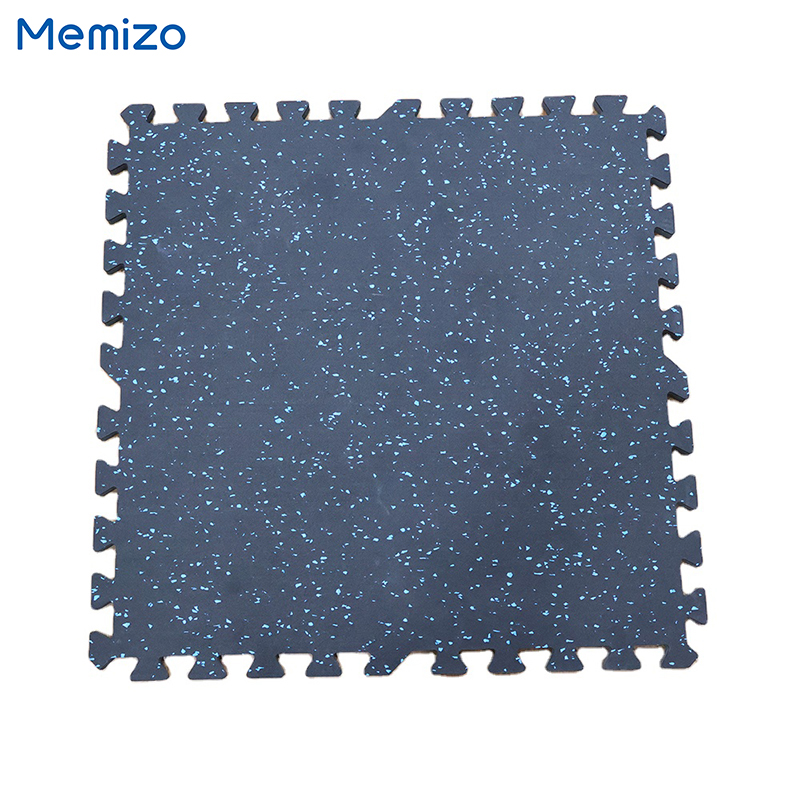
Unprotected subfloors face severe risks in any active fitness environment. Concrete and hardwood possess distinct vulnerabilities. Concrete often suffers from spalling and cracking when subjected to repeated blunt impacts. A dropping dumbbell acts like a hammer on an unprotected concrete slab. Hardwood floors face an entirely different threat. They suffer from structural splintering and deep gouging. Once you crack a concrete slab or splinter a hardwood board, the structural integrity of the entire room weakens.
Friction and micro-abrasions cause silent, gradual destruction. Heavy fitness machines rarely stay perfectly still. They vibrate and slide microscopically during intense use. This micro-sliding acts exactly like coarse sandpaper on your subfloor over time. Mats completely prevent this abrasive action. They lock the equipment firmly in place. The high-friction surface of the mat grips the machine, preventing the sliding motion entirely.
Moisture control provides another critical layer of defense. High-quality rubber foam features a completely non-porous structure. This barrier prevents moisture from seeping through to the vulnerable floor below. Gym environments generate significant sweat. Spilled water bottles occur daily. If this liquid reaches a wooden subfloor, the wood warps and rots. Trapped moisture also encourages dangerous mold growth. A premium mat seals the subfloor away from these liquid hazards, ensuring a hygienic and structurally sound environment.
Concrete Risks: Surface spalling, deep structural fractures, and dust generation from repeated blunt trauma.
Hardwood Risks: Deep scratches, splintering, and total board failure under heavy point-loads.
Moisture Risks: Warping, buckling, and hidden mold colonies forming beneath the training surface.
Selecting the right material determines the success of your fitness space. Buyers often confuse different flooring types. Each material serves a highly specific purpose. Using the wrong material leads to rapid degradation or an uncomfortable training experience.
Pure vulcanized or crumb rubber excels in extreme heavy-lifting environments. Olympic weightlifting platforms rely heavily on this material. It withstands massive barbell drops without failing. However, this extreme durability comes with notable drawbacks. Pure rubber is incredibly heavy and difficult to install. It often carries a strong, lingering odor. Furthermore, pure rubber feels far too rigid for floor-based martial arts, stretching, or yoga routines.
Pure EVA foam operates on the opposite end of the spectrum. It works best for low-impact environments. You commonly see it in kids' play areas or light yoga studios. It feels exceptionally soft and lightweight. Unfortunately, pure EVA suffers from remarkably low puncture resistance. Heavy gym equipment easily crushes it. Dropping a moderately heavy dumbbell tears straight through standard EVA foam.
You need a material bridging the gap between extreme rigidity and extreme softness. Enter the Rubber EVA Gym Mat. This hybrid product hits the exact decision-stage sweet spot. It offers distinct, measurable benefits. You get the lightweight, interlocking ease of EVA foam. You also enjoy the soft, comfortable feel required for floor exercises. Crucially, manufacturers reinforce this foam with rubber composite. This added durability withstands moderate weights and heavy foot traffic effortlessly. The ideal use cases include home gyms, martial arts studios, and versatile multi-purpose fitness rooms.
Table: Material Properties and Ideal Use Cases Comparison
Material Type | Primary Benefit | Major Drawback | Ideal Use Case |
|---|---|---|---|
Pure Vulcanized Rubber | Extreme durability and impact resistance | Heavy, rigid, and prone to strong odors | Olympic weightlifting, commercial powerlifting |
Pure EVA Foam | Lightweight and extremely soft | Easily punctured or crushed by equipment | Kids' play areas, light yoga, stretching |
Hybrid Rubber EVA | Balances comfort with structural durability | Not suited for extreme Olympic barbell drops | Home gyms, martial arts, multi-purpose rooms |
Evaluating flooring requires understanding specific metrics. You cannot rely on feel alone. You must analyze the thickness-to-impact ratio, density measurements, and acoustic ratings before making a final purchase.
Thickness dictates how much kinetic energy the mat absorbs before bottoming out. You must match the thickness to your specific training style.
3/8 inch (8-10mm): This thickness serves as the baseline for stationary equipment and basic bodyweight exercises. It protects the floor from ellipticals and stationary bikes perfectly.
1/2 to 3/4 inch (12-20mm): You require this thickness for dumbbell drops and intense functional training. It provides the necessary buffer to stop weights from damaging the concrete beneath.
Thickness means nothing without adequate density. You must look for higher density ratings. High-density foam resists crushing. It ensures the mat will not bottom out under heavy squat racks or dense weight benches. Shore Hardness measures material resistance to indentation. A higher Shore rating means the mat maintains its shape under extreme pressure, providing a stable lifting platform.
Noise complaints ruin commercial gym operations and annoy residential neighbors. Buyers in shared buildings must request specific acoustic metrics. Look for STC (Sound Transmission Class) and IIC (Impact Insulation Class) ratings. STC measures airborne sound reduction, like loud music or shouting. IIC measures structure-borne sound, like a dropping kettlebell. High IIC ratings ensure compliance with strict local noise ordinances and keep your neighbors happy.
Common Mistake: Buying thick mats with low density. A one-inch mat made of cheap, low-density foam will compress completely flat under a heavy barbell, offering zero subfloor protection.
Proper installation and maintenance dictate the lifespan of your flooring. Many buyers ignore environmental factors during installation, leading to rapid product failure.
Thermal expansion and contraction present the biggest installation risk. Rubber and foam physically fluctuate with temperature changes. They expand in hot environments and contract in cold ones. You must leave a small perimeter gap against the walls during installation. This gap gives the material room to breathe. Failing to leave an expansion gap causes the interlocking tiles to buckle and lift off the floor.
Off-gassing creates a temporary but noticeable issue. You must transparently address the "new rubber smell." Volatile Organic Compounds (VOCs) release into the air immediately after unboxing. You should prioritize products featuring low-VOC certifications. Always factor in a strict 48-hour ventilation period post-installation. Open all windows and run high-powered fans to clear the room before intensive training begins.
Cleaning protocols require strict adherence. Harsh chemicals destroy hybrid materials quickly. Bleach and heavy industrial solvents chemically degrade foam blends, causing them to crumble. You must establish a safe maintenance baseline. Use only pH-neutral cleaners. Apply them using a damp mop rather than soaking the floor. This gentle cleaning approach removes sweat and chalk while preserving the mat's structural integrity and lifespan.
Investing in the correct flooring serves as a vital preventative measure. It protects you against shockingly expensive facility repairs. Simultaneously, it provides a direct, noticeable upgrade to the daily user experience. Proper shock absorption saves joints, silences disruptive noise, and guards your subfloor against permanent damage.
Your shortlisting logic should remain straightforward. If heavy, overhead barbell drops happen rarely in your space, pure rubber is overkill. When joint comfort, versatility, and moderate equipment protection stand as your highest priorities, a hybrid rubber foam solution represents the most cost-effective choice. It delivers the exact performance profile required for modern, multi-purpose training spaces.
Take action before finalizing your facility design. First, calculate your exact square footage, factoring in a 10% overage for cutting errors. Second, evaluate your current subfloor condition for any existing moisture issues. Finally, request physical product samples from manufacturers to test the density and grip yourself before committing to a bulk order.
A: It depends entirely on the thickness and the drop frequency. While a premium 3/4-inch mat handles moderate drops efficiently, it has limits. Dedicated deadlift platforms, which combine ultra-thick vulcanized rubber and solid wood, are highly recommended for repeated, extreme-weight drops to guarantee maximum subfloor safety.
A: Usually no. These dense mats act as their own structural underlayment over hard surfaces like concrete. However, if you install them over plush residential carpet, a rigid plywood sub-layer becomes necessary. The plywood prevents the interlocking joints from separating and flexing unevenly under heavy loads.
A: For wall-to-wall installations, the tension of a proper fit holds them securely in place. You just need a slight expansion gap. For freestanding island areas, you must use double-sided carpet tape beneath the tiles. Alternatively, installing heavy transition edge strips around the perimeter effectively secures the layout.


