
Views: 0 Author: Site Editor Publish Time: 2026-08-28 Origin: Site


Caregivers often struggle to balance child safety and limited living space. Keeping wandering toddlers secure is an absolute necessity for busy parents. However, many traditional barriers dominate a room entirely. Fixed enclosures consume significant floor space and severely restrict your household mobility. Modern families require dynamic solutions to secure their infants. You need a secure zone without sacrificing everyday living areas.
Foldable models bridge the gap between permanent baby-proofing and dynamic household needs. They offer rapid teardown for quick storage. They also provide trunk-friendly dimensions for frequent travel. This guide evaluates the mechanical realities of foldable playpens. We compare setup friction, transport logistics, and specific safety trade-offs. You will learn actionable strategies to evaluate hinges, weight distribution, and accessibility. These insights will help you finalize your purchase decision confidently.
Space Optimization: Quality foldable models reduce their footprint by up to 80% when collapsed, fitting into closets or behind furniture.
Travel Readiness: Purpose-built transport features (carrying cases, lightweight frames) enable safe sleep and play environments outside the primary home.
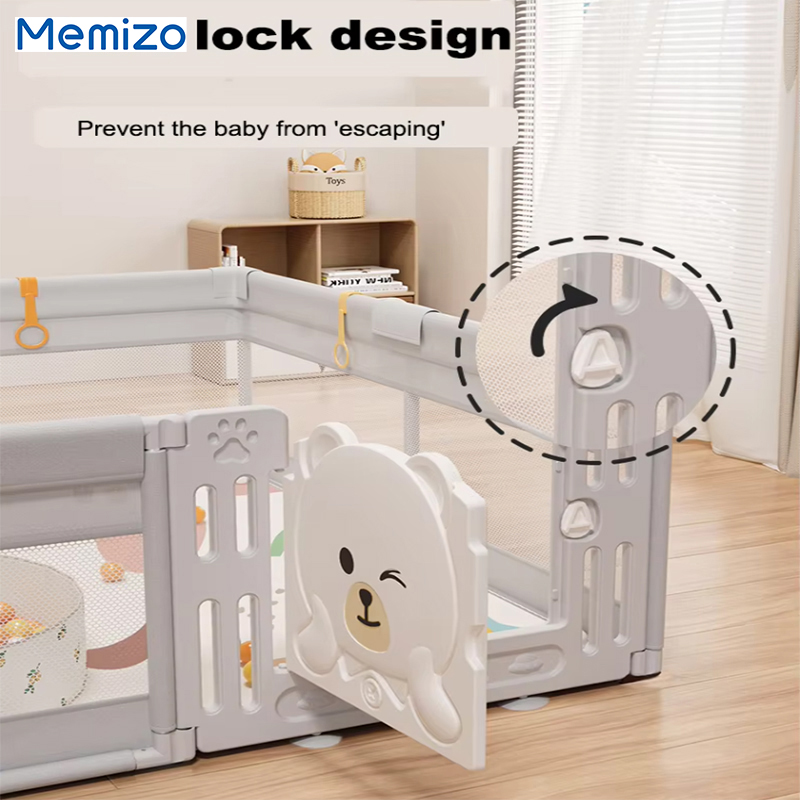
Ergonomic Access: Integrating features like an Open Door Baby Playpen design minimizes the physical strain on parents while complementing a foldable structure.
Safety Trade-offs: Portability must be weighed against structural rigidity; evaluating locking mechanisms and CPSC/ASTM compliance is non-negotiable.
Most fixed playpens command a permanent 15 to 20 square feet in a home. They sit empty and obtrusive during nap times or meals. A rigid structure disrupts the natural flow of your living room. Caregivers must navigate around these large plastic or wooden walls constantly. This permanent footprint creates visual and physical congestion for small homes.
Conversely, foldable options utilize accordion-style or hinge-lock joints. They collapse into compact cylinders or flat rectangles within seconds. Quality models reduce their standing footprint by roughly eighty percent. You can slide them neatly under a sofa or inside a hallway closet. This rapid transformation restores your adult living space immediately. It provides unparalleled flexibility for modern, multi-use family rooms.
We measure playpen success by how easily you can adapt your environment. Daily routines demand highly adaptable furniture. Caregivers need the ability to reclaim living room space during non-play hours. You also need open floor plans when hosting guests on weekends. A good design supports your lifestyle instead of dominating it.
Speed of breakdown: The unit should collapse in under two minutes.
Storage ease: Folded dimensions must fit typical household storage spaces.
Visual reduction: Collapse mechanisms must reduce visual clutter effectively.
Component integrity: Shrinking the frame should not require total disassembly of individual panels.
Balancing these criteria ensures long-term product satisfaction. Families abandon cumbersome gear quickly. Focus on units favoring daily convenience.
Evaluate the release mechanisms on any prospective model carefully. Many designs rely on push-button hubs located at the center of the floor or top rails. Others require you to unlatch individual panel locks manually. Push-button hubs generally offer faster deployment times. Individual panel locks provide tighter custom shapes but demand more setup effort.
Trust Note: Be skeptical of "one-handed fold" marketing claims. True, verifiable stability requires two-step locking mechanisms. A single-button release might sound convenient for a busy parent. However, a clever toddler might trigger a simple button accidentally. Two-step mechanisms prevent accidental collapse entirely. They require an adult to twist and push simultaneously, securing the environment safely.
Moving a bulky item requires careful engineering. Trunk compatibility dictates your travel success. You must compare the dimensions when folded against standard SUV and sedan cargo capacities. A playpen hanging out of a sedan trunk serves nobody. Always measure your specific vehicle's narrowest cargo point before purchasing.
Weight distribution is another crucial factor. Manufacturers balance lightweight materials against necessary structural mass. Aluminum and hollow plastic tubes make carrying effortless. Yet, the base needs sufficient mass to prevent toddler tipping. If a product feels incredibly light, verify its base width. A wider stance compensates for lighter vertical frames.
Frame Material Weight and Stability Comparison
Frame Material | Average Weight (lbs) | Transport Ease | Tipping Resistance |
|---|---|---|---|
Hollow Plastic | 10 - 15 | High | Low to Medium |
Tubular Aluminum | 12 - 18 | High | Medium to High |
Steel Alloy | 20 - 30 | Low | Very High |
Solid Wood | 35+ | Very Low | Maximum |
Portability means little if the structure fails under pressure. Bottom-heavy designs represent the gold standard for travel models. Anti-slip pads counteract the inherent lightness of travel-friendly frames. These rubberized feet grip hardwood and tile tightly. They stop toddlers from pushing the enclosure across the room during active play. A sliding baby playpen creates immediate danger near stairs or sharp furniture.
Caregivers must also choose between tensioned mesh and hard panels. Mesh reduces overall weight for transport dramatically. It also improves visibility from across a busy room. Breathable mesh ensures adequate airflow during warm summer travel. Conversely, hard panels offer rigid support for toddlers learning to stand. Whatever style you choose, CPSC and ASTM compliance is non-negotiable. Look for explicit certification labels on the product packaging.
Parental ergonomics play a massive role in long-term product satisfaction. Caregivers lift growing toddlers dozens of times daily. Bending over a tall rail strains the lower back severely. Zippered or latched access panels prevent caregivers from repeatedly bending over the top rail. This design is crucial for postpartum recovery. Grandparents also benefit immensely from ground-level access.
Integrating an Open Door Baby Playpen promotes healthy psychological development as well. Toddler autonomy increases naturally when they control their environment.
It allows the enclosure to transition into an accessible play fort.
It mitigates "container baby" anxieties by encouraging free movement.
It promotes voluntary entry and exit during supervised open play.
It fosters independent exploration without compromising perimeter security.
Frequent collapsing and transporting stresses the hinges heavily. Every deployment cycles the locking mechanism. Over time, cheap materials degrade and lose their grip. Evaluate products offering reinforced polymer. Metal corner joints outlast brittle standard plastics significantly. Metal rivets provide superior longevity for families traveling monthly.
Caregivers often ignore the stress placed on pivot points. Dragging a folded frame across pavement grinds down the plastic hubs. Always lift the unit entirely or use a wheeled transport bag. Routine inspection of these articulating joints prevents sudden structural failures. If a hinge shows white stress marks, retire the product immediately.
Human error accounts for many playpen accidents. Improperly locked top rails present a major hazard. They can collapse inward if a child pulls up on them suddenly. You must listen for the definitive "click" during every setup. Give each rail a firm downward tug before placing your child inside. Never rush the setup process in a hotel room or at a park.
Fabric design also impacts daily safety. Ensure the fabric cover fully conceals the locking hardware. Exposed metal hinges easily trap curious little fingers. A well-designed cover prevents pinched fingers during setup and use. It also stops teething toddlers from chewing on hard plastic joints.
Safe infant sleep and play require a firm, flat bottom pad. Often, the pad required for a safe environment is difficult to fold compactly. Manufacturers tackle this engineering challenge in different ways. Some brands use segmented hardboards inside the mattress. These boards fold accordion-style into a neat rectangle.
Factor in how the manufacturer handles mattress transport. Many designs wrap the segmented mattress around the folded metal frame. The mattress becomes a protective outer shell. This shell slides into the transport bag easily. If a model requires you to carry a bulky mattress separately, its travel value drops considerably.
Families taking multiple flights a year need highly specialized gear. Every extra pound matters when navigating busy airport terminals. Requirements for this profile include a sub-15 lbs total weight. You need a durable carry bag featuring robust shoulder straps. Flimsy nylon bags tear on their first trip through a baggage carousel.
The unit must fold compactly enough to check as standard baggage. Some premium models even fit inside large hard-shell suitcases. This prevents airline baggage fees. Focus entirely on weight, packed dimensions, and bag durability. You will sacrifice some floor space for ultimate portability here.
Local road trips present a different set of challenges. Driving to a grandparent's house does not require ultra-lightweight materials. Trunk space limits you, but weight restrictions remain loose. Requirements focus heavily on rapid trunk-to-living-room deployment. You want something you can pop open while holding a diaper bag.
Prioritize the ease of folding over absolute lightest weight. A slightly heavier model might feature a superior, single-motion central hub mechanism. We recommend finding a unit prioritizing setup speed. A five-minute setup frustrates a parent managing a crying toddler. Look for models deploying in under sixty seconds.
Urban parents face the toughest space constraints. You likely need to collapse the unit daily to reclaim your living room. Requirements include a smooth daily folding ability. The mechanisms must endure hundreds of cycles without degrading. Non-scratch rubber feet are mandatory for protecting expensive hardwood or laminate apartment floors.
Aesthetic integration also matters deeply. The gear lives in your primary space constantly. Look for neutral fabrics blending seamlessly with adult furniture. Finally, prioritize easy door access for limited space navigation. Crawling over tall rails in a cramped apartment creates unnecessary physical strain. Ground-level entry changes the entire dynamic of a small room.
A foldable baby playpen represents a long-term investment in household flexibility. It respects your limited floor plan while keeping curious toddlers out of harm's way. By prioritizing strong hinges and smart fabric choices, you secure a reliable travel companion. Proper evaluation of these structural elements prevents frustration and guarantees child safety.
Before purchasing, measure your vehicle’s exact trunk dimensions. Assess your personal need for an open-door feature based on your physical comfort and daily routine. Finally, verify the locking mechanism's CPSC or ASTM safety certifications. Taking these actionable steps ensures you buy a product capable of handling both daily apartment life and rigorous family travel.
A: High-quality models do not sacrifice stability. They compensate for lighter frames by utilizing wider base dimensions. Anti-slip pads grip the floor firmly. Advanced two-step locking hinges ensure the frame remains rigid when fully deployed. Always confirm the bottom locks engage completely to prevent tipping.
A: Yes, most airlines allow you to check them. However, you must verify specific dimensional limits with your carrier. Standard models often check for free as essential baby gear. Always use a heavy-duty, reinforced transport bag to prevent mechanical damage during transit.
A: Yes, they are highly secure. Manufacturers install exterior-only locking mechanisms. Zippers often feature safety clasps located out of the child’s reach. A toddler inside the enclosure cannot manipulate the exterior latches, ensuring they remain safely contained until you grant them access.
A: Look for models offering fully removable, machine-washable fabrics. You can strip the mesh and wash it on a gentle cycle. For quick maintenance, choose wipeable nylon materials. You can easily sanitize nylon with mild soap and warm water after a park visit.


