
Views: 0 Author: Site Editor Publish Time: 2026-08-28 Origin: Site


Investing in a safe floor space is a critical milestone for new parents. You need a durable surface seamlessly blending into daily household routines. Babies require ample floor time to develop crucial motor skills. A quality play mat provides the necessary foundation for crawling, rolling, and walking.
Choosing between foldable and roll-up designs often comes down to a tough compromise. You must balance seamless aesthetics against spatial constraints and daily storage habits. Many parents struggle to find a solution matching their specific living arrangements. A heavy, beautiful mat might become a chore to move every evening. Alternatively, a lightweight folding option might trap annoying crumbs.
We will provide an objective, evidence-based comparison of foldable and roll-up play mats. You will learn how to evaluate these products based on structural realities, maintenance, and developmental support. This guide will help you finalize your purchase confidently. You can finally select the perfect foundation for your child's playtime.
Structural Integrity: Roll-up designs offer a seamless surface ideal for hygiene and aesthetics, while foldable mats feature creased hinges optimized for rapid storage.
Maintenance Realities: Foldable mats can trap debris in their hinges over time; roll-up mats (especially a PU Leather Play Mat) offer easy wipe-downs but are significantly heavier to move.
Developmental Support: Both styles provide adequate shock absorption, but material density (firmness) is the critical metric for infant spine support and mobility progression.
The Core Verdict: Choose foldable for travel and tight, temporary spaces; choose roll-up for semi-permanent living room setups and superior longevity.
You cannot properly evaluate a play mat without understanding its underlying architecture. Modern designs rely on highly engineered foams and synthetic fabrics. They offer specific benefits tailored to different parenting lifestyles.
Manufacturers typically construct foldable mats from lightweight XPE or EPE foam. These closed-cell foams trap air inside tiny pockets. They provide a buoyant, incredibly lightweight structure. You can carry these items easily across the house.
Fabric or pressed hinges connect the individual foam panels. These hinges allow accordion-style collapsing. You can fold a large surface area down into a compact block in seconds. This structural choice prioritizes supreme convenience and rapid deployment. However, it introduces physical breaks across the floor surface.
Roll-up mats represent a completely different engineering approach. They are constructed as a single, uninterrupted monolithic piece. You roll them into a tight cylinder for storage.
These models generally feature heavier PVC materials. Alternatively, they use a seamless PU Leather Play Mat exterior layered over dense memory foam. This multi-layer construction mimics traditional area rugs. They offer substantial heft and lay entirely flat against the floor. The monolithic design eliminates all crevices. It creates a smooth, continuous runway for active babies.
We must establish a clear baseline before analyzing usability. Both architectures consistently meet standard non-toxic safety compliance. Reputable brands pass strict CPSC and ASTM testing protocols. They remain free from harmful phthalates, BPA, and heavy metals. We can shift our evaluation criteria strictly to usability. Your decision rests solely on lifestyle fit and daily functionality.
Chart: Basic Structural Properties Comparison
Feature | Foldable Architecture | Roll-Up Architecture |
|---|---|---|
Core Material | XPE or EPE Foam | Memory Foam, Heavy PVC |
Surface Layout | Sectioned by hinges | Uninterrupted monolithic |
Weight Profile | Ultra-lightweight (<5 lbs) | Heavy (15-20+ lbs) |
Storage Shape | Compact rectangular block | Tall cylinder |
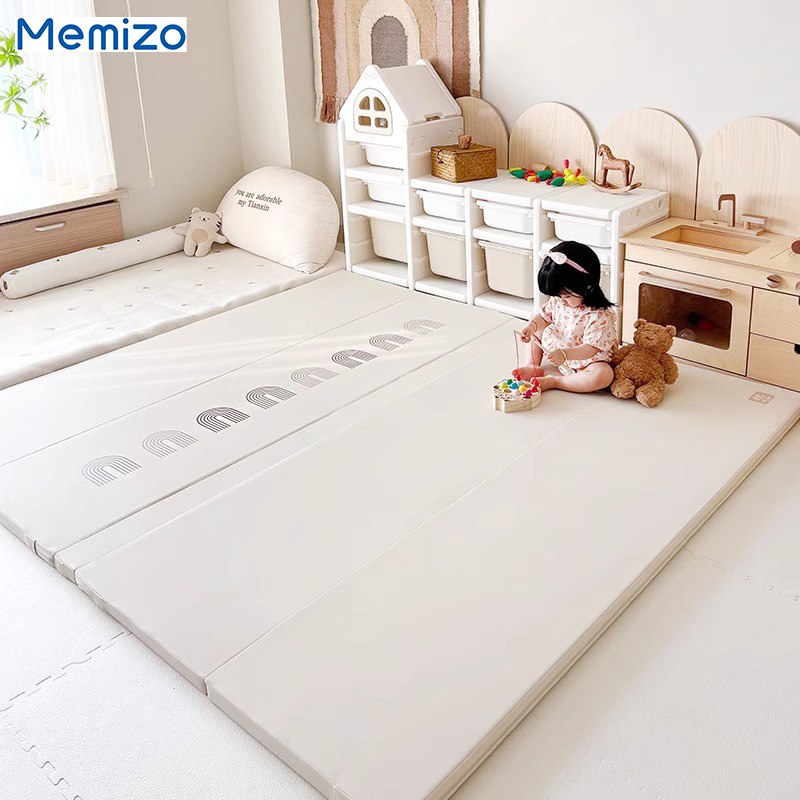
Every parent knows floor surfaces endure constant messes. Spilt milk, crushed crackers, and pet hair are daily realities. Your chosen design determines your cleaning workload.
User-generated content frequently highlights cleaning frustration. Foldable mats face harsh scrutiny regarding spill management. We evaluate them on the risk of crumbs, liquids, and pet hair getting trapped in folding crevices. Small particles easily migrate into these deep hinge pockets. You must actively unfold the panels and vacuum specific hinges regularly. Spilled liquids can seep into fabric-based seams if left unattended.
Conversely, we evaluate roll-up mats on their 100% waterproof, seamless surfaces. A PU Leather Play Mat requires zero deep-crevice cleaning. It functions much more like standard hard flooring. You simply wipe messes away using a damp cloth. You never have to hunt for hidden cheerios inside structural folds.
Long-term durability varies significantly between the two styles. We assess them based on mechanical stress and environmental exposure.
Hinge Degradation: Foldable mats experience wear specifically at their joints. Repeated folding and unfolding stresses the binding materials. Constant friction against rough carpets can eventually fray fabric hinges.
Surface Puncture Resistance: Heavier roll-up designs offer superior surface resilience. Dense materials resist sharp impacts better. They withstand dropped toys and heavy play equipment effectively.
Pet Claw Resistance: Homes housing dogs or cats demand tougher exteriors. A premium roll-up model generally resists pet scratches better than soft XPE foam.
Furniture Indentations: Heavy couches leave permanent dents on lightweight foam. Dense memory foam roll-ups recover their shape faster after removing heavy items.
You should establish a routine cleaning schedule immediately. Spot clean liquid spills instantly to prevent sticky residue. Use a mild soap solution weekly to sanitize the surface. Avoid harsh chemical bleach. It can degrade protective synthetic coatings and discolor PU leather exteriors.
Babies spend countless hours pressing against floor surfaces. The biomechanical interaction between a child's body and the floor influences their physical progression.
Parents often mistakenly seek the softest surface possible. However, excessively plush mats actively hinder motor development. Babies need resistance to push up, crawl, and eventually walk. A surface acting like a marshmallow absorbs too much kinetic energy. It forces infants to work twice as hard to stabilize their core.
Osteopaths emphasize material density for proper infant spine alignment. A firm surface provides essential proprioceptive feedback. It tells the baby's brain exactly where their limbs are in space.
We must compare the standard density of fold-out foam against the high-rebound density of premium roll-ups. Fold-out XPE foam offers decent shock absorption for minor tumbles. However, it can compress quickly under concentrated weight. High-rebound memory foam inside a heavy roll-up pushes back against the child. This firm resistance offers superior spine support during tummy time.
Floor safety extends beyond the center of the mat. The perimeter introduces unique risks you must anticipate.
Roll-Up Implementation Risk: Roll-up mats suffer from "memory" issues. The material remembers being rolled into a tight cylinder. This causes the edges to curl up during the first few months of use. Curling edges create an immediate trip hazard for toddlers learning to walk. You must actively counter-roll the material to flatten these perimeters.
Foldable Implementation Risk: Foldable options lay perfectly flat immediately. However, they lack significant weight. This creates shifting panels on hardwood floors. They slide out from under a running toddler if anti-slip backing is insufficient. You often need to purchase separate non-slip rug pads to secure them safely.
Safety & Biomechanics Evaluation Table
Evaluation Metric | Foldable Mats | Roll-Up Mats |
|---|---|---|
Spine Support | Adequate, but can compress under joint weight. | Excellent high-rebound resistance for pushing up. |
Motor Progression | Good for early tummy time. | Ideal for crawling and early walking steps. |
Edge Safety | Lays flat instantly; sliding risk on hard floors. | Curling edges risk early on; heavy enough to stay put. |
Fall Cushioning | Standard shock absorption for light tumbles. | Superior density absorbs harder toddler falls. |
A product's physical dimensions dominate its daily usability. You must interact with this item constantly. Spatial reality often dictates a parent's long-term satisfaction.
Weight considerations drastically impact your daily routine. Postpartum parents often lack the energy for heavy lifting.
Roll-up mats often weigh between 15 and 20 pounds. Some extra-large models weigh even more. Daily rolling and unrolling becomes physically demanding. Maneuvering a heavy, floppy cylinder behind a couch requires two hands and awkward bending.
Conversely, foldable mats typically weigh under 5 pounds. They allow for effortless, one-handed deployment. You can hold a baby in one arm while tossing the folded block onto the floor with the other.
You need to assess exactly where the item lives when not in use.
Evaluate the Foldable Profile: A folded mat creates a flat, rectangular block. It easily slides behind sofas. It slips effortlessly under cribs or guest beds. It demands very little vertical space.
Evaluate the Roll-Up Profile: A rolled mat creates a tall, bulky cylindrical profile. It requires upright closet space. Alternatively, you must dedicate a specific room corner for vertical storage. It cannot slide under low-clearance furniture.
Assess Daily Tolerance: Decide if you are willing to sacrifice floor space permanently. If not, measure your available closet dimensions immediately.
Families frequently visit grandparents or take weekend trips. Foldable designs win unequivocally for travel. You can stack them neatly in car trunks alongside strollers and luggage. They provide an instant, clean play area in unfamiliar hotel rooms.
Roll-ups are strictly for home use. They consume the entire backseat of a car. Their sheer weight makes casual transport completely impractical.
You must align the structural mechanics with your specific lifestyle. We have categorized the most common household profiles to guide your final choice.
You live in a home where the living room serves multiple functions. You host adults in the evening and toddlers during the day. You value interior design and hate visual clutter.
Recommendation: Roll-Up (specifically a premium PU Leather Play Mat).
Logic: This design blends seamlessly into modern home decor. It mimics the look of real area rugs perfectly. It withstands high foot traffic gracefully. You can treat it as semi-permanent furniture, eliminating the need for daily deployment entirely.
You live in an apartment where floor space is scarce. Your baby plays in the center of the room, but you need that space back by dinner time. You frequently visit relatives.
Recommendation: Foldable.
Logic: You need a surface disappearing completely in ten seconds. The ultra-lightweight profile allows you to tuck it under the sofa instantly. You can easily throw it in the trunk for a trip to a grandparent's house.
You have a designated room solely for children's activities. Aesthetics matter less than massive coverage and heavy-duty cushioning.
Recommendation: Tie (Depends entirely on floor size).
Logic: If you are covering a massive area, large roll-up mats perform excellently. They handle jumping and running beautifully. However, interlocking tiles might serve as a better secondary alternative for custom room shapes. You leave the surface deployed permanently, so storage friction becomes irrelevant.
Neither design is universally superior. A successful purchase depends entirely on your specific tolerance for daily setup versus your demand for a seamless aesthetic. You must balance the physical reality of moving a heavy cylinder against the minor annoyance of vacuuming foldable hinges.
To finalize your decision smoothly, follow these actionable next steps:
Measure the exact floor space where the baby will play before browsing online.
Measure your designated storage closet or under-sofa clearance to ensure a proper fit.
Evaluate your physical comfort level regarding daily lifting if considering a heavy roll-up model.
Prioritize firm surface density to support proper biomechanical development and spine alignment.
Assess your home's pet situation; opt for heavy-duty monolithic surfaces if claws are a concern.
A: Manufactured hinges will never flatten out completely because they are engineered physical joints allowing the accordion fold. However, superficial shipping creases found on the flat panels usually disappear within a few weeks. Warm room temperatures help the internal foam expand and smooth out these temporary shipping wrinkles naturally.
A: You must physically disrupt the material's structural memory. Reverse-roll the curled edges tightly in the opposite direction and secure them with soft straps for 24 hours. Additionally, placing heavy, flat books along the perimeter while applying mild warmth from a sunny window helps the foam relax permanently.
A: No, premium PU leather offers excellent traction. While it appears smooth, the synthetic exterior features a micro-textured finish providing necessary grip. This friction gives mobile babies the stability they need to push up onto their knees and propel themselves forward without slipping backward.
A: Roll-up designs are vastly superior for pet owners. The seamless, heavy-duty materials resist claw punctures far better than lightweight, air-filled foam. Furthermore, they eliminate deep crevices, making it incredibly easy to wipe away pet dander, hair, and accidental messes in one quick motion.


