
Views: 0 Author: Site Editor Publish Time: 2026-08-28 Origin: Site


Modern martial arts flooring serves a dual purpose in today’s highly competitive industry. It delivers mandatory impact protection for athletes while acting as highly visible brand real estate for your dojang. Club owners and event organizers face a distinct challenge when designing their training spaces. You must balance aesthetic customization, like printing logos or defining tournament rings, alongside functional durability and strict budget limits. This balancing act can be tough since visual upgrades should never compromise surface grip, foam density, or athlete safety.
We will break down exactly how you can tailor these surfaces without sacrificing quality. You will explore a technical evaluation framework for selecting, customizing, and maintaining professional grade mats. By the end, you will know exactly which methods suit your specific martial arts environment.
Brand Identity vs. Function: Custom logos and facility colors elevate professionalism, but application methods (printing vs. embedding) dictate longevity.
Format Dictates Application: The choice between a Taekwondo Puzzle Floor Mat and a vinyl-topped roll-out system determines which customization techniques are viable.
Cost and Lead Times: Customization increases upfront costs by 15-30% and adds operational lead time; ROI is realized through brand positioning and event sponsorships.
Safety Remains Primary: Regardless of customization, mats must meet strict thickness (typically 20mm to 40mm) and density requirements for strike-based martial arts.
Investing in customized flooring transforms a generic training space into a professional martial arts academy. This transition directly influences how students and competitors perceive your brand. A tailored environment builds authority. It signals a serious commitment to the sport.
Visual consistency plays a vital role in facility management. A well-branded dojang drives student retention. When members walk into a meticulously designed space, they feel part of an elite academy. You can leverage this perceived facility value to justify premium pricing models.
First Impressions: Cohesive colors immediately communicate professionalism to prospective students.
Visual Cohesion: Matching wall pads and flooring establishes a memorable brand identity.
Student Pride: Embedded center logos create a focal point for team photos and social media sharing.
Tournament organizers rely heavily on customized mats to manage large-scale events. Distinctly colored competition rings help referees define out-of-bounds areas quickly. They also guide competitors safely during high-intensity sparring. Furthermore, custom graphics provide essential sponsor visibility. High-profile tournaments often print sponsor logos directly onto the competition surface. This placement guarantees maximum exposure during live broadcasts and event photography.
A successful customized mat investment demands longevity. The surface must maintain its visual clarity for at least three to five years. It will endure heavy barefoot traffic. It will also face friction from martial arts shoes. You must ensure the chosen customization method resists peeling or fading under these demanding conditions.
You have several distinct methods for adding graphics and colors to your facility floor. Each technique offers specific advantages depending on your aesthetic goals and foot traffic levels.
Manufacturers apply ink directly to the foam or vinyl surface. This method supports complex logos and intricate color gradients. It allows you to display highly detailed sponsor graphics.
However, you must consider the implementation risk. Printed surfaces remain prone to scuffing and fading. High-friction areas wear down ink over time. You will require specific anti-slip topcoats to seal the design. These clear coats protect the ink but may alter the surface texture slightly.
Waterjet cutting offers a highly durable alternative. Facilities precision-cut logos from contrasting foam colors. Technicians physically piece these shapes into the mat like a jigsaw puzzle.
This technique works best for permanent, high-traffic club floors. It accommodates simple vector logos perfectly. The primary drawback involves a higher initial cost. You are also limited to solid colors. You cannot reproduce intricate color gradients. Yet, embedded logos offer zero risk of fading. The color runs through the entire thickness of the foam piece.
Color zoning provides a budget-friendly customization option. You utilize contrasting mat colors to map out specific areas. This technique lets you define sparring rings and safety zones. You can also mark spectator boundaries clearly. Color zoning achieves a highly organized look without incurring extra printing costs.
Chart: Comparison of Customization Techniques
Technique | Best Application | Durability Level | Design Complexity |
|---|---|---|---|
Direct Surface Printing | Tournaments, Sponsor Logos | Moderate (Fades over time) | High (Gradients supported) |
Waterjet Embedding | Permanent Dojangs | Excellent (Zero fading risk) | Low (Solid vector shapes only) |
Color Zoning | Defining safety boundaries | Excellent (Inherent foam color) | N/A (Uses standard tiles) |
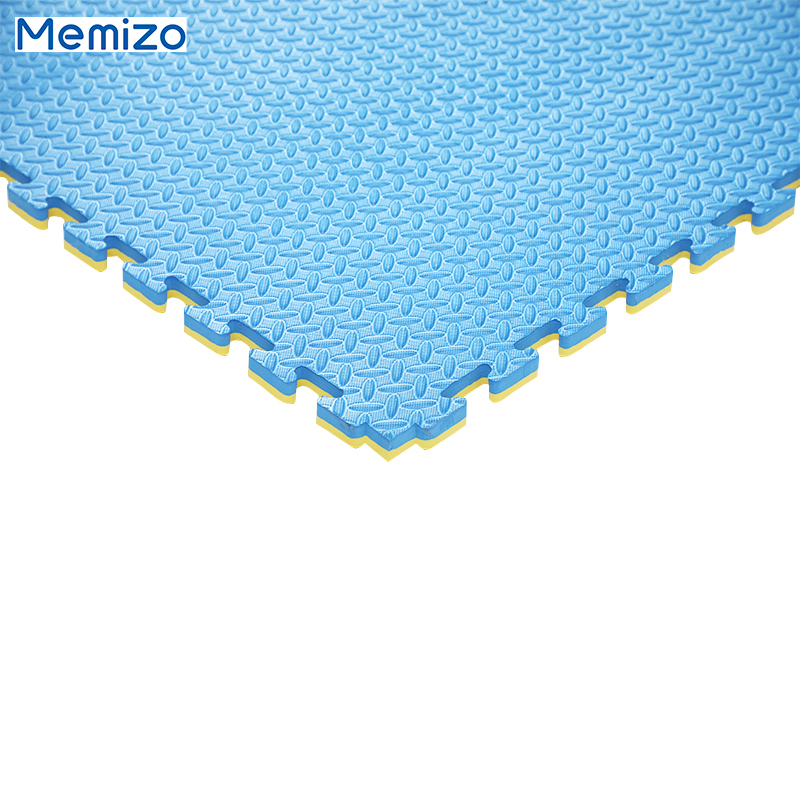
Your base material choice directly dictates which customization methods you can deploy. You must select a format based on your facility layout and operational agility needs.
Many academy owners prefer a Taekwondo Puzzle Floor Mat setup. These interlocking EVA foam systems offer high modularity. You can easily replace single damaged tiles without overhauling the entire floor. This flexibility makes them excellent for semi-permanent club setups. They also adapt well to irregularly shaped rooms.
However, puzzle formats carry specific customization limits. Printing across puzzle seams can disrupt complex graphics. When tiles expand or contract, printed lines may misalign slightly. Because of this, interlocking tiles are better suited for color-zoning. They also pair excellently with single-tile waterjet logos. When selecting taekwondo floor mats in a puzzle format, prioritize embedded designs for long-term clarity.
Vinyl-topped roll-out systems utilize high-density XPE foam. They deliver a seamless appearance across large areas. Tournament organizers favor them for their rapid deployment capabilities. Setting up a massive arena takes hours instead of days. They also feature superior tape-free joining systems.
These systems excel in visual customization. Flat vinyl surfaces are highly receptive to digital printing. You can apply large-scale, high-fidelity graphics. They accommodate prominent sponsor branding effortlessly. Unlike puzzle seams, the smooth vinyl allows uninterrupted graphics across wide competition rings.
Aesthetic upgrades mean nothing if the flooring fails to protect your athletes. You must evaluate foundational technical specifications before committing to any custom design.
Mat thickness directly correlates to impact absorption. A 20mm thickness is strictly for light training and stand-up striking. Conversely, a 40mm thickness is strictly required for heavy takedowns and throws.
Foam density plays a critical role in both safety and graphic stability. High-quality martial arts foam typically ranges from 100 to 120 kg/m³. Dense foam prevents the athlete's foot from sinking too deeply. This stability prevents ankle rolls. From a customization standpoint, dense foam provides a rigid base. It prevents printed topcoats from cracking under compression.
Texture impacts both grip and printing clarity. You typically choose between Tatami, T-pattern, or smooth finishes.
Tatami Texture: Mimics traditional woven grass. It provides excellent barefoot grip for dynamic kicking.
T-Pattern Texture: Offers multi-directional slip resistance. It allows smooth pivoting for martial arts shoes.
Smooth Finish: Generally reserved for specific wrestling applications or highly printed areas.
Note our primary warning. Heavy texturing can distort detailed printed logos. The ink settles unevenly into the deep grooves. However, adequate texture remains non-negotiable for barefoot grip and athlete safety.
You must verify material safety standards rigorously. Ensure custom inks or vinyl treatments are entirely non-toxic. They must be lead-free to protect athletes during floor-based grappling. Furthermore, confirm the materials meet specific fire-retardant standards. Look for certifications like EN71 or ASTM. Compliance protects your facility from liability and ensures a safe training environment.
Custom flooring requires careful logistical planning. You must account for production schedules and specialized cleaning protocols to protect your investment.
Do not expect immediate delivery for branded surfaces. You must factor in a standard four to eight week production window. Custom waterjet cutting requires precise factory programming. Digital print runs demand curing time for the topcoats. Plan your facility grand opening or tournament dates around these extended manufacturing schedules.
Improper cleaning destroys custom graphics quickly. You must learn how to clean these surfaces without degrading UV inks. Harsh chemical solvents will strip away protective clear coats. They can also weaken the adhesives used in embedded seams.
Always use pH-neutral cleaning solutions.
Avoid abrasive scrubbing brushes on printed sections.
Mop up sweat and moisture promptly to prevent bacteria buildup.
Never use bleach-based products on vibrantly colored zones.
Selecting the right product requires matching the format to your daily operations. Use this shortlisting logic to guide your purchasing decision.
For localized Dojangs, prioritize embedded logos on puzzle tiles. Your floor handles daily, repetitive friction. Waterjet logos deliver the maximum lifespan under these conditions. You avoid the headache of fading graphics halfway through the season.
For Touring Tournaments, prioritize digital printing on lightweight roll-out mats. You need rapid setup capabilities. You also need the ability to update sponsor logos seasonally. Roll-out mats provide the ideal canvas for high-fidelity temporary branding.
Customizing your martial arts facility requires strategic decision-making. You must prioritize functional material density above all else. Safety always comes first. Next, select your ideal format based on operational agility. Puzzle mats suit permanent clubs, while roll-out systems dominate weekend events. Finally, choose a customization method matching your desired lifespan. Embedded logos last forever, while surface printing offers complex color gradients for temporary setups.
Take these actionable next steps to secure your investment:
Request physical material samples from multiple manufacturers.
Ask for ink-adhesion test patches to evaluate printing durability.
Verify all fire-retardant and non-toxic certifications in writing.
Consult your instructors regarding preferred surface textures.
A: The lifespan depends entirely on traffic volume and topcoat quality. In high-traffic dojangs, printed logos typically last two to four years before noticeable fading occurs. You can extend this lifespan by placing printed logos in low-friction areas, such as the center referee zone.
A: We strongly advise against aftermarket customization. Painting or printing on existing mats is highly unreliable. Factory-applied customization uses specialized UV inks and industrial curing processes. DIY paints will crack, peel, and create a slippery, unsafe surface for your students.
A: Warranties usually cover structural foam failures, such as tearing or seam separation. However, most manufacturers explicitly exclude aesthetic fading or ink scuffing from standard wear and tear. Always review the warranty documentation regarding printed surfaces before purchasing.
A: Factories typically require minimum order quantities to offset production costs. For custom foam colors, expect an MOQ of 100 to 200 tiles. For post-production logo printing or waterjet embedding, some manufacturers accommodate smaller batches, but per-unit costs will increase significantly.


