
Views: 0 Author: Site Editor Publish Time: 2025-10-20 Origin: Site


Choosing the right play mat is about safety, size and how it fits your daily life. This checklist helps you pick the exact spec, from padding to prints — and explains why many families trust Shandong Memizo New Material Technology Co.,Ltd (NOAH GROUP) when selecting a XPE foam play mat that balances comfort, durability and cleanability.
Selecting the correct size and thickness is the first practical step when buying a play mat. Your home layout, the age of your child, and how you plan to use the mat determine what works best. A smaller mat may fit a nursery corner, while larger rolled or foldable mats serve living rooms and open play areas. Thickness directly affects shock absorption and comfort — but it also influences portability and edges.
Newborns (tummy time): For supervised tummy time, a thinner mat (6–10 mm) offers a stable surface that keeps infants close to the floor while giving enough cushion to protect elbows and chins. Thin mats are easier to clean and less likely to cause rolling instability for infants learning head control.
Crawlers (6–12 months): Aim for 10–15 mm thickness to absorb minor bumps without feeling too springy. This range balances support and floor contact for crawling babies.
Toddlers (1–3 years): For active toddlers who tumble or jump, 15–25 mm provides more protection during rough play. Thicker mats help reduce impact and protect knees and hips during longer play sessions.
Mixed-age families: If older siblings also use the mat, consider 18–25 mm for broader protection across ages.
Choosing the right thickness also ties to flooring type. Hard surfaces like tile or hardwood benefit from thicker padding, while carpeted rooms may require less thickness to maintain stability.
Modular tiles: Great for customizing shape and coverage. Tiles allow you to create an irregular play area that fits around furniture. They’re easy to replace if a tile gets damaged and are excellent for larger rooms because you can add or remove pieces. However, tiles may have seams that collect dirt and could separate over time without joining straps or underlay.
Foldable mats: Best for families who need portability and quick storage. Foldable designs are typically one-piece mats that fold into sections, making them simple to stow or carry. Foldable mats often come with continuous printed surfaces (ideal for large graphics) and fewer seams, which simplifies cleaning and maintains a neat appearance.
When floor coverage needs change frequently — for example, switching between playtime and adult use of a living room — a waterproof foldable play mat is often the most convenient choice.
Surface finish determines safety, longevity, and maintenance. The texture and protective coating affect how slippery the mat is, how the print ages, and whether spills penetrate the core.
Printed top films do more than decorate — they protect the core foam from abrasion, stains, and fading. High-quality printed films are laminated onto the XPE layer, creating a barrier that resists rubbing, scuffs from toys, and fading under indoor light. A well-applied printed film also:
Makes wiping spills easy with a damp cloth.
Enables crisp, high-resolution graphics that stay vibrant after repeated cleaning.
Reduces odor absorption compared with uncoated fabrics.
If you plan to use the mat for messy activities (painting, snacks, diaper changes), prioritize mats with durable printed top films and ask about UV and abrasion ratings when available.
Waterproof layers: XPE foam itself is closed-cell and naturally water-resistant, but performance improves when combined with a laminated waterproof top film. Fully waterproof mats protect the internal foam from liquids, preventing stains, mold and odor and making deep cleaning far simpler. For families with potty-training toddlers, waterproofing is essential.
Fabric covers: Removable fabric covers feel softer and look premium, but they require washing and may not be fully waterproof — liquids can soak through into the foam unless the cover includes an internal waterproof membrane. Fabric covers are ideal when tactile softness is the top priority, but they increase maintenance steps.
A practical compromise is a waterproof foldable play mat with an optional removable fabric topper: you get protection for heavy spills and the soft feel when desired.
Ease of transport and storage affects daily life more than buyers expect. Consider how frequently you’ll move, fold, or store the mat.
Foldable mats: Foldable mats typically fold into neat sections and often come with carrying straps or a storage bag. They’re quicker to set up and pack away and are ideal for multi-use rooms or travel. Because they usually have a continuous surface, they avoid seams that trap crumbs and dust — making cleaning faster.
Sectional tiles: Tiles are heavier to move as a full set but excel when you want flexible coverage or the ability to replace a damaged tile. When stored, tiles require space and careful stacking to avoid warping. Tiles may be easier to rearrange for different room layouts but are less convenient for rapid storage.
If you live in a compact apartment or frequently rearrange living space, a high-quality waterproof foldable play mat will save time and storage headaches.
Keep the mat flat or loosely rolled in a cool, dry place. Avoid tight folding for long periods, which may create permanent creases.
Store away from direct sunlight and heat sources — prolonged heat can soften certain films and affect print adhesion.
Use breathable storage bags rather than sealed plastic to prevent moisture buildup.
Before storing, ensure the mat is completely dry and clean; trapped moisture can encourage mildew on seams or fabric accessories.
Following these storage tips extends the mat’s life and preserves print clarity and anti-slip performance.
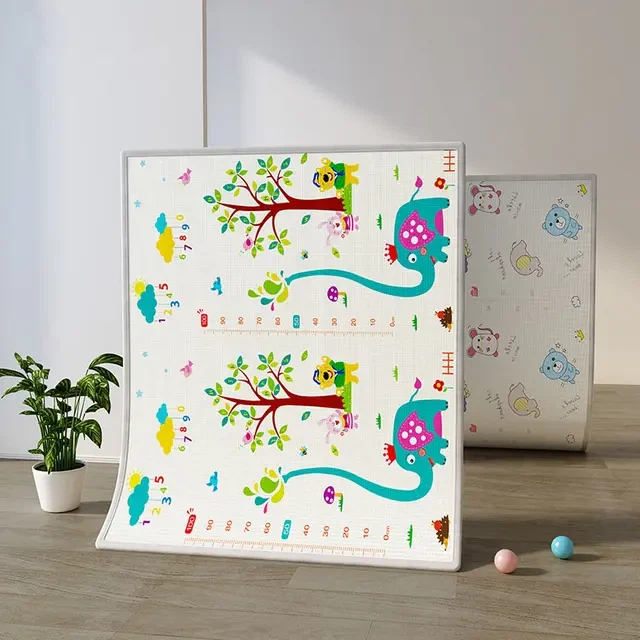
Beyond padding and finish, features such as prints and accessories shape how a mat supports play and learning.
Alphabet & numbers: Letter and number layouts support early literacy and numeracy during play. Large, bold letters promote recognition and make simple games easy to play with toddlers.
World maps & cityscapes: These larger, storytelling prints are great for slightly older children who enjoy imaginative play. Maps can spark questions about places and cultures — ideal for parents who want learning opportunities built into playtime.
Roads & activity scenes: Car-track or town prints motivate toy-car play and cooperative play between siblings. These prints often pair well with small wooden toys and encourage role-play scenarios.
Neutral textures & simple patterns: For families who prefer a calm aesthetic, understated geometric prints remain stylish while still providing a structured play surface.
High-resolution prints that stay vibrant after repeated wiping make the mat a durable canvas for daily play.
Joining straps or fasteners: For tiles, secure joining straps reduce seam separation and create a stable surface for active play.
Edge trims: Rounded or padded edge trims prevent trip hazards and create a finished look where tile meets hard floors.
Carrying bags and straps: These make foldable mats truly portable for visits, daycare drop-offs, or outdoor picnics.
Removable fabric toppers: Give extra softness for infants or nap time while keeping the original mat protected underneath.
Accessories let you tailor a basic mat to specific household needs — from safety to portability to aesthetics.
Safety is non-negotiable. XPE foam is a popular choice for play mats because it is closed-cell, lightweight, and generally free from foul smells that come from open-cell foams. Still, look for credible claims and certifications:
Non-toxic composition: Confirm the product is free from prohibited phthalates, heavy metals, and formaldehyde. Many suppliers provide lab test reports showing compliance with international toy and material safety standards.
Flame retardance and heat resistance: While XPE has certain resistance properties, it’s important to follow local safety guidelines and avoid placing the mat near open flames or heaters.
Anti-slip backing: The bottom surface should grip the floor adequately to prevent sliding, especially on hardwood. Verify anti-slip performance on typical home floors.
Rounded edges and child-safe finishes: Smooth edges and secure bonding between layers reduce risks of peeling or exposing foam.
Requesting independent lab reports is reasonable when buying for public spaces (daycare, play centers), and it’s a good practice even for family purchases.
Keeping a mat hygienic extends its usable life and protects your child’s health.
Daily cleaning: Wipe spills immediately with a damp cloth and mild detergent when needed. Steam cleaners are usually not recommended for laminated surfaces — check the manufacturer’s guidance.
Weekly routine: Lightly vacuum tiles to remove crumbs and dust from seams; wipe foldable mats with a microfibre cloth to maintain print brightness.
Deep cleaning: For heavy stains, use a soft brush with a gentle cleaning solution. If the mat has a removable fabric cover, follow laundering instructions carefully and ensure full drying before reassembly.
Avoid harsh chemicals: Bleach, abrasive powders, and solvents can damage printed films and reduce waterproofing.
A mat that’s easy to wipe down — especially a waterproof foldable play mat — simplifies cleaning after snacks, crafts, and wet-weather play.
Design choices matter beyond aesthetics. Light-coloured mats show stains more easily; darker, patterned prints hide small marks but may show wear differently. If you plan to resell or pass the mat to another child, opt for classic prints and neutral palettes that endure trends and appeal to broader buyers.
Measure the intended area and choose either foldable or modular layout accordingly.
Match thickness to child age and flooring type.
Confirm waterproofing method (laminated film vs. membrane) and print durability.
Verify anti-slip performance for your floor surface.
Ask for material safety certificates and lab test reports.
Consider accessories: edge trims, joining straps, carrying options.
Check storage guidance and portability if you’ll move the mat frequently.
When selecting the right XPE foam play mat for your family, match mat features to your home’s space, cleaning habits and activity level; Shandong Memizo New Material Technology Co.,Ltd (NOAH GROUP) supplies a range of XPE foam play mat options — including waterproof foldable play mat models — designed for safety, print quality and long-term durability. To see detailed product specifications, request MOQ information, or order a sample, please contact us through our sales channels; we’ll help you pick the best XPE baby play mat for your needs.

