
Views: 0 Author: Site Editor Publish Time: 2025-10-17 Origin: Site


When parents and caregivers choose a soft floor surface for playtime, the decision often narrows to foam options — and the two front-runners are XPE and EVA. This guide compares safety, comfort, cost, and durability so you can make an informed choice. As a manufacturer, Shandong Memizo New Material Technology Co., Ltd (NOAH GROUP) offers a wide range of foam solutions, including our flagship XPE foam play mat, produced to meet family-facing quality needs.
When evaluating play mats, the first questions are how soft the surface is and how well it cushions a fall. XPE (cross-linked polyethylene) and EVA (ethylene-vinyl acetate) are both closed-cell foams, but they differ in internal structure and feel.
XPE typically has a uniform, fine-cell structure created by a cross-linking process. That gives XPE mats consistent rebound and a slightly firmer, more stable feel underfoot compared with many EVA options. The firmer support reduces the “bottoming out” sensation when a child lands from a short fall, so for toddlers who are learning to walk or kids who tumble frequently, XPE often offers predictable impact absorption across the whole surface.
EVA foams are highly versatile and can be formulated to be very soft and springy. A softer EVA surface gives more plush cushioning at first impact, which some parents like for infant tummy time. The tradeoff is that very soft EVA can compress more over time, reducing long-term shock-absorption. If you plan to use a mat as a long-term high-traffic surface (daycare, playroom), choose a denser EVA or XPE-grade designed for resilience.
Key practical takeaways:
For predictable, long-lasting support and steady rebound: XPE.
For ultra-soft initial feel (short-term): low-density EVA.
For best fall protection overall: evaluate mat density and thickness more than the foam label alone; 10–20 mm is common for home use, 20–30 mm for more active play.
Both XPE and EVA are closed-cell foams, meaning they resist water absorption far better than open-cell foams or fabric-covered pads. However, manufacturing treatments and surface lamination matter for real-world mildew resistance.
XPE’s cross-linked closed-cell structure is highly water-resistant. Spills bead on the surface and are easy to wipe away. Because XPE resists moisture penetration, it is also less hospitable to mold and mildew growth when regularly cleaned and dried. That makes XPE particularly suitable for kitchens, basements, or spaces where accidental spills and occasional dampness happen.
EVA is similarly water-resistant at the foam level but is sometimes finished with printed surfaces, textile laminates, or EVA blends that can trap moisture at seams or under decorative layers. If an EVA mat uses fabric lamination, expect higher maintenance and a greater risk of mildew if liquid gets trapped between layers.
Practical advice:
Choose unlaminated, sealed-surface XPE when mildew-resistance is a priority.
If you prefer decorative prints or textures, verify the finishing method and whether seams or laminates are waterproof.
Chemical safety is a core concern for parents: VOC off-gassing, harmful plasticizers, and contaminants like formamide have made headlines in the past. Broadly:
XPE: modern production standards for XPE focus on inert raw materials and cross-linking chemistries that generate minimal VOCs. High-quality XPE can achieve low emissions profiles and be marketed as non-toxic when supported by test reports.
EVA: traditional EVA formulations are generally low in heavy plasticizers, but low-cost or poorly controlled manufacturing can introduce unwanted additives. Reputable brands supply third-party lab results for VOCs and phthalates.
PVC: polyvinyl chloride (PVC) mats are often cheaper but have been associated with higher VOC emissions and the use of phthalate plasticizers in some products. For infant use, many experts advise caution with PVC unless confirmed phthalate-free and low-VOC by testing.
Because chemical composition varies with supplier and specific product lines, request lab test certificates (e.g., phthalates, formaldehyde, VOCs, and lead) for any mat intended for infants. At Shandong Memizo (NOAH GROUP), we make test documentation available for our XPE products so customers can confirm compliance with relevant safety standards.
All foam mats intended for babies and young children should be backed by third-party testing; however, prioritize verification for:
New product lines or manufacturers without proven records.
Laminated or printed designs where inks or adhesives could introduce VOCs.
Products marketed at the lowest price tiers, where raw material substitution is more likely.
Tests to request:
VOC emissions (ISO or similar standard)
Phthalates and plasticizer content (especially for PVC-containing items)
Heavy metals (lead, cadmium)
Flammability ratings relevant to your market
Third-party reports make a meaningful difference in trust for parents and commercial buyers (daycare centers, preschools). When shopping, always ask suppliers for up-to-date test reports rather than relying on labels alone.
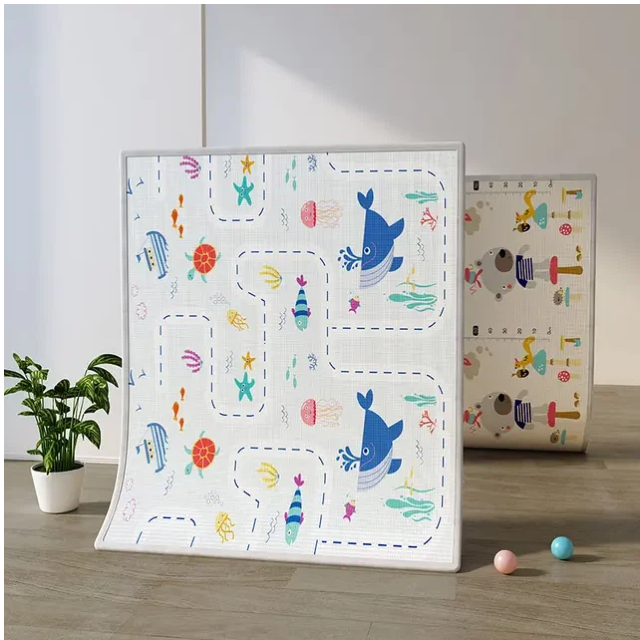
Use context determines the best material.
Kitchens: spills and food messes are common. Choose non-laminated XPE or sealed-surface EVA that wipes clean easily. Avoid fabric-laminated mats in kitchens — they can trap crumbs and moisture.
Nurseries: parents often prioritize chemical safety and a gentle surface. Thicker XPE with high-density formulation offers a clean, hypoallergenic surface that’s easy to sanitize.
Daycare: durability and ease of cleaning are paramount. XPE’s resilience to repeated cleaning, lower odor retention, and tear resistance make it an industry favorite. If EVA is selected for aesthetic reasons, ensure it meets wear-resistance specs and can withstand commercial cleaning.
Cleaning tips (universal): use mild soap and water; avoid harsh solvents which can damage surface coatings; dry thoroughly after wet cleaning to prevent any moisture entrapment.
Thickness affects both comfort and thermal insulation. On cold subfloors (concrete, tile), thicker foam provides a warmer surface and a more comfortable play area.
6–10 mm: thin protection; suitable for light cushioning and anti-slip; best for short-term activities or as underlay.
12–20 mm: popular home range — balances comfort, insulation, and manageability.
20–30+ mm: ideal for active playrooms, gymnastics basics, or spaces where toddlers tumble frequently.
XPE tends to hold insulating properties well per millimeter due to its cell structure; EVA also insulates but may compress more under sustained loads. For unheated rooms, lean toward thicker high-density XPE for lasting warmth and support.
Price comparisons between XPE and EVA must account for specification differences. When reviewing supplier quotes, compare:
Foam density and thickness (mm and kg/m³)
Surface finish (plain, textured, non-slip)
Printing method (in-mold, screen, heat-transfer) and whether inks are low-VOC
Edge finishing (beveled, tongue-and-groove, stitched)
Packaging (individual polybags, retail-ready printed boxes)
Certifications and test reports included
A low per-unit price can hide costs: thinner foam, low-density materials, or non-durable prints will lead to replacements that erode value. Ask suppliers to price comparable densities and finishes so your comparison is apples-to-apples.
Spend up-front when the mat will see heavy daily use, be used commercially, or must meet strict safety standards. Higher-cost items often include:
Better raw materials (higher-density XPE)
UV-resistant or abrasion-resistant surface finishes
Long warranties and accessible replacement parts (for modular mats)
Included lab reports and compliant packaging
For retailers, preschools, and families who want a long-lasting, low-maintenance mat, the additional investment in certified XPE with robust finishing typically pays back through fewer replacements and stronger buyer confidence.
Newborns + tummy time: choose softer surfaces with verified low-VOC profiles; both XPE (softer density) and EVA can work — prioritize test reports.
Active toddlers and multi-child households: choose higher-density XPE for consistent impact protection and long-term resilience.
Decorative playrooms or temporary soft play: EVA with decorative prints is acceptable if you accept shorter lifespan and follow careful cleaning routines.
Commercial settings (daycare, preschool): XPE for durability, easier cleaning, and lower long-term costs.
As an integrated group with multiple factories including overseas facilities in Malaysia and Thailand, Shandong Memizo New Material Technology Co., Ltd (NOAH GROUP) focuses on producing foam play mats with consistent material control, documented test reports, and flexible finishing options. Our production lines allow customers to choose density, thickness, texture, and packaging that match their market positioning — from retail consumer boxes to bulk daycare-ready rolls. We provide lab results and support to help international buyers meet local import standards.
For families and institutions seeking a balance of safety, performance, and long-term value, a well-specified XPE solution is often the best choice — it delivers lasting cushioning, strong moisture resistance, and predictable performance. If your priority is decorative softness for short-term use, EVA remains a viable option when paired with proper testing. As a reliable supplier, Shandong Memizo (NOAH GROUP) can provide samples, certifications, and custom options so you can evaluate fit for your market. Contact us to request XPE play mat samples, test reports, and a tailored quote — we’re ready to support your product selection and next order. Contact us.
Contact & next steps: For sample requests, bulk pricing, or technical specifications, please contact Shandong Memizo New Material Technology Co., Ltd (NOAH GROUP) sales team via our website or email — we will supply product samples, safety test reports, and production lead-time estimates to help you finalize the right choice.

