
Views: 0 Author: Site Editor Publish Time: 2025-10-29 Origin: Site


EPE foam play mat solves a common household headache — hard floors, tireless messes, and noisy play that worries parents and neighbors alike. In this guide we’ll walk decision-stage buyers through what EPE is, how it compares to other materials, the safety and cleaning facts parents care about, and a practical buying checklist so you pick the right mat for your space and needs. Shandong Memizo New Material Technology Co., Ltd (NOAH GROUP) manufactures high-quality EPE options designed for everyday family use.
Expanded Polyethylene (EPE) is a closed-cell polyethylene foam engineered to be lightweight, resilient, and shock-absorbing. Its closed-cell structure resists water and most stains, while providing a soft-but-supportive surface for babies learning to roll, toddlers taking first steps, and family playrooms. Because EPE compresses and springs back, it protects against small falls and cushions impact without feeling spongy underfoot.
Key physical properties:
Lightweight and easy to move or reposition.
Closed-cell construction: resists moisture, prevents mold growth.
Good shock absorption for low-to-moderate impact.
Typically low odor compared with some other foams.
When shoppers compare materials they’re usually weighing durability, smell/chemicals, cost, and feel. Here’s a practical comparison:
EVA: Often denser and more cushioned, EVA (ethylene-vinyl acetate) can feel thicker and offer slightly better impact protection. However, EVA sometimes emits stronger initial odors and can be heavier. EVA is popular — but price and off-gassing concerns lead many parents to prefer EPE for routine home use.
XPE: Cross-linked polyethylene (XPE) has excellent resilience and thermal stability. It’s generally more expensive than standard EPE and is used where long life or special performance is required.
TPU: Thermoplastic polyurethane is durable and abrasion-resistant, commonly used as a thin protective film or coating. Not typically the main foam in family play mats.
PVC: Polyvinyl chloride mats can be inexpensive and waterproof, but PVC raises chemical safety questions for some buyers (plasticizers/phthalates). EPE’s closed-cell polyethylene avoids many PVC-related concerns.
In short: EPE is a balanced choice — cost-effective, light, easy to clean, and performing well for everyday family scenarios.
Parents rightly ask about volatile organic compounds (VOCs), phthalates, and other chemicals. EPE’s closed-cell polyethylene structure reduces absorption and release of liquids and contaminants. High-quality EPE made with food-grade or low-VOC raw materials typically shows lower initial odor and fewer measurable volatiles compared to some EVA or PVC products. When buying, request test reports for VOCs, phthalates, and any required regional toy/child product standards.
A soft mat can still be unsafe if it features detachable components or decorative attachments. When evaluating a mat look for:
No small detachable toys or buttons permanently attached.
Seams and film lamination that are secure and not thin enough to peel into strips.
Non-toxic inks and coatings (no flaking or easily removed printed layers).
Edges that are smooth and without sharp bonding residue.
This product-design checklist helps reduce common hazards in play environments.
A major reason parents choose EPE is easy cleaning. Recommended routines:
Daily: wipe with a damp cloth or baby wipe for small spills.
Weekly: mild soap and warm water using a soft sponge; rinse and air dry.
Tough stains: a gentle cleanser recommended by the manufacturer; avoid abrasive scrubbers.
Avoid harsh solvents, bleach, or concentrated alcohol — these can degrade foam or printed surfaces. Because EPE is closed-cell, brief exposure to water won’t saturate the foam.
EPE's light weight means tiles and foldable mats are easy to move between rooms or put away when not in use. Common formats:
Puzzle tiles: modular, easy to expand or reconfigure; great for irregular rooms.
Foldable mats: fast setup and compact storage; ideal for small homes.
Interlocking large tiles: durable, suit semi-permanent playrooms.
Choose format based on whether the mat stays in place (playroom) or needs frequent relocation (travel, short-term use).
Beyond safety, EPE protects flooring from toy dents and reduces noise from footsteps and play. Its cushioning creates a comfortable standing surface for parents during long play sessions and can reduce reverberation in apartments — a frequent homeowner and renter pain point.
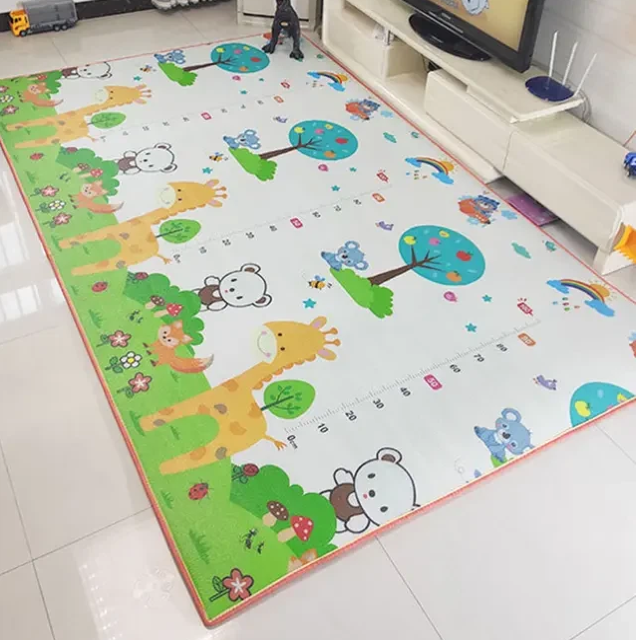
Thickness affects comfort and protection:
6–8 mm: thin option for travel, low-impact areas, or older toddlers.
10–12 mm: ideal for general playrooms and households with younger toddlers (tummy time & crawling).
15–20 mm: premium protection for family play areas where active play and frequent falls may occur.
Match thickness to expected use — thicker mats for higher activity and multi-child households.
Surface finish choices matter for appearance and safety:
Laminated film: durable printed patterns that resist wear; check lamination adhesion to avoid flaking.
Direct print on film: can provide vibrant patterns but ensure inks are tested for migration and non-toxicity.
Textured, non-slip finishes: useful for crawling infants and active toddlers.
Always ask for information about inks, lamination adhesives, and whether coatings are free from heavy metals or regulated phthalates.
Ask suppliers for:
VOC / formaldehyde test reports.
Phthalate and heavy metal screening.
ASTM toy/child product test reports (if selling in the US).
EN71 (European toy safety standard) where applicable.
Any third-party lab testing the manufacturer uses for routine QC.
A responsible supplier will provide up-to-date test certificates and welcome questions about material safety.
For nursery use prioritize a lightweight foldable mat or medium-thickness tiles for tummy time and supervised play. Choose matte, low-gloss finishes to avoid reflective distractions and select pastel prints or simple patterns that stimulate without overwhelming.
For a dedicated playroom or small childcare setting opt for interlocking tiles with 10–15 mm thickness, slip-resistant surfaces, and reinforced chamfered edges for easy cleaning and reduced tripping. Select neutral patterns or reversible designs that suit evolving decor.
For grandparents’ houses or hotel travel, a thin 6–8 mm foldable mat or slim puzzle tiles pack light and give children a familiar play surface wherever they go. Look for mats with quick-dry surfaces and a carry strap or bag.
Shandong Memizo New Material Technology Co., Ltd (NOAH GROUP) supplies EPE mats made for real family life. Key product highlights:
Material sourcing: selected low-VOC polyethylene with closed-cell structure for easy cleaning and minimal odor.
Quality control: routine in-house testing and available third-party lab reports for VOCs and restricted substances.
Formats & customization: tiles, foldable mats, and printed designs with MOQ and OEM options to fit retailers’ needs.
Durability: lamination and print processes designed for everyday wear with adhesion testing.
Support: specification sheets, packaging customization, and sample programs for qualified buyers.
Contact CTA: request a sample, ask for technical specs, or request a quotation by contacting our sales team.
Small issues happen; here’s how to handle them:
Peeling laminate edge: gently re-adhere with manufacturer-recommended adhesive and allow 24 hours before use.
Persistent stains: blot first, then apply mild detergent; avoid heat-drying which can deform foam.
Warping after storage: lay flat in a warm, ventilated area for several hours to restore shape.
Odor on new mat: air out in a ventilated space for 24–48 hours; using a fan helps accelerate dissipation.
Is EPE safe for newborns?
High-quality EPE made from low-VOC materials and with secure surface finishes can be suitable for supervised newborn use during tummy time. Confirm test reports and always supervise infants.
Can I use EPE mats outdoors?
EPE can handle brief outdoor use but prolonged UV exposure and wet conditions may shorten life. Choose UV-stable finishes for repeated outdoor use.
How long will an EPE mat last?
With normal home use and proper care, expect multiple years of service. Durability depends on thickness, finish, and frequency of use.
Are EPE mats recyclable?
EPE foam is recyclable in many regions where polyethylene foam collection exists; check local recycling facilities.
If you want an EPE baby play mat that balances safety, easy cleaning, and everyday practicality — Shandong Memizo New Material Technology Co., Ltd (NOAH GROUP) offers tested EPE options in tile and foldable formats, with customization and QC documentation available. Contact us for samples, spec sheets, and pricing so you can choose the right mat for your nursery, playroom, or travel needs. Contact us to request a sample or a quote today.

