
Views: 0 Author: Site Editor Publish Time: 2025-11-21 Origin: Site


Owning a large cat breed like a Maine Coon, Ragdoll, or Savannah brings immense joy, but it also presents a unique logistical challenge: the litter box. Most pet owners quickly discover that standard "large" or "jumbo" pans sold in pet stores are woefully inadequate for a 20-pound feline. These products are often designed for the average 10 to 12-pound cat, leaving larger breeds to contort themselves into uncomfortable positions just to do their business. This physical restriction is not merely an inconvenience; it creates significant behavioral stakes.
When a cat feels cramped, they often develop "elevator butt," where they accidentally overshoot the rim because they cannot crouch properly. Worse, the stress of a tight enclosure can lead to total litter box avoidance, resulting in inappropriate elimination around your home. We must move beyond misleading marketing labels to find waste management solutions that are ergonomically correct for giants. This article explores how to select a setup that prioritizes your cat’s biology and your home’s hygiene.
The Golden Ratio: Ideally, the box length must be 1.5x the length of your cat (nose to tail base) to allow comfortable turning.
Commercial vs. DIY: While some brands (Petmate, Frisco) offer viable jumbo options, the "Storage Tote" hack remains the gold standard for truly massive cats.
The "System" Approach: A larger box requires a specialized cat litter mat to handle increased tracking from larger paws.
Material Matters: Stainless steel offers superior hygiene for large surface areas compared to porous plastics.
To understand why standard boxes fail, we must look at the mechanics of how large cats move. A standard domestic cat can pivot easily in a 19-inch pan. A Maine Coon, however, requires significantly more turning radius to cover their waste without stepping in it. If we ignore these physical requirements, we invite accidents.
Size is the single most critical factor. The absolute minimum viable floor space for a large breed is 23 inches long by 18 inches wide. Anything smaller than this acts as a "kitten pan" for a full-grown Ragdoll. However, minimums are rarely comfortable. Veterinary behaviorists and industry experts often cite the "1.5x rule."
This rule states that the litter box length should be at least 1.5 times the length of your cat from their nose to the base of their tail. If your cat measures 20 inches, you need a 30-inch box. This metric is non-negotiable for preventing "poop on the rim." If the cat cannot turn around without their fur brushing the sides, they will instinctively perch on the edge or face outward, increasing the likelihood of waste landing on your floor.
Floor space addresses the "where," but wall height addresses the "how." Large breeds, particularly male Maine Coons, often do not crouch low when urinating. They may stand tall or raise their hindquarters during the process. In a low-sided pan, a cat might be standing perfectly inside the box, yet their urine stream clears the edge completely.
High sides are a functional necessity. Walls should be at least 10 inches high to contain high-spraying or standing urination. Enclosed spaces can also work, provided they are spacious enough to prevent "cave stress," where the cat feels trapped.
We must also consider the weight of the animal and the litter. A large cat entering a box exerts significant force. Standard polypropylene pans often have thin bottoms that flex under the weight of 20 pounds of cat plus 15 pounds of litter. This flexing creates micro-cracks in the plastic over time.
When the bottom flexes during cleaning or moving, urine-soaked clumps can break apart, contaminating the clean litter. Rigid materials, such as heavy-duty resin or stainless steel, provide the stability needed to maintain a clean environment. The table below compares common material choices for large setups.
| Material | Rigidity | Odor Control | Best Application |
|---|---|---|---|
| Standard Plastic | Low (Flexes) | Low (Porous) | Budget / Temporary |
| Heavy-Duty Resin | High | Medium | DIY Totes / High-End Pans |
| Stainless Steel | Very High | High (Non-Porous) | Permanent Hygiene Solution |
While the market is flooded with undersized products, a few manufacturers have recognized the need for true jumbo sizes. When evaluating the Best Litter Boxes for Large Cats, we look for designs that balance size, accessibility, and mess containment.
For owners seeking a simple, low-cost solution, the Petmate Giant is a staple. It offers a massive length exceeding 25 inches, making it one of the largest widely available commercial pans. The entry cost is low, usually around $20, and the open design appeals to cats who hate enclosed spaces.
The Drawback: The sides are relatively low. If you have a "sprayer," this pan offers zero protection against horizontal urine streams. You will likely need to place a waterproof barrier underneath or around it.
These boxes are designed specifically for the high-peeing cat and the aggressive digger. With walls reaching 10 to 11 inches, they effectively contain vertical messes and flying litter. Many models feature a lower "spout" front, which allows easier entry and exit for senior large cats who may struggle to jump.
The Drawback: Pay attention to the internal dimensions. These boxes often taper significantly at the bottom. A box that looks huge at the rim may have a surprisingly narrow floor, reducing the usable turning space for your cat.
Automatic litter boxes have historically been too small for large breeds. However, the Litter-Robot 4 features a wider, open bezel design compared to previous models. Does a 20lb cat fit? generally, yes. The open entry allows them to enter without feeling claustrophobic.
The ROI: The upfront cost is high ($699+), but for busy owners, the "never scoop again" convenience is transformative. It also reduces litter usage. However, extremely long cats may still find the internal globe slightly tight during the actual spin cycle.
Plastic absorbs odors over time. Stainless steel does not. The iPrimio XL is the best choice for owners prioritizing odor control and lifetime durability. The non-porous surface never retains ammonia smells and prevents bacteria build-up, which is crucial when managing the larger waste volume of a big cat.
The Drawback: It is heavy to lift and the metal can be cold or noisy if the cat scratches the sides. It also lacks high sides, so you may need to attach a separate splash guard.
There is a harsh reality for owners of cats weighing over 22 pounds: almost no pet store box is truly adequate. This is where the "Commercial Failure" gap exists. When commercial products fail, the industrial aisle at the hardware store provides the solution.
Using a large storage tote, such as an IRIS 132 Quart crate or a Rubbermaid Roughneck, is widely considered the gold standard for giant breeds. These containers offer floor dimensions that often exceed 30 inches in length and walls that stand 14 inches or higher.
Creating a DIY box is simple, but specific steps ensure safety and functionality:
Selection: Choose a tote with vertical walls rather than tapered sides to maximize floor space. Translucent plastic is preferred, as it allows the cat to see out, reducing the feeling of being trapped in a dark hole.
Modification: You will need to cut an entry door. Use a box cutter or a heated knife to cut a U-shaped dip on one of the short or long sides.
Safety Note: The cut edges will be sharp. You must sand them down with heavy-grit sandpaper or cover them with thick duct tape to prevent injury to your cat's underbelly as they enter and exit.
The economics are undeniable. You get superior floor space for a fraction of the cost of a "premium" litter box. The high walls guarantee urine containment, making it the ultimate solution for "elevator butt" issues.
Solving the space issue often creates a new problem: tracking. Large cats have massive paws. Breeds like Maine Coons also have tufts of fur between their toes. These physical traits mean they trap two to three times more granules than the average domestic shorthair.
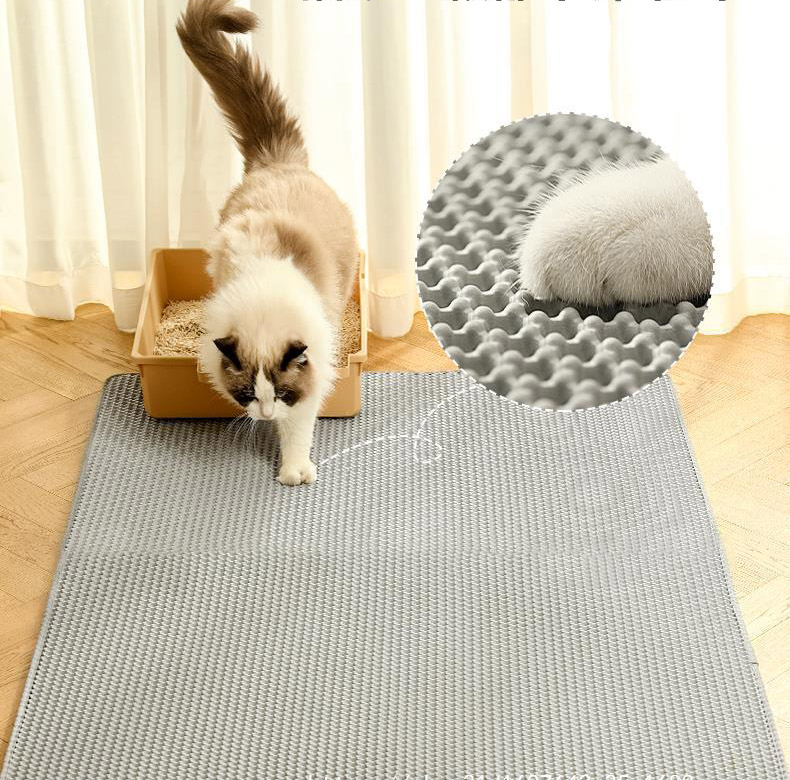
When a 20-pound cat jumps out of a box, they generate significant force. This creates a "blast radius" of litter scatter that a standard-sized doormat cannot contain. To keep your floors clean, you must treat the box and the mat as a single system. A Cat Litter Mat designed for large breeds is not an optional accessory; it is a containment necessity.
Not all mats are created equal. When searching for the best cat litter mat for an XL setup, consider these three factors:
Size: The mat must extend at least 24 inches beyond the exit point of the box. This ensures the cat takes multiple steps on the mat before hitting your bare floor, giving the mesh time to dislodge granules.
Texture: Double-layer honeycomb mats are highly effective because they trap litter inside the pockets, allowing you to pour it back into the box. Loofah-style mesh is also good for scraping paws but can be harder to deep clean.
Waterproofing: Large cats sometimes overshoot the entry. A waterproof bottom layer protects your hardwood or carpet from urine accidents that happen right at the threshold.
Oversized mats can be unwieldy. Ensure the mat you choose is capable of being shaken out easily or hosed down in the yard or shower. Complex textures that trap waste permanently will eventually become a hygiene hazard.
Upgrading to an XL setup requires a shift in how you manage your living space. These boxes are furniture-sized items, and hiding them is rarely an option.
We must acknowledge that XL setups consume significant floor space. A 30-inch tote plus a large mat can take up four feet of linear space. Corner placement is often the most logical strategy. It maximizes stability, preventing the box from sliding during vigorous digging, and minimizes intrusion into walking paths.
Be prepared for the cost of litter. An XL box requires significantly more material to achieve the necessary 3-to-4-inch depth across a larger surface area. A standard bag of litter might only fill half the box. However, there is a silver lining. A larger volume of litter stays cleaner for longer because the waste is better diluted. You may find yourself doing full litter replacements less frequently, provided you scoop daily.
As large cats age, they are prone to joint issues and arthritis. A high-walled DIY tote can become a barrier. If you have an aging giant, you must modify the setup. Ensure the entry threshold is cut low (about 3 to 5 inches from the floor) while maintaining high internal walls to catch spray. This combination of low-entry and high-wall is rare in commercial products, further validating the DIY approach for senior care.
For owners of XL cats, comfort is not a luxury; it is a biological requirement. Providing a properly sized litter box is the most effective way to prevent urinary tract issues and behavioral rebellion. If a cat fits comfortably, they will use the box consistently.
When making your decision, use this simple matrix:
If budget is tight: Go for the Petmate Giant or build a DIY Storage Tote.
If hygiene and odor control are the priority: Invest in the iPrimio Stainless Steel XL.
If convenience rules your life: The Litter-Robot 4 offers the best automated fit for large breeds.
Ultimately, do not compromise on size to save floor space. The cost of cleaning up accidents on your carpets or furniture is far higher than the "cost" of losing a few square feet of floor to a giant litter box.
A: At a minimum, the box should be 22 inches long by 17 inches wide. However, the ideal size is much larger. Experts recommend a length that is 1.5 times the length of your cat (nose to tail base). For most adult Maine Coons, this means a box that is roughly 30 inches long is necessary to ensure comfort and prevent accidents.
A: This is usually a spacing issue, not a behavioral revolt. If the box is too short, the cat may step inside but have no room to turn or crouch properly. They end up positioning themselves with their rear hanging over the edge. Upgrading to a longer box usually solves this problem immediately.
A: They are not inherently bad, but most commercial covered boxes are too cramped for large breeds. This causes "cave stress," where the cat feels trapped and unable to escape potential threats. High-sided open boxes are usually safer and preferred. If you must use a cover, ensure the interior is cavernous enough for the cat to stand fully upright.
A: You need to control their exit path. Use a high-sided box or a tote with a single entry point. This forces the cat to exit in one specific direction. Place an XL cat litter mat directly in that path to catch granules immediately as they step out. Regular trimming of toe tufts can also reduce the amount of litter carried out.


